 Mohammad Abdel-Rahman Accident & Injury Lawyer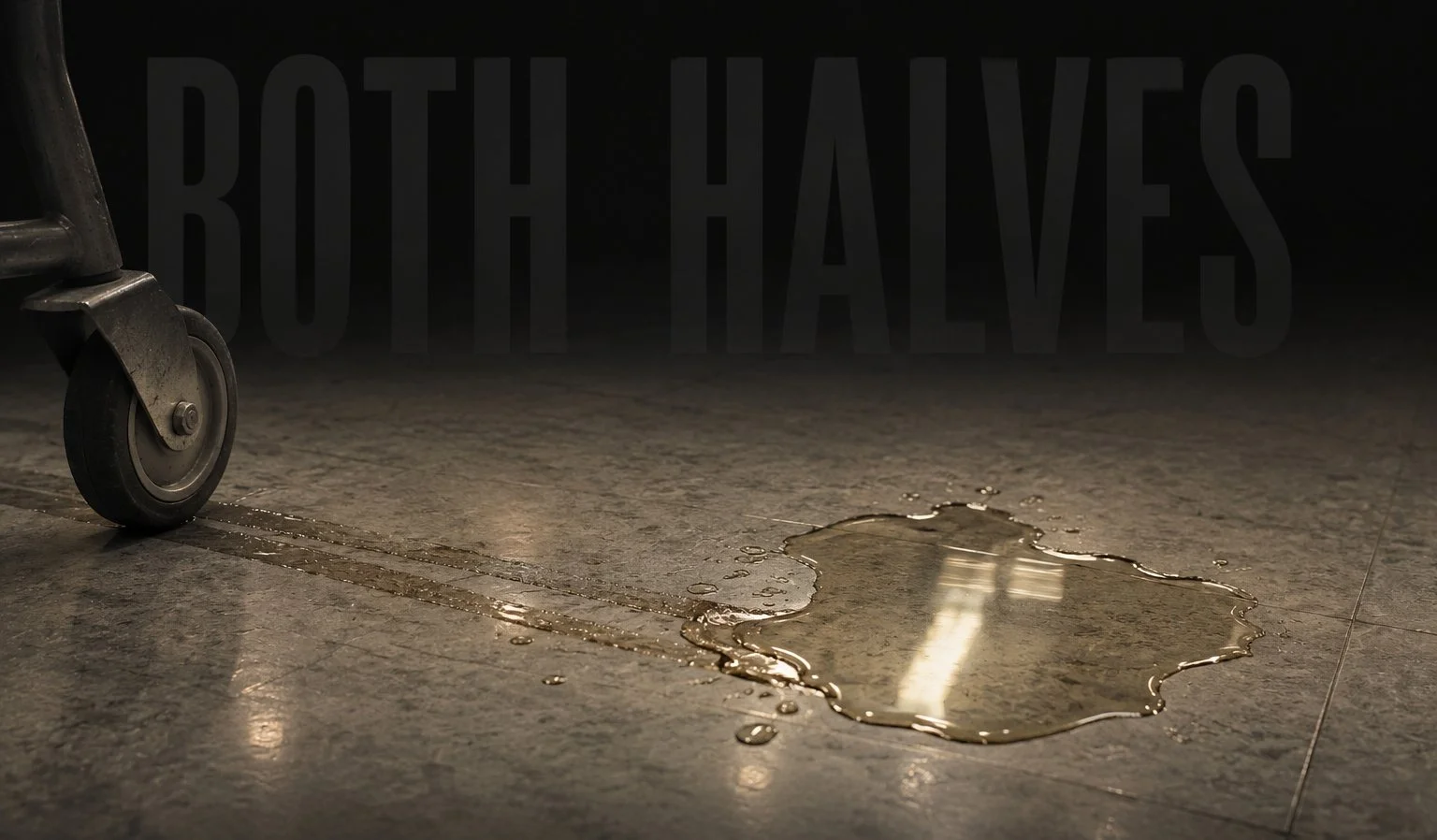
If you’ve just fallen in a store or on a sidewalk in Atlanta and you only have a minute, these are the six things that decide it:
- Georgia’s test has two halves, the owner’s knowledge and yours, and under Robinson v. Kroger the store has to show you were careless before your carelessness even comes into it.
- The case is about what you slipped on and how long it had been there, not about the fall itself.
- Photograph the spot before anyone mops it, and take one from standing height, because that frame is the one that shows whether it could have been seen.
- Keep the shoes you fell in.
- Tell a manager before you leave and ask how you get a copy of the incident report, or there may be no record the fall happened.
- Two years to sue a private store under O.C.G.A. § 9-3-33, but six months to send written notice if the City of Atlanta owns the sidewalk.
Georgia’s premises liability statute is one sentence long. O.C.G.A. § 51-3-1 says that an owner or occupier who invites people onto land for a lawful purpose has to exercise ordinary care in keeping the premises and approaches safe, and that is the whole of it. Everything that decides whether a fall in a Kroger on Ponce or on a City of Atlanta sidewalk turns into money has been built on top of that sentence by the courts, and most of what a fallen customer is told in the first week comes from the wrong half of that case law.
The Georgia Test Has Two Halves, And The Store Has To Go First On The Second
The framework every premises brief in Fulton County is still built on was set by the Georgia Supreme Court in Robinson v. Kroger Co., 268 Ga. 735 (1997):
An invitee must prove that the owner had actual or constructive knowledge of the hazard, and that the invitee lacked knowledge of the hazard despite the exercise of ordinary care due to actions or conditions within the control of the owner.
Both halves have to be there. An owner who knew nothing about a dangerous condition has not been negligent under this test, and a customer who walked into a puddle that was in plain view has not met the second half.
Before 1997 the stores had been winning the second half at summary judgment on a single question. A plaintiff would be asked in a deposition whether she had been looking at the floor, she would say no, and the trial court would treat that answer as an admission that she had failed to exercise ordinary care. Robinson stopped that. The court held that the plaintiff does not have to produce evidence on the second prong until the defendant has first put up evidence that she was negligent, meaning that she had knowingly walked into the hazard or had failed to look out for herself.
If the store has not shown that you were careless, your carelessness is not yet in the case, and “I wasn’t looking at the floor” on its own is not that showing.
The same decision dealt with distraction. If something within the owner’s control drew your attention away, and the owner knew or should have known it would, that is evidence that you were exercising reasonable care. A grocery aisle has been arranged so that the end cap, the sale signage and the product at eye level are pulling your eyes away from the floor, and under Robinson that arrangement counts for you rather than against you.
If you want the two halves put in plain terms, the John Foy slip and fall legal team has framed the question for years as what the property owner knew set against what the injured person could reasonably have seen, and the firm’s founder has used the example of a hole in a backyard walked into in daylight, where the owner is not liable, against a basement door with no step behind it, where the owner is. The phrase the firm uses is superior knowledge, and it is the right phrase for it.
Constructive Knowledge Is About Time
“Someone slipped” and “someone slipped on something” lead to different cases, and the something has to be named.
- Water that had been pooling near a refrigerated case.
- A stair tread that had worked loose and shifted underfoot.
- A change in floor level that could not be seen because the light above it was out.
- A pothole in a parking lot that had been there long enough for its edges to be worn smooth.
Each of those points at a different answer on the knowledge question. Actual knowledge means that somebody at the property knew. Constructive knowledge is broader and usually comes down to duration and inspection, whether the condition had been there long enough that a reasonable inspection should have caught it. A spill thirty seconds old and the same spill an hour later with cart tracks through it are two different cases, and the cart tracks are what proves the hour.
What To Photograph, In Order
Wet floors get mopped, dropped product gets picked up, and a cone appears after the fact with no one able to say when it was put there. If it is safe to do, the photographs that will matter are the ones taken in the first few minutes, and they go in this order:
- The condition itself, close enough that a stranger could tell what it was.
- The floor and walkway around it.
- The lighting, or the lack of it.
- Any warning sign, or the absence of one.
- The wider area, shot from roughly where your eyes were while you were walking toward it.
The close-up proves the puddle existed. Only the standing-height frame shows whether it could have been seen coming, and that is the half the store will fight you on.
Keep The Shoes
- The shoes and the clothes you fell in should be kept as they are. Six months on, when the defence asks about the sole of the shoe, it will matter that they were not thrown out.
Tell Someone Before You Leave
Falling in public is humiliating. The instinct is to get up, wave off help and be gone before anyone has looked for too long, and that instinct creates a question no one at the property will be able to answer later: did anyone at the property know this had happened at all?
- Tell a manager or an employee, and keep it to where you were, what you stepped on and what happened.
- Ask how the store documents incidents and how you get a copy of the report.
- If another shopper or an employee saw the fall, or had seen the condition before it, take a name and a number then.
There is nothing to be gained by theorising about fault at a customer service desk, and witnesses who have scattered are extremely hard to find afterward.
A Short Fall Can Still Break Something
Some injuries show up at once. Others arrive over the following days as swelling, stiffness, headaches, or a range of motion that is not what it was. See a doctor on the basis of how you feel and not on how dramatic the fall looked, because the two have nothing to do with each other. Medical records also fix when the symptoms were reported and what was recommended, which is a different thing from waiting five weeks and then trying to reconstruct from memory when the pain had started.
Two Years For A Store, Six Months If The City Of Atlanta Owns The Sidewalk
Under O.C.G.A. § 9-3-33, actions for injuries to the person have to be brought within two years of accrual. For a fall in a private grocery store that is usually the deadline that governs, and it is the number most people know.
Government property runs on a different clock. Georgia requires an ante litem notice, a formal written notice served on the government entity before any suit can be filed, and the deadlines are shorter:
| Who owns the property | Written notice due | Statute |
|---|---|---|
| A city, including the City of Atlanta | 6 months from the injury | O.C.G.A. § 36-33-5 |
| A county, including Fulton and DeKalb | 12 months from accrual | O.C.G.A. § 36-11-1 |
| The State of Georgia | 12 months from when the loss was discovered | O.C.G.A. § 50-21-26 |
The six months runs alongside the two years rather than replacing it, so a person can be well inside the window to file suit and have already lost the claim by never sending the notice. Courts read these requirements strictly, as to what the notice contains and where it is delivered, and claims have been dismissed over a notice that arrived a few days late or was sent to the wrong office. A broken sidewalk on Peachtree Street, a fall in a city park and an injury inside a county building all belong in that table, and six months is often shorter than the treatment, so a person who is still in physical therapy may have run out of time without knowing it.
Evidence keeps its own schedule whatever deadline applies. Footage at most retailers is overwritten on a loop measured in weeks, staff turn over, and surfaces get repaired, which is a good thing and also means the thing you tripped on no longer exists.
Georgia’s comparative fault rule keeps your own share of responsibility in play the whole way through. O.C.G.A. § 51-11-7 deals with what happens where a plaintiff’s failure to use ordinary care contributed to the injury, which is the practical reason to describe what you remember when the insurer calls and then stop. Saying you did not see the spill before you fell is a fact. Guessing at how long it had been sitting there hands the other side something they would otherwise have had to prove.
Plenty of serious injuries happen on somebody else’s property without producing a claim at all. The harder case to watch is the reverse: a fall that looked trivial, where no photographs were taken and no report was filed, and where it came out later that the store had mopped that spot three times that week. There was liability in that case, and no evidence.
This article provides general information about Georgia law and is not legal advice for an individual case.
References
- O.C.G.A. § 51-3-1, Duty of owner or occupier of land to invitee.
- Robinson v. Kroger Co., 268 Ga. 735, 493 S.E.2d 403 (1997).
- O.C.G.A. § 9-3-33, Injuries to the person.
- O.C.G.A. § 36-33-5, Presentation of claims against municipal corporations.
- O.C.G.A. § 36-11-1, Claims against counties.
- O.C.G.A. § 50-21-26, Notice of claim against the state.
- O.C.G.A. § 51-11-7, Diligence of plaintiff.