 Nicholas J. Rego Accident Lawyer
Three numbers in Florida law will do more to shape what happens after your accident than anything you say to an adjuster and all three of them are running from the moment of impact whether or not anyone tells you about them.
Most people find out about at least one of them late.
The short version:
| The number | What it governs | Why it bites |
|---|---|---|
| 14 days | Deadline to get initial medical care for PIP benefits to apply at all | Miss it and the PIP insurer owes nothing for medical care, even for treatment you get afterward |
| $10,000 vs $2,500 | Your PIP medical cap, depending on whether a qualified provider certifies an emergency medical condition | The same crash, the same injury, four times the coverage, decided by a determination made early on |
| More than 50% | The share of fault that bars a negligence recovery in Florida | Being mostly at fault does not reduce your recovery. It ends it |
| 2 years | The limitations period for negligence actions accruing on or after March 24, 2023 | It used to be four. A lot of older articles still say four |
Beyond those, the early stuff is ordinary. Get the crash on record, get looked at, keep your paperwork somewhere that isn’t the glove compartment and stop guessing out loud about whose fault it was.
Whether police come out depends on what kind of crash it was
Not every collision gets an officer. The Fort Lauderdale Police Department’s crash-reporting guidance sets out the situations where drivers have to stay at the scene and notify law enforcement and the list covers injury or death, hit-and-run, a suspected DUI, anything involving a commercial vehicle, a car that needs a wrecker to move it and apparent damage over the statutory threshold.
Crashes that fall under all of that may be eligible for self-reporting instead.
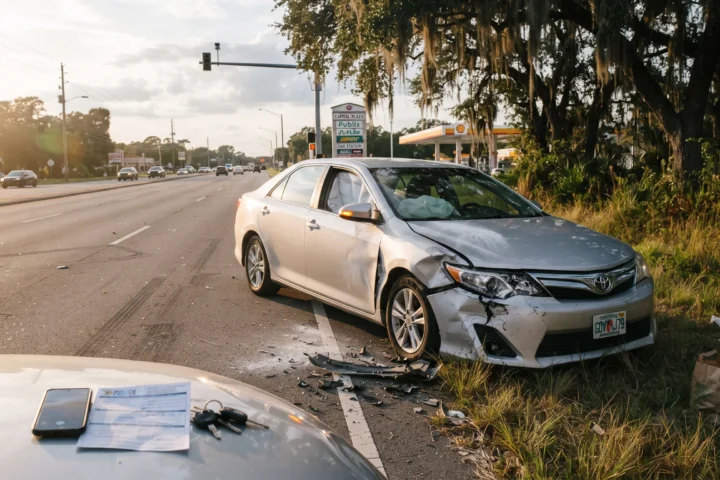
If police do respond, write down which agency it was and how to get the report later, because you will need that report number more times than you expect and every insurer and medical office will ask for it. If your crash qualifies for self-reporting, do the self-report. Swapping phone numbers with the other driver in a parking lot is not a record of anything and the version of events you agree on at the roadside has a way of changing by the time the other person has spoken to their insurance company.
The 14-day window decides whether your PIP is worth $10,000 or $2,500
Adrenaline makes the first hour a bad time to assess yourself. Plenty of people walk away from a wreck feeling shaken but fundamentally okay, then wake up two days later unable to turn their head.
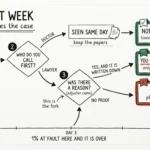
Florida attaches an insurance consequence to how you handle that. Under Florida’s Personal Injury Protection statute, the injured person has to receive initial services and care within 14 days of the accident for PIP medical benefits to be available. Miss the window and the insurer is not liable for medical benefits, full stop, including care you receive later. The clock runs continuously from the date of the crash, weekends and holidays included and it does not care that your symptoms took nine days to show up or that you could not get an appointment.
Then there is the part almost nobody explains, which matters more than the deadline itself.
PIP medical benefits cap at $2,500 unless a qualified provider certifies that you had an emergency medical condition. With that certification, the cap is the full $10,000. Physician, osteopathic physician, dentist, physician assistant, advanced practice registered nurse or a hospital emergency department can make the determination. Without it, you are working with a quarter of the coverage for the same injury.
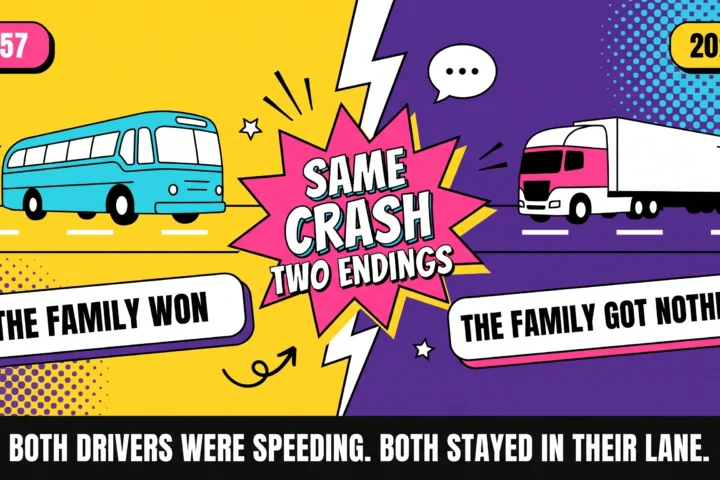
So two people can have the same crash and the same neck, both see somebody inside 14 days and end up with wildly different coverage based on what got written down and by whom. That is not a reason to exaggerate anything to a doctor. It is a reason to describe every symptom you actually have, including the ones that seem too minor to mention and to let the provider make the call with the full picture instead of a polite summary.
The medical side comes first regardless. Go because you are hurt, not because of a statute.
PIP pays first and then it stops
Drivers who move to Florida from elsewhere often expect the at-fault driver’s liability insurance to pick up the injury bills. That is not how the system opens.
Florida requires PIP for most motorists and it pays regardless of fault. The Florida Bar’s automobile insurance consumer information gives a plain-language rundown of PIP alongside the other common coverages and it is worth twenty minutes before you talk to anybody about a settlement.
What PIP does not do is cover everything. It pays 80 percent of reasonable medical expenses and 60 percent of lost wages, drawn from the same $10,000 limit, which means the remaining 20 percent of the bills and 40 percent of the wages are somebody’s problem and that somebody is you unless health insurance, MedPay or a claim against the at-fault driver picks it up. Ten thousand dollars sounds like a cushion right up until you see what one emergency room visit with imaging costs.
Fault still matters, in other words. Serious injury claims run into liability questions, policy limits and damages that sit well outside what PIP was built to handle and there are separate statutory requirements governing when noneconomic damages can be pursued at all in a motor vehicle case. Read your actual policy rather than assuming every kind of insurance behaves the same way.
Saying “I didn’t see him” is not a small thing
Some crashes look decided. A driver runs a red light. Somebody rear-ends a stopped car. A lane change turns into a sideswipe.
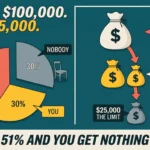
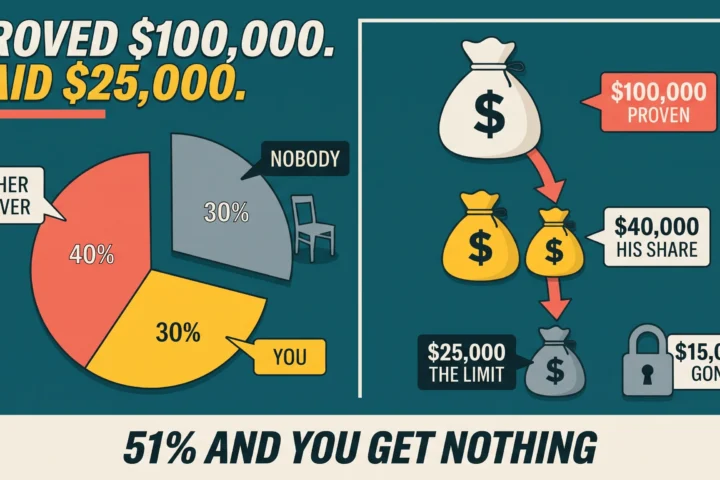
Insurers pick at them anyway, because Florida gives them a reason to. Under Florida Statute 768.81, your share of fault reduces what you can recover in negligence and a party found more than 50 percent responsible for their own harm generally cannot recover damages at all. Not reduced. Barred. Florida used to run a pure comparative system where being mostly at fault still left you something and that changed.
Which turns casual conversation into evidence. Nobody at the scene of their own accident is a reliable narrator about speed or distance or what the other driver was doing and the apologetic thing people say by reflex in the first thirty seconds gets written down and quoted back later. Stick to what you know. You do not have to be rude about it and you do not have to speculate about anything.
The boring evidence is the evidence that works
People picture accident evidence as surveillance footage and skid marks and expert testimony. Usually it is duller than that:
- Photos of both cars, from several angles, showing where the impact landed
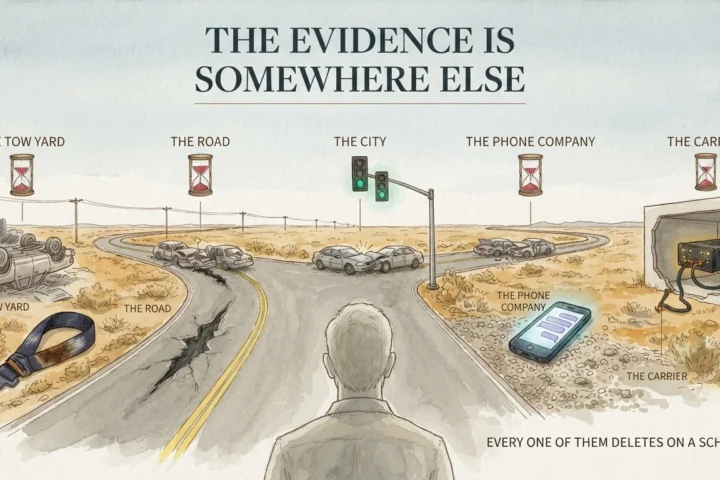
- The road, the signals, any debris, the weather, all of which are gone in an hour
- The repair estimate, which is a second independent record of the damage
- Emails and letters from insurers, saved rather than remembered
- Medical bills, receipts, towing paperwork and a note of every day you missed work
- Any witness phone number, stored somewhere that is not a receipt in the center console
One folder, digital or paper. That is the whole system. It is not about building a case, it is about not having the useful details scattered across three inboxes, a text thread and a pile on the kitchen counter eight months from now when somebody asks.
Two years and it started the day of the crash
Claims drag. Treatment runs long. Everyone is still returning calls, so it feels like there is time.
Florida’s statute of limitations for negligence actions is two years for causes of action accruing on or after March 24, 2023, cut down from the four years it had been for decades. Filing an insurance claim does not pause it. Different circumstances carry different rules and a deadline should never be worked out from a general article, this one included, but the practical version is short enough to remember: do not put this in a drawer for a year on the assumption there is plenty of runway.
If your crash involved a serious injury, a commercial vehicle or a dispute about who caused it, that is the point to get individual advice rather than read another article and the Blakeley car accident team resource walks through how these claims tend to run in Fort Lauderdale specifically.
The adjuster who calls you on day three is friendly and that is not an accident of personality, it is the job. Nothing wrong with being pleasant back. Just remember that the person asking how you’re feeling is writing down the answer and “oh, I’m okay, a bit sore” is a sentence that can follow you for two years.
This article provides general information about Florida law and is not legal advice for any individual case.