 Nicholas J. Rego Accident Lawyer
If you got hit on a Florida road any time after the spring of 2023, a few of the things you probably believe about what happens next are out of date and it isn’t your fault, because most of what’s online was written before the rules changed and never got updated. The short version of what’s different now, before I get into any of it:
- You have two years from the crash to file a lawsuit, not four. That was cut in half in March 2023.
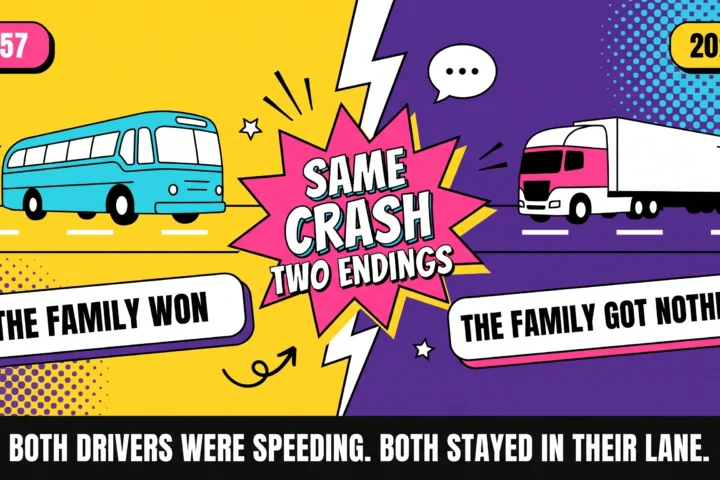
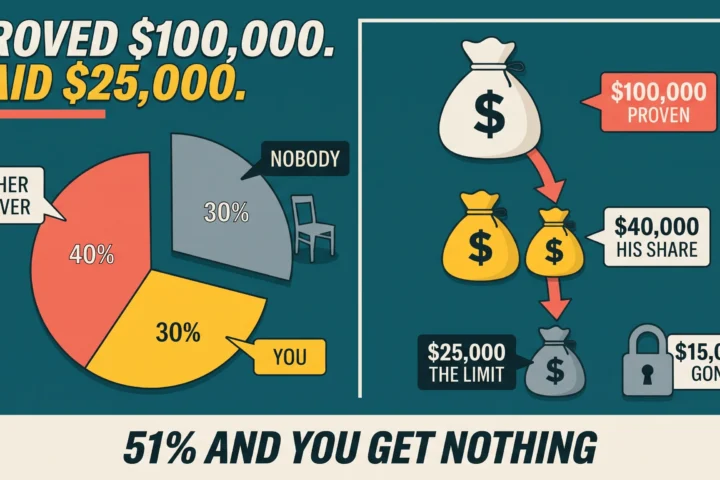
- If the insurer can pin more than half the blame on you, you get nothing, not a reduced amount, nothing.
- Your own no-fault coverage only pays if you saw a real doctor inside 14 days and it only pays the full $10,000 if that doctor wrote a specific thing in your chart. Otherwise it stops at $2,500.
That’s the whole article really and if you’re reading this from a hospital bed the bullets are what matter. The rest is how each one works and where people are getting caught.
For scale, Leon County alone had a little over six thousand crashes in 2023 with 39 people killed, which is one county with I-10 and US-319 running through it, so there are a lot of people working off the old rules right now who don’t know it.
Why Florida’s Lawyers Filed 90,000 Cases In One Week
The bill was HB 837 and the governor signed it on a Friday, March 24, 2023 and it took effect the same day, which is unusual and was the point. The plaintiff side saw it coming and spent the week before filing everything they had, because a case filed before that Friday kept the old law and a crash after it got the new one. The South Florida Sun Sentinel pulled the e-filing portal numbers and found 90,593 circuit civil cases went in between March 17 and March 22 and in Pinellas County the clerk counted 2,085 auto negligence filings that week against 50 the week before. John Morgan told the Tampa Bay Times his firm alone had filed 23,000 in three days. I bring it up because that’s the clearest way I know to explain how big the change was. Lawyers who have done this for thirty years don’t pull all-nighters over a technical amendment and they did.
What the bill did, in plain terms, was shorten the deadline, put a hard cap on how much fault a claimant can carry, change what a jury gets shown about medical bills so the billed-but-never-paid figures can’t be waved around anymore and take away the one-way attorney fee that used to make an insurer think twice before lowballing. The first two are what decide whether you have a case at all, so those are the ones I’m going to spend time on and then the no-fault thing, which is older but people keep tripping over it.
The Two-Year Deadline and the Crashes That Still Get Four
The limitations statute is section 95.11 and before the bill a negligence claim had four years. Now it’s two and it applies to causes of action that accrued on or after March 24, 2023, so if your crash was March 20 of that year you’re still on the old four-year clock and if it was March 25 you got two and that one already closed in March 2025. Somebody hurt in the spring of 2024 who’s been “thinking about it” has less time than they probably assume and a year of treatment plus a year of an adjuster saying they’re still reviewing it eats two years faster than it ever ate four.
One thing that confuses people looking this up: the statute got renumbered in 2024, so the negligence deadline now lives at 95.11(5)(a) instead of the old (4)(a) and a lot of firm websites still print the four-year figure or the old subsection or both. Wrongful death was already on two years so that didn’t move and medical malpractice has it’s own separate timing that the bill left alone.
When the deadline passes the case doesn’t get weaker, it ends. The defense files a motion, the judge looks at the date and how badly you were hurt never comes into it. That was always the rule, but at four years it was hard to miss and at two it isn’t.
More Than Half at Fault Means Zero, Not a Smaller Check
Section 768.81(6) is one sentence:
In a negligence action to which this section applies, any party found to be greater than 50 percent at fault for his or her own harm may not recover any damages.
Medical negligence is carved out. Car crashes, falls in stores, bad security at an apartment complex, all of that runs through it.
Under the old system fault was a dial, so a jury putting you at 30 percent meant you collected 70 percent of your damages and at 60 percent you still got 40 and insurers hated it because there was no argument that killed a claim outright, only arguments that shrank one. Now there is one and the recorded statement a couple of days after the crash has changed from a search for reasons to pay less into a search for reasons to pay nothing. Whether you were looking at your phone, whether you’d had a drink at dinner, whether you were a bit over the limit or braked late, none of those on it’s own gets you to 51, but stacked up in a statement given on pain medication from a hospital bed they can and that is what the adjuster is now listening for.
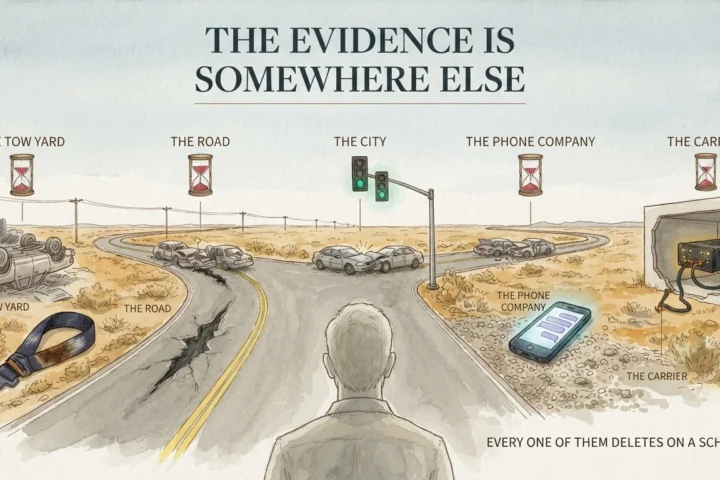
It’s also why the “I’ll handle the insurance company myself for now” plan costs more than it used to, because fault gets argued from the evidence that exists in the first few weeks and not from the evidence that would’ve existed if someone had asked for the traffic camera footage before it got overwritten.
The 14-Day Rule And The $2,500 Trap Inside Your Own Policy
This part is older than HB 837 and it’s the one almost nobody has heard of until it’s already cost them money.
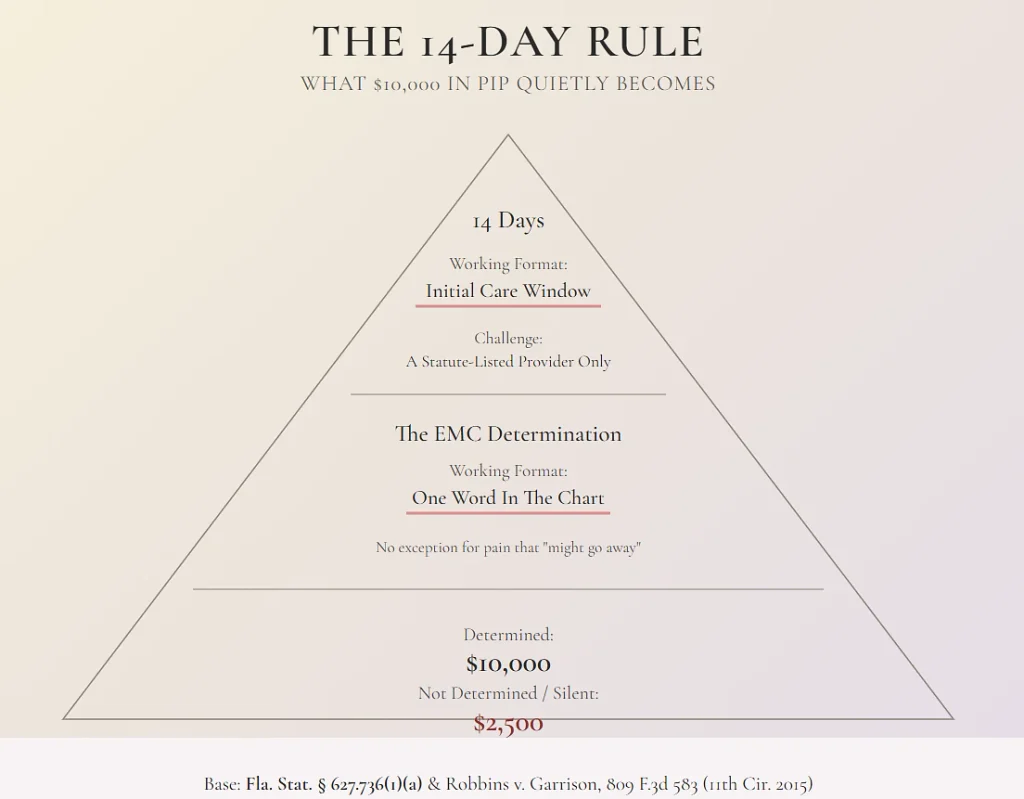
Florida is no-fault, so every registered car carries $10,000 of personal injury protection that’s meant to pay 80 percent of medical bills and 60 percent of lost wages quickly, whoever caused the crash. Section 627.736(1)(a) is where that lives and it has two conditions written into it that the insurers know and the drivers mostly don’t.
The first is that you have to receive initial care within 14 days of the crash from a provider the statute lists, meaning a physician, an osteopath, a dentist, a chiropractor, a physician assistant, an advanced practice nurse, a hospital or a facility one of those runs. An emergency room visit is fine. Seeing a massage therapist isn’t and neither is calling your insurer to say you’re sore and there’s no exception in there for people who waited three weeks because they thought the neck pain would go away.
The second is the emergency medical condition tier and this is the one worth reading twice. The $10,000 is only available if one of those listed providers determines you had an emergency medical condition. If a provider determines you didn’t, the cap is $2,500. And what about the situation most people are actually in, where nobody wrote anything either way because nobody told the urgent care doctor the phrase mattered?
That question went to court. Two women, Glenaan Robbins and Sendy Enivert, were hurt in separate crashes in 2013, got treated and then had Garrison and Progressive respectively stop paying at $2,500 because no doctor had made the determination. They both sued and the Eleventh Circuit heard the appeals together and in Robbins v. Garrison Property & Casualty Insurance Co., 809 F.3d 583 (11th Cir. 2015), it sided with the insurers: no determination means $2,500, full stop. Florida’s own appellate courts said the same thing a year later in Medical Center of Palm Beaches v. USAA Casualty Insurance Co., 202 So. 3d 88 (Fla. 4th DCA 2016), so it’s settled on both sides of the courthouse.
So silence in the chart is a $7,500 decision made in the insurer’s favor, out of coverage you already paid premiums for and the only person who can break that silence is a doctor you’ll be seeing in the first two weeks, which is why the first question an experienced Florida injury lawyer tends to ask isn’t about the other driver, it’s when you first got seen and what got written down.
If you want the plainest explanation of what the 14-day rule takes away from drivers, the one I’d point you to was written the year it came in, by Fasig | Brooks, who called it a travesty of justice on their blog and laid out the $10,000-to-zero problem before most people had heard the phrase. It reads a bit angrier than a law firm post usually does and a decade on it turned out to be right.
What The First Two Weeks Now Have To Look Like
Put the three rules next to each other and the calendar after a crash gets short in a way it never was.
- See a listed provider inside 14 days and if it’s warranted ask or have someone ask, whether the record reflects an emergency medical condition determination, because that one line is the $2,500 versus $10,000 question.
- Don’t give the recorded statement until the police report, the scene photos and your medical records are in hand, because anything said before that is a guess and guesses get quoted back at 51 percent.
- Get preservation letters out in the first month for camera footage, event data recorder downloads and witness contact, since fault is now decided on what survives.
- File inside two years of the crash date or none of the above matters.
Some of the crashes in that Leon County count will still get sorted out under the old law because they happened early enough in 2023 or got filed in that March rush. Everyone hurt since has been living under the two-year clock and the 50 percent line whether they knew it or not and the insurers have known since the day it was signed.
References
- Florida Traffic Crash Facts Annual Report 2023, Florida Department of Highway Safety and Motor Vehicles.
- Leon County car crashes above average, The Famuan, October 16, 2024.
- CS/CS/HB 837 Civil Remedies, Final Bill Analysis, Florida House of Representatives, May 12, 2023.
- Florida Enacts Major Tort Reform and Bad-Faith Insurance Claim Legislation, Holland & Knight, March 2023.
- HB 837 Brings Sweeping Tort Reform to Florida, Zinober Diana & Monteverde, citing Florida Courts E-Filing Portal data reported by the South Florida Sun Sentinel.
- Robbins v. Garrison Property & Casualty Insurance Co., 809 F.3d 583 (11th Cir. 2015).
- Medical Center of Palm Beaches v. USAA Casualty Insurance Co., 202 So. 3d 88 (Fla. 4th DCA 2016).