 Marc Mackenzie ( Probate Lawyer )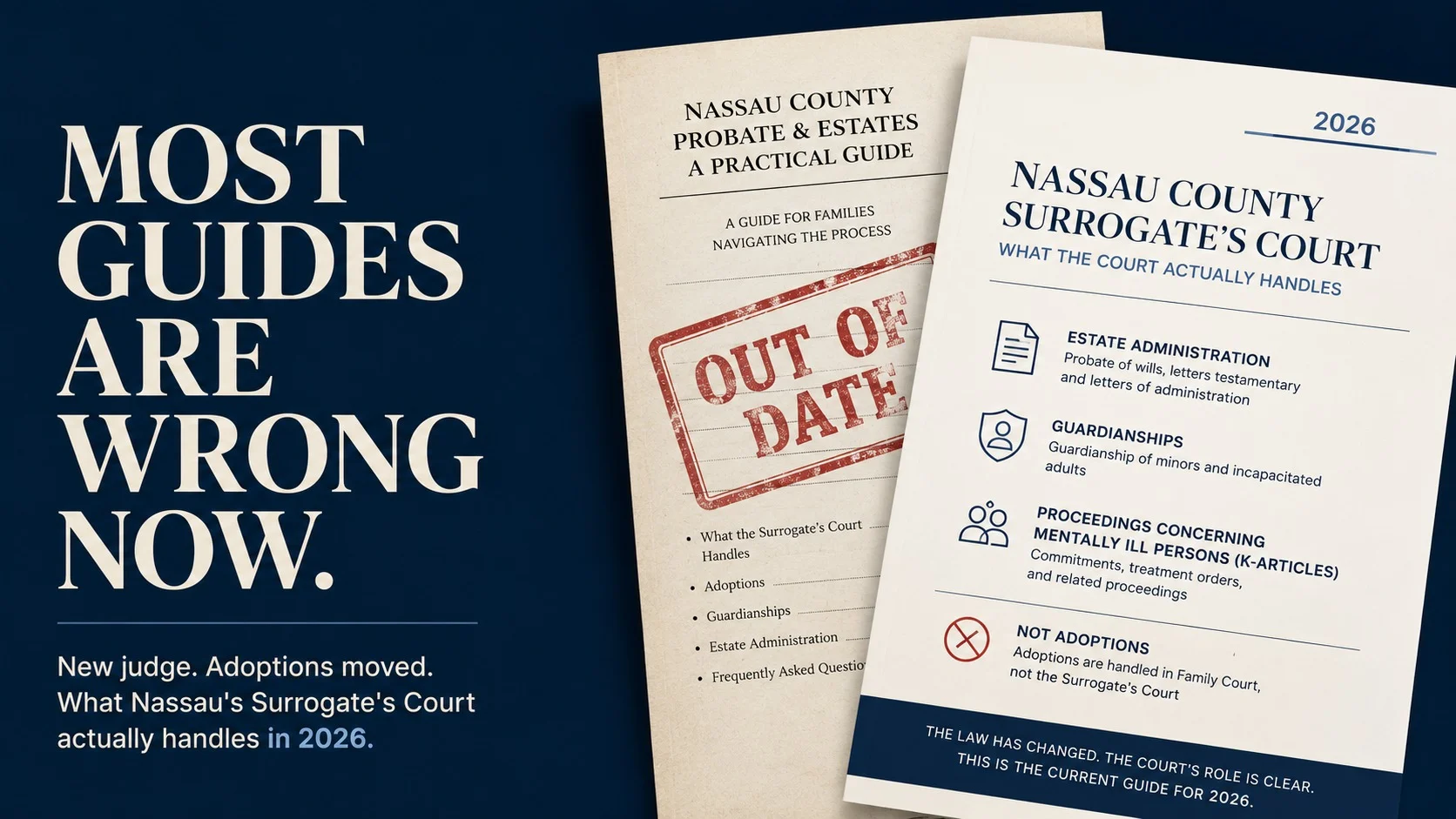
The Nassau County Surrogate’s Court is the court that decides what happens to a person’s estate after they die. It sits at 262 Old Country Road in Mineola, inside the county court complex and it handles wills, intestate estates, guardianships of minors, trust disputes and the accountings that fiduciaries have to file. If someone died a Nassau County resident, this is where the will gets probated and where letters get issued.
Two things about the court are different now than they were even a year ago and most of the guides you’ll find online haven’t caught up.
There’s A New Surrogate As Of January 2026
The sitting judge is Hon. David P. Sullivan, who took over probate matters in the Surrogate’s Court of Nassau County for a term running from 2026 to 2033. He came over from the Supreme Court bench, where he’d served for close to three decades.
He replaced Margaret C. Reilly, who ran the court from 2016 through the end of 2025. Reilly was elected to a ten-year term in 2015, but the county GOP did not renominate her for a new term, even though she hadn’t hit the mandatory retirement age of 70. Sullivan was cross-endorsed by both parties in the November election, which is why his name didn’t show up in a contested race the way most Surrogate elections do.
Why this matters practically: the court’s individual part rules, calendar practices and how motions get handled all flow from whoever holds the seat. Any brief, form or law-firm page still telling you Reilly is the Surrogate is out of date. Check the court’s directory before you assume anything about part rules.
Adoptions Moved Out Of This Court In October 2025
If you’re here about an adoption, you’re in the wrong place now. As of October 2025, all adoptions are processed in the Nassau County Family Court, not the Surrogate’s Court.
The Surrogate’s Court still keeps custody of the old sealed adoption records. You can still go to it for things like unsealing an adoption record, certificates of adoption or an order to vacate an adoption. But a new adoption petition goes to Family Court. This is the single most common piece of stale advice floating around about this court, because for decades the Surrogate did handle adoptions and every older guide still says so.
What The Court Actually Handles
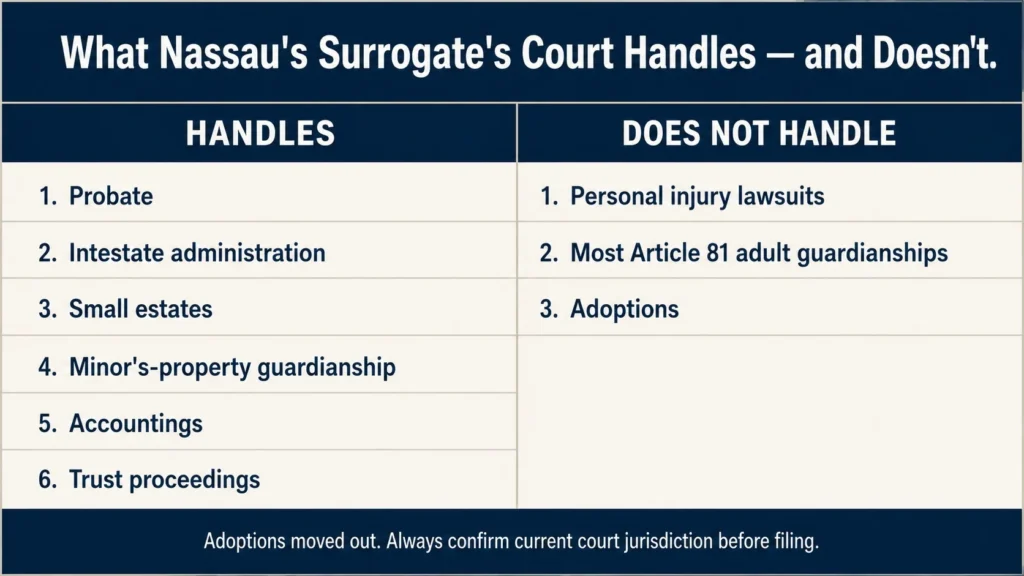
Everything tied to a decedent, a fiduciary or a minor’s property. The main buckets:
- Probate of wills, where the will is proven valid and an executor gets appointed.
- Administration of estates where there’s no will, handled under intestacy rules.
- Small estate (voluntary administration) for modest estates, covered below.
- Guardianship of a minor’s property, when a child inherits or receives a settlement.
- Accountings, both the voluntary kind a fiduciary files to close out and get discharged and the compulsory kind a beneficiary files to force a fiduciary to show the books.
- Trust proceedings, discovery (turnover of estate property), kinship hearings and wrongful death compromises.
What it does not handle: personal injury lawsuits brought by an estate, most Article 81 guardianships of incapacitated adults where personal-needs decisions are involved (those usually start in Supreme Court) and now adoptions. Those go elsewhere.
Probate: How Long And How Much
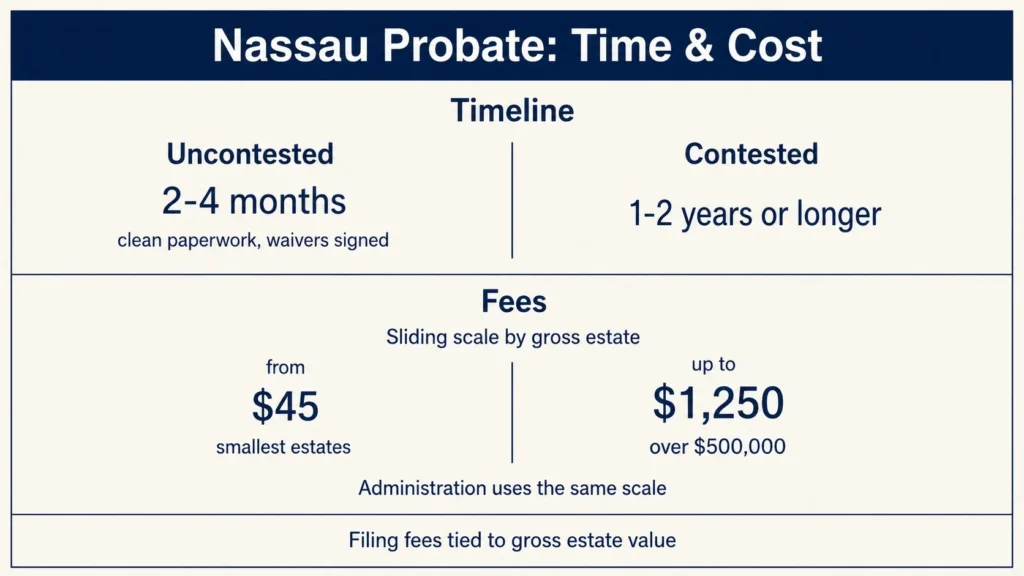
An uncontested probate in Nassau usually runs two to four months from filing to letters, assuming the paperwork is clean and everyone entitled to notice signs a waiver instead of forcing a citation to issue.
You file the probate petition with the original will, a certified death certificate, an affidavit from the attesting witnesses and a family tree showing who the distributees are. If the will is self-proving and every distributee waives, the Surrogate can admit it on the papers with no hearing. Since the pandemic the court has let attesting witnesses testify remotely over Microsoft Teams when there’s no self-proving affidavit, which saves the weeks you’d otherwise lose chasing down a witness in person.
Contested probate is a different animal. If a distributee objects, a citation issues and you’re into SCPA 1404 pre-objection examinations, discovery and possibly a jury trial, since probate carries a right to a jury. A contested case can run one to two years or longer.
Probate filing fees run on a sliding scale tied to the gross estate value, from $45 for the smallest estates up to $1,250 for estates over $500,000. Administration petitions use the same scale.
The Small Estate Shortcut Is Genuinely Cheap
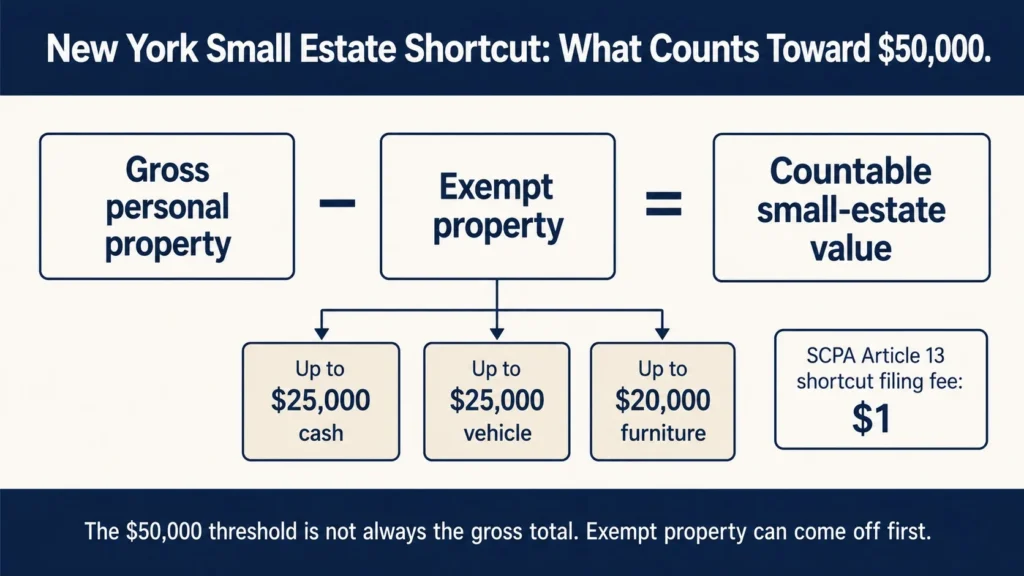
If the decedent’s personal property comes to $50,000 or less, you can skip formal administration entirely and file for voluntary administration under SCPA Article 13. The filing fee is one dollar and the process moves far faster than standard probate.
The threshold has a real trick to it that trips people up. The $50,000 count excludes property that automatically vests in a surviving spouse or children under 21 under EPTL 5-3.1, which can include up to $25,000 in cash, a motor vehicle worth up to $25,000 and household furniture up to $20,000. So an estate that looks like it’s over the line on paper often qualifies once you back out the exempt property. Run that calculation before you assume you need full probate.
One hard limit: voluntary administration only reaches personal property. If the decedent owned real estate in their own name alone, this route is closed and you need a full administration or probate, regardless of value.
Guardianship Of A Minor’s Property
When a minor inherits or is awarded more than $10,000, someone has to be appointed guardian of that property before it can be managed. A parent or relative files the petition, usually with a bond unless the court dispenses with it and the guardian then files an annual accounting every year until the child turns 18. The guardianship filing fee is $50.
Nassau enforces the annual accounting deadlines strictly. Miss them and you’re looking at removal and, in a bad case, contempt. If you take on a minor’s-property guardianship here, calendar the accounting date the day you’re appointed.
E-filing Is Mandatory And Rejections Are Common
Attorneys must file through NYSCEF, the state’s electronic filing system, for probate, administration, accountings and most miscellaneous proceedings. Paper filing by an attorney is only allowed with a hardship exemption. Self-represented filers can use NYSCEF voluntarily or file on paper.
The most frequent reason a petition bounces back is a weak jurisdictional showing, meaning the petition didn’t properly identify every distributee or account for possible unknown heirs. The court’s clerks scrutinize the family tree hard. A rejection notice costs you a cure cycle and easily adds weeks. The accounting department does it’s own pre-review and a filing with schedule errors gets flagged “no-cal,” which means it never even reaches the calendar until you fix it.
Estate Tax Is A Separate Deadline
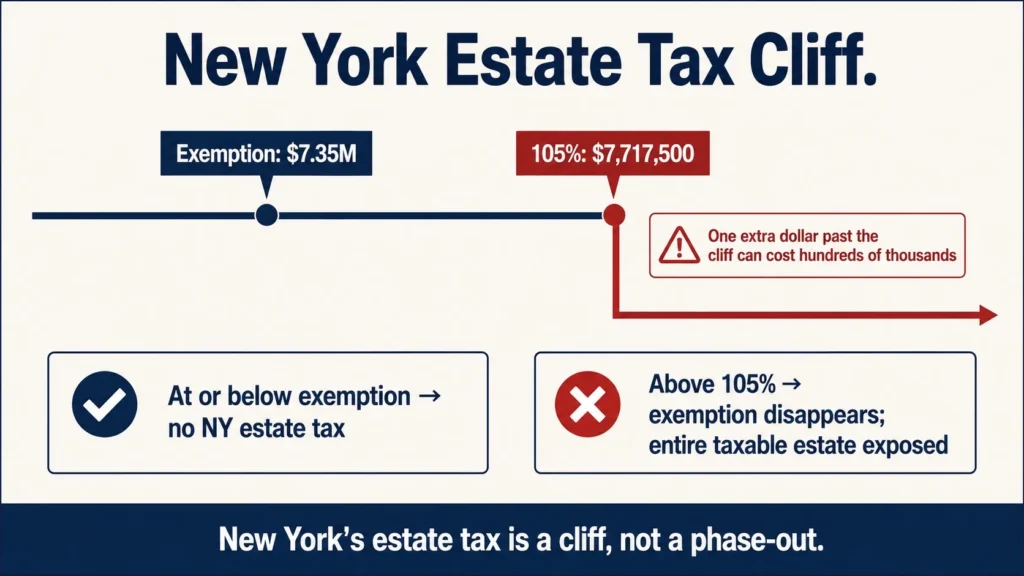
The court isn’t the taxing authority, but you can’t ignore New York estate tax while you’re settling the estate. For 2026 the state exemption is $7,350,000 and New York’s version has a cliff most states don’t: if the taxable estate goes past 105% of the exemption, which is $7,717,500 in 2026, the entire exemption disappears and the whole estate is taxed from the first dollar. Rates run from 3.06% up to 16% and the ET-706 return is due within nine months of death. The court may want a tax waiver before assets are released, so this runs in parallel with the estate itself, not after.
Practical Notes Before You File
- Confirm the current Surrogate and part rules on the court’s own site, not a law-firm page, since the bench just changed.
- If it’s an adoption, go to Family Court, not here.
- Get a bond quote early if the estate needs one, because the fiduciary can’t be appointed without it unless every distributee waives bond in writing.
- Line up your distributee list carefully. Sloppy heirship allegations are the number-one cause of rejection.
- Self-represented filers can use the court’s Pro Se help center and the statewide DIY forms for simple probate and small-estate filings, but the clerk can’t give legal advice or predict how a case will go.
The court is efficient when the paperwork is right and slow when it isn’t. Most of the delay people blame on the court is actually a curable filing defect that bounced back on the first pass.