 Marc Mackenzie ( Probate Lawyer )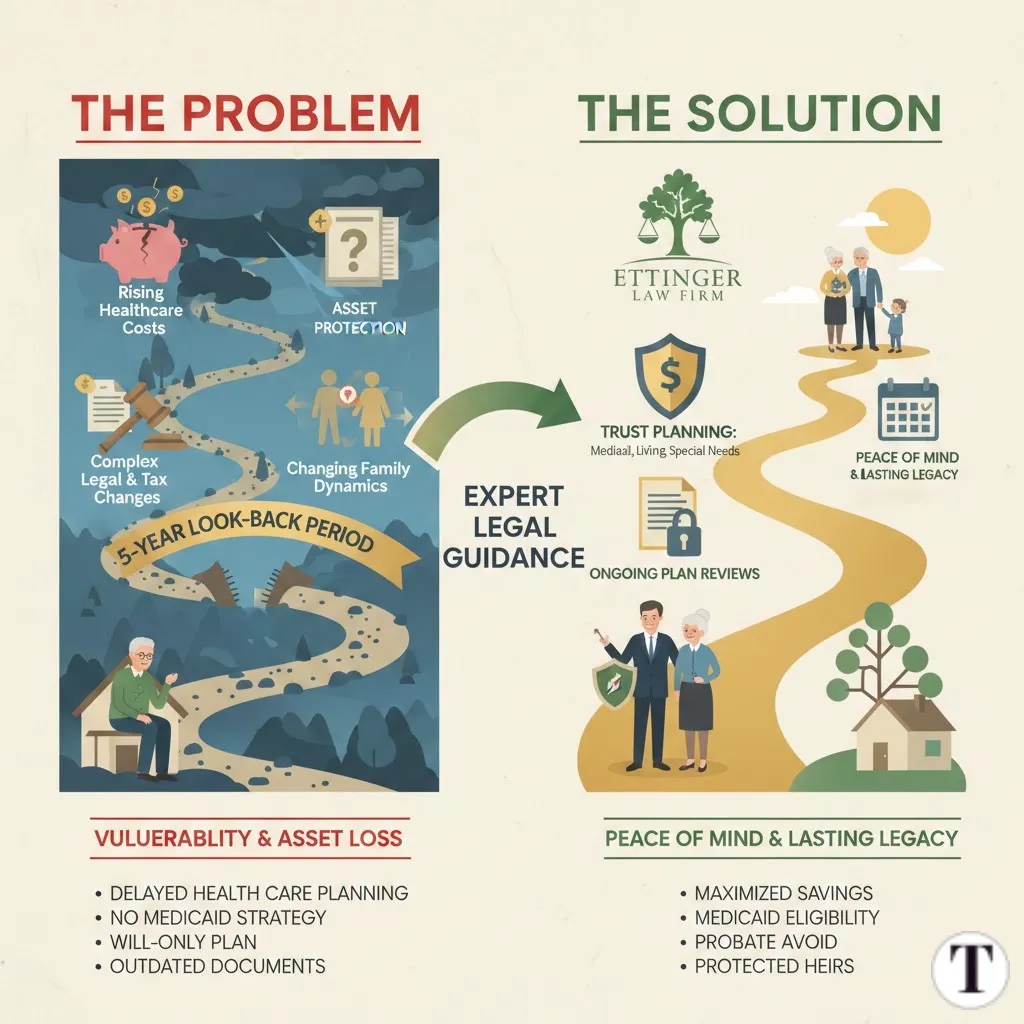
| The Problem (The Oversight) | The Consequence (The Risk) | The Solution (The Strategy) |
| Delaying Long-Term Care Planning | High costs ($9k–$10k+/month) and being forced into lower-quality care options. | Early Financial Projecting: Working with experts to estimate future costs and protect assets before a crisis hits. |
| Violating Medicaid Look-Back Rules | A 5-year “look-back” period can result in penalties and benefit holds if assets were gifted or sold cheaply. | Medicaid Asset Protection Trust: Setting up a trust that allows you to “age in place” while shielding savings from estate recovery. |
| Relying Solely on a Will | Public probate court, long delays, high fees, and zero protection against creditors or divorce. | Trust Planning: Using Revocable or Irrevocable Trusts to bypass probate, keep finances private, and manage affairs during incapacity. |
| Poor Asset Titling & Tax Planning | Exposure to lawsuits, creditor claims, and unnecessary tax burdens for heirs. | Proactive Asset Protection: Modern titling of accounts and utilizing lifetime trusts for heirs to minimize tax and legal exposure. |
| Outdated Estate Documents | Generic or old plans may benefit “unintended beneficiaries” (like ex-spouses) or cause family feuds. | Ongoing Plan Reviews: Regularly updating documents to reflect current family dynamics, wealth levels, and changing tax laws. |
Comprehensive estate planning becomes paramount as you turn 65, especially as health care costs rise, tax systems undergo changes and your family dynamics change. Stricter Medicaid eligibility requirements and a greater susceptibility to asset loss can compromise your financial safety net and your ability to leave a lasting legacy.
Older adults often fall victim to significant planning oversights. Fortunately, legal experts in elder law pay close attention to the essential elements, helping to protect your dignity and wealth in the later stages of your life.
- Delaying or Overlooking Long-Term Health Care Planning
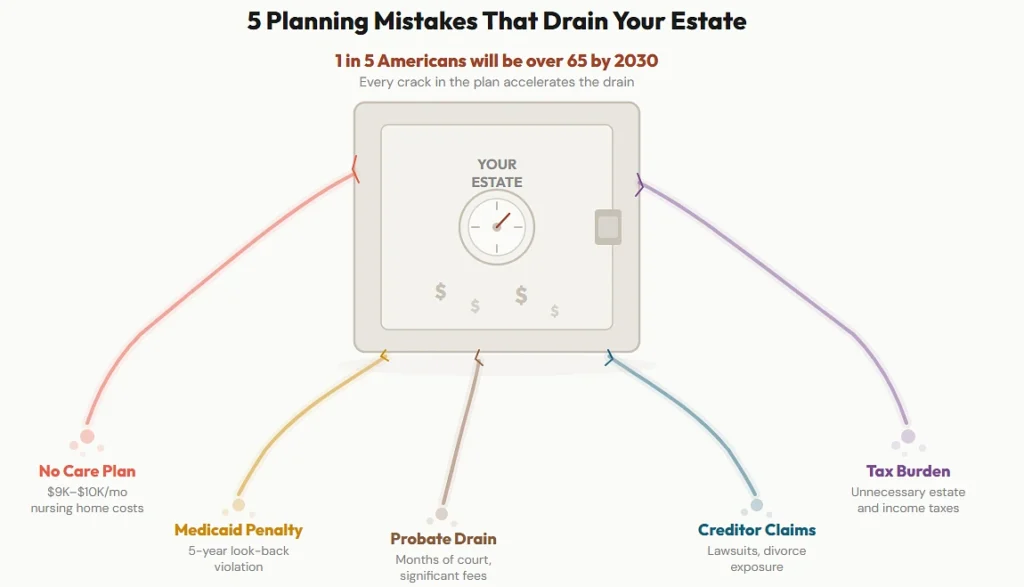
Delaying or overlooking long-term health care planning leaves you financially vulnerable as you get older. Monthly nursing home facility costs are already averaging $9,277 for a semi-private room and $10,646 for a private room, but these fees vary by location.
Waiting too long can also impact your Medicaid eligibility and restrict your care opportunities, particularly as federal programs enforce strict look-back periods. When applying for Medicaid long-term care, the government reviews your finances for the past five years to ensure you did not give away or sell assets for less than they are worth. Otherwise, you could be subject to a penalty period for benefits.
The professionals at New York’s Ettinger Law Firm can assist you with projecting costs, protecting your assets and making the most informed long-term health care decisions for you and your family.
- Failing to Incorporate Medicaid Planning
Putting Medicaid planning on the back burner can result in considerable financial hardship, especially as the U.S. population continues to age rapidly. According to studies, one in five Americans will be over 65 years old by 2030, placing an increased burden on the health care system.
Improper asset transfers or violating the five-year look-back rule could impede your savings and result in benefit holds. Legal guidance can help you develop effective spend-down strategies and time everything perfectly to avoid disqualification.
Your best advantage to working with a legal professional is their ability to direct you through intricate Medicaid rules. Ettinger Law Firm’s team can set up a Medicaid Asset Protection Trust that enables you to age in place and leave a substantial amount of savings for your heirs. These trusts are also exempt from estate recovery and offer significant tax advantages.
- Not Utilizing Trust Planning for Asset Protection
Wills are usually the most common estate planning tool people use because they are familiar and address basic asset distribution needs. Although a will is better than nothing, a will-only plan can leave your estate vulnerable to the following:
- Open court proceedings for inheritance, often taking months to resolve, with significant fees
- No lifespan protection
- Poor management by financially irresponsible parties
- Creditor and divorce exposure
- Unintended beneficiaries who bypass the will
- Outdated designations, such as 401(k)s, IRAs and life insurance
- Legal and family disputes
Trust planning circumvents many of these challenges to seamlessly manage your affairs, especially in cases of incapacity, protecting loved ones in blended families and keeping your finances private.
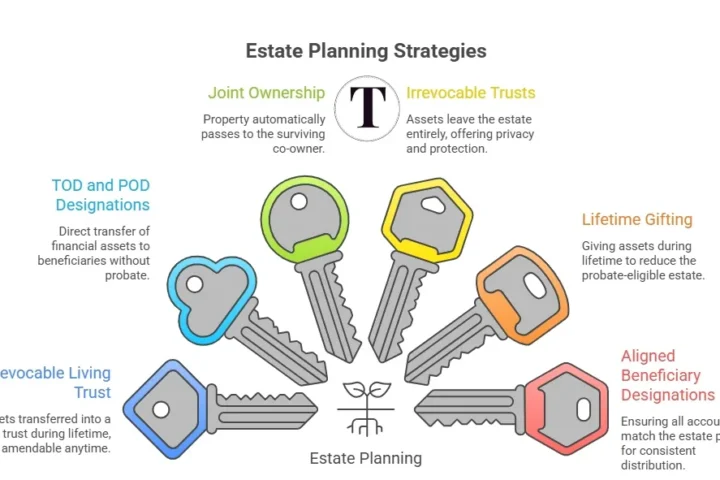
Irrevocable trusts, revocable living trusts and special needs trusts are other solutions you might also consider, enabling you to set precise conditions for asset management and beneficiary support. Depending on which one you choose, you can shield your assets from creditors, long-term care costs and unnecessary taxes, helping you maintain control and security.
- Overlooking Asset Protection Strategies
Overlooking asset protection strategies in asset planning can leave you vulnerable to lawsuits, creditor claims, high costs for nursing home care and other unexpected risks. You must be proactive to prevent exposure and depletion of your hard-earned money.
Modern asset protection usually includes asset titling, irrevocable trusts and other specialized safeguards. Legal experts can tailor wealth preservation strategies based on your unique financial situation.
For example, the Ettinger Law Firm offers a comprehensive suite of asset planning services, personalized to provide maximum protection. Professionals can review and adjust how your assets are titled to ensure the account ownership aligns with your individual estate and protection goals.
They can also help minimize future tax burdens and care expenses, guide you on ways to gift your assets to children and other beneficiaries, and create lifetime trusts for your heirs.
- Inadequate Estate Distribution Planning
Having generic or outdated documents that no longer reflect your family dynamics, current wealth or evolving tax structures will result in inadequate estate distribution. Overlooking this may cause unintended beneficiaries to receive your assets or hold up distribution in probate court. It might also burden your loved ones with unnecessary taxes.
A lack of clarity could further cause an argument among your heirs over your true intentions. Review the current state of your affairs and update your estate distribution plan as your situation changes, so it aligns with your wishes. This approach ensures a streamlined transfer of assets with minimal hurdles for beneficiaries to overcome.
How Ettinger Law Firm Helps Older Adults Avoid These Mistakes
Ettinger Law Firm’s experienced team of legal experts is dedicated to helping older adults navigate the complexities of estate planning. Its comprehensive client-centric approach provides knowledgeable assistance in long-term health care planning, Medicaid eligibility, various trusts, asset planning and the intricacies of estate distribution.
The legal professionals at this practice remain up to date with evolving regulations and laws to ensure each plan is effective and current. They will tailor strategies and services to your unique financial, family and health needs, issue ongoing plan reviews, and proactively address any problems that arise to avoid mistakes.
Clients benefit from excellent communication, with clear explanations and guidance that protect their legacies and their loved ones’ well-being. Notably, the firm’s no-cost consultation empowers you to learn about your options, ask questions and make fully informed decisions. With this supportive and thorough process, you can avoid potential missteps and gain reassurance for the future.