 Nicholas J. Rego Accident Lawyer
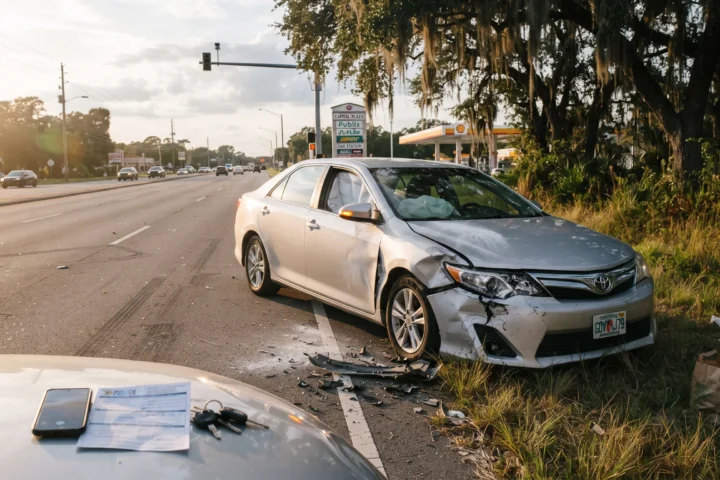
You’re expecting $100,000 for your injuries after someone T-boned you at an intersection. But wait – the insurance company says you were going 10 mph over the speed limit. That’s 20% your fault. Your $100,000 just became $80,000. Every percentage point of blame assigned to you directly cuts your payout. Got rear-ended but your brake lights were out? That might be 15% on you, costing you $15,000 on a $100,000 claim. The other driver ran a red light but you were texting? You could lose 30-40% of your settlement right there.
This isn’t some abstract legal theory – it’s exactly how insurance companies calculate what they’ll pay you after a crash. And they’re really good at finding ways to pin part of the blame on you.
Understanding Comparative Negligence
Insurance adjusters love comparative negligence because it saves them money. Plain and simple. Every state except Alabama, Maryland, North Carolina, Virginia, and D.C. uses some version of this system where fault gets split between drivers (FindLaw, “What Is Comparative Negligence?” August 2023).
The basic idea sounds fair enough: if two people cause an accident, they each pay for their share of the mess. But the reality gets complicated fast. Recent data shows the average car accident settlement ranges from $20,000 to $37,000, but these numbers tank quickly when comparative negligence kicks in (Brown & Crouppen analysis of 4,500+ cases, January 2025).
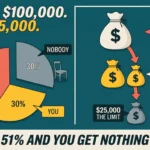
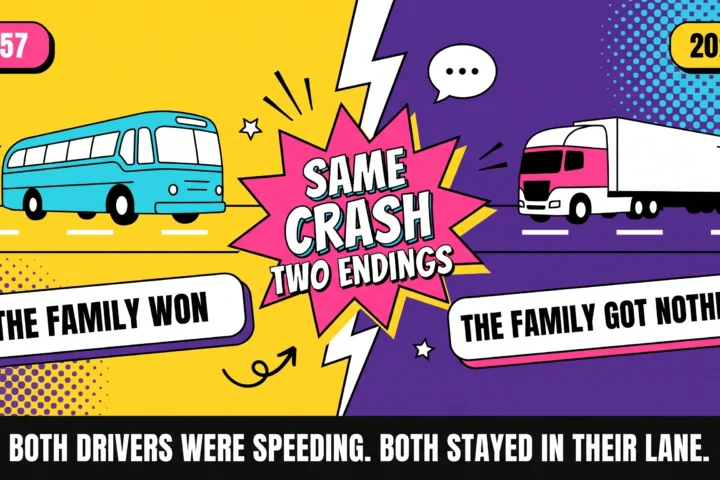
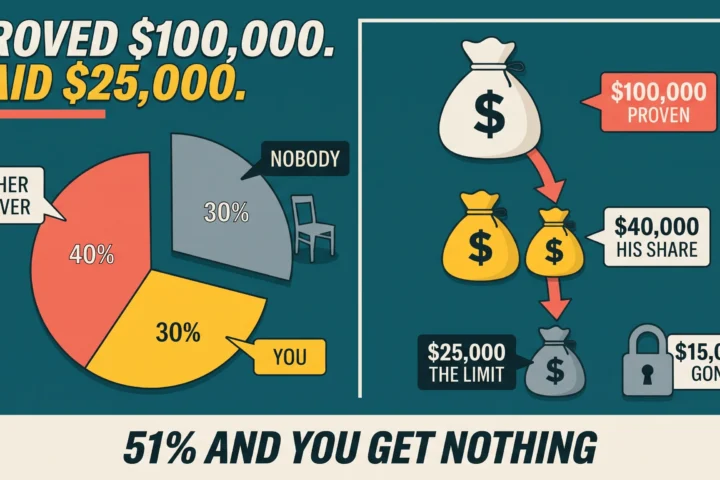
There are two main flavors of this legal principle. Pure comparative negligence states let you collect something even if you’re 99% at fault – though good luck getting much at that point. Thirteen states including California, Florida, and New York follow this rule. The rest use modified comparative negligence with either a 50% or 51% cutoff. Once you hit that magic number of fault, you get nothing. Zero. Texas, Colorado, and 31 other states draw the line at 51%, while states like Arkansas and Tennessee cut you off at 50%.
Factors That Shift Fault Percentages
Insurance companies have turned fault-finding into a science. They’ll dig through every detail to push more blame your way. Here’s what they’re looking for:
- Speed matters more than you think. Speeding was involved in 29% of all traffic deaths in 2023, killing 11,775 people (NHTSA, 2023). If you were going even 5 mph over the limit when someone else caused the crash, expect to lose 10-20% of your settlement. The physics are simple: higher speeds mean longer stopping distances and harder impacts.
- Your phone is their best friend. The numbers are staggering – 3,275 people died in distracted driving crashes in 2023 (NHTSA Distracted Driving Report, 2024). Insurance companies know that 14% of fatal crashes involve cell phone use. They’ll subpoena your phone records faster than you can say “hands-free.” One study found drivers who text are 23 times more likely to crash. If they prove you were on your phone, even at a red light, you’re looking at 25-50% fault minimum.
- Following distance is huge. Rear-end crashes make up about 29% of all injury accidents, and tailgating causes roughly one-third of all crashes nationwide according to drive safety organizations. The Texas Department of Insurance found 51% of drivers admit to tailgating on purpose. Even if someone slams on their brakes for no reason, if you were following less than three seconds behind, you’ll eat 20-40% of the fault.
- Weather changes everything. Bad conditions multiply your responsibility. Driving the speed limit in heavy rain? That could be “too fast for conditions” and cost you 15-30% fault. The same crash on a sunny day versus during a snowstorm can swing fault percentages by 40 points or more.
Common Scenarios and Their Typical Fault Splits
Real crashes rarely have one person 100% at fault. Insurance companies know this and use it against you. Here are the most common scenarios and how fault typically shakes out:
Left Turn Accidents
The turning driver usually takes 70-90% fault, but not always. If you were speeding through a yellow light when they turned, your fault jumps to 30-40%. Recent cases in Colorado showed drivers making left turns averaged 80% fault, with the straight-traveling driver picking up the remaining 20% for excessive speed or distraction.
Rear-End Collisions
Everyone thinks the rear driver is automatically at fault. Wrong. About 20% of rear-end cases involve shared fault. Brake lights out? That’s 10-15% on you. Changed lanes and got hit from behind? Could be 25-50% your fault. Cut someone off in traffic? You might take majority blame even though you got rear-ended. National data shows rear-end crashes result in approximately 2,000 deaths and 950,000 injuries annually.
Intersection T-Bones
Red light runners usually get tagged with 80-100% fault, but victims aren’t always blameless. Entering an intersection without checking for traffic, even on green, can cost you 10-20%. Phone in your hand? Add another 20-30%. No seatbelt? Some states dock you 5-10% just for that, arguing your injuries were worse because you weren’t properly restrained.
Highway Merging Crashes
These are fault-finding nightmares. The merging driver typically bears 60-70% responsibility, but aggressive driving by the highway driver shifts things fast. Speeding up to block someone from merging? That’s 40-50% on you. Both drivers usually share blame in these crashes, with percentages swinging wildly based on witness statements and dash cam footage.
Parking Lot Accidents
Insurance companies treat these as automatic 50-50 splits unless proven otherwise. Why? Both drivers have equal duty to watch for hazards in parking lots. Even if someone backs into you while you’re stopped, if you saw them backing and didn’t honk, you might catch 20-30% fault for “failure to take evasive action.”
Statistical reality check: In states with modified comparative negligence (the 50% or 51% bar rule), about 15% of injury victims recover nothing because they’re found majority at fault. That’s thousands of people every year who thought they had solid cases but ended up with zero compensation because fault tipped just past the halfway mark.
Remember, these percentages aren’t just numbers – they’re dollars out of your settlement. On a $50,000 claim, every 10% of fault costs you $5,000. The difference between 45% and 55% fault? Everything. One side gets paid, the other gets nothing.
Some More Tips:
1. Assigning Percentages, Not Just Blame
Comparative negligence reformulates the strategy from identifying a sole “at-fault” party to assigning specific percentages of fault to everyone involved, depending on the evidence. For instance, a driver may be found to be 70% at fault for running through a red light and the other driver 30% at fault for being too fast to brake.
Insurance appraisers, mediators, or juries depend on various sources to assess fault percentages. This encompasses police records, eyewitness accounts, traffic camera images, car damage trends, and specialists’ evaluations. This approach acknowledges that crashes usually stem from a chain of events brought on by the actions of several individuals. Your assigned percentage immediately identifies how much of your total damages you can really recover.
2. Direct Reduction of Your Financial Recovery
Once fault percentages are established, your compensation is reduced proportionally. When a partial fault is assigned, your recoverable damages are reduced proportionally. For example, if your total damages, like medical bills, lost income, car repairs, and pain and suffering, add up to $100,000 and you’re 20% at fault, you’d receive $80,000. If you’re 60% at fault, you’d only recover $40,000.
This percentage reduction is valid regardless of the accident’s severity. For instance, though the average settlement for a minor car accident is a certain amount, assigning even 30% fault to you would immediately reduce the figure by 30%. The takeaway is that your designated percentage of fault directly reduces the compensation you obtain. A higher fault percentage assigned to you means a significantly smaller payout.
3. The Critical Importance of Evidence and Advocacy
Because comparative negligence is founded on allocating a percentage of fault, winning an appeal of an insurance company’s initial determination of fault is important. Insurers will seek to assign higher fault percentages to the claimant to limit their payment. Strong evidence and effective advocacy are vital to plead a reduced percentage of fault.
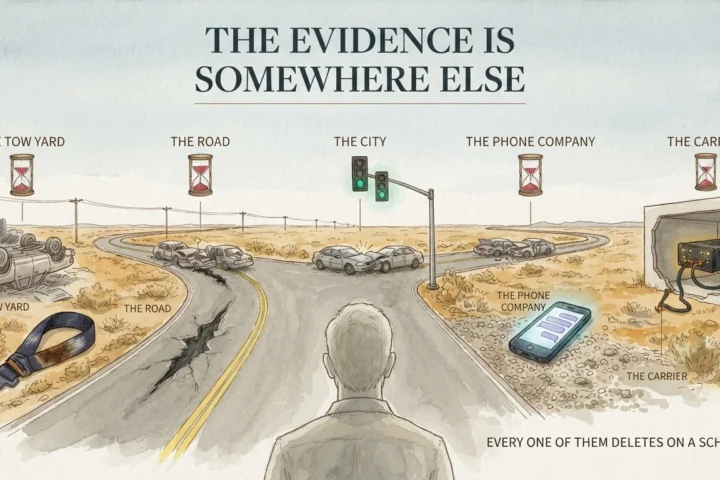
This includes compiling good evidence, including video, photography, witness testimony, and wherever necessary, reconstruction of the accident. Also, it demands a good knowledge of any relevant traffic laws and the definite proof that the driving behavior of others was the main reason for the accident.
Presenting a compelling case that minimizes your share of responsibility is essential for maximizing your final compensation. Failure to disprove fault allegations by an insurer could lead to an unfair fault determination. This can decrease your settlement money considerably, leaving you with unsubstantially compensated damages.
References
- AAA Foundation for Traffic Safety. (2023). Aggressive Driving and Road Rage Statistics
- National Highway Traffic Safety Administration. (2024). Traffic Safety Facts – 2023 Data: Speeding. Report DOT HS 813 473
- NHTSA. (2024). Distracted Driving in 2023. Traffic Safety Facts Research Note
- Insurance Information Institute. (2021). Facts + Statistics: Highway Safety
- FindLaw. (2023). What Is Comparative Negligence? State-by-State Analysis
- Brown & Crouppen. (2025). Average Car Accident Settlement Amount Study: Analysis of 4,500+ Cases
- Texas Department of Insurance. (2024). Tailgating and Rear-End Collision Statistics