 Mohammad Abdel-Rahman Accident & Injury Lawyer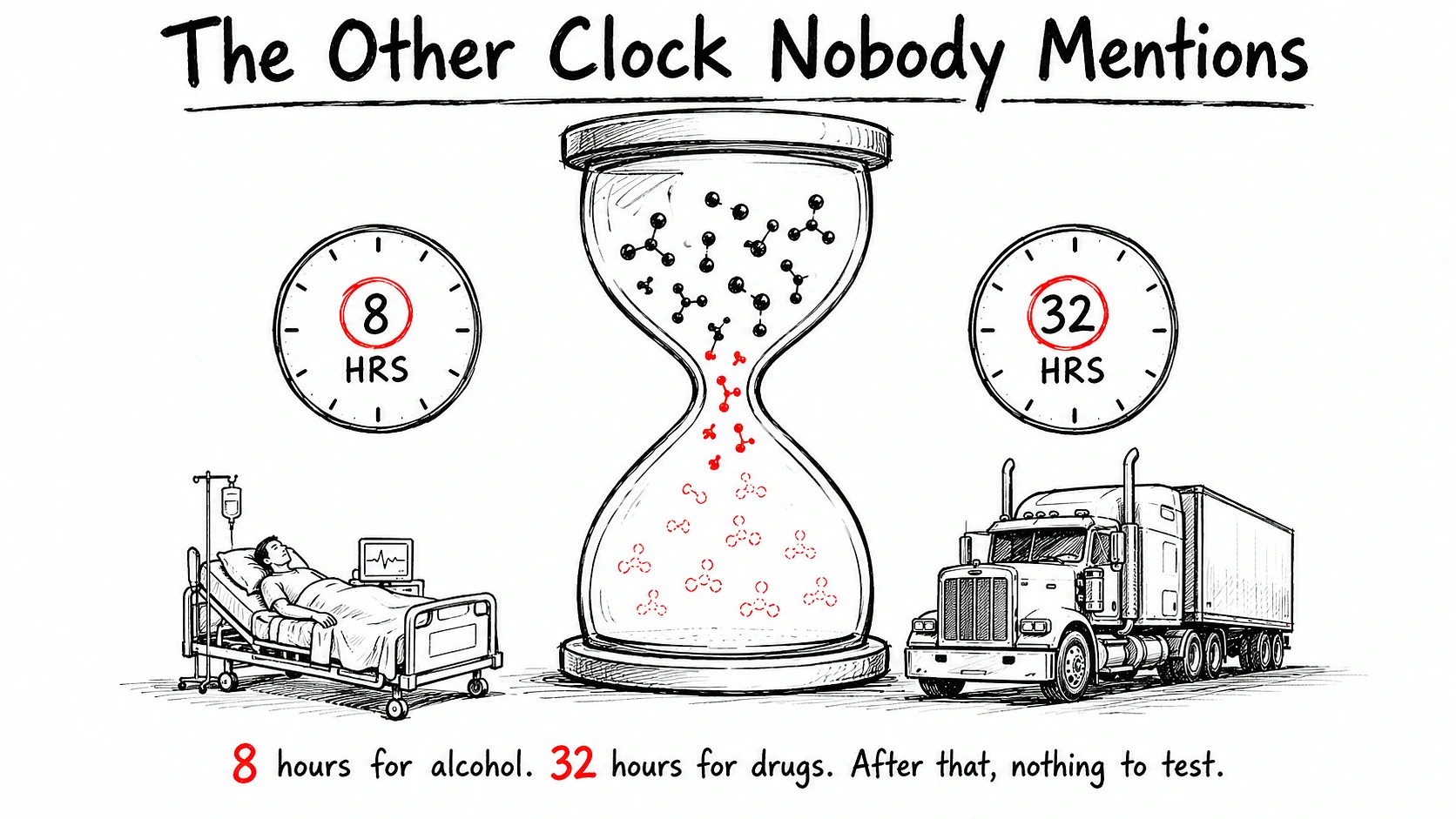
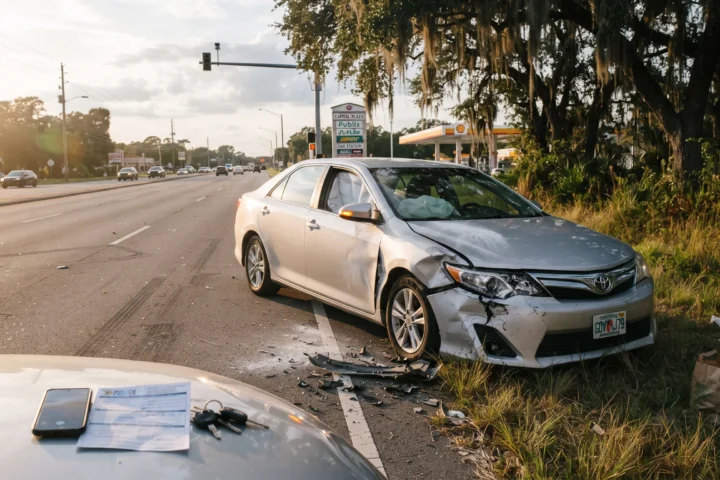
So a commercial truck hits you on I-4 or I-75 or one of the feeder roads around Tampa and you end up in the hospital and the first thing most people think about is the medical bills and the car and whether insurance is going to cover everything, which is reasonable because that is the immediate crisis sitting in front of you.
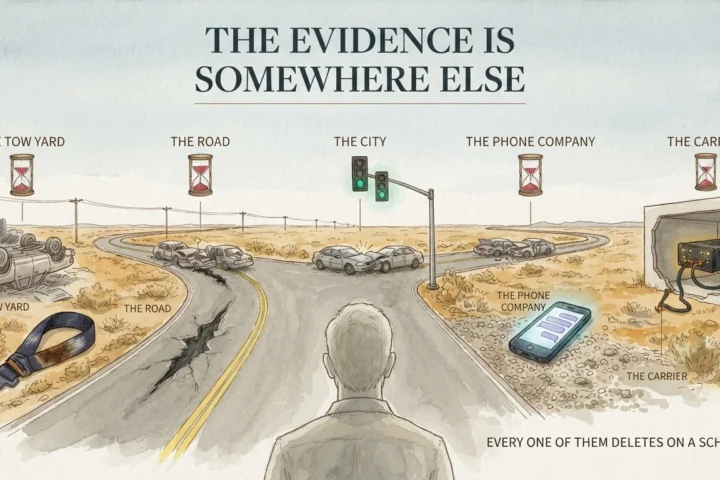
But there is a different clock running that none mentions to the family at the hospital and it has nothing to do with your treatment.
Key Value:
The trucking company has 8 hours to test the driver for alcohol and 32 hours to test for drugs. After that the evidence is gone. Not hidden, not sealed, not stored somewhere you can subpoena it later. Gone from the driver’s system, permanently, and no court order on earth can reconstruct what was in someone’s bloodstream 48 hours ago.
That timeline is federal law under 49 CFR § 382.303 and it applies to every commercial motor vehicle crash that involves a fatality, or where the driver gets cited and somebody needed medical transport from the scene, or where the driver gets cited and a vehicle had to be towed. Those are the three triggers. Miss the window and the trucking company is supposed to document why the test did not happen but that documentation, honestly, is cold comfort when you are trying to figure out whether the person who put you in the hospital was impaired.
The Trucking Company Orders the Test, Not the Police
This is the part that catches people off guard and I think it is worth sitting with for a second because the assumption most people carry is that law enforcement handles this the way they handle a DUI stop, they show up, they test the driver, they document the results, done.
That is not how it works with commercial vehicles.
Under 49 CFR § 382.303 the obligation to conduct post-accident drug and alcohol testing falls on the motor carrier, not on law enforcement. The employer. The trucking company. The people who have a direct financial interest in the outcome of whatever happened.
Florida Highway Patrol responds to the scene, writes the crash report, maybe issues citations, maybe arranges medical transport, and then they leave. They are not calling the carrier’s designated employer representative to make sure a urine specimen gets collected within 32 hours. They are not tracking whether the alcohol test happened within the 8-hour window. That is not their job under the federal framework and they know it and the carrier knows it and the driver definitely knows it.
What happens when the carrier does not test in time
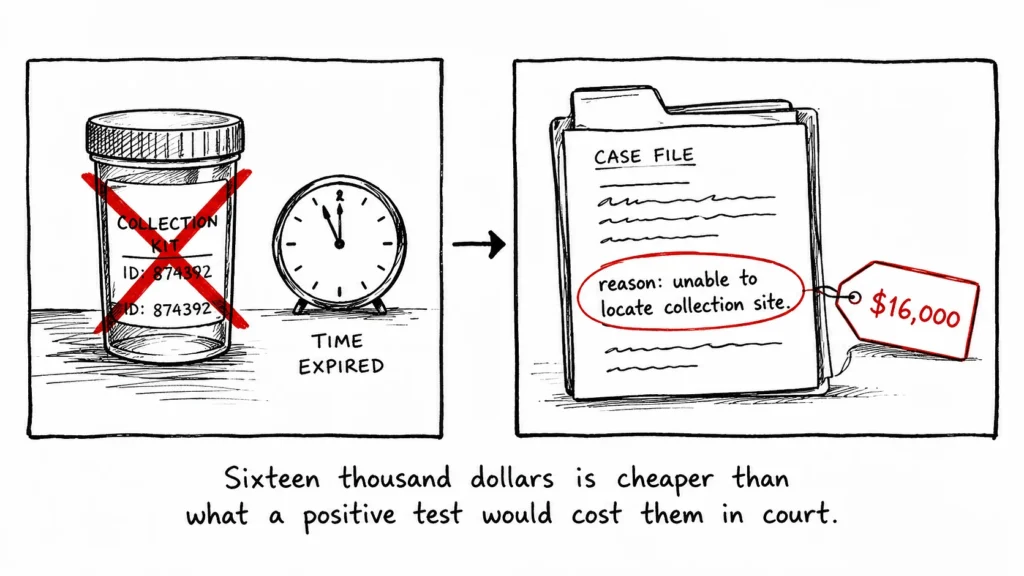
If the alcohol test does not happen within 2 hours the carrier has to prepare a written record explaining the delay. If it does not happen within 8 hours, game over, they stop trying and file the documentation saying why it did not get done. For drugs, if the test does not happen within 32 hours they document and move on.
That documentation goes into the carrier’s files and it is supposed to be available to FMCSA auditors on request. The penalty for failing to conduct required post-accident testing can run up to $16,000 per violation under 49 CFR Part 386.
Sixteen thousand dollars sounds like a lot until you compare it to what a positive drug test would cost the carrier in a wrongful death or catastrophic injury lawsuit. A documented positive result for methamphetamine or opioids or marijuana in the driver’s system after a fatal crash is the kind of evidence that turns a negligence case into a punitive damages case. The kind of evidence that makes juries angry. The kind of evidence that produces eight-figure verdicts.
I am not saying carriers deliberately avoid testing to hide results. Some probably do. What I am saying is that the system places the testing obligation on the party with the strongest incentive to not find anything, and then gives them a documentation escape hatch if the test does not happen in time.
The 8-Hour Alcohol Window Is Absurdly Short and Everyone in the Industry Knows It
Think about the timeline of a serious crash on I-4 or I-75 in the Tampa metro.
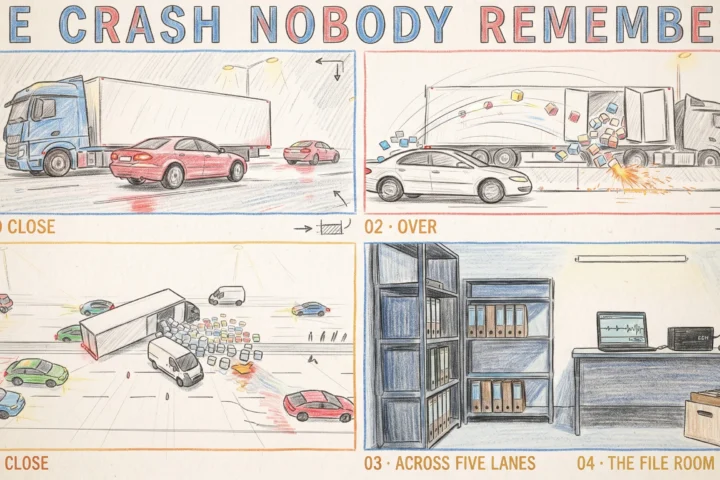
The crash happens. Emergency services respond. The driver is either injured and transported to a hospital or is standing at the scene giving a statement. Either way chaos, flashing lights, adrenaline, medical personnel, tow trucks, traffic backed up for miles.
Now add the logistics of getting a DOT-compliant alcohol test administered. The carrier’s designated employer representative has to be contacted. A testing facility or mobile collector has to be arranged. The driver has to physically present at a collection site or the collector has to come to the scene or the hospital. Paperwork has to be completed.
Eight hours sounds like plenty. After a major crash with injuries and vehicle damage and police involvement and hospital visits, eight hours goes by fast. Really fast. And every hour that passes the alcohol is metabolising out of the driver’s system and the test becomes less likely to detect anything even if it eventually gets administered.
The drug test window at 32 hours is more reasonable but even that has gaps. Certain substances clear faster than others and the 32-hour window assumes the carrier actually initiates the process promptly rather than waiting until hour 28 to start looking for a collection site.
What an Attorney Does in the First 24 Hours That You Cannot Do on Your Own
A spoliation letter. That is the first thing.
Within 24 hours of the crash, Anidjar & Levine’s truck accident legal team or any firm that handles these cases properly sends a written preservation demand to the trucking company, the driver, and the carrier’s insurer. The letter puts them on legal notice to preserve every piece of evidence connected to the crash. ELD data. ECM data from the truck’s black box. Post-accident drug and alcohol testing records. Driver qualification files. Maintenance logs. Dispatch communications. GPS data. Dashcam footage.
If the testing was conducted, the results are in those records. If the testing was not conducted, the absence of results and the carrier’s documentation explaining why are in those records. Either way the spoliation letter locks everything in place before the carrier can destroy, overwrite, or lose anything.
Without that letter the carrier has no legal obligation to preserve anything beyond what federal retention rules require, and some of those retention windows are shorter than you would think. ELD data gets retained for six months. The truck’s ECM crash-event data can be overwritten if the truck gets repaired or sent back into service. Dashcam footage depends on the system and the storage capacity and some of those systems loop every 72 hours.
The driver’s pre-employment screening and Clearinghouse record
Here is another thing your attorney pulls early. Under the FMCSA Drug and Alcohol Clearinghouse, every CDL holder’s drug and alcohol violation history is recorded federally. A driver who tested positive at a previous employer, refused a test, or failed to complete the return-to-duty process has a Clearinghouse record. The current carrier was required to query the Clearinghouse before hiring that driver and annually after.
If the carrier hired a driver with an unresolved Clearinghouse violation, or if they failed to run the required query at all, that is negligent hiring. It is a separate basis for liability that goes beyond what happened in the crash itself and directly into the carrier’s decision to put that driver behind the wheel in the first place.
Florida’s 51% Bar Makes All of This Evidence Critical
Here is where it all connects.
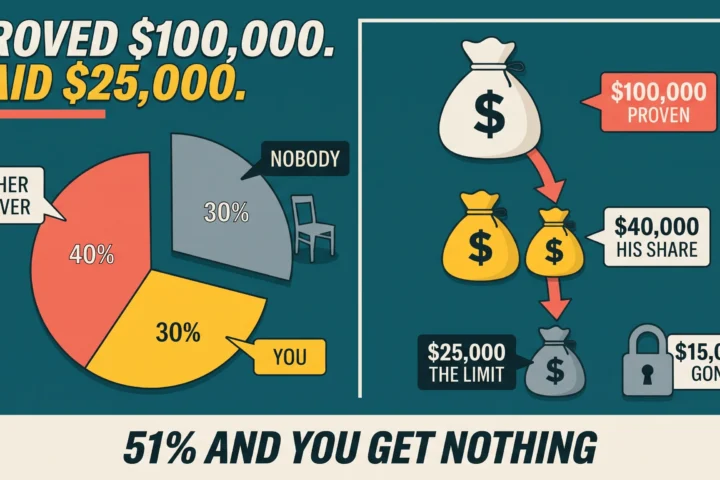
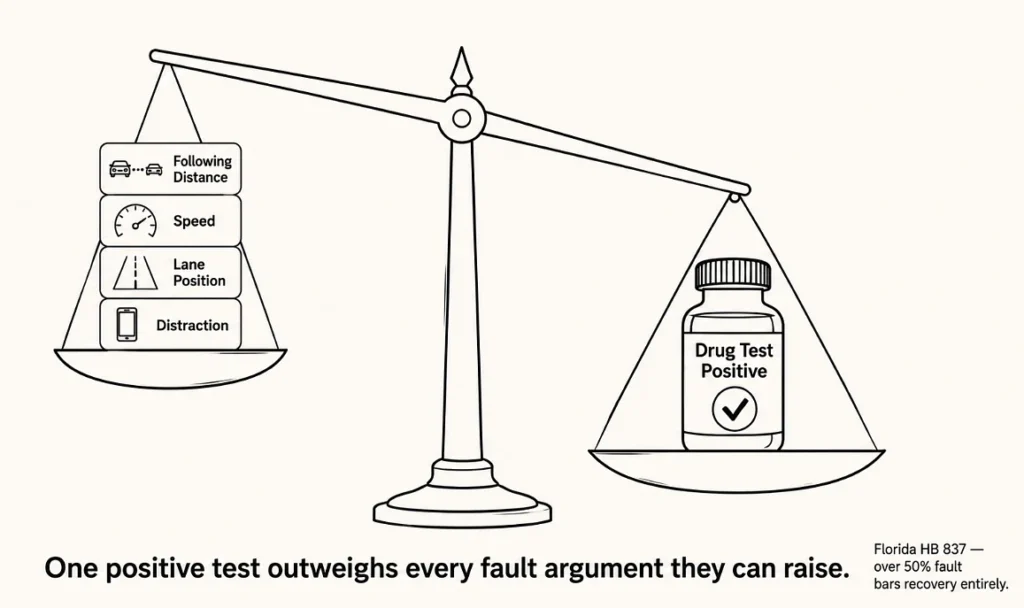
Florida switched from pure comparative negligence to modified comparative negligence under HB 837 in 2023. If you are found more than 50% at fault for the crash, you recover nothing. Zero.
Trucking company defence teams know this rule and they use it aggressively. They argue following distance. They argue lane position. They argue speed. They argue distraction. Every percentage point of fault they can push onto the injured driver is a percentage point reduction in what they pay, and if they get past 50% the whole claim disappears.
Evidence that the truck driver was impaired at the time of the crash is the single strongest counter to a comparative fault argument. A jury that learns the truck driver tested positive for amphetamines, or that the carrier failed to conduct the required post-accident test at all and cannot explain why, that jury is not going to spend much time debating whether the injured driver was following too closely.
But if the test was never administered and the window closed and the evidence metabolised out of the driver’s system, that argument is gone. You cannot prove impairment without the test results. And the carrier’s documentation saying “test not administered within required timeframe, reason: unable to locate collection site after normal business hours” is not going to generate the same jury reaction as a positive drug screen.
The testing window and the evidence window are the same window. Once it closes, it does not reopen.
References
- 49 CFR § 382.303. Post-accident testing. Alcohol within 8 hours, controlled substances within 32 hours. Carrier must document failure to test.
- 49 CFR Part 386. Civil penalties for FMCSA violations, up to $16,000 per occurrence.
- 49 CFR § 382.301. Pre-employment controlled substance testing.
- FMCSA Drug and Alcohol Clearinghouse. Federal repository of CDL holder drug and alcohol violations. Employer query requirements.
- Florida Statute § 768.81(6). Modified comparative negligence, 51% bar. Enacted by HB 837, March 2023.
- FMCSA, “When does testing occur and what tests are required?” Post-accident testing decision chart.
- ASAP Programs, “DOT Post-Accident Testing Requirements: 49 CFR 382.303” (October 2025). Three triggering scenarios and 2/8/32 hour windows.
- Safer Road Compliance, “FMCSA Drug & Alcohol Violations Explained” (March 2026). Penalty structures and audit implications.