 Irma C. Dengler
LingLong Wei’s lawsuit against Michigan State University demands $100 million for MSU Chemical Exposure Lawsuit, but that is not the number that matters most.
The consequential number is 7,000.
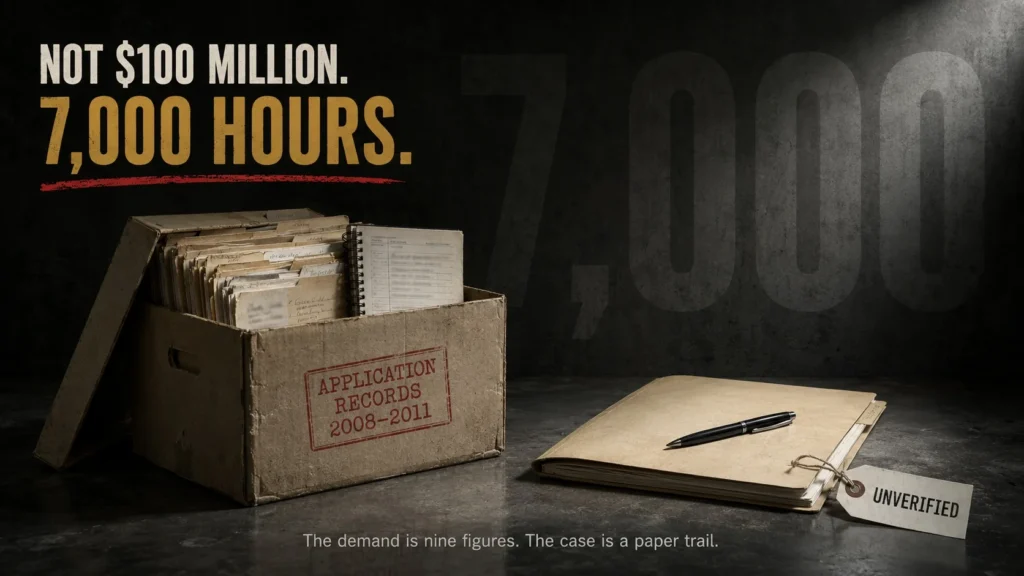
Wei, a former MSU horticulture graduate student and research assistant, alleges that she spent more than 7,000 hours spraying chemicals including paraquat dichloride, glyphosate and oxyfluorfen between 2008 and 2011. Her complaint says she was not given adequate protective clothing, respiratory protection or chemical-safety training. She was diagnosed with papillary thyroid carcinoma in July 2024.
Seven thousand hours equals 875 eight-hour working days. It is an extraordinary exposure allegation, not a measurement established by the court.
That distinction will decide whether this case becomes evidence of institutional negligence or collapses into an unproven medical-causation claim.

MSU’s Records Could Confirm Or Destroy The Central Allegation
Wei’s complaint describes chemicals blowing into her face and soaking her clothing while she worked without a mask, gloves or coveralls. It also says she developed breathing problems around 2010 and that an MSU health provider attributed them to anxiety.
Those claims should be testable.
Research logs, greenhouse schedules, pesticide-purchase records, application records, training certificates, emails and the labels attached to the actual products used could show what Wei handled, how often she handled it and what protection was required at the time.
The public complaint does not identify the brands, formulations, concentrations, application equipment or exact dates of each exposure. Without those details, nobody outside the litigation can calculate a credible dose or determine every historical label requirement.
That is currently the largest hole in the public case.
The Thyroid-Cancer Cesearch Is Concerning, But It Does Not Prove Wei’s Claim
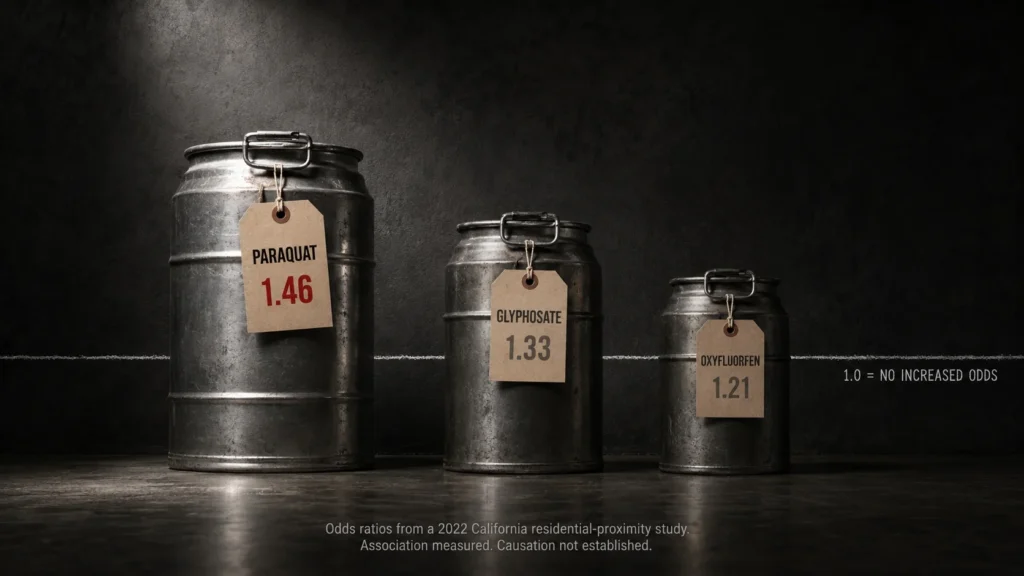
A 2022 California case-control study examined 2,067 thyroid-cancer cases and 1,003 controls. It reported higher odds of thyroid cancer among people living near agricultural applications of paraquat, glyphosate and oxyfluorfen. The reported odds ratios were 1.46 for paraquat, 1.33 for glyphosate and 1.21 for oxyfluorfen.
Read alone, those numbers appear to support Wei.
The deeper analysis was less straightforward. When researchers separated other chemicals from simultaneous paraquat exposure, the glyphosate and oxyfluorfen associations weakened and were no longer statistically clear. Paraquat remained the strongest signal.
The study also measured residential proximity to pesticide applications, not the amount inhaled or absorbed by an individual worker. It lacked complete occupational histories and several personal risk factors. Its authors explicitly said stronger prospective research was needed.
This evidence justifies investigating a possible connection. It does not establish that any of these chemicals caused Wei’s particular tumour.
Regulators have not reached that conclusion either. The US Environmental Protection Agency continues to describe glyphosate as unlikely to be carcinogenic to humans, although part of its 2020 review was vacated and the agency is updating its assessment. For paraquat, the EPA recognizes serious risks to workers and requires trained applicators and protective measures, but says it has not found a clear cancer link from uses consistent with the label.
A Diagnosis Thirteen Years Later Makes Documentation Essential
Wei finished the work described in her complaint in 2011 and received her cancer diagnosis in 2024. A long latency period does not disprove chemical causation, but it makes reconstruction harder.
Her experts would need to explain the biological mechanism, estimate cumulative exposure and distinguish the alleged chemical contribution from other possible causes. MSU’s lawyers can challenge the hours, dose, protective-equipment claims and reliability of any expert connecting the exposure to the tumour.
The university has said it provides required safety training and protective equipment and complies with applicable laws. That is a denial, not evidence that Wei received those protections.
Governmental immunity may also become a major issue because MSU is a public institution. Michigan law generally protects governmental agencies performing governmental functions, while individual employees may face liability when gross negligence is the proximate cause of an injury.
The $100 Million Demand Proves Nothing
The complaint seeks $100 million for medical costs, lost income, pain, emotional distress and other alleged damages. That amount is a request written by Wei’s lawyers. It is not a court valuation, settlement or verdict.
As of July 10, 2026, I could not verify a public judgment or settlement resolving the case. The widely circulated complaint copy also contains an unfinished date field and no completed case number or assigned judge, so the current docket position cannot be established from that document alone.
The honest reading is therefore uncomfortable for both sides.
Wei has described a specific and potentially documentable failure involving thousands of hours of chemical work. MSU cannot rebut that merely by pointing to its written safety policies. But Wei has not publicly proved that the exposure occurred at the claimed scale or that it caused her cancer.
The litigation’s real question is not whether pesticides can be dangerous.
It is whether MSU’s records support those 7,000 hours.