 Christopher Morgan (Bankruptcy & Finance)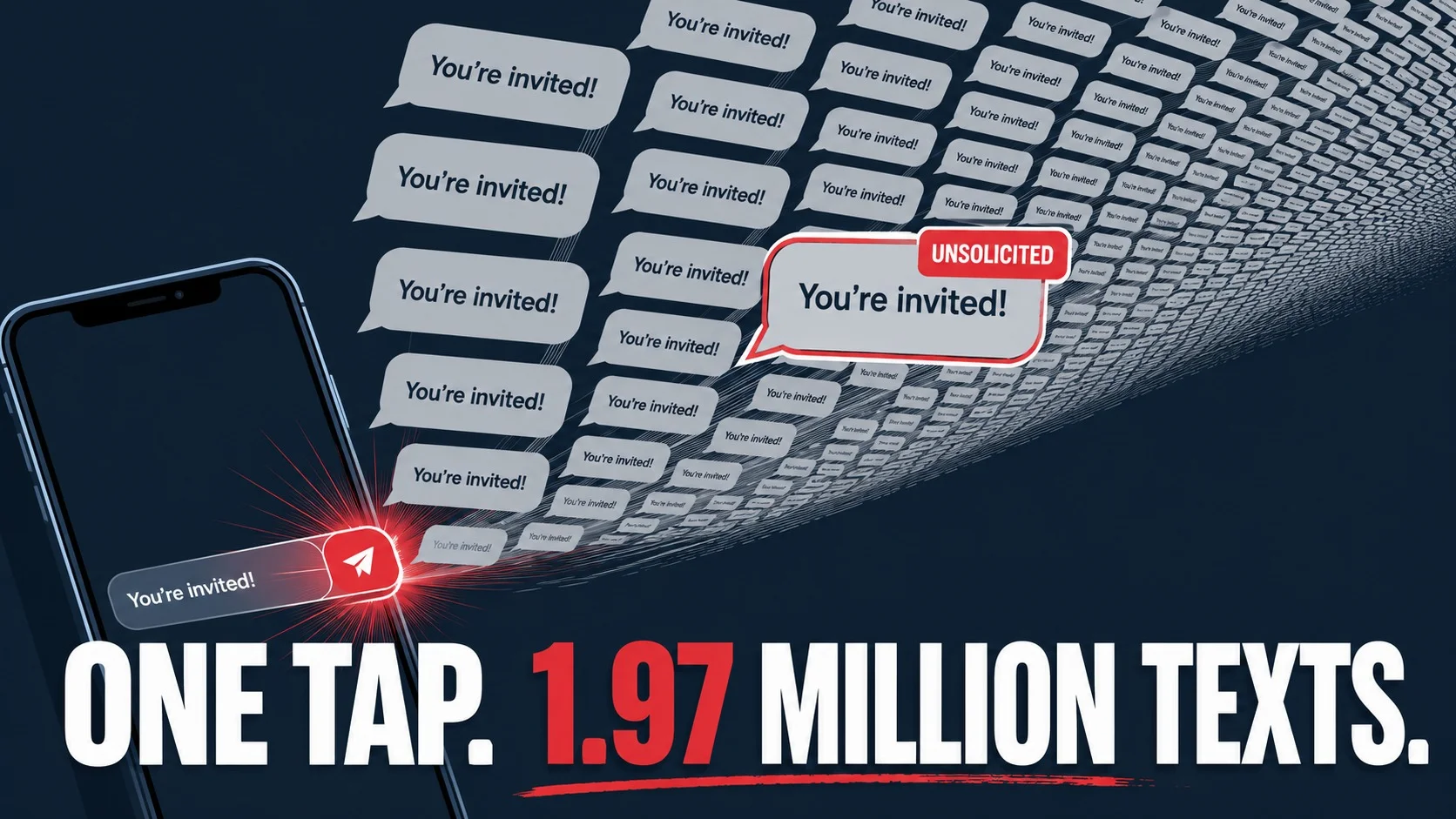
What Was the Cash App Spam Text Lawsuit About? Cash App’s “Invite Friends” button did exactly what it promised a user tapped it, picked contacts from their phone and Cash App fired off a pre-written text with a referral link and a cash bonus attached. The people receiving those texts never agreed to hear from Cash App and by one plaintiff’s declaration, messages went out to roughly 1.97 million unique phone numbers with Washington area codes alone.
That referral machine became Bottoms v. Block, Inc., a class action arguing that Block, Cash App’s parent company, unlawfully assisted in blasting unsolicited commercial texts to people who’d opted into nothing.
Block denied all wrongdoing throughout, maintained it complied with state and federal law and settled anyway; the company agreed to pay $12.5 million, the court granted final approval on December 2, 2025 and that closed the book on the litigation.
How Much Did People Actually Get Paid?
$394.36 per approved claimant. Payments started going out February 2, 2026 and if that number sounds oddly high for a spam-text case, it is, early estimates on the settlement website projected somewhere between $88 and $147, but pro rata math cuts both ways and fewer valid claims than expected meant each approved claimant’s slice grew. Most class action payouts shrink between announcement and check; this one nearly tripled, which almost never happens.
Can You Still File a Claim?
No, and this is the answer most people searching this topic need first. The claims deadline was October 27, 2025, the settlement has been fully approved and payments have already been distributed. There is no late-claim mechanism, no second window and any website claiming it can still get you into this settlement is either outdated or fishing for your personal information. If you filed a valid claim before the deadline and haven’t seen your payment, the settlement administrator at BottomsTextSettlement.com is the contact point, not Cash App support.
One thing worth checking regardless: unclaimed settlements are common and legitimate class action trackers like ClassAction.org list open ones, texts from other companies you’ve received may qualify for cases still accepting claims.
Why Did Only Washington Residents Qualify?
Because the winning law was a Washington law. Plaintiffs originally reached for the federal TCPA, the statute behind most spam-text cases and the court threw that claim out in May 2024, ruling the TCPA doesn’t impose liability for assisting with a text message; the texts technically came from users’ own referral actions, not from Block directly.
What survived was Washington’s Commercial Electronic Mail Act, which does something the federal law doesn’t, it makes it unlawful to “initiate or assist in the transmission” of unsolicited commercial texts and Block’s role fit that word “assist” like a glove: the company wrote the message, supplied the individualized referral link and paid users a bonus for every contact who signed up.
A claim built on a Washington statute can only cover Washington recipients, which is why someone in Oregon who got the identical text from the identical program received nothing. Legal commentators drew the obvious conclusion, a referral program can comply with federal law in forty-nine states and still generate eight-figure exposure in the one state whose statute reaches the platform behind the send button.
Block Denied Wrongdoing — So Why Pay $12.5 Million?
Standard settlement logic, mostly: certainty now beats a jury later and the motion-to-dismiss ruling had already signaled the CEMA theory had legs. Worth the context, too, that 2025 was an expensive year for Block across the board, a $255 million resolution with the CFPB and state regulators over Cash App oversight came in January, putting the company’s consumer-protection tab near $270 million for the year. Against that ledger, $12.5 million to retire a class of nearly two million phone numbers reads less like capitulation and more like line-item math.
Still Getting Cash App Spam Texts?
The settlement released past claims, not future conduct, so texts arriving now sit outside it entirely. Replying STOP creates a written record of revoked consent, which matters later. Unwanted commercial texts can be reported by forwarding them to 7726 (SPAM) and filing with the FCC’s consumer complaint center and if the texts keep coming after a clear opt-out, statutory damages under federal law run $500 to $1,500 per message, numbers that make individual suits genuinely viable when the messages stack up. Washington residents keep the extra CEMA layer on top.
The referral-text era is quietly ending either way. Platforms watched Block write this check and pre-written invite blasts to strangers’ phones are exactly the feature a compliance team deletes first.