 Danielle R. Farahi (From California)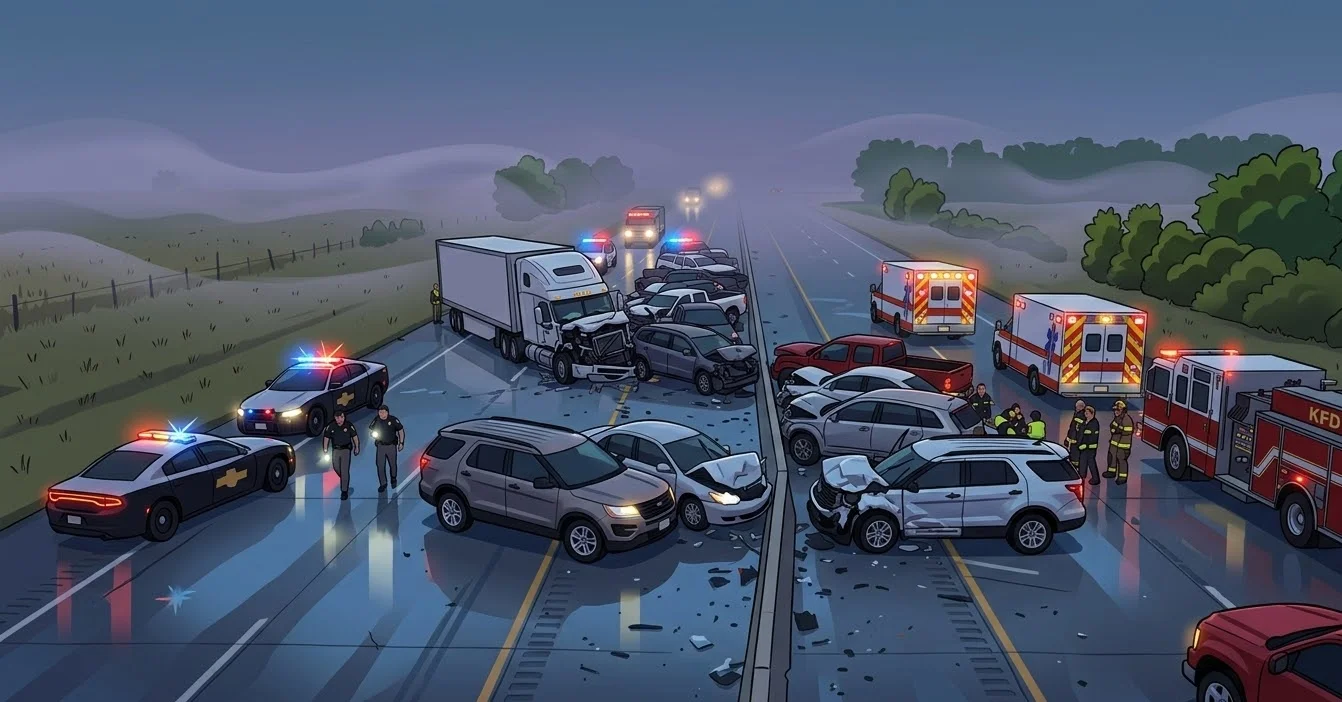
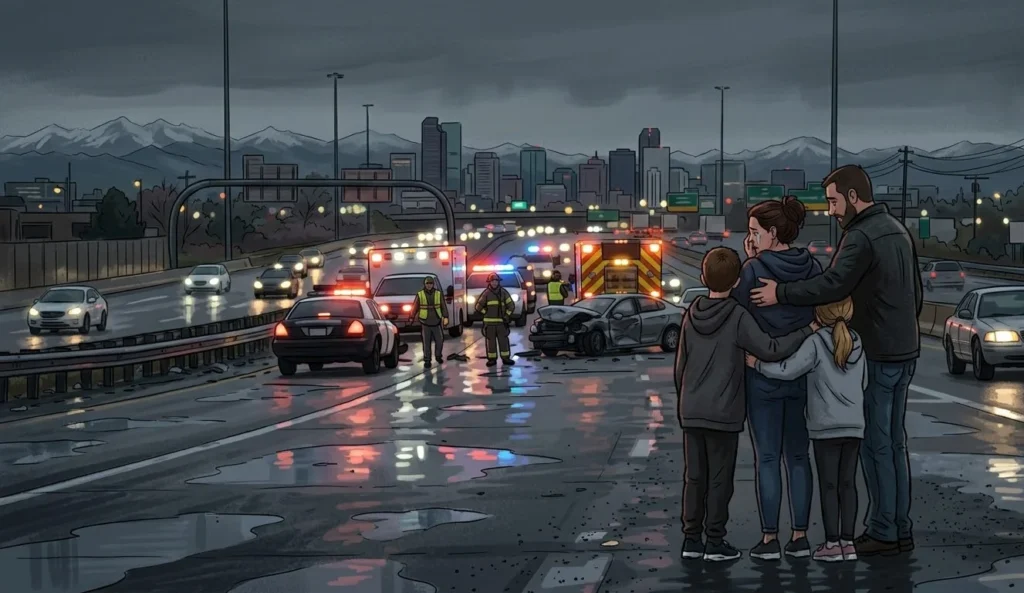
The national road carnage deaths have even hit an estimated 40,990 in a year. The statistics in the region are not an exception, as evidenced by a recent spate of devastating highway pile-ups in the beginning of 2026. Severe weather and constant heavy congestion on the highways are occurring habitually, leading to massive chain-reaction crashes. Such accidents make busy sections of Interstate 35 and Interstate 70 complicated arenas of lawsuits. It takes a fine legal approach to unravel the web of causation in multi-vehicle collisions. The professionals have to deal with the altered comparative fault system in Kansas, the possibility of overlapping insurance policies, and with the help of sophisticated accident reconstruction.
Untangling the Chain Reaction: Causation in 2026 Highway Collisions
The multi-vehicle crashes cause pure physical and logistical confusion that makes the legal investigations that follow to be difficult. The current 2026 statistics reflect this fact as recent as an early morning car crash in northbound I-35 in Overland Park, where at least four cars were involved with moderate damage.
Primary and Secondary Impact
The forensic examination requires a legal distinction that the driver who caused the crash has to be of an absolutely different impact with other persons who have secondary impacts. Such disasters are often caused by environmental conditions that include blowing dust storms along I-70 in Thomas County that cause severe visibility reduction. Although there are these external dangers, drivers have always had a primary responsibility of care to drive at safe speeds given the circumstances. Also, human error is one of the leading causes in such situations. Distracted driving acts as an emergency risk, taken into consideration in 3,308 deaths and estimated 289,310 injuries each year.
Navigating Kansas’s Modified Comparative Fault System
The Kansas law lacks the pure joint and several liability model that is applicable to traffic accidents; however, the state applies a modified comparative fault framework. According to this system, investigators and civil courts are required to allocate a particular percentage of blame to each party that is involved in the collision. The allocation of liability between four or more drivers requires a very careful investigation procedure. Forensic investigators use strict measures to objectively distribute blame in complicated pile-ups:
- Telematics Data Extraction: Pre-crash and braking black box data analysis.
- Debris Field Mapping: The use of the drone mapping and photogrammetry to identify sequence of impacts.
- Surveillance and Dashcam Review: Examining local business or vehicle footage in order to determine who initiated the main incident.
- Witness and First Responder Testimonies: Comparison of the statements of Highway Patrol and EMS personnel on final resting positions of vehicles.
The outcome following a highway accident that involves many vehicles exposes the victims to a complete legal and financial catastrophe. Due to the fact that one chain-reaction collision may be counted among four, five, or even a dozen different insurance companies, injured people often become a target of a barrage of different adjusters who are trying to transfer the percentage of blame out of their respective policyholders. The absence of effective advocacy means that the victims may be given a disproportionate amount of the blame, which according to the Kansas law, will significantly decrease or eliminate their financial compensation.
To make it through this tangled web of intermingling liability and corporate defense strategies, one will need a special legal case management, ideally a local one. Enter an injury lawyer near me to narrow down your search to lawyers in your locality. Experienced Wichita personal injury lawyers, such as, have the resources and litigation experience that may independently to re-assemble the sequence of accidents, name all the responsible parties and take well-endowed insurance companies to the negotiation table.
Through handling all communications, maintaining the services of nationally reputed experts in accident reconstruction and creating a fortress of evidence, personal injury attorneys can help victims to avoid the emotional impact of the claims procedure. This is because it allows injured people to concentrate wholly on the physical recovery process as their law firms diligently tear down the efforts of the defense to avoid responsibility.
Dealing with Multiple Insurance Companies and Optimal Settlements
The multi-party crash has the immediate financial consequences of challenging the victims to get restitution. The compensation pool is limited when three or more people are seriously injured and policy limits are met quite swiftly. This has necessitated vigorous law moves to find additional umbrella policies or commercial liability insurance. As an example, a semi-truck is an issue where commercial policies become essential, as was witnessed in the lethal I-70 accident between a disabled Hyundai and a commercial tractor-trailer.
The Statistical Advantage of Legal Representation
Statistical data heavily prove the value of professional litigation in these high-stakes scenarios. While only 3-5% of personal injury cases go to trial, with 95-96% settling out of court, unrepresented claimants face significant disadvantages during negotiations. Claimants with attorney representation secure settlements averaging 3.5 times higher than pro se individuals. Furthermore, 91% of represented victims secure a settlement, compared to a mere 51% success rate for unrepresented parties. Overall, the average personal injury settlement sits at roughly $55,056, though complex multi-vehicle claims frequently exceed this baseline due to severe damages and multiplied liability limits.
| Metric | Unrepresented Claimants | Represented Claimants |
|---|---|---|
| Probability of Securing a Settlement | 51% | 91% |
| Average Settlement Multiplier | Baseline | 3.5x Higher |
| Trial Resolution Rate | High Risk of Dismissal | 95-96% Settled Out of Court |
| Carrier Negotiation Position | Low | High (Backed by Forensic Experts) |
Securing Justice and Accountability in Highway Litigation
The multi-vehicle crashes do not function within the parameters of mere negligence formulas. These disastrous incidents are only resolved through careful forensic reconstructions and vigorous maneuvering through comparative liability laws in order to designate proper liabilities. With the emerging trends in 2026 traffic patterns, traffic congestion and severe weather continues throughout the state. Therefore, the need of proactive, evidence-based approach to legal issues will become even greater among Kansas drivers that are compelled to deal with the consequences of a serious accident.
The article is informational. It is neither an investment, legal or tax advice. The data provided in this post is not an advice to either sell or purchase any security. The future results do not depend on the past performance. Express any financial decision to a professional.