 Mohammad Abdel-Rahman Accident & Injury Lawyer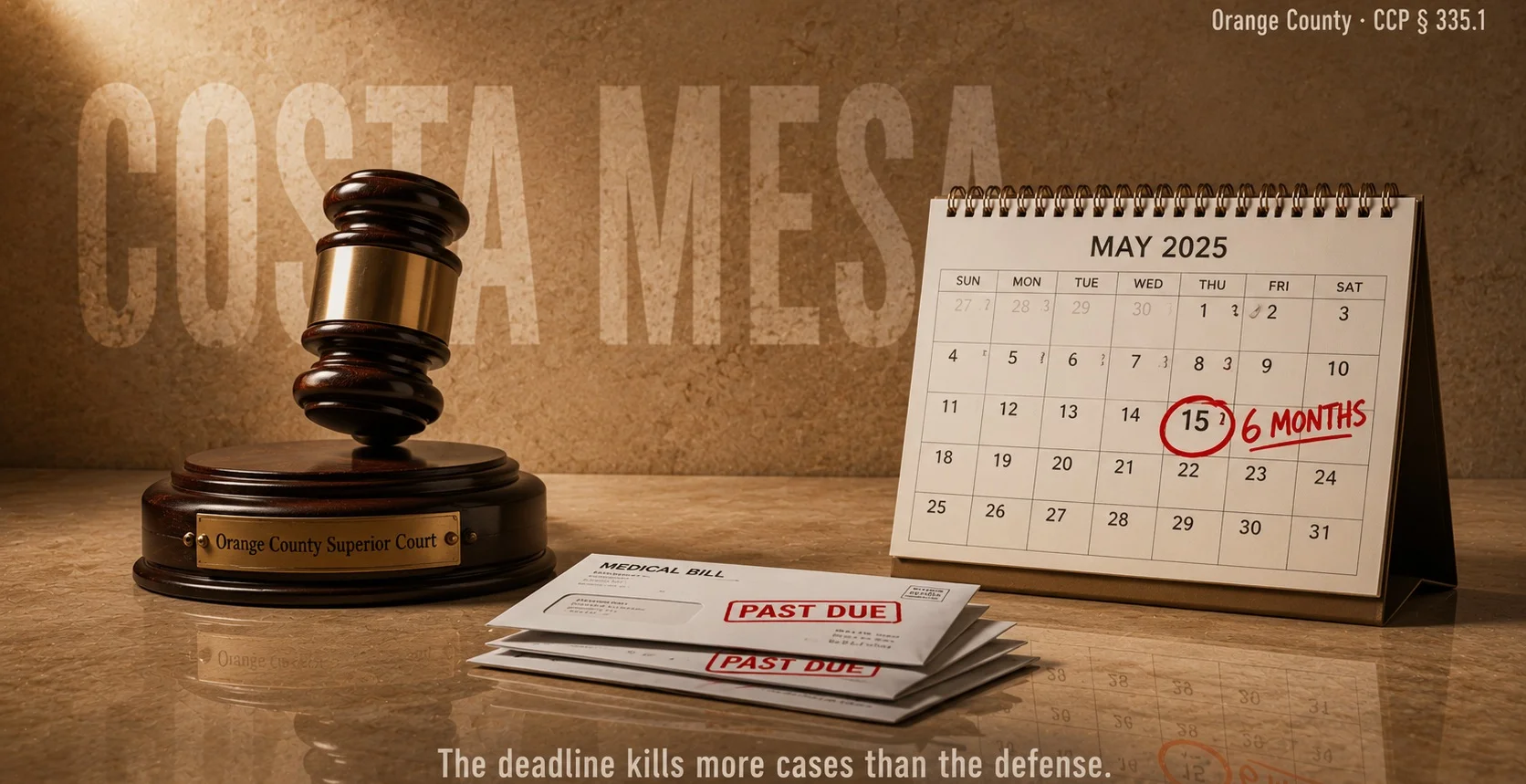
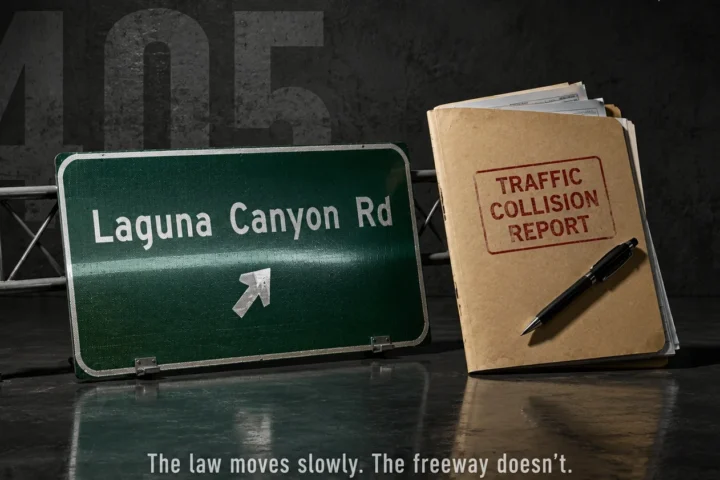
If you’ve been hurt in Costa Mesa — on the 405, at South Coast Plaza, on a bike along Harbor Boulevard — California law gives you two years to file a claim and far less if a government entity is involved. Attorneys here work on contingency, so you pay nothing upfront. But the real decision isn’t whether to hire a lawyer; it’s finding one with genuine trial experience in the Orange County Superior Court, because insurance companies track exactly which attorneys will actually take them to a jury. That single fact shapes every settlement offer you’ll receive.
Here’s something most people don’t realize until they’re sitting in a hospital bed Googling lawyers: where your accident happened matters almost as much as what happened.
Not philosophically. Procedurally. An injury on Bristol Street and an injury on a city bus follow completely different rules, different deadlines, different courthouses. Let me walk through how this actually works in Costa Mesa.
Why Costa Mesa Cases Have Their Own Character
Costa Mesa sits at one of the more congested crossroads in Orange County. Three freeways — the I-405, SR-55 and SR-73 — converge here, feeding into surface streets like Harbor, Newport Boulevard and Bristol that carry heavy commercial and tourist traffic. Add South Coast Plaza, one of the highest-grossing shopping centers in the country and a population over 110,000 and you get a specific local accident profile:
- High-speed freeway collisions where the merge zones stack up during rush hour.
- Pedestrian and bicycle accidents in the dense mixed-use corridors.
- Premises liability incidents — slip-and-falls, negligent security — clustered around the retail and entertainment hubs.
- Out-of-town driver accidents, since tourists unfamiliar with local roads raise the rate of distracted-driving and DUI collisions.
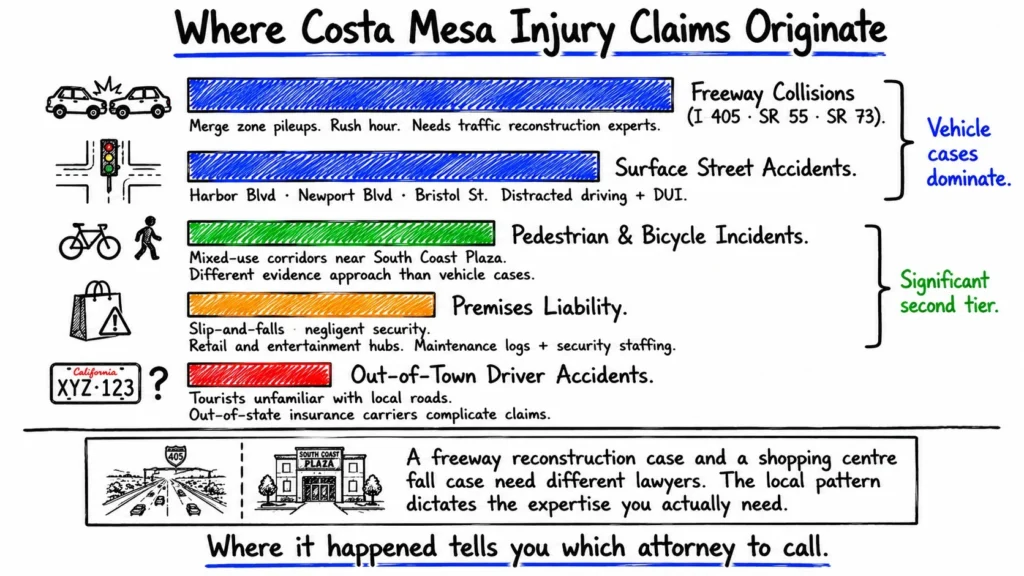
Why does this matter for choosing an attorney? Because a freeway pileup case needs traffic reconstruction experts. A fall at a shopping center needs a premises liability specialist who understands maintenance logs and security staffing. The local pattern dictates the expertise you actually need.
The Deadlines That Quietly Kill Cases
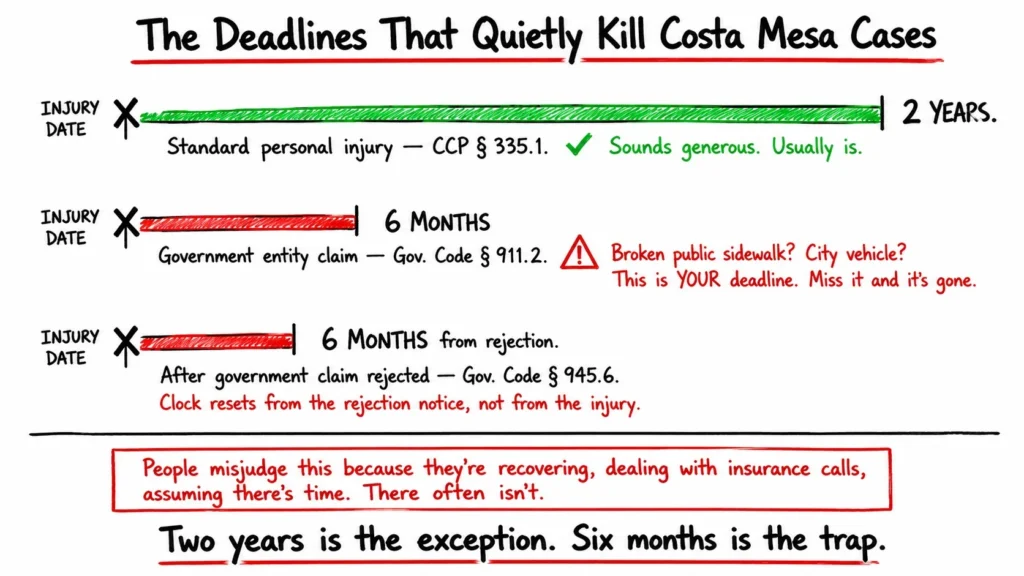
This is the part I’d want every reader to remember even if they forget everything else.
| Claim Type | Deadline | Governing Law |
| Standard personal injury | 2 years from injury date | CCP § 335.1 |
| Claim against a government entity | 6 months to file an administrative claim | Gov. Code § 911.2 |
| After government claim rejection | 6 months from rejection notice to sue | Gov. Code § 945.6 |
The two-year window sounds generous. The six-month one is the trap. Tripped on a broken public sidewalk? Hit by a city vehicle? You don’t get two years — you get six months to file a formal administrative claim with the correct agency, in the correct format or your case is gone regardless of how strong it was. The procedural details are laid out by the California Courts self-help resources and they’re unforgiving.
I’ve noticed people consistently misjudge this because they’re recovering, dealing with insurance calls, assuming there’s time. There often isn’t.
Where Your Case Actually Gets Heard
A Costa Mesa injury lawsuit doesn’t get filed “in Costa Mesa.” It lands in the Orange County Superior Court system and the courthouse depends on the money at stake:
- Over $35,000 (unlimited civil): Central Justice Center in Santa Ana — the venue for serious injury litigation.
- $35,000 or under (limited civil): Harbor Justice Center in Newport Beach.
This sounds like trivia. It isn’t. Defense firms and insurers know which plaintiff’s attorneys regularly try cases at the Central Justice Center and which ones settle everything cheap to avoid a courtroom. That reputation — credible trial threat, lawyers call it — directly affects the settlement numbers offered in your case before anyone steps near a judge.
One more local wrinkle worth knowing: Orange County juries have a reputation in the California legal community for being more conservative than Los Angeles juries, particularly skeptical of large pain-and-suffering awards. You’ll find local residents discussing OC court experiences on Reddit with roughly this same read. An attorney who’s actually tried cases here builds around it — leaning on hard, verifiable economic losses rather than emotional theatrics. That’s local literacy you can’t fake from a billboard.
What You Can Actually Recover — and the 99% Rule
California splits compensation into two buckets:
- Economic damages: Medical bills (past and future), lost wages, reduced earning capacity, property damage. The countable stuff.
- Non-economic damages: Pain and suffering, emotional distress, loss of consortium. No statutory cap in a standard injury case — the major exception is medical malpractice, where MICRA limits apply.
Then there’s the rule that surprises almost everyone. California follows pure comparative negligence, from the Li v. Yellow Cab decision in 1975. Your recovery gets reduced by your share of fault — but never eliminated. You could be 99% responsible and still recover 1% of your damages.
Why should you care? Because the insurance adjuster’s favorite move is “you were partly at fault, so you get nothing.” In California, that’s simply not how it works. Partial fault reduces; it doesn’t bar.
How Lawyers Get Paid (and the Question Most People Forget to Ask)
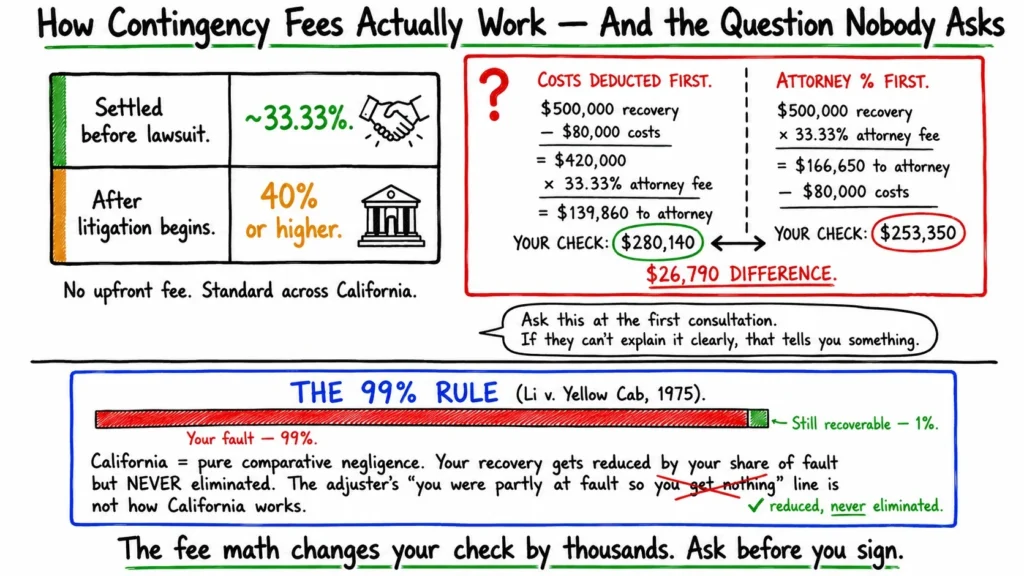
Nearly every personal injury attorney in Costa Mesa works on contingency — no upfront fee, the lawyer takes a percentage of what’s recovered:
| Stage | Typical Fee |
| Settled before filing a lawsuit | ~33.33% |
| After litigation begins | 40% or higher |
Fine. Standard. But here’s the question that actually separates fee agreements: are case costs deducted before or after the attorney’s percentage is calculated? Expert witnesses, depositions, filing fees — these can run into six figures on a serious case. The order of that math changes your final check by thousands. Ask it directly at the consultation.
Vetting an Attorney Without Falling for Marketing
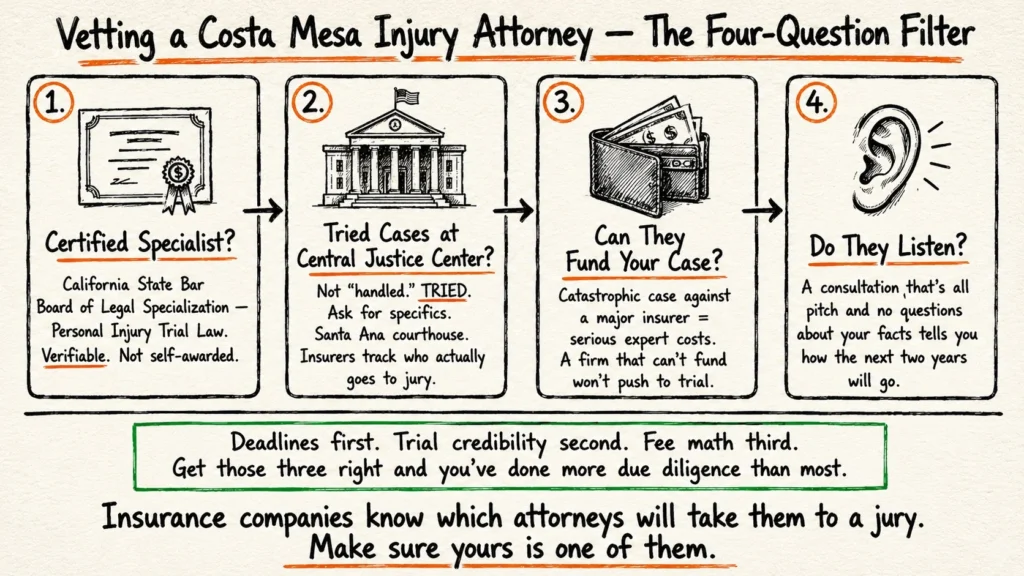
No firm recommendations here — just the filter:
- Certified specialist? The California State Bar’s Board of Legal Specialization certifies Personal Injury Trial Law specialists. Verifiable, not self-awarded.
- Tried cases at the Central Justice Center? Not “handled.” Tried. Ask for specifics.
- Can they fund your case? A catastrophic injury case against a major insurer requires fronting serious expert costs. A firm that can’t won’t push to trial.
- Do they listen? A consultation that’s all pitch and no questions about your facts tells you how the next two years will go.
For broader grounding on crash data behind these cases, the NHTSA publishes the national statistics that experts on both sides rely on.
The short version: deadlines first, trial credibility second, fee math third. Get those three right and you’ve done more due diligence than most injury victims ever manage.