 Mohammad Ahsan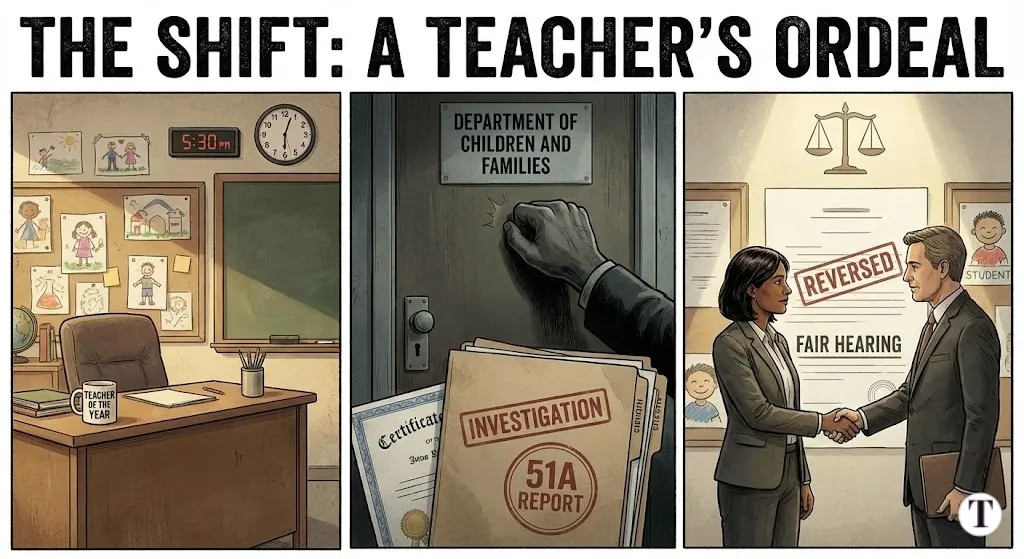
Ms. Maya Reed had been teaching in a South Shore public school for years. Good reputation. Strong relationships with students and families. The kind of teacher who stays late and shows up early.
Then someone knocked on her door, and everything shifted.
A Department of Children and Families investigation — triggered by a single 51A report — put her career, her name, and her future working with children directly at risk. She hadn’t done anything wrong. That part didn’t matter yet. What mattered was that DCF had opened a file, and a supported finding was already building against her before she fully understood the process she was trapped in.
Her case ended with a full reversal at Fair Hearing. But getting there required strategy, legal help, and an understanding of Massachusetts child welfare law that most teachers never have to think about until it’s too late.
One Report Filed, One Career on the Line
DCF investigations don’t creep in slowly. They land all at once.
Under Massachusetts General Laws Chapter 119, § 51A, anyone — but especially mandated reporters like teachers, doctors, and school staff — can file a report of suspected child abuse or neglect. That report triggers a formal screening process at DCF. If the report gets “screened in,” the department must begin a 51B investigation to determine whether there’s reasonable cause to believe abuse or neglect occurred.
In FY2024, DCF received 92,819 protective intakes through the 51A process. Of those, 45,141 — roughly 49% — were screened in for a CPS response. The rest were screened out, though some still got referred to district attorneys.
Ms. Reed’s situation became one of those 45,000+ investigations. And for an educator, that’s a uniquely dangerous place to be.
The Student, the Classroom, and the People in It
The investigation centered on a seven-year-old in Ms. Reed’s classroom — we’ll call him Jay. He had an ADHD diagnosis and sometimes struggled with emotional regulation, which isn’t unusual at that age. He benefited from structure and consistent adult guidance. Standard stuff for elementary school.
One detail that would prove critical later: Ms. Reed was never alone with Jay. Her classroom had four paraprofessionals — Ben, Liz, Omar, and Sue — present throughout the school day. That’s a lot of eyes in one room. It also meant that whatever DCF thought happened, there were witnesses to say whether it actually could have.
How a 51A Report Gets Filed and What Triggers It
Jay missed several days of school. Standard attendance protocol kicked in — school staff conducted a wellness check at his home. During the visit, Jay’s mother mentioned marks on his arm and asked where they came from.
That conversation produced a 51A report.
Here’s what most people outside the system don’t realize about 51A reports: they don’t require proof. Under MGL c.119, § 51A, a mandated reporter must file when they have “reasonable cause to believe” that a child is being abused or neglected. The standard is deliberately low — the point is to cast a wide net. Mandated reporters have to file orally immediately and then follow up with a written report within 48 hours. Failing to report can result in fines up to $1,000 for first offenses. Filing a frivolous report can carry penalties up to $2,000 and imprisonment for repeat offenses.
But once that report is in the system, it moves fast regardless of whether the underlying facts hold up.
What a Supported Finding Actually Means — and Why Teachers Should Be Worried
DCF investigated Ms. Reed’s case through the 51B process. At the end, they issued a supported finding — meaning DCF concluded there was reasonable cause to believe abuse or neglect occurred.
That phrase — “reasonable cause to believe” — is doing heavy lifting. It’s not “beyond a reasonable doubt.” It’s not even a preponderance of evidence. It’s a judgment call made by investigators who may or may not have gathered all the facts.
For teachers, a supported finding creates a cascading problem that extends well beyond DCF itself:
Your name goes on the DCF central registry. That registry exists specifically so employers working with children can check it. A supported finding shows up during background screening for any childcare, education, or youth services position in Massachusetts.
DESE gets notified. Under a 2020 memorandum of understanding between DCF and the Department of Elementary and Secondary Education, DCF is supposed to share all supported 51A/51B findings involving students in publicly funded schools with DESE on a monthly basis. DESE then conducts its own review to determine whether the educator’s license should be investigated, suspended, or revoked — a completely separate process from the DCF investigation itself.
A 2021–2023 state audit found that DESE wasn’t consistently following up on these reports, which creates a different kind of risk — delayed investigations can leave both educators and students in limbo for months.
CORI and SORI checks enter the picture. Massachusetts school employers are required under MGL c.71, § 38R to run Criminal Offender Record Information (CORI) checks and national fingerprint-based background checks on anyone with direct, unmonitored contact with children. A supported DCF finding doesn’t show up on CORI directly — CORI covers criminal arraignment records — but it does appear on the DCF central registry, which employers check separately. The Sex Offender Registry Information (SORI) is a separate database. The practical impact? A supported finding can block future employment even without criminal charges.
Where the Investigation Fell Short
In Ms. Reed’s case, the initial 51B investigation missed things that mattered.
Jay had only been in her classroom for a limited period. Multiple adults were present every day. Several of the paraprofessionals were never asked detailed questions during the initial response — a procedural failure that would become significant later.
This kind of gap isn’t rare. Under 110 CMR 4.32, DCF investigators are required to interview witnesses at the request of alleged perpetrators and must include evidence in their reports that detracts from a supported finding. When that doesn’t happen — when the report only tells one side — assumptions replace evidence. A narrative that looks solid on paper collapses once someone actually tests it.
The Boston Globe reported in February 2024 that DCF hearing officers reversed the department’s own findings 40% of the time in FY2023. In FY2022, the reversal rate was even higher — nearly 50%. In FY2020, it hit 54%.
Those numbers tell you something uncomfortable: a huge share of supported findings don’t survive scrutiny when properly challenged.
Feeling Cornered by a System That Moves Fast
Ms. Reed knew she hadn’t done anything wrong. She also knew that “I’m innocent” isn’t a legal strategy.
DCF investigations create a specific kind of pressure for educators. Statements made during interviews can be taken out of context. Silence can be read as evasion. The timeline is tight — once a 51B investigation is underway, DCF has 15 business days to complete it in non-emergency situations, or as little as 2 hours if immediate danger is alleged. That’s not much time for a thorough investigation, and it’s not much time for the person being accused to mount a defense either.
Meanwhile, Ms. Reed’s career felt like it was hanging by a thread. Years of building trust with students, parents, and colleagues — all suddenly fragile because of one report.
Getting an Attorney Before It Was Too Late
Ms. Reed contacted a DCF defense attorney as soon as she understood the weight of the situation. She didn’t assume DCF would sort it out fairly on its own.
That decision mattered for several reasons. Early legal representation helped protect her rights during interviews, ensured accuracy in the investigative record, and — critically — preserved the option of a Fair Hearing appeal before deadlines expired.
Under 110 CMR 10.06, an individual has 30 calendar days from the date of the supported finding to request a Fair Hearing. Miss that window and the finding stands. The 30-day deadline is strict, and most people don’t know about it until it’s almost gone.
Timelines and Records That Dismantled the Allegation
DCF cases live and die on details. Dates, schedules, staffing rosters, and classroom routines can prove what could or couldn’t have happened during a specific window.
In this case, records showed Jay’s limited time in Ms. Reed’s classroom and confirmed that at least four other adults were present at all times. Those facts directly contradicted the allegation. They also raised the question nobody had asked during the initial investigation: if something happened to this child, when and where did it actually occur?
Witnesses Who Could Account for Every Minute
Ben, Liz, Omar, and Sue — the four paraprofessionals — all gave consistent accounts of classroom routines and supervision practices. Their testimony didn’t just support Ms. Reed’s version of events. It made the allegation itself implausible under normal conditions.
In false allegation cases, identifying who was physically present is often the deciding factor. A classroom with four additional adults isn’t a setting where abuse goes unnoticed. The initial investigation’s failure to interview all of them thoroughly was both a procedural error and a missed opportunity to resolve the case earlier.
Medical Evidence That Didn’t Match
Kids get bumps. They fall off bikes, scrape themselves on playgrounds, bang into furniture. Marks on a seven-year-old’s arm can mean almost anything — and without medical context, photographs can exaggerate what’s actually there.
A medical expert reviewed the photographs and the relevant timelines in Ms. Reed’s case. The conclusion: the marks were inconsistent with the alleged conduct and raised questions about when and where the injuries actually occurred. That expert opinion directly undercut the foundation DCF had built its supported finding on.
The Fair Hearing That Fixed What the Investigation Got Wrong
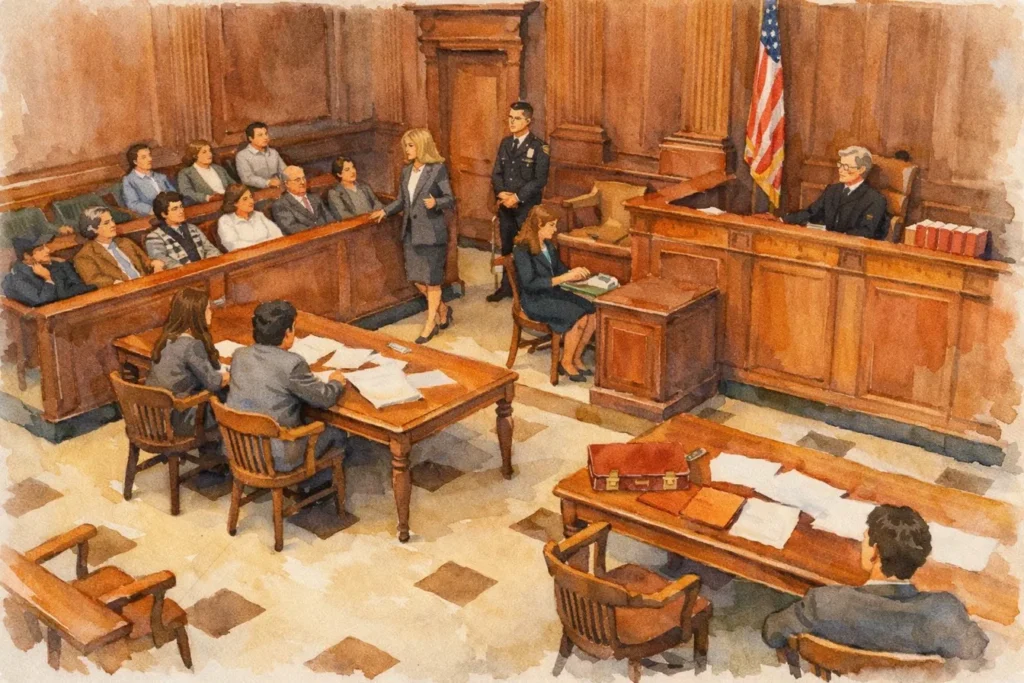
Massachusetts gives individuals the right to challenge a supported DCF finding through a Fair Hearing — an administrative appeal process governed by MGL c.30A and 110 CMR 10.00. The hearings aren’t as formal as court proceedings. Rules of evidence are relaxed. But both sides present testimony, submit documents, and get cross-examined.
The hearing officer’s job is to determine whether DCF had reasonable cause for its finding — giving “due weight to the clinical judgments of Department social workers” while reviewing the full record. If the finding is reversed, the DCF commissioner must review that reversal decision. Massachusetts is actually the only state in the northeast that requires this commissioner review step, according to research by the Ripple Group cited in the Boston Globe’s reporting.
Ms. Reed’s Fair Hearing allowed all the evidence — the witness testimony, the medical expert opinion, the timeline analysis, the staffing records — to be considered together for the first time. The initial investigation had operated on partial information. The Fair Hearing corrected that.
The Reversal
The hearing officer reversed DCF’s supported finding. The conclusion: DCF lacked sufficient reliable evidence to support the abuse allegation.
Ms. Reed’s name was removed from the central registry. Her teaching career continued. Her professional standing was restored. If she hadn’t appealed — if she’d missed the 30-day deadline, or assumed the truth would sort itself out — that finding would still be on her record, still showing up in background checks, still threatening every future job application.
What Teachers and Caregivers Should Take From This
False DCF reports happen. In a state that processes over 92,000 51A intakes per year, with hearing officers reversing 40% of findings that reach appeal, the system itself acknowledges that supported findings aren’t always correct.
That doesn’t make it less terrifying when it happens to you. But it does mean the process includes a mechanism to fix errors — if you know about it and act fast enough.
Practical steps if you’re facing a DCF investigation:
- Get an attorney immediately. Not after the investigation closes. Not after you get the supported finding letter. Now. The earlier legal help enters the picture, the more control you have over what goes into the investigative record.
- Preserve everything. Schedules, staffing rosters, classroom logs, emails, attendance records, communication with parents. Documentation wins cases. Its absence loses them.
- Know your deadlines. You have 30 days from a supported finding to request a Fair Hearing under 110 CMR 10.06. That deadline doesn’t bend.
- Understand the DESE connection. A supported DCF finding can trigger a separate investigation by the Department of Elementary and Secondary Education into your teaching license. These are two different processes with two different outcomes — and you need to be prepared for both.
- Don’t assume the truth will be enough. Ms. Reed was innocent. The investigation still produced a supported finding against her. Strategic, informed action — not just honesty — is what ultimately cleared her name.
References
- Massachusetts General Laws Chapter 119, §§ 51A–51E — Mandated reporting, investigation, and child welfare procedures
- 110 CMR 10.00 — Fair Hearing and Grievance Regulations
- DCF FY2024 Annual Report — 93,771 intakes, 92,819 via 51A process
- Boston Globe — “When appealed, DCF findings against parents are often overturned” (February 2024):bostonglobe.com
- DCF FY2023 Fair Hearing Report: mass.gov (PDF)
- DCF FY2024 Fair Hearing Report: mass.gov (PDF)
- DESE Audit Finding 1 — Failure to enforce MOU with DCF on supported findings (August 2025)
- MGL c.71, § 38R — Criminal background checks for school employees
- DESE Background Checks and CORI Information
- Massachusetts Legal Help — DCF Fair Hearing Guide
- Mass.gov — Reporting Alleged Child Abuse or Neglect (51A): mass.gov