 Nicholas J. Rego Accident Lawyer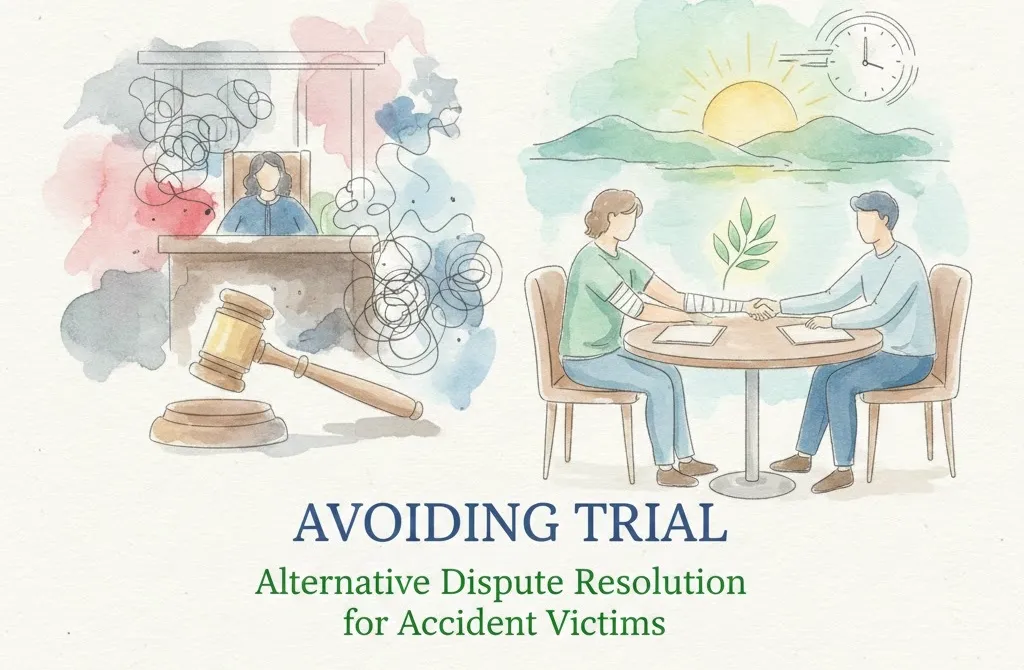
Primary Methods of ADR:
- Mediation: A voluntary, collaborative process where a neutral third party helps both sides reach a mutual agreement. The victims maintain control over the final outcome.
- Arbitration: A more formal process where a neutral “arbitrator” hears the evidence and makes a final, usually binding, decision (similar to a private judge).
Major Benefits Over Trial:
- Speed: Resolves claims in a fraction of the time it takes for a court date.
- Cost: Saves money on legal fees, expert witnesses, and court costs.
- Privacy: Unlike public court records, ADR proceedings are confidential.
- Reduced Stress: The environment is less adversarial and intimidating than a courtroom.
Flexibility and Control: In mediation, parties can craft “creative solutions” that a judge might not be able to order. If mediation fails, victims still generally have the right to take their case to court.
Debunking Myths:
- ADR does not mean giving up your legal rights.
- Mediation settlements and arbitration awards are legally enforceable.
Accidents happen unexpectedly, and the aftermath can be overwhelming. Victims often face physical injuries, emotional stress, medical bills, lost wages, and property damage. On top of these challenges, dealing with insurance companies, determining liability, and pursuing compensation can make recovery even more complicated. Many accident victims assume that filing a lawsuit is the only way to resolve their claims. However, going to court is not always the fastest, most effective, or least stressful solution.
Alternative dispute resolution (ADR), including mediation and arbitration, provides accident victims with powerful tools to resolve claims without enduring a lengthy trial. ADR allows victims to achieve fair settlements more efficiently, while maintaining privacy and often preserving relationships. Understanding how ADR works can help accident victims make informed decisions and avoid unnecessary litigation.
What Is Alternative Dispute Resolution?
Alternative dispute resolution refers to processes that resolve disputes outside the courtroom. The two primary forms are:
- Mediation: A neutral mediator facilitates communication between the parties, helping them reach a voluntary agreement. The mediator does not make a decision or impose a resolution.
- Arbitration: A neutral arbitrator hears evidence and arguments from both sides and issues a decision that may be binding. Arbitration is more formal than mediation but still avoids the complexities of a trial.
For accident victims, ADR provides an alternative path that is often faster, less expensive, and less adversarial than traditional litigation.
Why Accident Victims Should Consider ADR
Accident claims, whether from car accidents, slip-and-fall incidents, workplace injuries, or other accidents, frequently involve disputes over liability, damages, or insurance coverage. Here’s why ADR is particularly beneficial in these cases:
1. Speedy Resolution
Court cases can take months or even years to conclude due to scheduling conflicts, discovery disputes, motions, and trials. ADR allows the parties to schedule hearings quickly and resolve disputes in a fraction of the time.
2. Cost Savings
Litigation is expensive. Attorneys’ fees, court costs, expert witness fees, and other expenses can add up rapidly. ADR generally requires fewer procedural steps, reducing overall legal costs.
3. Privacy
Court trials are public, and details of the accident, medical conditions, or settlement amounts may be exposed. ADR processes are private and confidential, protecting the personal information of accident victims.
4. Control Over the Outcome
In mediation, accident victims have direct input into the resolution, unlike in a trial where a judge or jury makes the final decision. This control allows parties to craft creative solutions that meet their specific needs.
5. Preserving Relationships
Some accidents involve ongoing relationships—such as those between neighbors, businesses, or employers. ADR emphasizes collaboration and communication, which can reduce hostility and maintain professional or personal relationships.
6. Reduced Stress
Going to trial can be intimidating and emotionally draining. ADR creates a structured but less formal environment, allowing accident victims to focus on facts and solutions rather than courtroom procedures.
How Mediation Works for Accident Claims
Mediation is often the first ADR step for accident victims. The process generally includes:
1. Choosing a Mediator
Both parties select a neutral mediator experienced in personal injury or accident claims. An experienced mediator understands the law, insurance processes, and negotiation strategies, making the process more effective. A qualified qualified mediation provider like this(fdrmediation.com) can guide parties through each step.
2. Preparing for Mediation
Parties gather evidence, including police reports, medical records, repair estimates, witness statements, and any other documentation supporting their claims.
3. Mediation Session
The mediator begins by explaining the process, confidentiality rules, and ground rules. Each party has the opportunity to present its perspective and desired outcomes. The mediator then facilitates discussion, identifies common ground, and explores potential solutions.
4. Negotiation and Resolution
Through collaborative negotiation, the parties may reach a mutually acceptable settlement. If an agreement is reached, it is documented in a legally binding written settlement agreement.
5. No Agreement?
If mediation does not result in a settlement, parties retain the right to pursue arbitration or litigation. However, even unsuccessful mediation often clarifies issues and helps narrow the scope of a dispute.
How Arbitration Works for Accident Claims
Arbitration is more formal than mediation and may be used when parties require a binding decision:
1. Selection of an Arbitrator
The parties agree on an arbitrator with experience in accident claims and personal injury law. The arbitrator’s role is to listen to both sides, review evidence, and issue a decision.
2. Pre-Arbitration Procedures
Similar to trial preparation, the arbitrator sets schedules, rules for discovery, and hearing dates. However, arbitration is typically more streamlined than court proceedings.
3. Arbitration Hearing
Each party presents evidence and witnesses, often including accident reports, medical documentation, and expert testimony. The hearing is less formal than a trial, but the arbitrator reviews the evidence thoroughly.
4. Arbitrator’s Decision
The arbitrator issues a written award, which is usually binding. The award resolves the dispute definitively and avoids prolonged litigation.
Key Advantages of ADR for Accident Victims
- Efficiency: ADR processes are faster than court trials.
- Cost-effective: Less preparation, limited discovery, and no lengthy court calendar reduce expenses.
- Flexibility: Parties can tailor the process to the specifics of their claim.
- Privacy: ADR keeps sensitive information out of the public record.
- Control: Mediation allows parties to negotiate creative solutions.
- Expert Guidance: Mediators and arbitrators with experience in accident claims can help streamline resolution and ensure fairness.
Common Misconceptions About ADR
Many accident victims hesitate to use ADR due to misunderstandings:
- “Mediation means giving up my rights.”
Mediation is voluntary, and parties retain complete control over the outcome. - “Arbitration is just like court.”
Arbitration is more streamlined, flexible, and private than traditional litigation. - “ADR isn’t legally binding.”
Mediation agreements can be made binding, and arbitration awards are usually final and enforceable.
Clearing up these misconceptions allows accident victims to approach ADR confidently.
Conclusion
Accident claims can be stressful, complicated, and emotionally charged. While litigation is always an option, it is often slower, more expensive, and more adversarial than necessary. Alternative dispute resolution offers accident victims a practical way to achieve fair settlements efficiently.
Mediation encourages collaboration, preserves relationships, and allows the parties to craft flexible solutions. Arbitration provides a structured process with a binding decision, giving parties closure without the delays of trial.
For accident victims seeking guidance, working with a mediation provider ensures a professional, effective, and focused process that aims to achieve a fair outcome. By considering ADR, accident victims can save time, reduce stress, and move toward recovery and closure with confidence.