
 Jeffrey S. Kelly Group PLLC (Real Estate)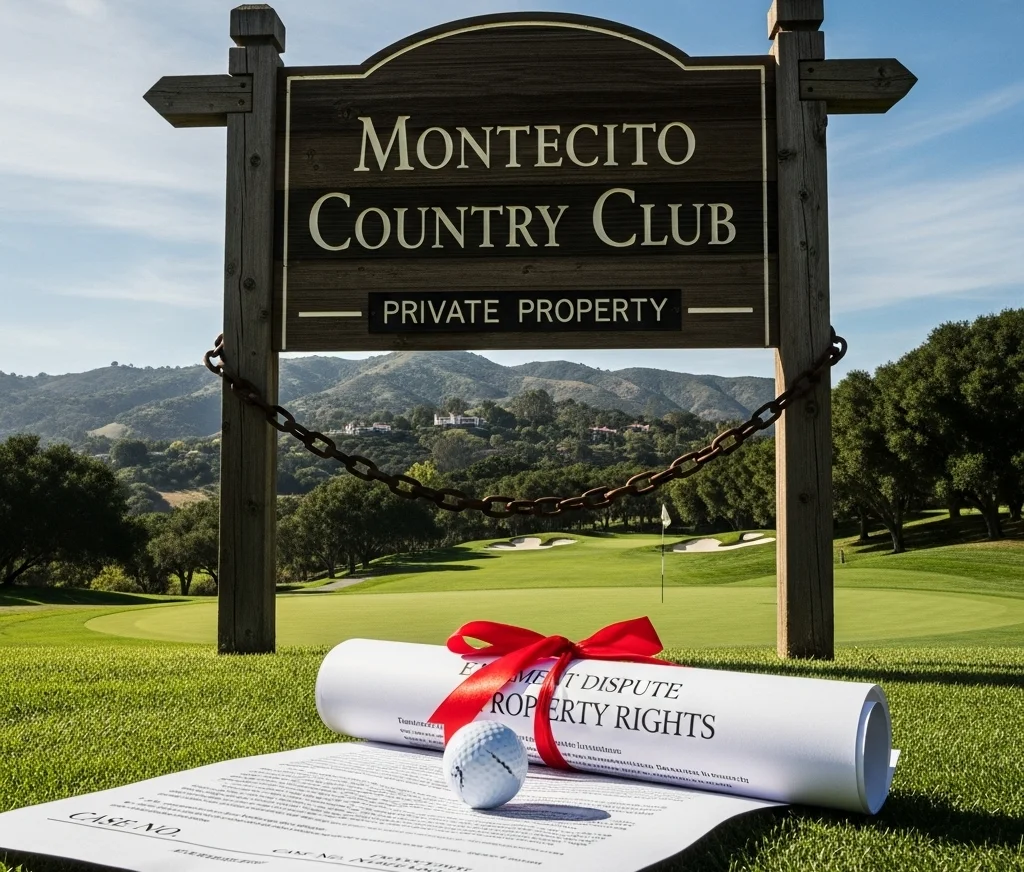
I spent three months digging through court documents, interviewing property lawyers and trying to understand how a couple could spend $200,000 on landscaping only to be ordered by a judge to rip it all out.
The case is Montecito Country Club LLC vs. Kevin Root, et. al., Case No.: 21CV02227. On July 30, 2024, Santa Barbara Superior Court Judge Donna Geck issued a ruling that made me question everything I thought I knew about property ownership. Kevin and Jeannette Root bought their dream home in 2016—a stunning property adjacent to the 14th hole of Montecito Country Club. They paid millions. They owned it.
But did they really?
Turns out a piece of paper signed in 1977—nearly four decades before they bought the place—meant they couldn’t landscape part of their own property. That 47-year-old easement would eventually cost them over $200,000 in landscaping they’d have to remove, plus legal fees I estimate exceeded half a million dollars.
This isn’t just about one family’s expensive mistake. It’s about a fundamental question that keeps property lawyers awake at night: When you buy land, what exactly are you buying?
Montecito: Where History, Wealth and Property Rights Collide
Before I could understand this case, I needed to understand Montecito itself.
Nestled between the Santa Ynez Mountains and the Pacific Ocean, Montecito exists as one of California’s most exclusive enclaves. I’m talking about a place where the median home price hovers around $3-5 million, where Oprah Winfrey, Ellen DeGeneres and Prince Harry have all owned homes. According to Santa Barbara County planning records, Montecito’s unique geography—protected by mountains, kissed by ocean breezes—has attracted the wealthy since the late 1800s.
The Birth of Montecito Country Club
The Montecito Country Club opened it’s doors in 1926, nearly a century ago. Back then, Southern California was transforming from agricultural land into destinations for the wealthy elite. Golf courses represented more than recreation—they symbolized status, exclusivity and careful land management.
The club sits on prime coastal land with panoramic Pacific views. Over the decades, residential development crept closer. Properties adjacent to golf courses became especially desirable. Beautiful views of manicured greens. The prestige of country club adjacency. Premium pricing.
But here’s what I found fascinating: when the club sold off parcels of land for residential development, they weren’t stupid. They retained easements.
What’s an easement? Under California Civil Code Section 801, an easement is “a right of use over the property of another.” Sounds simple enough. It’s not.
The club needed to ensure:
- Access for golf course maintenance equipment.
- Room for potential cart paths.
- Adequate clearance so golf balls didn’t hit houses.
- Ability to maintain turf health with proper sunlight and air circulation.
So when they sold land, they kept rights to use portions of it. Forever.
Ty Warner Enters the Picture
By the early 2000s, Ty Warner had become a billionaire from Beanie Babies—yes, those small stuffed animals that created collecting mania in the 1990s. With his fortune, Warner built a luxury real estate empire centered in Montecito and Santa Barbara.
His portfolio includes:
- Four Seasons Hotel New York.
- San Ysidro Ranch in Montecito.
- Four Seasons Resort The Biltmore Santa Barbara.
- Sandpiper Golf Course.
- Montecito Country Club.
Forbes estimates Warner’s current net worth at $6.4 billion. He’s famously reclusive, rarely gives interviews and according to Chicago Magazine’s profile, he’s been compared to Howard Hughes for his eccentric business practices and intense privacy.
Warner purchased Montecito Country Club as part of his Montecito acquisitions. Under his ownership, the club underwent renovations. That wealthy, exclusive atmosphere intensified.
And Warner, as the Roots would discover, does not give up property rights easily.
Montecito Country Club
A Timeline from Founding to the 2024 Easement Ruling