 Adriana Campos ( Colorado )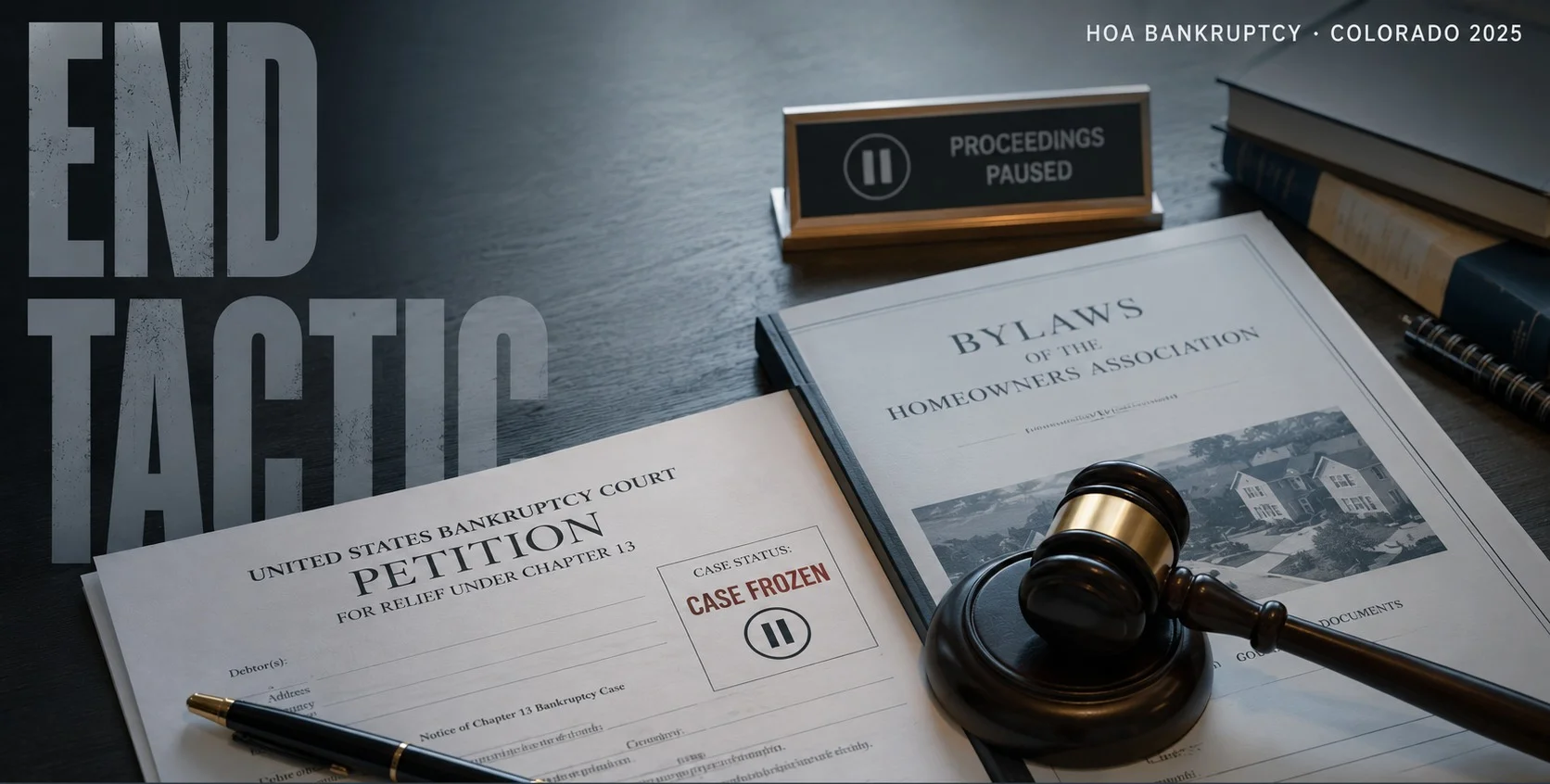
A 370-lot community near Brighton, Colorado watched it’s own homeowners association file for Chapter 11 bankruptcy in July 2025 — not because the money ran out, but because a lawsuit from it’s own residents was costing too much to fight. The bankruptcy froze that lawsuit in place and now a federal judge has to decide whether that’s a legitimate use of the Bankruptcy Code or an escape hatch.
- The HOA filed Chapter 11 on July 15, 2025 (Case No. 25-14385, D. Colo.) after spending roughly $900,000 defending a homeowner lawsuit.
- The board calls it an “end tactic” to stop the financial drain; the plaintiffs call it a move to dodge a 2026 jury trial and a subpoena of bank records.
- The automatic stay paused the homeowner’s case the moment the petition hit the docket.
- A motion to dismiss the bankruptcy as a bad-faith filing is the fight to watch.
Bottom line for homeowners: your assessments don’t disappear in an HOA bankruptcy — but who controls your community’s money for the next few years is being decided in federal court right now.
How a Landscaping Contract Ended Up in Federal Bankruptcy Court
I’ve covered plenty of HOA disputes and they usually burn out at the angry-annual-meeting stage — this one didn’t. Back in 2023, twenty-one homeowners at Todd Creek Farms sued their association’s board, alleging a “swap” of board member’s terms that violated the bylaws, ignored records requests and a landscaping contract they claim quietly benefited the board president to the tune of six figures, an allegation he and the company firmly deny. Two years of litigation later, the association had burned through nearly a million dollars in defense fees — reporting from BusinessDen noted the strange twist that oil and gas royalties from drilling on the property helped foot that bill, money that might otherwise have gone back to residents.
The Filing That Stopped Everything Cold
Then came the morning of July 15, 2025, when the plaintiff’s lawyers — reportedly close to subpoenaing the bank records they’d been chasing — got notice that the HOA had filed a Chapter 11 petition in the U.S. Bankruptcy Court for the District of Colorado. Filing triggers the automatic stay, a federal freeze on essentially every lawsuit and collection effort against the debtor and it doesn’t care how close you were to a deposition; the state case stopped that day. What makes this one unusual is the board’s own candor about it — their newsletter called the filing “not a delay tactic” but “an end tactic,” and openly framed it as the path to shutting down the litigation, which is exactly the framing the plaintiffs now hope to use against them.
What Bankruptcy Can and Can’t Do to Your Money
Here’s the part I always have to untangle for people: an HOA filing for bankruptcy is not the same as your obligations going away and it’s not the same as the board losing power either. Under Chapter 11, the existing board keeps running the association as a “debtor in possession” — same people, same meetings, now with a federal court looking over their shoulder — and Cornell’s Legal Information Institute has a readable breakdown of how the automatic stay works if you want the statute itself. Your assessments keep coming due, the covenants stay recorded against your deed and the trails still get mowed.
What Chapter 11 can do is restructure what the association owes — stretch out debts, pay some creditors a fraction and in this case, potentially convert a hostile jury verdict that never happened into a claim that gets negotiated in a plan instead. That’s the strategic heart of this filing and it’s worth sitting with how odd it is: the HOA said itself that this wasn’t about mismanagement, lack of funds or unpaid vendors and that the association holds more assets than debts. Solvent debtors filing to escape litigation is a known move in corporate America; watching a neighborhood association run the same play is something else.
The Bad-Faith Fight Is the Whole Ballgame
Bankruptcy courts can dismiss a Chapter 11 case filed without a legitimate reorganizational purpose and that’s precisely the question here — the plaintiff’s attorney has said the court will have to determine whether this petition reflects actual solvency problems or a filing made solely to end a lawsuit and avoid accountability and through early 2026 the court has been weighing exactly that motion while keeping the case administratively alive. If the judge finds bad faith, the petition gets tossed, the stay lifts and that jury trial comes roaring back. If the filing survives, the homeowner’s claims likely get resolved as creditor claims inside a plan, on the HOA’s timeline, with no jury in sight — spend twenty minutes in the r/HOA subreddit and you’ll find owners across the country discovering how little leverage individual members have once these fights institutionalize.
What Happens Next
Watch three things: the ruling on the dismissal motion, the plan of reorganization the HOA eventually files (that’s where any special assessment would surface) and the 2026 board election, since the community announced a candidate slate even while the case grinds on. My honest read after years around cases like this — whoever wins in court, the residents already lost something harder to restructure than debt, because $900,000 of community money bought two years of litigation and a federal docket number instead of a single repaired fence. Trust doesn’t file a proof of claim.