 kerry-gp ( law, procedures, system )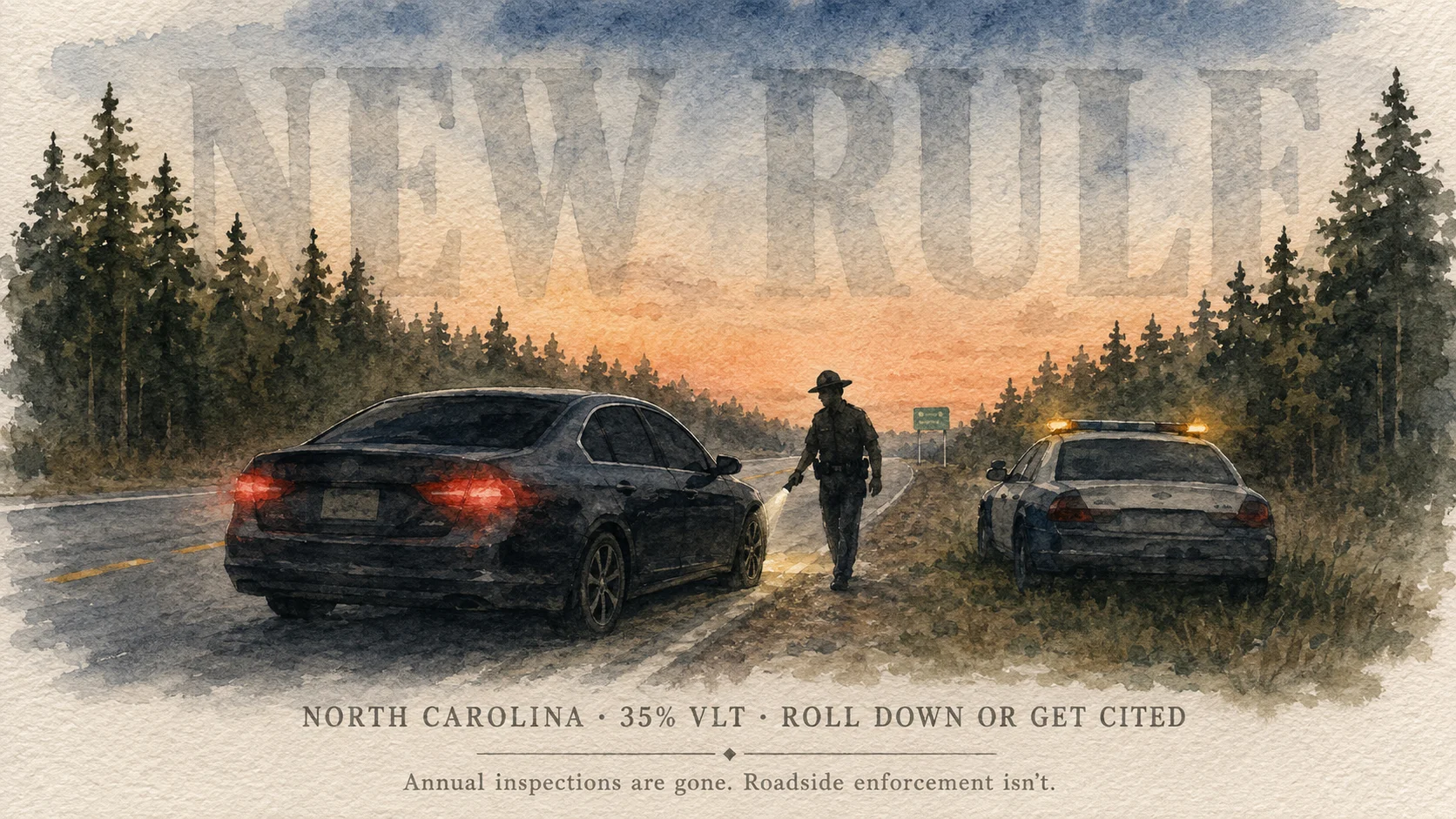
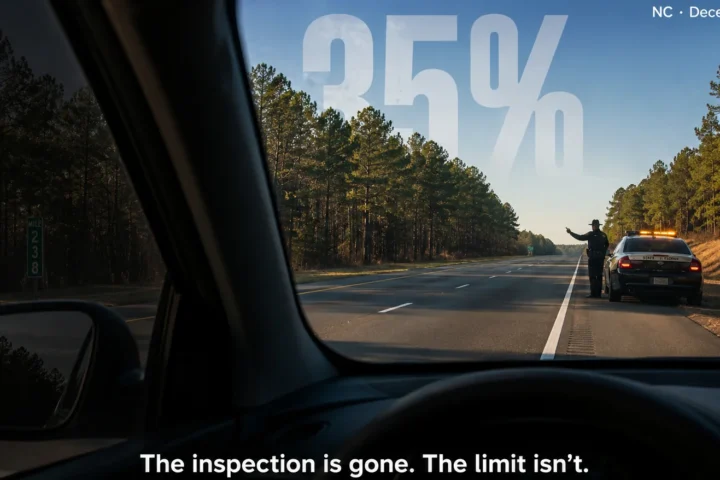
North Carolina didn’t rewrite its tint limits — 35% VLT is still the darkest legal shade on most windows, same as it’s been. What changed on December 1, 2025 is how enforcement works. Annual inspection checks for tint are gone. In their place: if an officer approaches your vehicle during a traffic stop, you’re now legally required to roll down the window on their side. That’s the headline. Everything below is the detail.
The Change Nobody Really Explained Properly
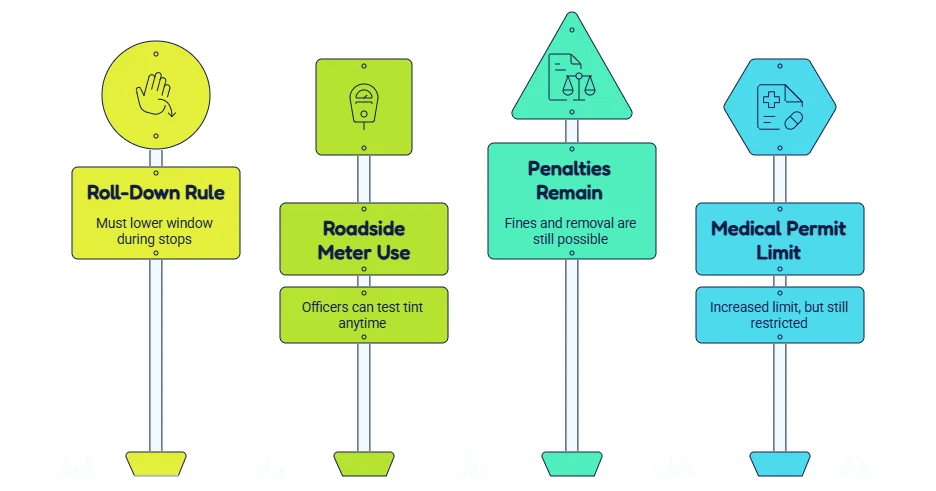
Most of the coverage around this focused on what went away — the annual tint inspection. And sure, that’s convenient. One less thing to worry about at the DMV.
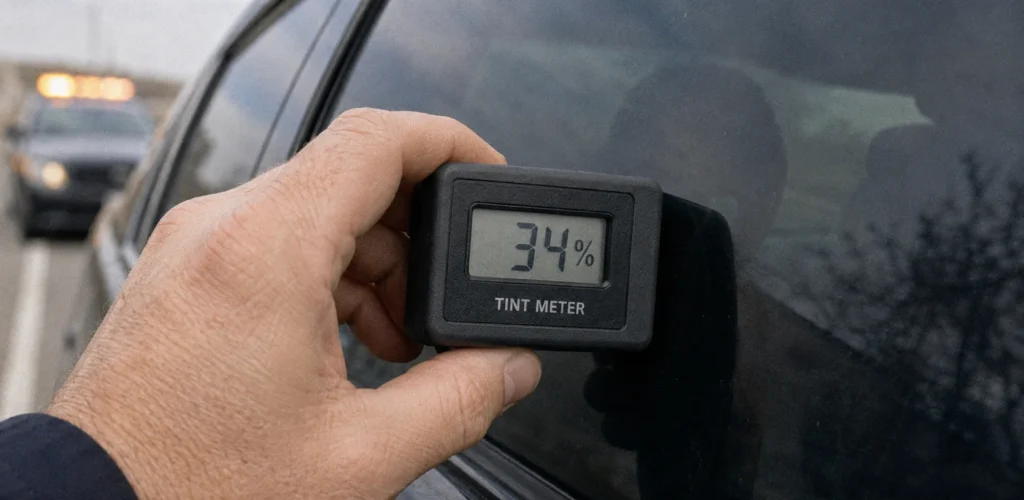
But the roll-down rule is the part that actually matters day-to-day. Under NC General Statute § 20-127, failing to lower your window when an officer approaches is now its own compliance issue — separate from whether your tint is even legal. Officers can still pull out a tint meter on the spot and cite you if your film is too dark. The inspection checkbox is gone; the enforcement isn’t.
A thread on r/NorthCarolina captured the confusion well — plenty of people assumed “no more inspection” meant “no more enforcement.” It doesn’t.
What the Actual Limits Are (And Have Always Been)
The NCDMV’s tint page hasn’t had to update the darkness limits because they didn’t change. Here’s where things stand:
| Vehicle Type | Windshield | Front Side | Back Side | Rear |
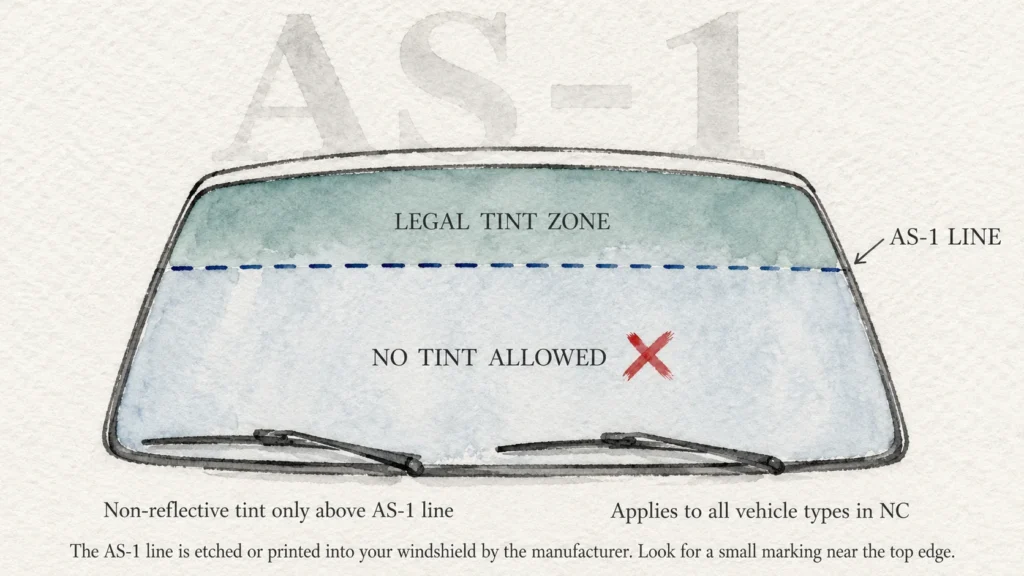
| Sedan | Non-reflective tint above AS-1 line only | 35% VLT minimum | 35% VLT minimum | 35% VLT minimum |
| SUV / Van / Truck | Non-reflective tint above AS-1 line only | 35% VLT minimum | Exempt from 35% rule | Exempt from 35% rule |
A quick note on that SUV exemption — it’s real, but it doesn’t mean anything goes. Reflectivity is still capped at 20%, and red, yellow, and amber tints are prohibited across all vehicle types regardless of darkness level.
Visible Light Transmittance (VLT), for anyone not familiar: it’s the percentage of light the film allows through. Lower number = darker tint. 35% VLT lets in more than a third of available light. 5% — “limo tint” — lets in almost none.
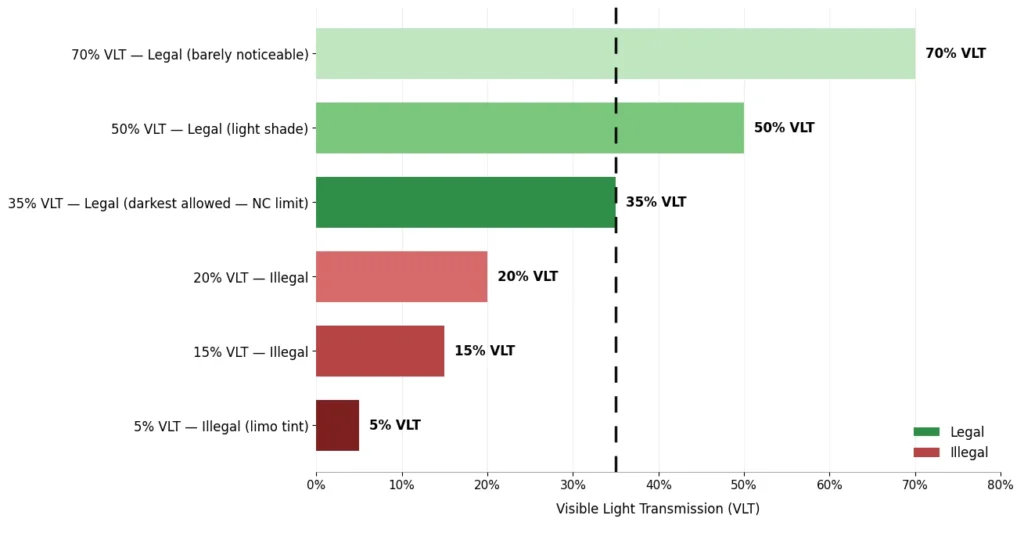
Quick legality breakdown:
- 70% VLT — legal, barely noticeable
- 50% VLT — legal, light shade
- 35% VLT — legal, the darkest you can go
- 20% VLT — illegal
- 15% VLT — illegal
- 5% VLT — illegal, no question
The technical fine print: windows need to transmit more than 32% light to carry a conclusive presumption of legality — that 3-point buffer exists because tint meters have some variance. Don’t try to game it.
Medical Exemptions Got a Quiet Upgrade
This part didn’t make many headlines. Drivers with documented medical conditions — certain light sensitivities, skin conditions, eye disorders — can apply for a Medical Exception Permit through the NCDMV, which allows darker tint than the standard limit.
What changed: the number of active permits a single person can hold went from two to four. Permits run up to five years each and require sign-off from a licensed physician or optometrist. If you’ve been navigating the old two-permit ceiling and it’s been a problem, that ceiling just doubled.
Penalties If You’re Out of Compliance
No annual inspection doesn’t mean no consequences. During any traffic stop — for any reason — an officer can test your tint on the spot. If it fails:
- You’ll get cited and fined.
- You may be required to remove the tint at your own cost.
- Repeat violations can escalate to a Class III misdemeanor.
That last point is the one worth sitting with. A misdemeanor over window film sounds absurd until it’s on your record. If you’re driving through NC and you’re not sure where your tint sits, it’s worth getting it checked before someone with a meter does it for you at the roadside.
Traveling Through NC? Read This Part
If you’re coming in from a state with looser tint laws and several bordering states do allow darker film — North Carolina’s limits apply the moment you’re on NC roads. Out-of-state registration doesn’t exempt you. Officers can and do cite out-of-state vehicles.
The practical advice: know your tint percentage before you drive through. If you had it done at a shop, they should have a certificate in the glovebox. Keep it there.