 Christopher Morgan (Bankruptcy & Finance)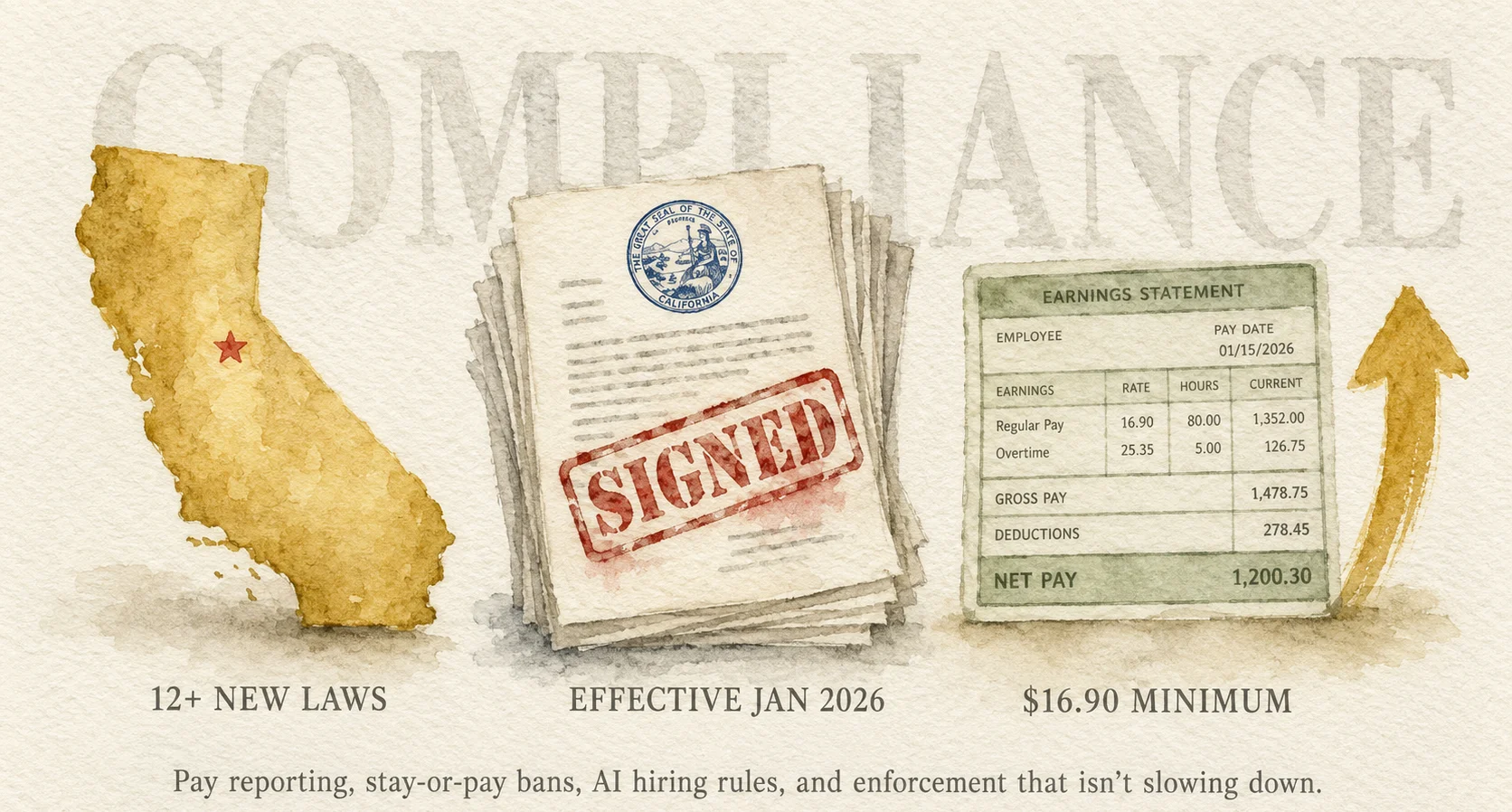
Quick Reference: What’s Changing and When
| Law / Change | Effective Date | Who It Affects |
|---|---|---|
| SB 464 – Pay data penalties mandatory | May 12, 2026 (filing deadline) | Employers with 100+ employees |
| SB 642 – Pay Equity Enforcement Act | January 1, 2026 | All employers posting jobs |
| SB 294 – Know Your Rights notice | February 1, 2026 | All employers |
| AB 692 – Ban on stay-or-pay clauses | January 1, 2026 | All employers |
| AB 406 – Expanded sick leave uses | January 1, 2026 | All employers |
| SB 648 – Tip theft enforcement | January 1, 2026 | Hospitality, food service |
| Minimum wage increase to $16.90/hr | January 1, 2026 | All employers |
| Confined spaces construction standard | January 1, 2026 | Construction employers |
Originally Published ast California Employment Law NEWS November 2025
Updated in July 2026
California wrapped up one of its busiest legislative years, with Governor Newsom signing over a dozen employment bills before the October 13 deadline, most kicking in January 1, 2026. Pay reporting just got more teeth, “stay-or-pay” clauses are now banned and workers are getting a new annual rights notice employers have to send out. On top of new laws, state agencies kept enforcement pressure high, with wage theft citations crossing $1.2 million in some individual cases.
The Pay Data Overhaul
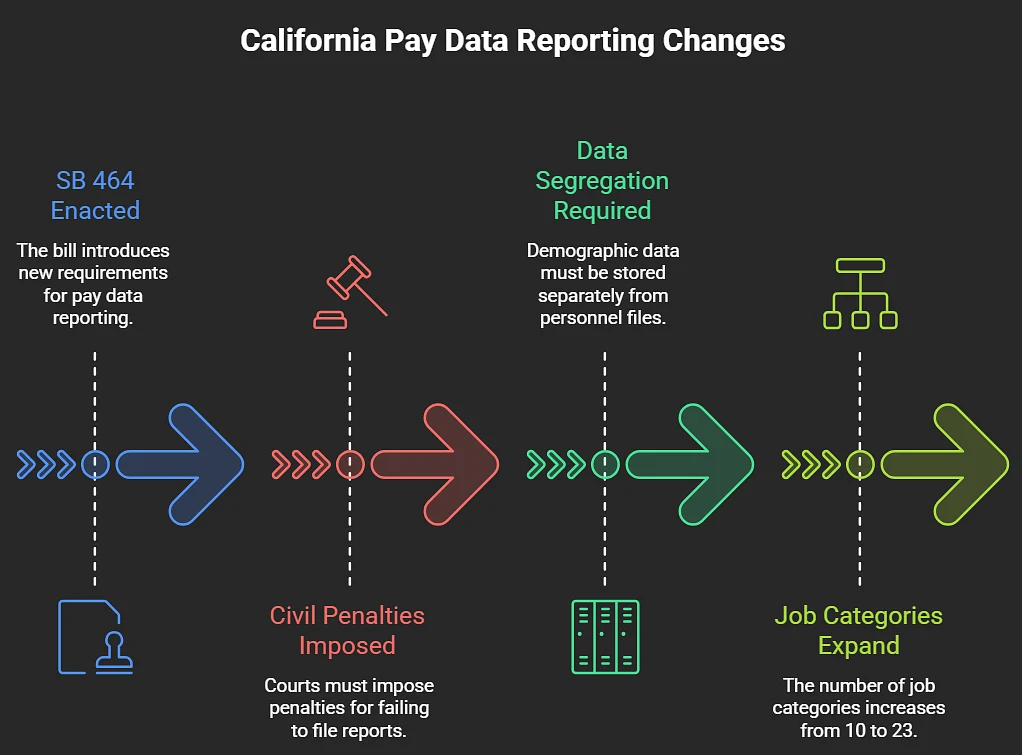
SB 464 slipped past most people. California already required large private employers, 100+ employees, to file annual pay data reports. That requirement isn’t new. The consequences are.
Starting with the 2026 report cycle, courts must impose civil penalties for failing to file. Previously judges had discretion, they could let it slide. That’s gone now. Miss the May 12, 2026 deadline and penalties aren’t optional anymore.
There’s also a data segregation requirement now. Demographic information collected for the report has to be stored separately from regular personnel files. Easy to overlook, until an auditor asks for it.
The bigger shift comes in 2027: reporting job categories expand from 10 to 23, aligned to the Standard Occupational Classification System. That’s more than double the current categories. Companies that think they’ve got pay data compliance figured out will need to revisit their entire classification structure before that hits.
Pay Transparency Got Sharper
SB 642, the “Pay Equity Enforcement Act,” changed both the California Equal Pay Act and existing pay transparency laws. Effective January 1, 2026.
The job posting requirement was already in place in various forms, but the new language is more specific: job postings must include a good faith estimate of what the employer actually expects to pay upon hire. Not a range so broad it tells you nothing. The estimate has to reflect what the employer genuinely intends to offer.
What’s broader is the definition of “wages,” it now explicitly covers bonuses, stock options, and benefits. So equal pay claims aren’t just about base salary anymore. If two employees doing the same job have different equity packages or bonus structures with no legitimate justification, that’s now squarely in scope.
The statute of limitations went from two years to three, and recovery can reach back six. For someone who only realized they were being underpaid after leaving a job two years ago, that changes everything.
Non-binary gender is now explicitly a protected class under these provisions as well. FEHA arguably covered it before, but “arguably” is not “explicitly,” and now it’s explicit.
For employees who travel for work or work across multiple locations, field reps, traveling nurses, regional managers, the broadened wage definition matters directly. Expense reimbursements, travel bonuses, per diems: all of it potentially falls under the expanded “wages” umbrella when pay equity is being evaluated.
Every Employee Gets a “Know Your Rights” Notice Now
SB 294, the Workplace Know Your Rights Act, requires employers to provide a written notice to all employees annually covering essential workplace rights. Labor laws, workers’ comp, immigration inspection laws, right to unionize. This goes into effect on February 1, 2026.
The Labor Commissioner must publish a template notice so employers don’t have to draft their own from scratch.
There’s also a March 30, 2026 deadline for a specific requirement: employers must give workers the option to designate an emergency contact for immigration or law enforcement purposes. Employees aren’t required to do it, but employers are required to offer it.
“Stay-or-Pay” Clauses Are Done
AB 692 started narrow and ended up broad. From January 1, 2026, employers can no longer stick clauses into employment contracts that make workers owe money for training costs or other debts if they quit.
A common version of this: company hires someone, pays for their certification, then buries a line in the contract saying the employee owes $8,000 back if they leave within two years. That held up in court until now. It won’t anymore.
There are limited exceptions, certain tuition reimbursement arrangements and retention bonuses structured carefully can still survive, but the default position flipped. The burden is now on the employer to justify any repayment clause, not on the worker to fight it.
What the Courts Said
The California Supreme Court’s decision in Iloff v. LaPaille, decided August 21, 2025, kept generating compliance discussion through November because of what it means in practice.
The issue was liquidated damages for minimum wage violations, essentially double the unpaid wages. Employers had been using “good faith belief” as a defense: we didn’t know we were violating the law, so don’t hit us with the penalty. The Court shut that down. A genuine good faith defense now requires showing the employer actually made a reasonable attempt to figure out what the law required. Not knowing by itself doesn’t work anymore.
The same decision also clarified something on the other side: employees can’t sue privately to recover administrative penalties for paid sick leave violations. That enforcement runs through agencies, not individual lawsuits.
The other case worth knowing, People ex rel. Garcia v. Superior Court from July 2025, established that elected officials aren’t “employees” under Labor Code section 1102.5 whistleblower protections. Narrower ruling, but relevant for anyone working in or around public sector employment.
Enforcement Numbers That Should Get Attention
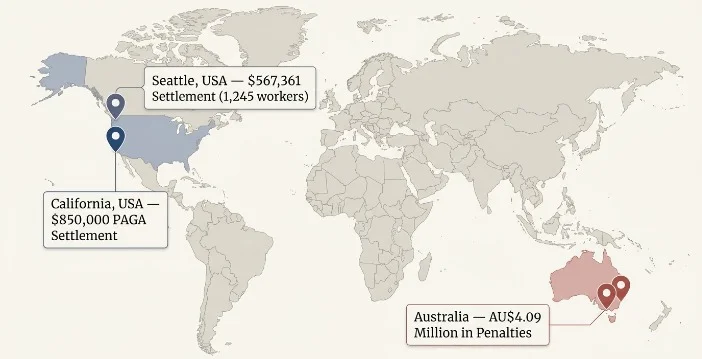
The Labor Commissioner’s Bureau of Field Enforcement didn’t slow down in November. A few specific actions stand out:
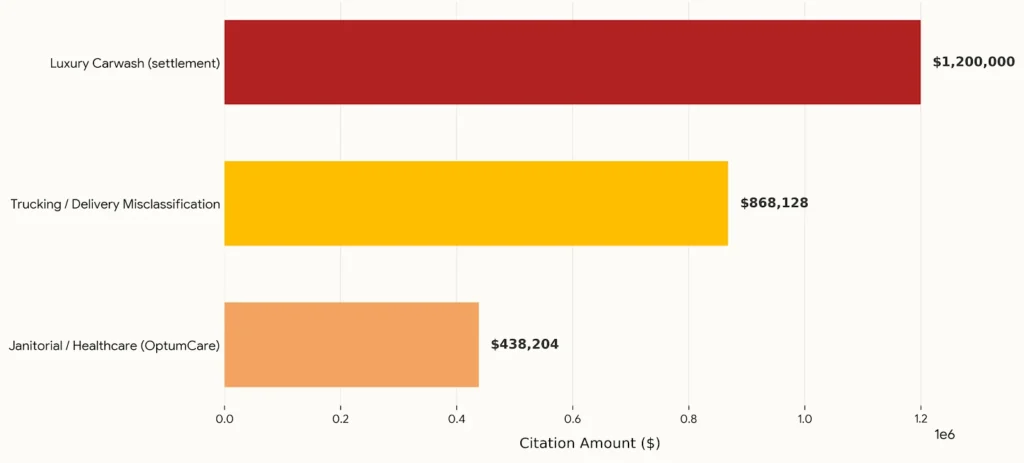
The misclassification actions are worth paying close attention to. Delivery drivers being classified as contractors rather than employees is a pattern Cal/OSHA and BOFE have been targeting aggressively. If your business uses contract delivery or gig-model logistics, the scrutiny is real and ongoing.
Throughout all of 2025, the DLSE issued over 3,600 notices to discontinue wage and hour violations. That’s not a number that suggests enforcement is easing up.
AI in Hiring: Already Regulated, Still Evolving
Regulations that came into effect on October 1, 2025 address how the Fair Employment and Housing Act applies when an employer relies on AI or automated decision making in hiring, promotions or terminations. These rules are now live.
The rules come from the California Civil Rights Council. Core requirements: no discriminatory outputs from your ADS tools, and you have to retain automated decision system data for at least four years.
Governor Newsom vetoed a separate bill that would have required employers to disclose when they’re using AI in employment decisions. So the anti-discrimination obligation exists, but a blanket disclosure requirement doesn’t, at least not yet. That tension is probably going to produce more legislation in 2026.
Minimum Wage Moves Up
Effective January 1, 2026, California’s statewide minimum wage rises to $16.90 per hour. The salary threshold for exempt employees moves to $70,304 annually.
If you have salaried employees currently classified as exempt, meaning they’re not eligible for overtime, check their salaries against that new floor. Anyone below $70,304 needs either a raise or a reclassification before January 1.
Cal/OSHA Updates Worth Bookmarking
Two separate things happening on the safety regulation side.
Workplace Violence Prevention: on November 12, 2025, a Cal/OSHA advisory committee met to work through a draft standard that’s been contentious. Open questions include exceptions for small employers and whether “hostile work environment” qualifies as a workplace violence hazard. The Standards Board has until December 31, 2026 to finalize it.
Confined Spaces in Construction: less attention but already in effect as of January 1, 2026. Updated definitions, new requirement that employers use a “competent person” to identify and evaluate permit-required confined spaces. If you’re in construction, this one’s already live.