 Adriana Campos ( Colorado )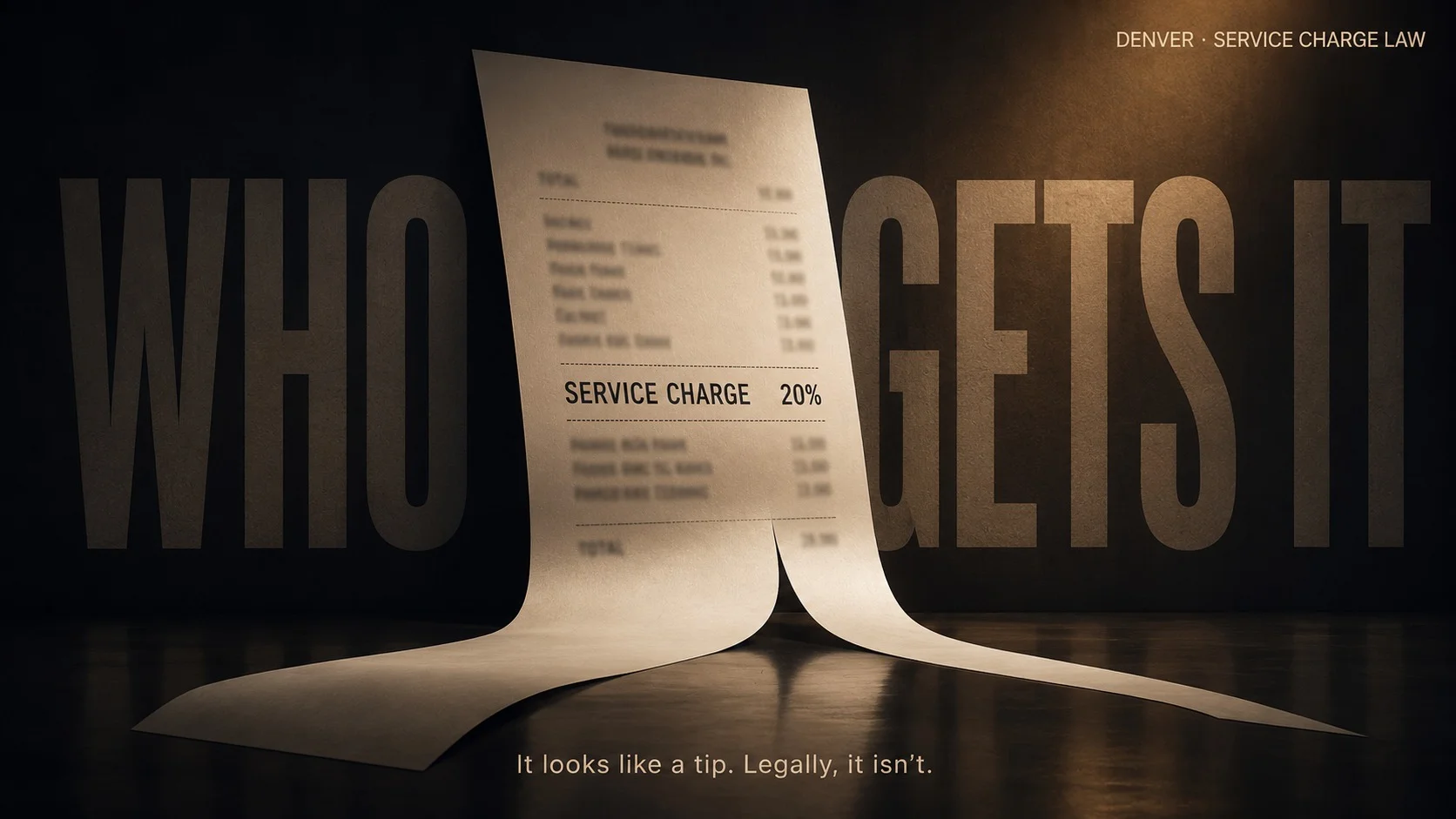
The Case at a Glance
| Restaurant group | Culinary Creative Group (CCG) — Kumoya, Fox and the Hen, Tap and Burger, Forget Me Not, Señor Bear, Bar Dough, Mister Oso |
| Service charge | 20%, mandatory, described on checks as “equitably distributed to employees” |
| What plaintiffs alleged | Roughly 30% of the charge went to management; front-of-house wages were cut to tipped minimum in Jan 2024; state-mandated rest breaks were denied |
| What CCG says | Service fees are legally different from tips under Colorado law; management may be included; no wrongdoing |
| Where it landed | Dismissed to arbitration, March 2026 — Judge Sarah B. Wallace did not rule on the merits |
| The unusual part | Both sides agreed on a proposed transparency standard for service-charge disclosure |
Why This Case Matters Beyond CCG
The Numbers Diners Rarely See
A 20% mandatory line on a Denver check looks like a tip until you read the receipt language and even then most diners don’t. The Culinary Creative Group case turned on what happens to that 20% after it leaves the customer’s card and the answer, per the lawsuit, was that a meaningful slice never reached the servers customers assumed it was for.
Former Kumoya employee Faith Lindstrom told CBS Colorado that when staff pushed for numbers, the company disclosed roughly 30% went to management. Paychecks, she said, “always stayed the same and it was practically nothing. Nobody could tell us where the money was going.”
Why Colorado Restaurants Can Do This Legally — Mostly
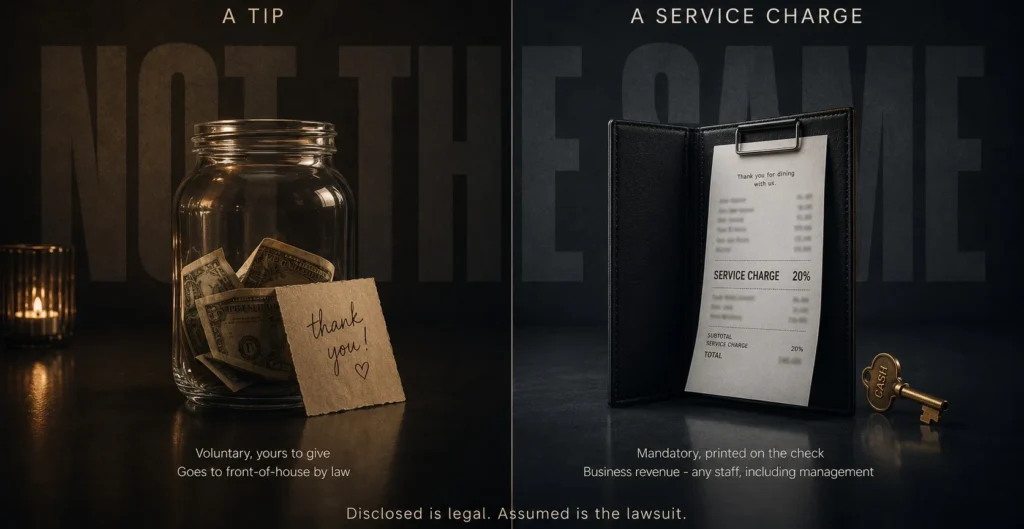
Here’s the twist most coverage misses: Colorado law treats mandatory service charges as business revenue, not tips, provided customers are told about them. Under the Colorado Department of Labor’s INFO #3C guidance, a restaurant may distribute a service charge to any employee it chooses, including management and that is the legal ground CCG stood on.
What restaurants cannot do is claim a “tip credit” (paying a sub-minimum cash wage) while treating the service charge as if it were reaching servers like a tip. The plaintiff’s theory sat exactly on that line: cash wages dropped to tipped-minimum in January 2024, which only made mathematical sense if the service charge was flowing to front-of-house but if it wasn’t, the sub-minimum wage was a second violation stacked on the first.
Two facts about the same 20%, in other words, that couldn’t both be true.
What CCG Says Happened
The Company’s Position
CCG’s then-CEO Juan Padro pushed back on the record and drew the distinction the law actually recognizes: “Under Colorado law, service fees may be distributed to any employees, including management, at the restaurant’s discretion. All guest checks at CCG establishments clearly disclose that the checks include a 20% charge which is labeled as a ‘service fee.’
Our guest checks also include an entirely separate line for guests to leave ‘tips.'” At Kumoya, Padro said the manager share was 10%, not the 30% figure the plaintiffs described. On the rest-break claim, the company’s position was that it’s compensation model was built to deliver stable, competitive pay and that the allegations were false.
Both statements can be true at once and still leave the plaintiff’s case intact, which is part of why this one didn’t produce a clean answer.
The Arbitration Exit and What It Left Behind
Judge Sarah B. Wallace dismissed the case in March 2026, routing the dispute to arbitration and expressly declining to rule on the merits, writing that the court might not have jurisdiction. That is a procedural exit, not a decision, the class-wide question of whether CCG’s disclosures were sufficient never received a binding answer, which means the next Denver restaurant to structure a service charge the same way is not bound to anything a court said about CCG’s specifically.
The Standard Both Sides Agreed To

The unusual finish worth pausing on: as part of the exit, the plaintiffs and CCG landed on a proposed transparency standard for how a Denver restaurant should describe a mandatory service charge and the company adopted the language on it’s Kumoya checks:
“The 20% service charge on your check enables us to fairly compensate every team member who contributes to your experience. It is not a tip or gratuity. Any tip you leave is given entirely to the front-of-house team under Colorado law.”
Read closely, that receipt does the work Colorado law asks a service charge to do names the charge, disclaims it as a tip, tells the customer where a voluntary tip actually goes. Plaintiff’s attorney Zachary Harrison called it a template that could add clarity industry-wide; new CCG CEO Richard Flaherty said the company was “pleased that the lawsuit has been dismissed and are tying up loose ends in arbitration.”