 Mohammad Abdel-Rahman Accident & Injury Lawyer
Key Takeaways:
- Every commercial truck records speed, braking, throttle and engine data through it’s Electronic Control Module (ECM). That data can disappear if the truck gets repaired or the system overwrites it.
- Florida’s statute of limitations for personal injury dropped from four years to two years after the 2023 tort reform law. Evidence preservation needs to happen in days, not months.
- Liability in truck crashes rarely stops at the driver. The chain extends to the trucking company, the freight broker, the maintenance contractor and sometimes the cargo loader.
- Florida juries have returned verdicts of $1 billion, $141.5 million and $3 million in recent truck crash cases — and in each one, the trucking company’s hiring and safety failures were central to the outcome.
The Computer That Saw Everything
A truck driver says he was doing 55. The other driver’s family says the impact felt like 70. The police report estimates speed from skid marks, which is better than guessing but not much.
Meanwhile, the truck’s ECM recorded exactly what happened. Speed at 10-second intervals. Throttle position. Whether the brakes were applied and how hard and when. Engine RPM. Cruise control status. Even how many seconds passed between the moment the driver’s foot moved off the accelerator and the moment it hit the brake pedal.
The ECM doesn’t forget, doesn’t exaggerate and doesn’t have a reason to lie. That’s what makes it the single most consequential piece of evidence in most Florida truck accident cases — and it’s also the evidence most likely to vanish before anyone asks for it.
How Data Gets Lost
ECMs don’t store data indefinitely. Depending on the manufacturer and model, the system may retain crash-event data for a limited number of trigger events before overwriting. If the truck is repaired, the ECM may be reset or replaced. If the trucking company sends the vehicle back into service — which they’re financially motivated to do as quickly as possible — the pre-crash data can be gone within weeks.
ELD (Electronic Logging Device) data, which tracks hours of service, is governed by FMCSA regulations under 49 CFR Part 395. Carriers are required to retain ELD records for six months. But the ECM crash data and the ELD compliance data are different systems recording different things. The six-month retention rule doesn’t necessarily protect the crash-event snapshot.
Which is why spoliation letters exist. An attorney sends a written preservation demand to the trucking company, the driver, the insurer and sometimes the truck manufacturer — putting them on legal notice to preserve all electronic data, maintenance records, driver logs and dispatch communications. Once that letter is received, destroying or overwriting the data creates a legal obligation problem that can result in sanctions, adverse inference instructions (the court tells the jury to assume the destroyed evidence was unfavourable to the defendant) or both.
That letter needs to go out in days, not weeks. Someone who waits three months to contact a lawyer may find the truck has been repaired, re-sold or scrapped — and the data with it. Click here to connect with attorneys who handle Tampa truck accident litigation.
Who’s Actually on the Hook — It’s Rarely the Driver Alone
The driver is the person behind the wheel. But in Florida truck crash litigation, the driver is often the least significant defendant financially. The real exposure sits with the companies behind them.
The trucking company (motor carrier) is liable under respondeat superior for the driver’s negligence if the driver is an employee acting within the scope of employment. Florida applies this doctrine broadly in commercial vehicle cases.
The freight broker — the company that arranged the shipment — occupies a legally contested space. The 2024 SCOTUS decision in Alvarez v. XPO Logistics Worldwide addressed whether federal law preempts state negligence claims against brokers. The question of broker liability is evolving and Florida courts are watching closely. If the broker hired a carrier with a known safety record or failed to vet the driver’s qualifications, they may share liability depending on how the claim is framed.
Maintenance contractors can be liable if a brake failure, tyre blowout or steering malfunction contributed to the crash and the maintenance records show deferred repairs or skipped inspections.
Cargo loaders face exposure if an improperly loaded or unsecured load shifted during transit and caused the driver to lose control.
And the trucking company’s insurer — which typically carries policies in the millions, far above standard auto coverage — has it’s own interests. Their adjusters are trained to minimise payouts and they start working the moment the crash is reported. By the time the injured person contacts a lawyer, the insurer may already have recorded a statement, inspected the scene and formed a liability position.
Three Florida Verdicts That Show How This Plays Out
Dzion v. AJD Business Services & Kahkashan Carrier — $1 Billion (Nassau County, 2021)
Connor Dzion was 18 years old, two weeks into his freshman year at the University of North Florida. Labour Day weekend, 2017. He was driving on I-95 near State Road 200 when an AJD Business Services truck driver — distracted by his phone — rear-ended a vehicle, causing a massive pileup that blocked traffic for an hour. Connor stopped. Hundreds of cars stopped. Then a Kahkashan Carrier truck came through at 70 miles per hour on cruise control and ploughed into 20 stationary vehicles.
Connor died at the scene.
At trial, it came out that the Kahkashan driver had been hired without a proper background check and didn’t hold a valid commercial driver’s licence. He had prior violations for speeding and aggressive driving. The AJD driver admitted to being on his phone.
The jury deliberated for four hours and returned a verdict of $1 billion — $100 million in compensatory damages and $900 million in punitive damages, split between the two companies.
The verdict will almost certainly be reduced on appeal. But it sent a message about what happens when trucking companies skip background checks and put unqualified drivers in 80,000-pound vehicles on Florida’s busiest highways.
K&N Logging LLC — $141.5 Million (Nassau County, 2024)
March 2020. State Road 200 again. A logging truck owned by K&N Logging, driven by Ellis Trollinger, slammed into the rear of a vehicle in a construction zone traffic slowdown. The collision triggered a chain reaction involving five cars.
A five-year-old girl suffered permanent brain damage.
At trial — which lasted four weeks — the jury learned Trollinger’s history: methamphetamine possession, battery on a law enforcement officer, aggravated assault with a deadly weapon, DUI, running a red light in a commercial vehicle. K&N Logging never ran a background check before hiring him.
Unanimous verdict. $141.5 million. Morgan & Morgan represented the plaintiffs and their argument was straightforward — the company put a dangerous driver in control of an 80,000-pound truck without spending five minutes checking his record.
Central Florida Trucking Settlement — $3 Million (2025)
A less dramatic number, but a case that illustrates the evidence chain. A commercial truck crash in Central Florida resulted in a $3 million settlement after the plaintiff’s attorneys secured the truck’s ECM data, analysed the driver’s hours-of-service logs, reviewed the trucking company’s maintenance records and investigated the company’s hiring and supervision practices.
The ECM data showed what the driver was doing in the seconds before impact. The ELD records showed whether he was in compliance with federal rest requirements. The maintenance logs showed whether the truck had been properly serviced. And the hiring records showed whether the company had vetted the driver’s qualifications.
Each layer of evidence targeted a different defendant in the liability chain. That’s what a properly built truck accident case looks like — not one argument, but several, each supported by a different data source.
Florida’s Two-Year Deadline and Why Evidence Doesn’t Wait for It
Florida’s 2023 tort reform law (HB 837) cut the statute of limitations for personal injury from four years to two. That applies to any accident occurring on or after March 24, 2023.
Two years sounds like enough time. But the evidence that actually wins these cases — ECM data, surveillance footage, witness statements, maintenance records — operates on timelines measured in days and weeks, not years.
The security camera at the petrol station near the crash site? Probably overwrites every 7 to 14 days. The dashcam footage from a passing vehicle? The owner might format the SD card this weekend. The truck’s ECM crash data? Could be gone the moment the carrier’s mechanic clears the fault codes and sends the truck back on the road.
Florida also switched from pure comparative negligence to modified comparative negligence under the same 2023 reform. If you’re found more than 50% at fault, you recover nothing. That makes proving the truck driver’s and the trucking company’s percentage of fault more critical than it was before — and the ECM data is often the evidence that establishes that percentage.
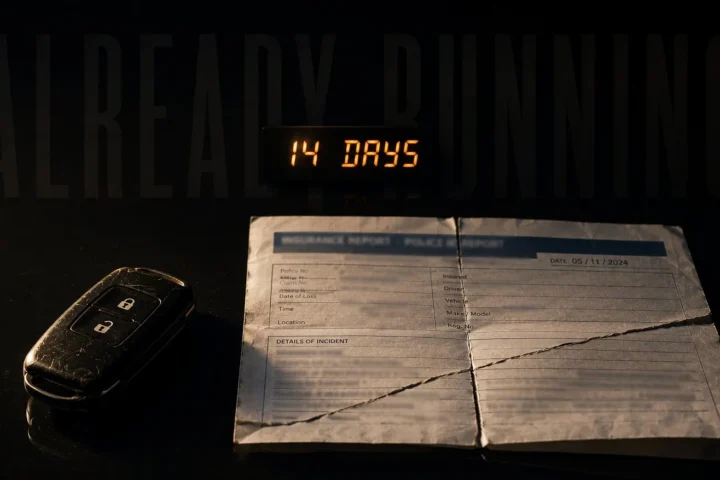
If you’re dealing with a truck crash in Tampa, where I-4, I-75 and I-275 converge and commercial trucks are part of the daily traffic landscape, the data that could determine your case is already on a countdown.
References
- 49 CFR Part 395 — FMCSA Hours of Service and ELD requirements.
- 49 CFR Part 563 — Event Data Recorder requirements (December 2024 final rule expanding recording duration to 20 seconds for vehicles manufactured after September 2027).
- Florida HB 837 (2023) — tort reform reducing statute of limitations to two years and adopting modified comparative negligence.
- Melissa Dzion v. AJD Business Services and Kahkashan Carrier (Case No. 2018-CA-000148, Nassau County, FL) — $1 billion verdict, August 2021.
- K&N Logging LLC — $141.5 million verdict, Nassau County, FL, November 2024. Reported by News4Jax and Expert Institute.
- Central Florida trucking accident — $3 million settlement, 2025. Reported by Scolaro Law.
- Florida Turnpike truck crash (August 2025) — three fatalities from illegal U-turn by commercial truck driver Harjinger Singh. Reported by Scolaro Law.