 Aminder Kaur Mangat Canadian Barrister
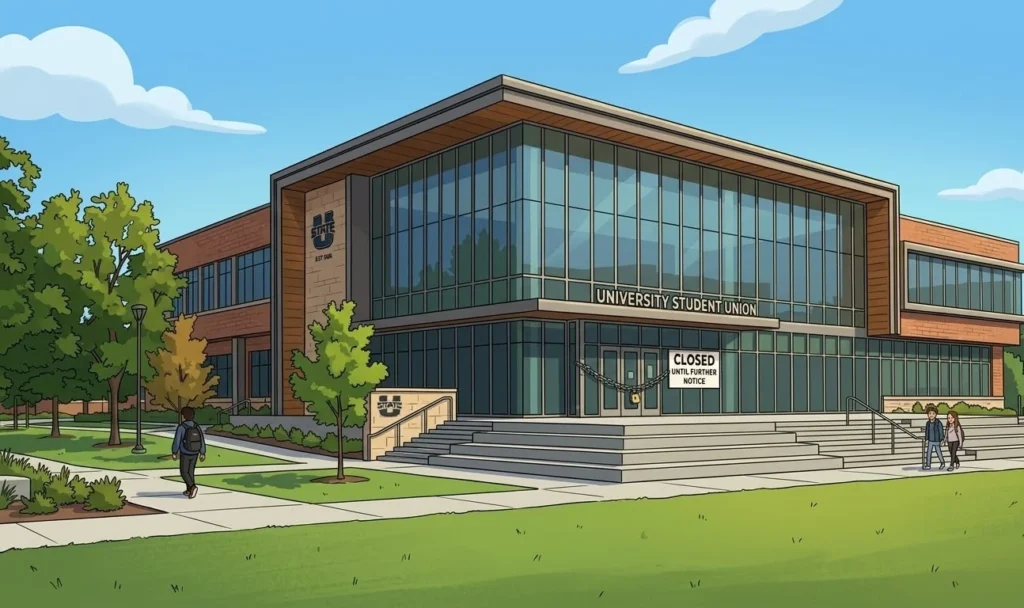
We can begin with what in fact happened since this case is bigger than most students are aware. In the spring of 2020, the University of Florida (as well as virtually any campus in America) closed down. Dorms emptied. Recreational centers closed. Shuttles stopped running. UF continued to charge obligatory student service fees, though. No services. Full fees.
One graduate student Anthony Rojas decided that wasn’t right. He filed a class-action lawsuit in April 2021, and after years of courtroom back-and-forth, Florida’s highest court sided with him on a critical threshold question in July 2025. The ruling doesn’t hand Rojas or his classmates a refund check just yet. But it does blow open the door that UF tried to shut and for students across Florida, that matters a lot.
Background & Facts: What Were These Fees and Why Does It Matter?
The fees at the center of this case weren’t optional add-ons you could skip. They were mandatory baked into every UF student’s tuition bill under Florida law (Fla. Stat. § 1009.24). Specifically, the lawsuit targets four categories:
- Activity and Service Fees — funding student clubs, programming, campus events.
- Transportation Access Fees — covering the bus routes and shuttle systems that many students depend on.
- Health Fees — supporting the student health center and related medical services.
- Athletics Fees — contributing to UF’s sports programs and athletic facilities.
Rojas’s complaint attached the actual documents spring 2020 tuition statements, UF’s general fee schedule, and the university’s Financial Liability Agreement, which students must sign to enroll. That agreement conditions enrollment on timely payment of fees for “educational services.”
When COVID hit and UF went remote in spring and summer 2020, those services vanished. No campus shuttles. No recreation center access. The student health center operated in a drastically limited capacity. And UF issued no refunds for any of it.
Importantly, this case is not about tuition, room or board just those service fees. And those fees, under Florida law, are supposed to be spent for student benefit. That’s not just policy language; it’s a statutory requirement.
Summary of Contested Fees
| Fee Type | What It Funded | Status Spring/Summer 2020 |
| Activity & Service | Student clubs, campus events, programming | Suspended / inaccessible |
| Transportation Access | Campus buses and shuttles | Not operating |
| Health Fee | Student health center, medical services | Severely limited |
| Athletics Fee | Sports programs, athletic facilities | Closed to students |
Procedural History: The Long Road to the Florida Supreme Court
This case didn’t go straight to the top. It climbed and got knocked down, then climbed again.
- April 2021 — Complaint Filed. Rojas files in Alachua County Circuit Court, attaching tuition statements and the Financial Liability Agreement as evidence of a written contract.
- Trial Court Win. The circuit court denied UF’s motion to dismiss. Judge found the complaint adequately pled a written contract. UF appealed immediately.
- 2022 — First District Court of Appeals (1 st DCA) Overturns. 1980, 226-228.<|human|>in University of Florida Board of Trustees v. The claiming was thrown out by Rojas, 351 So. 3d 1167 (Fla. 1 st DCA 2022). Its rationale: the papers lacked an express, written contract that was specific to campus services or a refund policy. The claim was barred by the sovereign immunity.
- Florida Supreme Court Accepts the Case. The 1st DCA certified a question of great public importance. Florida’s highest court took it on under Art. V, § 3(b)(4) of the Florida Constitution.
- June 5, 2024 — Oral Arguments. Both sides argued before the full court.
- July 17, 2025 — Supreme Court Rules 5-2 for Rojas. The court quashed the 1st DCA decision, issuing a per curiam opinion.
- August 28, 2025 — UF Withdraws Rehearing Motion. The university decided not to pursue further appeal before the Supreme Court.
- September 11, 2025 — Mandate Issued. The case returned to Alachua County Circuit Court for further proceedings.
The Florida Supreme Court Decision: What the Court Actually Said
The Core Question
The Court reframed the 1st DCA’s certified question into something cleaner and more direct:
“With regards to written contracts entered on behalf of government entities, does sovereign immunity prevent actions against claims of breach of implied covenants and conditions that neither conflict, replace, or preclude express contract terms?“
Answer: No.
That’s a big deal. Here’s why.
Sovereign Immunity — The Defense UF Was Relying On
Sovereign immunity refers to a doctrine that tends to shield government agencies against suing. In Florida, the rule of thumb is that the state cannot be dragged to court unless the legislature indicates so. Over decades, state universities have been relying on this defense whenever the students or contractors had a breach-of-contracts claim.
But there’s a major exception the “waiver-by-contract” doctrine established in Pan-Am Tobacco Corp. v. Department of Corrections, 471 So. 2d 4 (Fla. 1984). The basic idea: if a government entity has statutory authority to enter a contract, and it actually does enter one, it has waived sovereign immunity for claims arising from that contract.
UF’s Board of Trustees clearly has that authority it’s spelled out in Fla. Stat. § 1001.72(1). And UF clearly entered a contract: it took students’ money under a written fee schedule and a signed Financial Liability Agreement. So far, so good for Rojas.
Where the 1st DCA Went Wrong
The appeals court demanded what the Supreme Court called “extraordinary specificity” essentially requiring UF’s enrollment documents to spell out exactly what services would be provided and what refund rights existed if those services stopped. That’s not what contract law requires. You don’t need a 50-page service-level agreement for a contract to be enforceable.
The 1st DCA also made a threshold error: it treated questions of contract interpretation (what exactly did UF promise?) as immunity questions (can you even sue?). Those are different issues. Whether the fees created an obligation to provide services is a merits question something a jury or judge resolves at trial, not something that kills a case at the dismissal stage.
What the Supreme Court Held
The majority confirmed that Pan-Am’s waiver doctrine applies to breach-of-contract claims based on implied covenants like the implied covenant of good faith and fair dealing as long as those implied terms don’t contradict the written agreement. They relied on the earlier case of County of Brevard v. Miorelli Engineering, Inc., 703 So. 2d 1049 (Fla. 1997), which blessed implied covenants that are consistent with a contract’s express terms.
The Court also pointed to the structure of the fees themselves. Under § 1009.24, those fees must be spent for student benefit. That’s not just a nice policy goal it suggests the legislature intended these fee arrangements to be mutually enforceable, not one-sided instruments where UF can collect indefinitely regardless of performance.
As the per curiam opinion put it: the 1st DCA’s approach would render government contracts “illusory” where only one party (the student) has real obligations. That’s not a contract. That’s a taking.
The Dissent & Key Takeaways
The two dissenters — Justice Sasso and Justice Grosshans weren’t persuaded. Their argument: the documents Rojas attached to the complaint didn’t actually create a contract that covered the specific obligations he was claiming. Enrollment agreements, fee schedules, a general tuition statement these don’t automatically mean UF promised to keep the rec center open. Implied covenants, in their view, can’t create obligations the written contract never contemplated.
It’s a legitimate tension. Courts have always struggled with how far implied terms can stretch before they become new contract terms rather than interpretations of existing ones.
Key Takeaways from the Ruling
| What the Court DID Decide | What the Court Did NOT Decide |
| Sovereign immunity doesn’t block the lawsuit | Whether UF actually breached the contract |
| Implied covenants can support breach claims | How much (if anything) students are owed |
| The contract interpretation issue goes to trial | Whether the class will be certified |
| 1st DCA applied too strict a standard | Any amount of refund liability for UF |
Current Status & Broader Implications
Where the Case Stands Now (March 2026)
It is under Alachua County Circuit Court again. No trial date has been set. No announcement has been made. The following phases are anticipated to be the discovery, summary-judgment briefing on the interpretation of the contract, and the proceedings of class-certification under Fla. R. Civ. P. 1.220.
UF has not officially declared its plans in the future. What is interesting: instead of appealing further in the Supreme Court the university rescinded its rehearing request. No confession, but then again, neither.
The Ripple Effects Across Florida
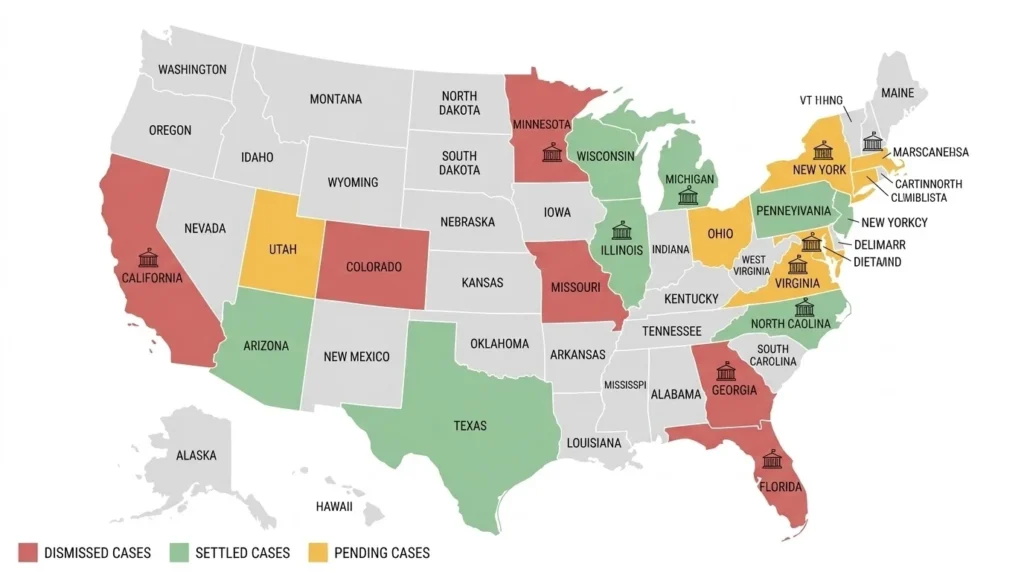
This ruling didn’t only affect UF. Several parallel COVID-era fee cases against Florida Atlantic University and Polk State College, among others had been stayed (essentially put on hold) waiting to see what the Supreme Court would do in Rojas. Those cases can now move forward.
There were hundreds of similar lawsuits nationally filed throughout the COVID. Their highest number were dismissed or paid small sums. Pre-Rojas Florida was among the harder jurisdictions on which students were subject to sovereign immunity. That calculus has shifted.
Practical Advice: What Should You Do Now?
If You’re a Current or Former UF Student
- The class has not been certified yet meaning you’re not automatically part of any lawsuit or settlement.
- Follow news at the Alachua County Circuit Court, or watch news releases out of the plaintiff attorney, Eaton and Wolk, P.A.
- Retain documentation of your spring or summer 2020 enrollment tuition bills, statement of fees, Financial Liability Agreements. In the event of class certification, such paperwork might be significant.
- Don’t expect a quick resolution. These cases take years, and there’s still significant litigation ahead before any money changes hands.
If You’re a Student at Another Florida Public University
- The Rojas precedent applies broadly. If your institution charged you mandatory service fees during COVID-era shutdowns, a breach-of-contract claim may now be viable in Florida courts.
- The sovereign immunity defense the main tool universities used to dismiss these cases early is harder to deploy after this ruling.
- Consult a Florida attorney if you believe you have a claim. The statute of limitations may be relevant depending on when fees were charged and when suit was (or wasn’t) filed.
If You’re a University Administrator or General Counsel
- Review your enrollment agreements, tuition statements, and fee disclosures right now. If there’s no language addressing service disruptions, force majeure, or refund policies, that’s a gap.
- The statutory requirement that service fees be spent for student benefit (§ 1009.24) creates implied obligations. If your fee disclosures are silent on what happens when services stop, you may be more exposed than you think.
- Work with counsel to add clear disruption-scenario language to Financial Liability Agreements going forward. Rojas makes vague enrollment contracts risky.
Quick Reference: Who Should Do What
| Stakeholder | Immediate Step | Longer-Term Action |
| UF students (2020) | Preserve fee documentation | Monitor class-certification proceedings |
| Students at other FL public universities | Consult a Florida attorney | Track parallel cases (FAU, Polk State) |
| University legal/admin teams | Audit enrollment agreements now | Update fee policy language; add force-majeure/disruption clauses |
| Plaintiffs’ attorneys | Review standing cases on COVID fees | File or revive claims using Rojas framework |
Conclusion
What Rojas v. The decision of the University of Florida Board of Trustees is fundamentally based on the idea that the public universities in Florida cannot hide under the immunity of sovereignty indefinitely simply because their contracts are not written using a scalpel. The law doesn’t require that. Normal contract law does not insist on that. And it was affirmed by the Florida Supreme Court, by a 5-2 vote.
That said, this case is far from over. The immunity barrier is gone but now comes the harder part: proving UF actually breached its obligations, and doing it on behalf of an entire class of students. Those are fact-intensive battles that will play out in Alachua County over the next few years.
To students who had paid fees in spring and summer 2020 as they sat at home viewing their campus go dark on Zoom, this decision is at the very least a confirmation. You were not mistaken in thinking that something in that showing did not work. Most judges of the Supreme Court in Florida were with you.
Stay informed. Track updates from the trial court. And if you have specific questions about your own situation, talk to a Florida attorney this article is educational, not legal advice.