 Mohammad Ahsan
Getting hit by a car while riding leaves you shaken up and probably not thinking about legal claims right now. You’re dealing with pain, maybe injuries, and trying to process what just happened. But what you do over the next three days determines whether you have a strong case or a weak one when it comes time to deal with insurance companies.
Evidence vanishes fast. Surveillance cameras record over their footage within days. Witnesses forget what they saw or lose interest in getting involved. Insurance adjusters start building their defense against your claim within hours while you’re still figuring out if you need stitches.
This breaks down as a timeline so you can jump to wherever you are right now: first 30 minutes at the scene, first 24 hours after the crash, and days two through three.
Why the first 72 hours matter so much
There are time constraints for bicycle accident claims in every state. Depending on where you live, these periods are usually between one and four years. That sounds like a lot of time. It isn’t.
Your claim’s proof goes away much faster than that. Footage from security cameras is erased in days, not years. Witnesses forget things in just a few weeks. It gets tougher to prove that the accident caused your injuries the longer you wait to see a doctor. Louisiana, Kentucky, and Tennessee only give you one year to file, which means you have even less time to make mistakes.
Most bicycle accident claims get won or lost in these first 72 hours, even though nobody files paperwork that fast. The photos you take now, the medical records you create today, and the statements you refuse to give this week are what insurance companies use months later when they’re deciding fault and how much to pay. That early window sets everything in motion for how bicycle accident claims work long before lawyers get involved.
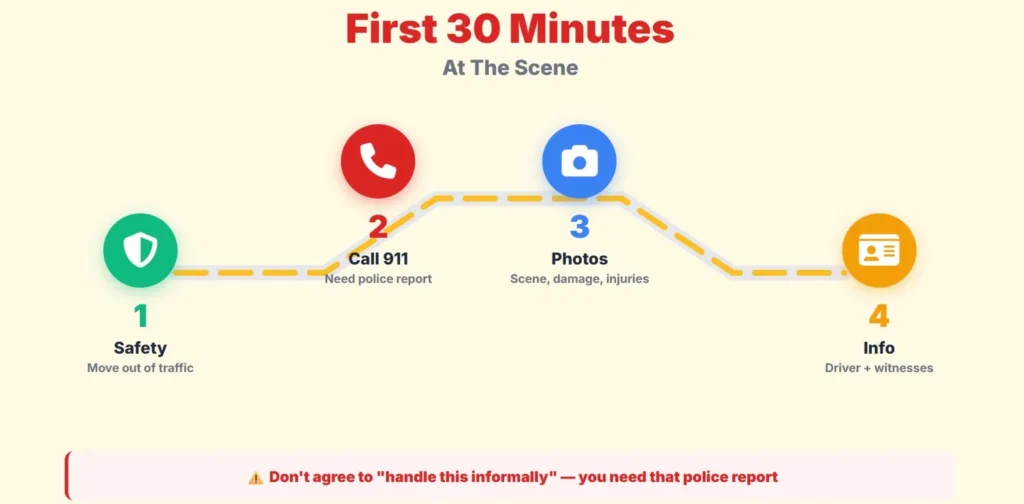
The First 30 Minutes: At The Scene
Get to safety
Move yourself and your bike out of traffic if you can. If something feels seriously wrong or you think you might have a spinal injury, don’t move. Wait for paramedics.
Adrenaline does weird things after crashes. You might stand up, walk around, feel totally fine. Doesn’t mean you’re not hurt. Fractured ribs don’t always hurt immediately. Soft tissue damage takes hours to show up. Internal bleeding is silent until it’s not.
Call 911
Do this even if everything looks minor. You need that police report. It’s an official record of what the officer saw about fault, road conditions, whether the driver got cited. A citation at the scene helps your case considerably.
The driver might suggest handling this informally without cops. “Let’s just exchange information, no need to make this official.” Don’t agree. Without a police report, proving liability gets much harder later. If the officer tries to wave it off as too minor to bother with a report, insist anyway. You’re entitled to one.
Document the scene
Pull out your phone and start shooting photos:
- Where the vehicles ended up and license plate numbers
- Skid marks, potholes, traffic signals showing which light was on
- Damage to your bike and damage to the car
- Your visible injuries including scrapes, bruises, road rash, ripped clothing
Take way more photos than seems necessary. You can’t go back tomorrow and capture what you missed today.
Collect information before people leave
Get the driver’s details: full name, phone number, driver’s license number, insurance company name and policy number, vehicle make and model and plate number. Type it all into your phone instead of trusting your memory after a head impact.
If anyone saw what happened, get their names and phone numbers before they walk away. A witness who watched the driver run that red light is incredibly valuable to your claim, but only if you can actually contact them three months from now when things get disputed.
The First 24 Hours
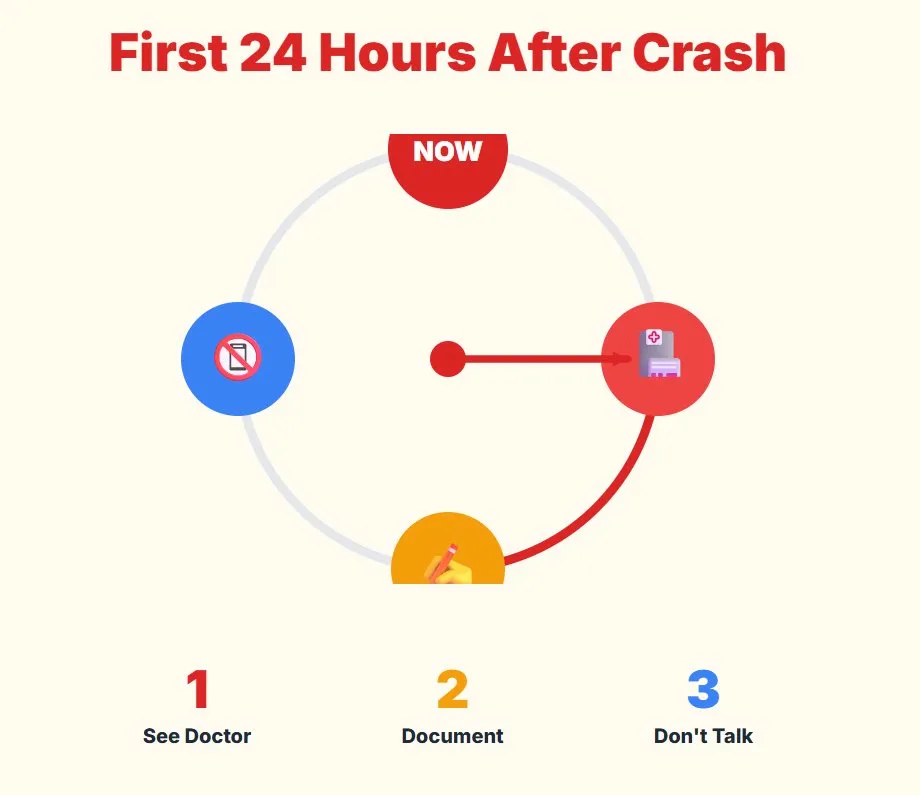
Get a medical evaluation
Today, go to the ER, urgent care, or your usual doctor. Not tomorrow. Not when it hurts more.
Injuries that didn’t seem bad at the time can get worse over time. But this is also about strengthening your case. A medical record made on the same day as the accident links your injuries directly to the crash. The insurance company will say that your injuries were caused by something else totally or that they can’t be that bad if you didn’t get checked out straight away. That argument takes away from your settlement, both the things that can be measured, like medical bills and lost pay, and the things that are difficult to measure, such pain and suffering.
Even if it seems small, tell the doctor everything that happened and every symptom you’re having. You may have headaches, dizziness, a stiff neck, numb hands, or difficulties concentrating. Your medical record will include everything you say, and that record will show later that the accident caused your injuries.
Write down everything you remember
Your memory of the crash is sharpest right now. It gets fuzzier every single day that passes. Sit down tonight and write out everything: what you saw before impact, what the driver was doing, what got said between you two afterward, weather conditions, time of day, how fast you were going, which direction you were traveling, what the road surface was like.
Include details that feel insignificant. The driver was staring at their phone when you made eye contact right before they hit you. There was a puddle near the intersection. Sun was in your eyes. Write it all down and let your attorney figure out later what matters.
Don’t talk to the other driver’s insurance company
The driver’s insurance company can call that same day. The adjuster appears to be kind and eager to assist. They really want you to say things on a recorded line that make your injuries look less bad, guess who was to blame, and make up stories that they can use during negotiations to get you to pay less.
Legally, you don’t have to give the other driver’s insurance company a written statement. When they call, say, “I’m not ready to talk about this yet.” Please forward any questions to my lawyer. You don’t even need a lawyer to state that. It provides you time to get one.
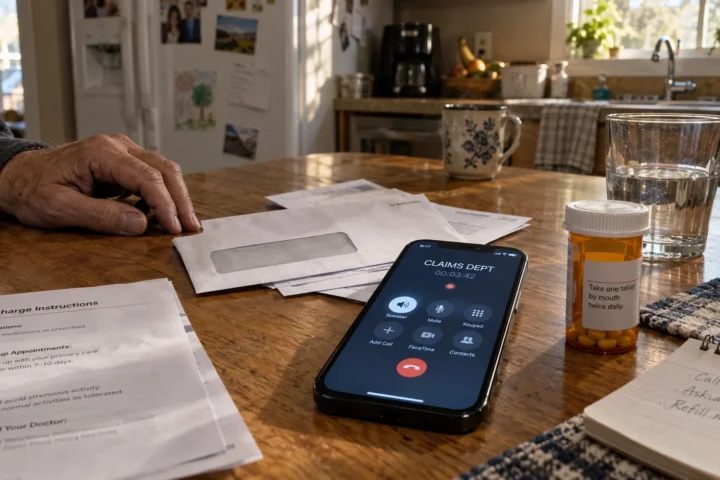
Your own insurance company is not the same. You probably need to call your insurance provider and let them know about the accident. Stick to the truth, even with your own insurance company. Don’t try to figure out who is to blame, and don’t make things sound worse or better than they are.
Days two and three
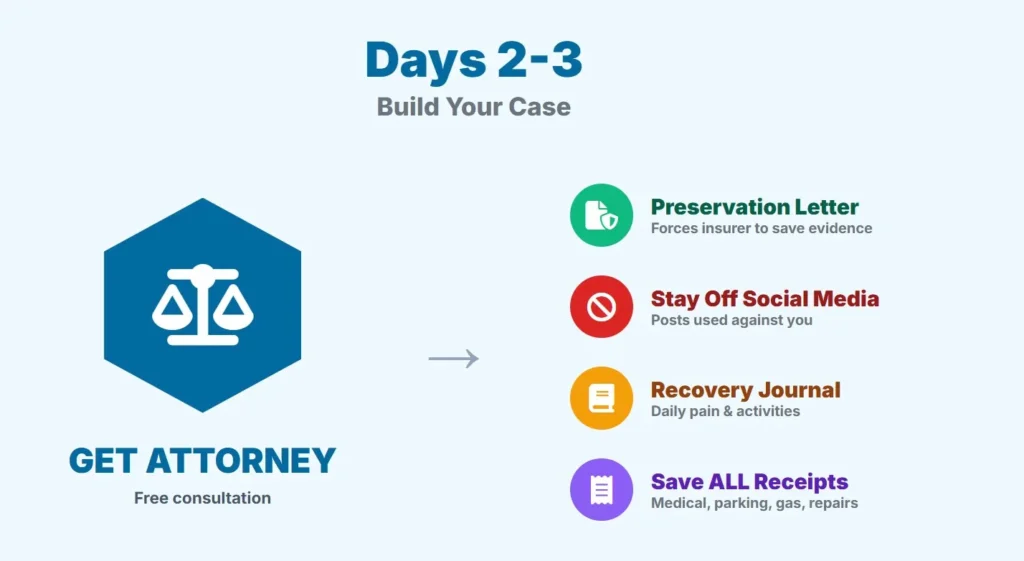
Talk to a bicycle accident attorney
If your injuries go beyond minor scrapes, contact a bicycle accident attorney as soon as you can. Getting a lawyer involved early matters for several reasons.
An attorney sends a preservation letter to the driver’s insurance company, which legally forces them to keep evidence instead of destroying it. Without that letter, nothing stops them from tossing records that could help you. Your attorney can also request traffic camera footage and the driver’s cell phone records before they disappear. Many surveillance systems automatically erase footage within 48 to 72 hours.
An attorney takes over all communication with the other driver’s insurance company and starts building your case while evidence is still fresh. Claims that get properly documented early tend to settle for more money.
What to bring to the call
Most bicycle accident attorneys work on contingency, which means you pay nothing upfront. Their fee comes as a percentage of whatever settlement or verdict you get. Most offer free initial consultations.
When you call, have these ready if possible:
- Police report or at least the report number
- Photos you took at the scene
- Driver’s name, license info, insurance details, vehicle information
- Medical records or discharge papers from your ER visit
- Your written account of what happened
Stay off social media
Insurance adjusters check claimants’ public social media profiles looking for posts they can use to argue your injuries aren’t as bad as you claim.
A photo of you smiling at a family dinner two days after the accident gets entered as evidence that your pain and suffering damages should be reduced. A comment saying “Feeling better today!” gets screenshot and used against you. Even a friend tagging you in a weekend activity post can end up in your case file.
Don’t post anything about the accident, your injuries, your recovery, or your legal situation. Ask friends and family not to tag you in anything. This includes private groups. Adjusters have subpoenaed social media content in disputed claims, and “private” settings don’t always protect you.
Start a recovery journal
A lot of folks don’t do this. When your lawyer figures up damages, it matters more than you would imagine. Get a notepad or open a notes app and start keeping track of your recuperation every day.
Every day, write down how much pain you’re in, what typical activities you can’t perform anymore, whether you’re sleeping comfortably or tossing and turning all night, how the injury is affecting your work, mood, and daily routine. Did you miss work because you couldn’t focus? Put it in writing. Did you miss your child’s soccer game because sitting on the bleachers hurt too much? Keep it in mind. Have you not been able to ride your bike since the crash? Write it down.
Save every receipt, including those for medical bills, medication expenses, copays, petrol money for getting to appointments, parking fees at the hospital, bike repair estimates and new gear you had to buy. Your lawyer utilises those receipts to figure out how much money you lost and your journal entries to back up your claim for pain and suffering.