 Mohammad Abdel-Rahman Accident & Injury Lawyer
Cyclists got crushed in 2023 – literally. The National Highway Traffic Safety Administration recorded 1,105 bicyclist deaths, the highest since they started tracking in 1975. Another 46,000 cyclists ended up in emergency rooms. The average insurance payout for bicycle accident injuries hit $52,000 according to the Insurance Information Institute, but most riders settle for under $10,000 because they botch evidence collection.
Here’s what makes these cases brutal: cyclists always lose the physics battle. A 3,000-pound car versus a 20-pound bike means riders suffer real injuries while drivers walk away. But legally, you’re equals on the road. Every state except New Hampshire gives bicycles the same rights and responsibilities as vehicles under traffic law. Problem is, proving a driver violated those rights requires evidence that disappears fast.
Photos and Video That Win Cases (Not Instagram Likes)
Accident scene photos need legal purpose, not artistic merit. Your smartphone becomes evidence collection equipment. The Federal Rules of Evidence require authentication under Rule 901 – basically proving photos accurately represent the scene. Time stamps, GPS data, and metadata matter.
Shoot these specific angles:
- Driver’s view approaching the collision point – shows visibility and sight lines.
- Your approach path – demonstrates lawful riding position.
- Street width measurements using your bike as reference – proves available space.
- Traffic control devices from 100 feet away – establishes right-of-way.
- Pavement defects or debris – shifts liability to municipalities sometimes.
- Vehicle damage patterns – reveals impact angle and speed.
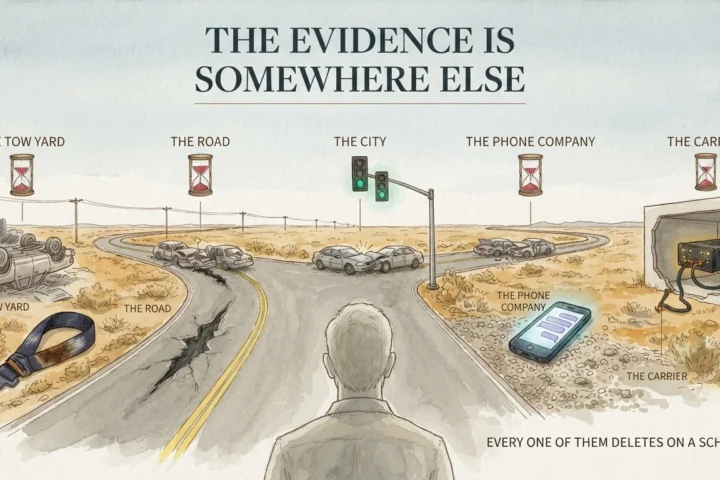
Video evidence explodes case values. A University of California study found cases with dashcam footage settled for 47% higher amounts than those without. But here’s the trap – video gets overwritten quickly. Most commercial systems keep 24-72 hours. Traffic cameras? Usually 30 days max.
Skilled bicycle accident injury attorneys send preservation letters immediately to every business within sight of the crash. Under Federal Rule of Civil Procedure 37(e), destroying evidence after notice can result in sanctions, adverse jury instructions, even default judgments. Gas stations, banks, ATMs, doorbell cameras – everything gets a letter.
Police Reports – The Good, Bad, and Fixable
Officers responding to bike crashes often don’t understand cycling laws. The League of American Bicyclists found 60% of police reports contained errors about cyclist positioning or right-of-way. Common mistakes include claiming cyclists must ride on sidewalks (illegal in most business districts) or can’t take full lanes (they can under specific conditions).
Get the report within 5 days. Every state allows amendments for factual errors – not opinion changes, but objective mistakes. California Vehicle Code Section 20012 gives you 30 days to request changes. Florida Statute 316.066 allows amendments anytime with supporting evidence.
The narrative section matters most. Officers write things like “cyclist came out of nowhere” – legally meaningless but prejudicial. Your attorney needs to supplement with witness statements correcting these characterizations. Some states like Oregon allow cyclists to add victim impact statements to reports.
Citations create rebuttable presumptions of fault. If the driver gets ticketed, that’s evidence gold. But 43% of drivers in fatal bike crashes never receive citations according to NHTSA data. Push for prosecution – criminal convictions basically guarantee civil liability.
Medical Documentation Under Legal Microscopes
Emergency rooms focus on saving lives, not building legal cases. They miss documenting road rash locations that prove impact angles. They note “head injury” instead of “coup-contrecoup brain injury consistent with acceleration-deceleration trauma” that shows mechanism of injury.
Follow-up with specialists who understand trauma biomechanics. Orthopedic surgeons, neurologists, physiatrists – they provide detailed narratives connecting injuries to crash forces. Their reports using specific medical terminology from the AMA Guides to the Evaluation of Permanent Impairment carry more legal weight.
Get every diagnostic test insurance covers. MRIs reveal soft tissue damage X-rays miss. DTI brain scans show diffuse axonal injuries standard CTs can’t detect. Nerve conduction studies prove permanent damage. These objective findings defeat “minor injury” arguments.
Document everything daily. Pain levels on 1-10 scales. Activities you can’t perform. Medications and side effects. The Oswestry Disability Index and SF-36 questionnaires create standardized measurements juries understand. Apps like PainScale create timestamped logs admissible under hearsay exceptions.
Witness Statements That Actually Help
Witnesses disappear or forget quickly. Memory research shows 50% detail loss within 48 hours, 75% within a week. But raw witness statements immediately after crashes fall under excited utterance exceptions to hearsay (Federal Rule of Evidence 803(2)).
Record witnesses on scene if possible. Most states are one-party consent for recording. Even two-party consent states like California allow recording in public with no expectation of privacy. Get them describing what they saw, not legal conclusions. “The car turned left in front of the cyclist” beats “the driver was at fault.”
Professional witnesses matter more. UPS drivers, bus drivers, delivery people – they’re trained observers who testify credibly. Other cyclists understand riding dynamics. Pedestrians walking dogs appear neutral. The driver’s own passengers sometimes admit fault out of guilt.
Written statements need specific language. “I saw…” not “I think…” Describe positions, speeds, signals used. Mention weather, visibility, distractions observed. Have them draw diagrams. Get contact info for subpoenas later – name, phone, email, employer.
Expert Witnesses Who Justify Their Cost
Accident reconstructionists charge $5,000-15,000 but can prove cases worth hundreds of thousands. They use crash formulas, computer modeling, and physics to show speed, impact angles, and avoidance possibilities. Their animations make complex crashes understandable to juries.
Biomechanical engineers explain injury mechanisms. They prove how specific impacts cause particular injuries, defeating “pre-existing condition” defenses. Their testimony links crash forces to permanent impairments, supporting future damage claims.
Vocational experts calculate lifetime earning losses. Traumatic brain injuries often cause subtle cognitive deficits affecting career advancement. These experts quantify promotions you won’t get, overtime you can’t work, early retirement forced by disabilities.
Human factors experts address driver behavior. They explain reaction times, sight distances, and conspicuity issues. When drivers claim they “didn’t see” cyclists, these experts prove whether that was possible or negligent.
Physical Evidence Preservation
Your destroyed bike is evidence worth thousands in settlement value. The crumpled frame shows impact force. Paint transfer proves contact. Bent wheels indicate impact angle. Chain position reveals what gear you were in (relevant for speed estimates).
Never repair or discard anything. Store items in climate-controlled spaces to prevent deterioration. Photograph everything from multiple angles with rulers for scale. Blood on clothing? Don’t wash it – DNA evidence might matter if hit-and-run.
Helmets tell stories through damage patterns. Linear cracks indicate direct impact. Rotational damage suggests angular acceleration causing brain injury. Missing foam shows energy absorption. Some skilled bicycle accident injury attorneys partner with helmet manufacturers’ engineers who testify about forces required to cause observed damage.
Electronic evidence from cycling computers or apps like Strava provides objective data. Speed, route, elevation changes, heart rate – all timestamped and GPS verified. This defeats “cyclist was racing” accusations when data shows normal riding patterns.
Financial Loss Documentation
Lost wages seem simple but get complicated fast. Beyond missed paychecks, document lost bonuses, overtime, benefits, retirement contributions. Self-employed riders need tax returns, invoices, contracts showing lost business. Gig workers need app records from Uber, DoorDash, etc.
Medical bills require scrutiny. Insurance companies use “usual and customary” rates to lowball settlements. But most health insurance contracts require accepting negotiated rates as full payment. The difference between billed and paid amounts isn’t recoverable. Lawyers who understand medical billing recover more.
Future damages need expert support. Life care planners project lifetime medical needs. Economists calculate present value of future losses. These reports transform speculation into evidence-based demands that insurance companies can’t ignore.
Property damage extends beyond bikes. Cycling clothes, computers, phones, watches – everything damaged gets valued. Replacement cost, not depreciated value, is the standard for newer items. Custom bikes need appraisals from bike shops, not generic blue book values.
State-Specific Laws That Change Everything
Three-foot passing laws exist in 32 states but vary wildly. Pennsylvania requires four feet. South Dakota says six feet on highways. Violations create presumptive negligence, shifting burden to drivers to prove innocence.
Vulnerable road user laws in 12 states enhance penalties for hitting cyclists. Oregon’s law makes striking cyclists prima facie evidence of careless driving. Delaware doubles fines. These statutes strengthen civil cases by establishing higher duty of care.
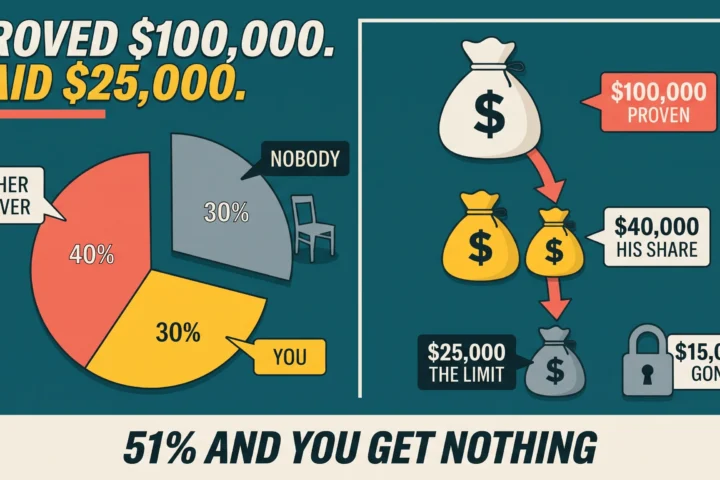
Comparative negligence rules determine compensation. Pure comparative states like California let you recover even if 99% at fault (just reduced proportionally). Modified comparative states like Texas bar recovery if you’re 51% at fault. Contributory negligence states like Maryland bar any recovery if you’re even 1% at fault.
Dooring laws make huge differences. Illinois makes dooring strict liability – passengers are automatically at fault. Massachusetts requires checking before opening doors. New York City treats dooring as automatic negligence. These laws eliminate “cyclist should have avoided it” defenses.
References
- National Highway Traffic Safety Administration. (2023). Traffic Safety Facts 2023 Data: Bicyclists and Other Cyclists. DOT HS 813 507.
- Insurance Information Institute. (2023). Claim Severity Trends: Bicycle Accident Settlements 2020-2023. III Research Department.
- League of American Bicyclists. (2023). Every Bicyclist Counts: Police Reporting Analysis. LAB Advocacy Report.
- University of California Berkeley. (2023). “Impact of Video Evidence on Personal Injury Settlement Values.” Transportation Research Record, 2677(3).
- Federal Rules of Evidence, Rules 803(2) and 901. Hearsay Exceptions and Authentication Requirements.
- American Medical Association. (2023). Guides to the Evaluation of Permanent Impairment, Sixth Edition. AMA Press.