 Mohammad Ahsan
You hired them. Paid the retainer. Signed the engagement letter. Felt that exhale of relief because somebody qualified was finally handling it and you could stop lying awake running through worst-case scenarios at two in the morning.
Then the calls stopped getting returned.
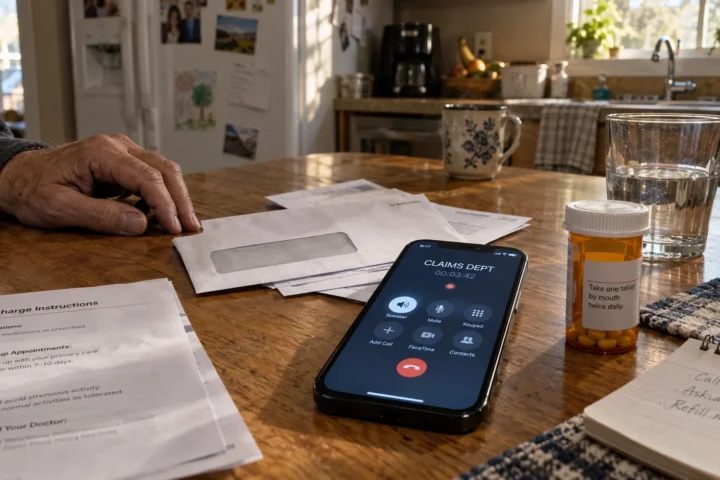
First it was a day, then three days, then you left a voicemail on a Monday and heard nothing back until Friday and the response was a one-line email saying “we’re working on it” with no detail about what “it” actually meant. You sent a follow-up asking for a status update. Nothing. Sent another one. Nothing. Called the office and the receptionist said your attorney was in a meeting. Called again the next week and got the same answer.
That sinking feeling is not paranoia. Neglect is the single most common disciplinary complaint filed against attorneys in the United States. The ABA and every state bar that publishes data say the same thing, year after year, neglect and poor communication sit at the top of the list. Florida’s Bar reported it in 2024. California’s discipline data for the same year confirmed it. The pattern is national and it is persistent.
So what do you actually do when you are stuck in it?
Check Whether a Deadline Has Already Been Missed
This is the first thing and it is the scariest one because the answer changes everything.
Every legal matter runs on deadlines. A statute of limitations for filing suit. A discovery cutoff for exchanging evidence. A response deadline to a motion the other side filed. A court-ordered date for producing documents. Your lawyer knows these dates. You probably do not, because the whole reason you hired someone was so you would not have to track this stuff yourself.
Pull out your engagement letter and whatever documents your attorney has sent you. Look for any mention of filing deadlines, court dates, or response windows. If you cannot figure out whether something has been missed, call the clerk of court where your case is filed and ask whether any orders or deadlines are pending. You do not need a lawyer to make that call.
If a deadline has already passed and your case has been damaged by it, you are no longer dealing with poor communication. You are dealing with potential malpractice. More on that further down.
If nothing has been missed yet but the silence is making you nervous that something will be, that nervousness is reasonable and it is telling you to act now rather than wait.
Your Right to Fire Your Lawyer Exists at Any Time
A lot of people do not realise this. You can terminate the attorney-client relationship whenever you want, for any reason, at any stage of the case. You do not need your lawyer’s permission, you do not need to justify it, and you do not need to wait for a convenient moment.
The process depends on whether you have an active court case.
If you have a pending case in court
You file a Substitution of Attorney form with the court. The form names your new attorney or states that you are proceeding pro se, meaning on your own. Both you and your former attorney sign it. If your former attorney refuses to sign, your new attorney can file a motion to substitute and the court will handle it.
If there is no pending case
You send a written notice terminating the representation. Keep a copy. That is it.
What about the retainer?
Your former attorney is entitled to fees for work already performed. Whatever portion of the retainer was not earned gets returned to you. If the attorney spent $2,000 of a $5,000 retainer on actual billable work, you are owed $3,000 back. If they cannot account for where the money went, that is a trust accounting issue and the state bar takes those very seriously, trust accounting violations are consistently in the top three discipline categories in every state that tracks them.
Ask for an itemised invoice. Not a summary. Line items showing dates, tasks performed, time spent, and rates applied. If what comes back does not add up, you have grounds for a fee dispute.
Fee Arbitration Before You Sue
Every state bar offers some form of fee dispute resolution. In most states it is called fee arbitration and it is designed to resolve billing disputes between lawyers and clients without requiring a lawsuit.
The process is usually faster and cheaper than going to court. You file a petition with the bar, the attorney responds, and an arbitration panel made up of lawyers and sometimes non-lawyer public members reviews the dispute and issues a decision. In some states the decision is binding, in others it is non-binding and either side can reject it and proceed to litigation.
When does fee arbitration make sense?
When the dispute is about money. How much the lawyer charged, whether the charges were reasonable, whether unearned portions of the retainer were returned. Fee arbitration does not address the quality of the legal work or whether the lawyer’s neglect damaged your case. For that you need either a bar complaint or a malpractice claim, and those are separate tracks.
Filing a Bar Complaint and What It Does and Does Not Accomplish
State bar complaints go to the disciplinary arm of your state’s bar association or supreme court. You fill out a form describing what happened. The bar investigates, contacts the attorney, reviews the file, and decides whether the conduct violated the Rules of Professional Conduct.
Here is where expectations need adjusting though.
A bar complaint can result in a private reprimand, a public reprimand, probation, suspension, or disbarment depending on how bad the conduct was. What it cannot do is get you money back or fix the damage to your case. The bar’s job is to regulate the profession, not to compensate individual clients. A lawyer who gets suspended for neglecting your case has been punished but you still have a neglected case.
That said, filing the complaint is not a waste of time for two reasons. First, the investigation creates a record that can support a malpractice claim later. Second, the bar may discover the attorney has been doing this to multiple clients, and pattern neglect is treated much more seriously than a single isolated lapse. Of the roughly 4,000 disciplinary cases filed in Florida in a recent year, only about 300 resulted in actual discipline ordered by the court. The numbers are similar nationwide. Most complaints do not result in sanctions. But the ones that do tend to involve attorneys with multiple complaints from multiple clients over a period of time, which is why your complaint, even if it does not result in discipline on its own, contributes to a pattern that the bar can eventually act on.
Solo practitioners face investigation at twice the rate of large firms
California’s 2024 Attorney Discipline Disparities Study found that solo practitioners accounted for the most investigations at 41%, with the highest investigation rate of any firm size. As firm size increased, investigation rates generally decreased, with attorneys at firms larger than 200 lawyers seeing only 17% of their complaints forwarded to investigation.
That does not mean solo lawyers are less ethical. It might mean they are more likely to take on too much work without the infrastructure to support it, which is exactly how neglect happens. A solo attorney with eighty active files and no paralegal is structurally set up to drop balls. Not out of malice. Out of math.
Legal Malpractice: When Neglect Becomes Actionable
If your lawyer’s neglect caused actual damage to your case, you may have a legal malpractice claim against them. Malpractice is a separate lawsuit, you are suing your own former attorney for the harm their negligence caused.
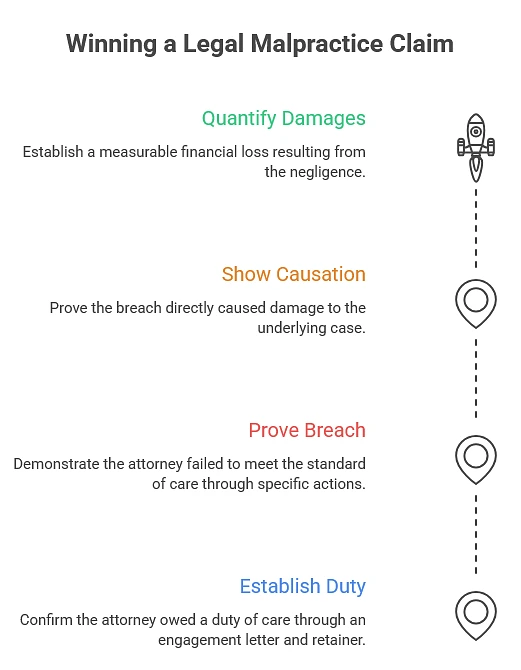
According to QUMARS BEHZADI from Behzadi Law, To win you generally need to prove four things and the fourth one is the hardest.
- Duty. The attorney owed you a duty of care. If you had a signed engagement letter and paid a retainer, this element is almost always met.
- Breach. The attorney failed to meet the standard of care. Missing a filing deadline, failing to respond to discovery, not showing up for a hearing, ignoring client communications for weeks, all of these can constitute breach depending on the circumstances.
- Causation. The breach caused damage to your underlying case. This is where it gets complicated because you essentially have to prove a “case within a case,” meaning you need to show that but for the attorney’s negligence, your original matter would have had a better outcome.
- Damages. You suffered a measurable financial loss. Emotional distress alone is not usually sufficient. You need to show that the negligence cost you money, either through a lost settlement, a dismissed case, an adverse judgment, or additional legal fees to fix what the first attorney broke.
That “case within a case” requirement is why legal malpractice claims are hard to win. You are not just proving your lawyer screwed up. You are proving your original case would have succeeded if they had not. That means litigating two cases at once, the malpractice claim and a hypothetical version of the case your lawyer neglected.
Warning Signs You Are Going to Have This Problem
Some of these show up early enough to do something about it before real damage happens.
- Calls and emails go unanswered for more than a week. Once, fine, people get busy. Repeatedly, that is a pattern and patterns get worse not better.
- Your case has been reassigned to someone you have never met. You hired a specific attorney based on their experience and reputation. Your file is now being handled by an associate or paralegal whose name you learned from a voicemail you did not expect.
- You find out about developments in your own case from the opposing side. The other party’s lawyer called to discuss a scheduling issue and you did not even know there was a hearing on the calendar. That means your attorney is communicating with the court and opposing counsel but not with you.
- The retainer ran out and nobody told you. You assumed the retainer covered the work being done. Turns out it was exhausted months ago and the firm has been carrying a balance they have not mentioned. Now they want payment before they do anything else and your case has been sitting untouched while the balance accumulated.
- Your attorney cannot clearly explain what has been done on your case in the last 60 days. If you ask for a status update and get generalities instead of specifics, that is usually because there is nothing specific to report, because nothing has been done.
None of these individually means your lawyer is committing malpractice. All of them together paint a picture of a representation that has gone sideways, and the time to address it is when you notice the first sign, not after the third or fourth one has confirmed a pattern you were hoping was temporary.
The Honest Part About Why This Happens
Most lawyers who neglect cases are not bad people running scams. Some are. Most are not.
What happens more often is that a lawyer takes on more work than they can handle because saying yes to a new client is easier than turning them away, especially for solo practitioners and small firms where every new matter is revenue they need. The caseload grows. The infrastructure does not grow with it. Response times stretch. Filing deadlines get tracked on a mental calendar instead of a tickler system. One file falls through the cracks, then another, and by the time the lawyer realises they are behind on your case they are embarrassed about the gap and the embarrassment makes them avoid your calls rather than face the conversation.
That cycle is human and understandable and it does not make it acceptable. Understanding why it happens does not change the fact that you are the one sitting with an unworked case and a deadline approaching.
The system is supposed to catch these situations before they cause permanent damage. Bar discipline, peer accountability, malpractice insurance, court oversight. Sometimes it does. Sometimes it does not, and the client is the one who pays for the gap.
References
- ABA Center for Professional Responsibility, Survey on Lawyer Discipline Systems (S.O.L.D.), 2023.
- ABA, “Protect Yourself From Common Disciplinary Complaints” (2022). Neglect and communication are the top two complaint categories nationally.
- Florida Bar, 2024 Discipline Trends. Interference with administration of justice, neglect, and trust accounting as top three complaints. Of roughly 4,000 cases filed, approximately 300 resulted in discipline.
- California State Bar, 2024 Attorney Discipline Disparities Study. Solo practitioners: 41% of investigations, highest rate. Firms larger than 200 lawyers: 17% investigation rate.
- FindLaw, “Lawyer Complaints” (October 2023). ABA-linked analysis of neglect, communication, and trust account violations.
- ABA Model Rules of Professional Conduct, Rule 1.3 (Diligence), Rule 1.4 (Communication), Rule 1.16 (Declining or Terminating Representation).