 Muhammad Usman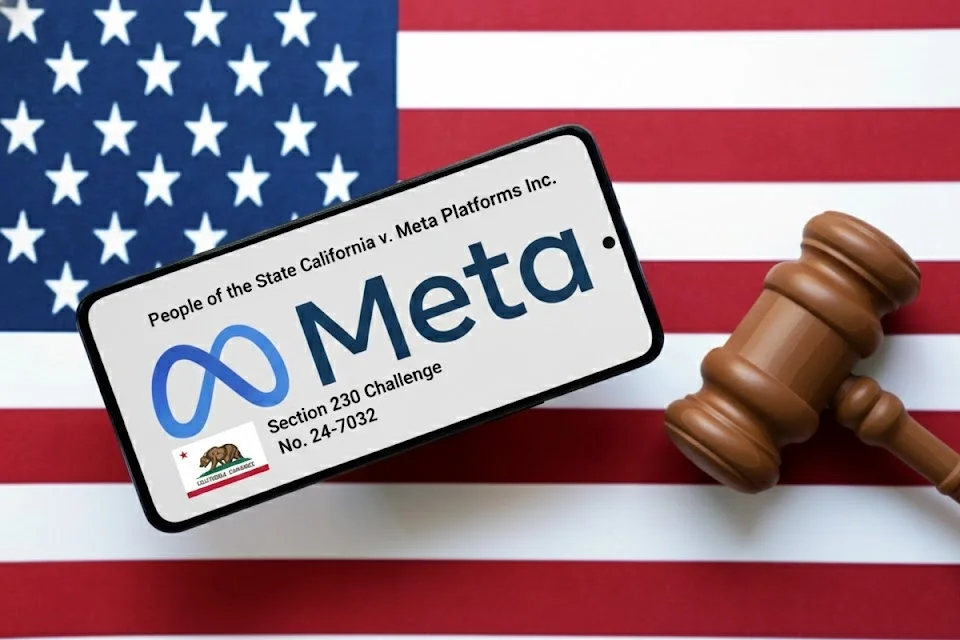
Executive Summary
Meta is appealing to the 9th Circuit Court of Appeals, seeking immunity under Section 230 of the Communications Decency Act from over 2,200 lawsuits alleging it’s platforms are designed to addict young users. Following January 6, 2026 oral arguments, judges appeared skeptical of Meta’s broad immunity claims, with Circuit Judge Jacqueline Nguyen stating that Meta’s argument “isn’t borne out in the statute’s language.”
The outcome could reshape tech accountability either opening Big Tech to extensive discovery and potential billions in damages or reinforcing the broad legal protections that have shielded internet platforms for nearly three decades.
Key Legal Issues at Stake
• Scope of Section 230 immunity: Whether it protects platform design features or only third-party content.
• Immunity from suit vs. immunity from liability: A critical distinction for when tech companies can appeal.
• Product liability claims: Whether traditional tort law applies to social media platforms.
• Youth protection: The intersection of corporate responsibility and child safety online.
Understanding Section 230: The Foundation of Internet Freedom
Section 230 of the Communications Decency Act, enacted in 1996, contains “the twenty-six words that created the internet”:
“No provider or user of an interactive computer service shall be treated as the publisher or speaker of any information provided by another information content provider.” 47 U.S.C. § 230(c)(1)
Foundational Court Decisions
• Zeran v. America Online (1997): Established broad immunity even when platforms have knowledge of illegal content.
• Barnes v. Yahoo! (2009): Created exception for promissory estoppel claims based on specific promises.
• Fair Housing Council v. Roommates.com (2008): Platforms lose immunity when they materially contribute to illegal content.
The Multidistrict Litigation
In October 2022, over 2,200 cases were consolidated before U.S. District Judge Yvonne Gonzalez Rogers in Northern California. This represents one of the largest consumer protection litigations in recent history.
Who’s Suing Meta
• Government Entities: 34 State Attorneys General, 150+ school districts, municipal governments.
• Private Plaintiffs: Families alleging platform addiction caused depression, anxiety, self-harm and suicide.
The ‘Defective Design’ Theory
Plaintiffs argue Meta’s platforms contain deliberately addictive design features:
• Infinite scrolling: Eliminates natural stopping points.
• Push notifications: Designed to interrupt and redirect attention.
• Variable ratio reinforcement: “Like” buttons create dopamine-driven addiction loops.
• Algorithmic recommendations: Exploit psychological vulnerabilities.
• Social comparison features: Streaks and popularity metrics.
Legal Arguments: A Battle Over Internet Law’s Future
Meta’s Defense Strategy
Meta argues for broad Section 230 immunity based on several theories:
• Traditional Publishing Functions: Algorithmic content curation constitutes protected editorial functions.
• Content-Centric Claims: All addiction allegations stem from user-generated content.
• Innovation Protection: Denying immunity would chill technological innovation.
• Immunity from Suit: Section 230 provides right not to stand trial, not just defense against liability.
Plaintiffs’ Counter-Strategy
Plaintiffs focus on platform design rather than content:
• Product Liability Theory: Platforms are defective products unreasonably dangerous for teens.
• Design vs. Content: Claims target proprietary features independent of user content.
• Corporate Knowledge: Internal documents show deliberate design choices prioritizing engagement over safety.
The January 6, 2026 Oral Arguments
The three-judge panel showed significant skepticism toward Meta’s broad immunity claims.
Key Judicial Concerns
• Judge Nguyen’s Challenge: Meta’s argument “isn’t borne out in the statute’s language”.
• Congressional Intent: “When Congress wants to give immunity from suit, it knows how to say that”.
• Jurisdictional Focus: Court questioned whether Judge Rogers’ orders were truly “final” for appeal purposes.
Potential Outcomes and Industry Impact
| If Meta Loses Appeal | If Meta Wins Appeal |
| • Cases return to discovery • Internal documents subpoenaed • Other platforms face similar risks • Potential billions in damages • Industry-wide design changes | • Thousands of cases dismissed • Reinforced immunity doctrine • Stronger tech protections • Limited design accountability • Potential Congressional reform |
International Context: Global Platform Regulation
European Union: Digital Services Act
• Algorithmic transparency requirements.
• Special protections for minors.
• Risk assessments for mental health impacts.
United Kingdom: Age-Appropriate Design Code
• Privacy by default for under-18 users.
• Prohibition on addictive design features.
• Mandatory parental controls.
A Defining Moment for Digital Rights
The Meta case represents a watershed moment in internet law evolution. The January 6 oral arguments suggest judicial skepticism of blanket corporate immunity, particularly regarding youth welfare.
The court’s focus on distinguishing between “immunity from suit” and “immunity from liability” could reshape Section 230’s operation, potentially requiring platforms to defend design choices through discovery rather than avoiding accountability through early dismissals.
Regardless of the legal outcome, this litigation has already catalyzed industry changes, with Meta’s introduction of “Teen Accounts” and other platforms adopting enhanced youth protections. The international regulatory context particularly the EU’s Digital Services Act suggests the era of largely unregulated social media design may be ending.
Educational Takeaways
• Section 230 Evolution: The law’s scope continues to evolve through judicial interpretation.
• Product vs. Publisher: Courts are distinguishing between content publication and product design.
• Youth Protection Priority: Child safety concerns are driving legal and regulatory changes.
• Global Regulatory Trends: International laws are influencing U.S. platform accountability discussions.
• Corporate Responsibility: Tech companies face increasing pressure for design accountability.
For more information on this case and Section 230 developments, students should monitor federal court decisions and congressional reform proposals as this landmark litigation continues to unfold.