 Mason (Driving Law Expert)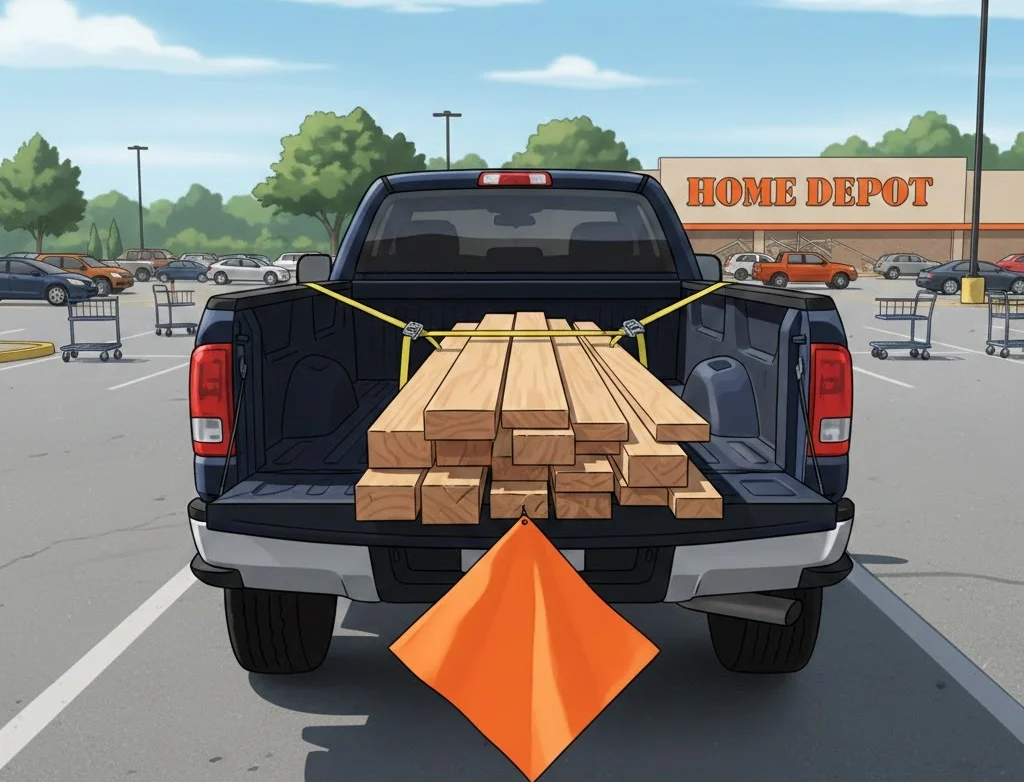
Summary
Georgia’s flagging laws kick in when any load extends four feet or more beyond your vehicle’s rear – whether you’re a weekend warrior hauling lumber or a commercial logger. During daylight, you need bright red or orange fluorescent flags (18 inches square minimum). When visibility drops, red lights become mandatory. Timber loads face stricter rules requiring amber strobes plus flags. The typical costs of violation are 150-200 without any license points, yet the actual danger is the civil liability in case such an unmarked load leads to an accident. This guide subdivides the specific requirements, general errors that lead to citations and industry-specific compliance plans basing on real cases and enforcement trends across the counties of Georgia.
Picture this: You’re hauling lumber from Home Depot, that last piece sticking out maybe five feet from your tailgate. No big deal, right? Wrong. In Georgia, you just became subject to specific legal requirements that could cost you $200 if you mess up.
Georgia Code § 40-8-27 isn’t some obscure regulation gathering dust. It’s actively enforced and I’ve seen contractors get slapped with violations they never saw coming. The law kicks in when your load extends four feet or more beyond your vehicle’s rear. That’s not much – about the length of a standard sheet of plywood.
The Four-Foot Threshold That Changes Everything
Here’s where it gets interesting: The law doesn’t care what you’re hauling. Lumber, kayaks, that old couch you’re taking to the dump – if it sticks out four feet, you’re subject to flagging requirements.
Basic Requirements at a Glance
During daylight hours:
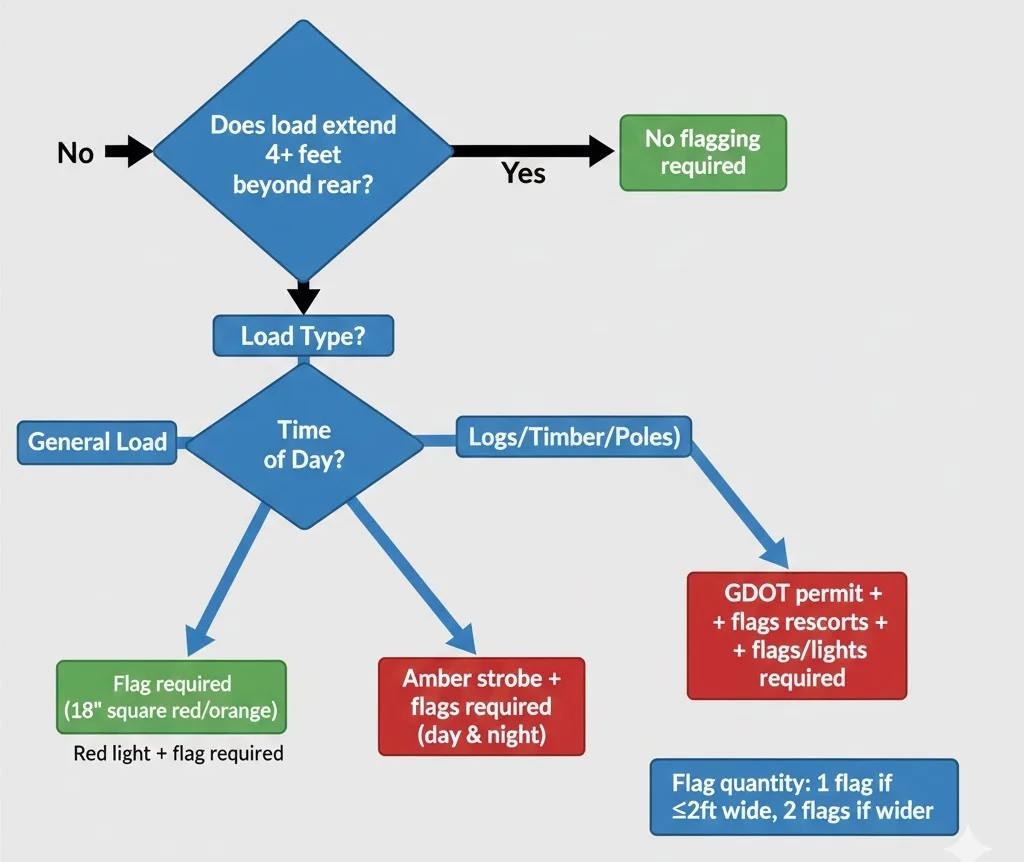
- Bright red or orange fluorescent flag (minimum 18 inches square).
- Must be visible from behind.
- One flag for loads 2 feet wide or less.
- Two flags for wider loads (positioned to show maximum width).
During low-visibility periods:
- Red light visible from 500 feet to sides and rear.
- Required from 30 minutes after sunset to 30 minutes before sunrise.
- Also required during rain or when visibility drops below 500 feet.
The specificity here matters. I’ve seen people try to argue that their dingy orange cloth counts as “fluorescent” – it doesn’t. The statute specifically requires “bright red or orange fluorescent material.” Courts aren’t impressed by creative interpretations.
Special Rules for Timber and Long Materials
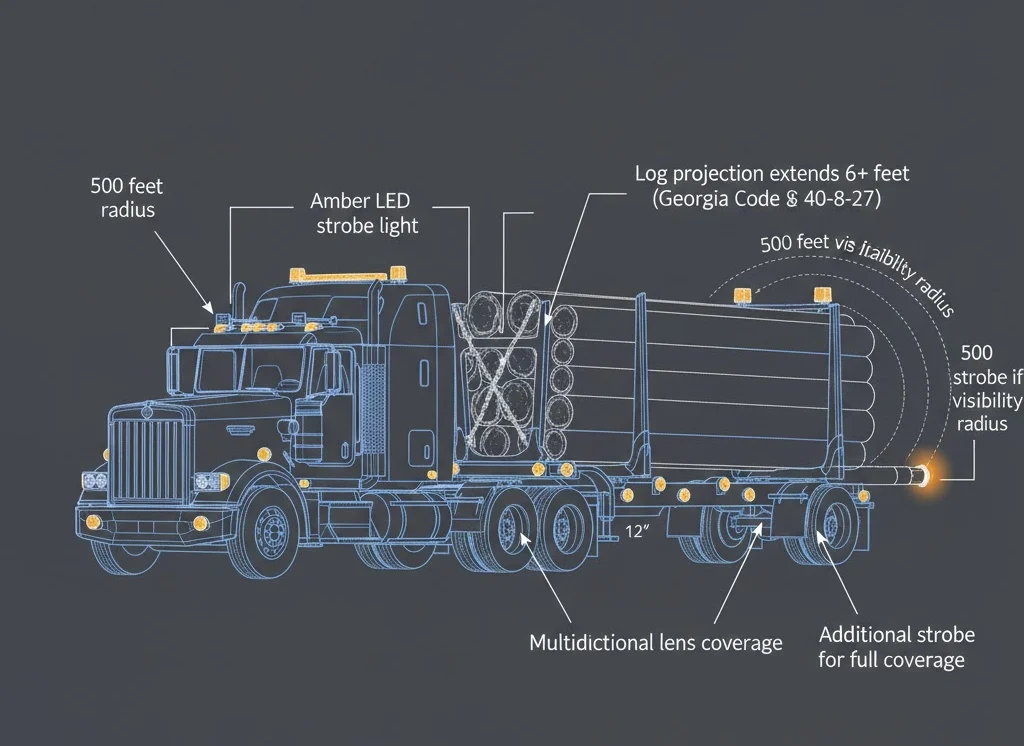
Georgia’s logging industry influenced these rules heavily. If you’re hauling logs, pulpwood, poles or posts, different requirements apply:
Timber-Specific Requirements
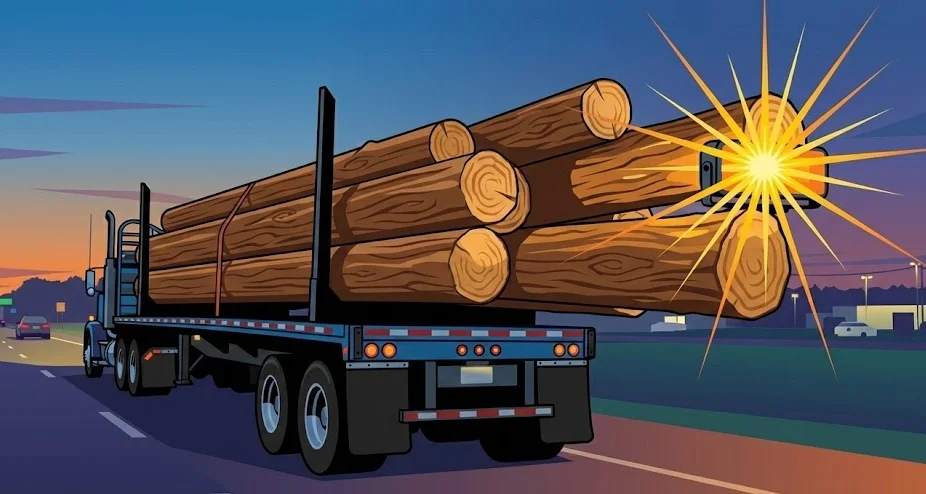
- Amber strobe or LED light (not red like regular loads).
- Must flash at least 60 times per minute.
- Positioned as close as possible to the load’s end.
- Visible from 500 feet in all directions.
- Plus the standard flag requirements.
The 2008 and 2011 amendments added LED options after industry lobbying. LED lights must maintain 85% operational diodes and include spare batteries if battery-powered. No emergency light permit needed under § 40-8-92, which was a win for commercial haulers.
Real-World Compliance Challenges
From my practice, here’s what trips people up most:
Flag positioning errors: People hang one flag in the middle of a wide load. Wrong. Two flags must mark the maximum width points.
Visibility timing confusion: The “30 minutes after sunset” rule catches many off-guard. It’s not “when it gets dark” – it’s a specific time calculation.
Light placement mistakes: Amber strobes stuck randomly on the side rather than at the projection’s end.
Common Violation Scenarios and Penalties
| Violation Type | Typical Fine | Court Examples |
| Missing flag during daylight | $150-200 | Athens-Clarke: $151 |
| No light during low visibility | $150-200 | Thomas County: $200 |
| Wrong flag size/color | $150-200 | Varies by jurisdiction |
| Improper strobe on timber loads | $200+ | Commercial vehicles face higher scrutiny |
The Federal Connection You Can’t Ignore
Georgia’s requirements align with federal guidelines under 49 CFR § 393.87, but state law is more detailed. Interstate haulers often get confused because federal rules focus mainly on flags, while Georgia adds specific light requirements and timber provisions.
Key federal baseline:
- 18-inch square red or orange flags.
- Positioning based on load width.
- Tiedown requirements (minimum 50% of cargo weight).
Interstate commerce is regulated by the federal rules, but even on the territory of Georgia, the federal rules are not as strict as the requirements of Georgia. This poses a compliance issue to trucking companies which operate at interstate.
Court Cases That Shaped Enforcement
Hall v. Buck (1992) established important precedent. The Georgia Court of Appeals ruled that overlapping equipment violation charges could confuse juries, but the conviction stood because evidence showed an unmarked projecting load contributed to the accident.
More recently, Belmares v. Celtic Cable Construction (2024) involved a civil negligence claim where failure to flag a projecting cable caused injury. The court emphasized that compliance represents a basic duty of care standard.
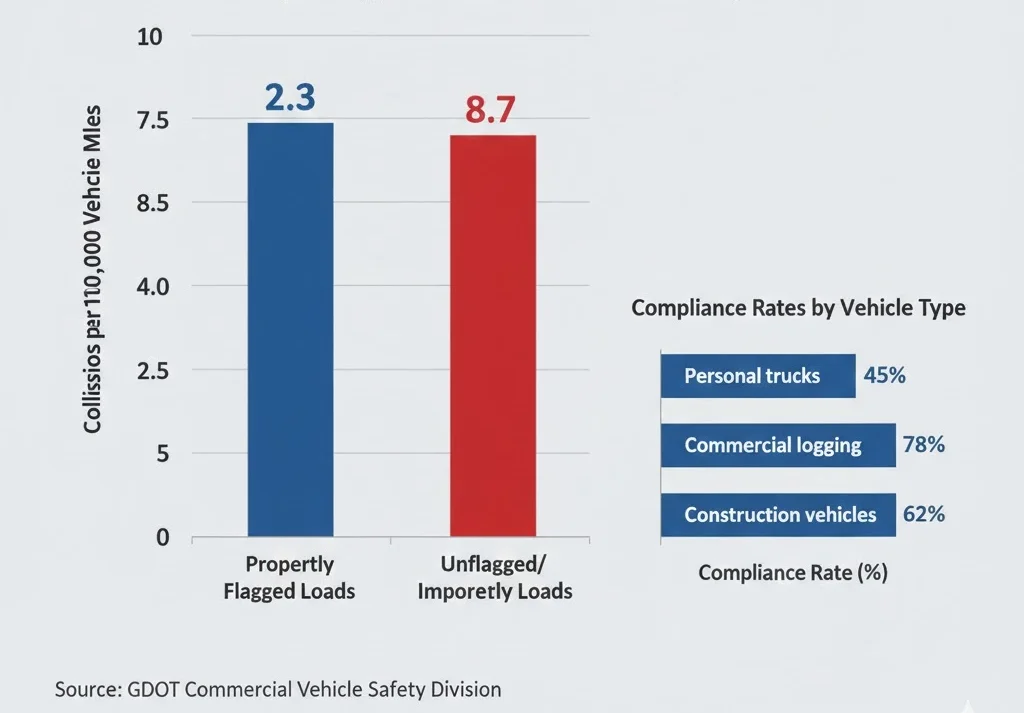
These cases highlight how flagging violations can escalate beyond simple traffic tickets. In civil litigation, non-compliance becomes evidence of negligence per se.
Penalties and Practical Consequences
The criminal penalties seem modest – typically $150-200 fines with no points on your license. But that’s just the beginning.
Hidden costs include:
- Commercial vehicle inspection complications.
- Insurance premium impacts after accidents.
- Civil liability exposure in injury cases.
- DOT compliance issues for commercial operators.
Thomas County’s schedule shows $200 for missing strobe lights on projecting timber loads. Athens-Clarke County lists $151 for “No Tow Lights/No Flag on Load.” These amounts add up quickly for commercial operations.
Industry-Specific Compliance Strategies
Different industries face different challenges:
Construction and Contracting
- Keep spare flags in vehicles.
- Train drivers on measurement techniques.
- Invest in quality LED strobes for timber loads.
- Maintain compliance checklists.
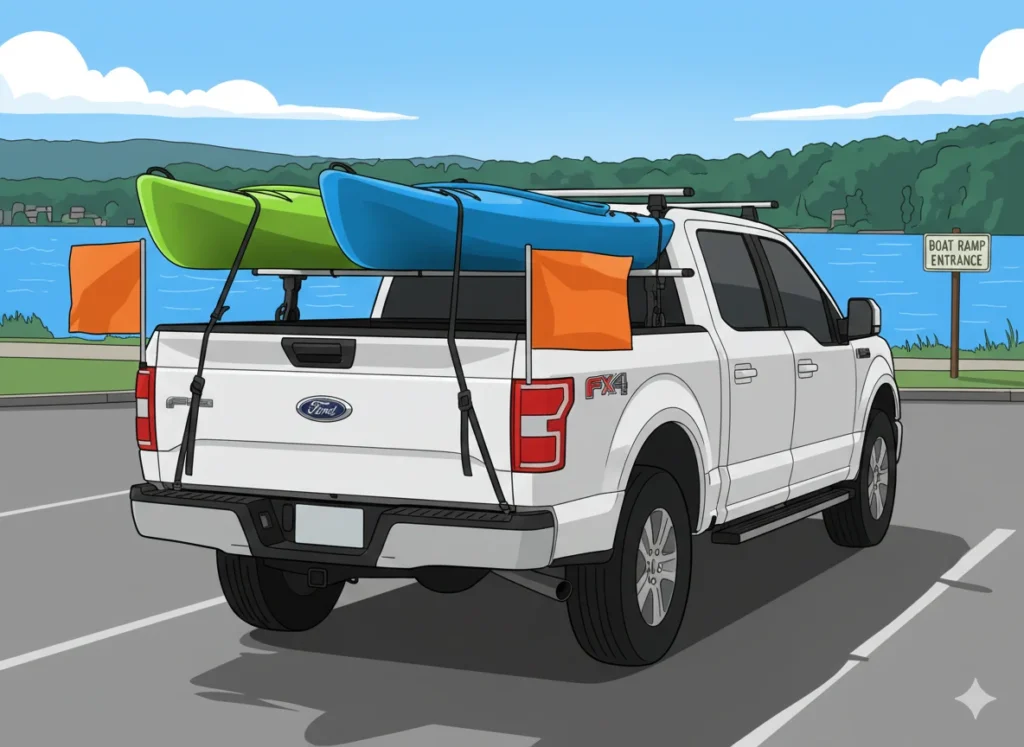
Recreational Users
- Weekend warriors hauling boats or lumber.
- Often unaware of requirements until cited.
- Simple flag kits available at auto parts stores.
Commercial Logging Operations
- Must comply with both state flagging and federal securement rules.
- Amber strobe maintenance becomes critical.
- Multiple light setups for loads requiring full coverage.
Overlapping Regulations You Need to Know
Georgia Code § 40-6-248.1 requires load securement to prevent dropping or shifting. Commercial violations causing harm can result in fines up to $1,000. This works alongside flagging requirements.
For oversized loads (over 12 feet wide, 14’6″ high or 100 feet long), GDOT permits are required under Chapter 672-2 rules. These often mandate escort vehicles and additional signage beyond basic flagging.
Practical Compliance Tips from the Trenches
After handling dozens of these cases, here’s what actually works:
Measurement matters: That four-foot threshold is exact. Carry a tape measure. “About four feet” doesn’t cut it in court.
Quality equipment: Cheap flags fade and tear. Invest in proper fluorescent material that stays bright. I’ve seen cases where faded flags didn’t meet the “bright” requirement.
Multiple light strategy: For timber loads requiring 500-foot visibility in all directions, often one amber strobe isn’t enough. Use multiple units positioned strategically.
Documentation: Take photos of your flagging setup, especially for commercial operations. This helps in enforcement encounters and potential litigation.
The Insurance Angle Nobody Talks About
Insurance companies increasingly scrutinize equipment violations in accident claims. A simple flagging violation can become leverage for reducing payouts or denying coverage entirely.
Commercial policies often include specific language about regulatory compliance. Non-compliance with flagging requirements could void coverage for certain claims.
Recent Enforcement Trends
Local enforcement varies dramatically across Georgia counties. Rural areas with heavy logging activity tend to be stricter about timber load requirements. Metro Atlanta focuses more on general flagging compliance during rush hours.
The use of flagging violations as a secondary offense when making a traffic stop is also on the increase among state patrol officers. The fact that the penalty is only twenty dollars may not be too much, yet most times it means that other possible breaches may be closely scrutinized.
Technological and Future Changes
LED technology has been advanced and is now providing brighter and long lasting substitutes of amber strobes. Long-haul operations are getting popular with the use of solar-powered units.
The amendments which were made in 2011 demonstrate that Georgia is eager to change the regulations along with the changes in technology. Anticipate changes in the future that may include new lighting technologies and possibly growing needs of some types of loads.
Bottom Line for Practitioners and Drivers
Georgia’s flagging requirements aren’t suggestions – they’re enforceable law with real consequences. The four-foot threshold captures more loads than people realize and the specific requirements for flags, lights and positioning matter in enforcement and litigation contexts.
For attorneys, these violations often intersect with broader negligence claims. Understanding the technical requirements helps in both defending violations and building civil cases.
For drivers and fleet operators, compliance is straightforward once you understand the rules. Keep proper equipment, train your drivers and document your safety procedures.
The $200 fine is the least of your worries if that unmarked load causes an accident. In a state with heavy commercial traffic and active enforcement, proper flagging isn’t just legal compliance – it’s risk management.