 Irma C. Dengler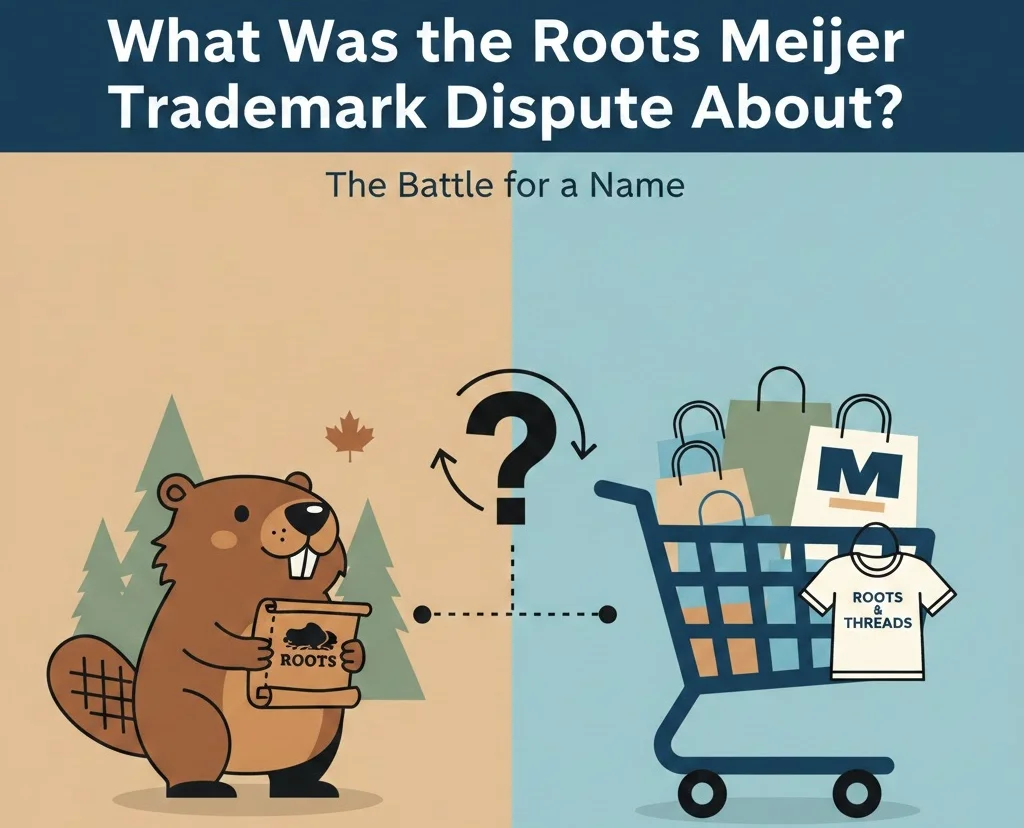
When Canadian brand lifestyle company, roots corporation, learned that a U.S. based retailer Meijer intended to launch a kiddie label under the name “ROOTS and THREADS,” it led to a federal trademark lawsuit that underscores valuable lessons regarding brand protection and expanding into retailing. This is what transpired and what companies can learn out of this case.
The Companies at the Center of the Dispute
Roots Corporation: The Canadian Heritage Brand
Roots Corporation is a well-established Canadian lifestyle brand founded by two Detroit natives Michael Budman and Don Green in 1973. The firm is present in Canada and has opened more than 100 stores as well as has developed a market in the U.S. with outlets in Michigan and Utah.
Key facts about Roots:
- Founded: 1973 in Toronto.
- Products: Home products, leather goods, products, footwear, and casual apparel.
- Market position: Premium quality, durable goods.
- Trademark portfolio: Multiple “ROOTS” trademarks used continuously since inception.
Meijer: The Midwest Retail Giant
Meijer, Inc. is a Michigan based family retailer with operations located in Grand Rapids, Michigan and has over 500 supercenters in the Midwest. The company intended to roll-out a children shop label called “ROOTS & THREADS” under the private labels of the company with target users being children who are going back to school.
Meijer vs. Roots (U.S. Footprint)
| State | Meijer Presence (approx. 500+ Total) | Roots U.S. Presence | Overlap Intensity |
| Michigan | 255+ stores (Corporate HQ) | 3 Stores (Birmingham, Novi, Rochester) | High |
| Ohio | 50+ stores | None | Low |
| Indiana | 40+ stores | None | Low |
| Illinois | 30+ stores | None | Low |
| Kentucky | 15+ stores | None | Low |
| Wisconsin | 15+ stores | None | Low |
| Utah | None | 1 Store (Park City) | None |
What Was The Controversy Behind The Juridical Battle?
The USPTO Rejection
The conflict started when Meijer submitted the application to the trademark of ROOTS & THREADS in October 2024. In May 2025, the U.S. Patent and Trademark Office made a non-final rejection, arguing a likelihood of confusion with existing trademarks of the existing trademarks of Roots.
This move at USPTO was vital leverage to Roots since it gave it official status that the marks were likely to confuse consumers.
Roots’ Legal Strategy
Subsequent to the rejection of the trademark application by the USPTO, Roots wrote a cease and desist letter to Meijer requesting that he abandon the trademark application. Roots went to the federal court when Meijer resumed its development plans.
The Legal Claims Explained
Primary Allegations Under the Lanham Act
Roots filed their lawsuit under the Lanham Act, the federal trademark law, making three key claims:
1. Trademark Infringement
- Claimed “ROOTS & THREADS” was confusingly similar to “ROOTS”.
- Argued consumers might believe Meijer’s products were affiliated with Roots.
- Pointed to the USPTO’s rejection as supporting evidence.
2. Trademark Dilution
- Alleged that association with Meijer’s products could harm Root’s reputation.
- Concerned that consumers might attribute lower-quality items to the Roots brand.
- Focused on protecting the distinctiveness of the “ROOTS” mark.
3. Unfair Competition
- Claimed Meijer was capitalizing on Root’s established brand equity.
- Alleged false designation of origin under federal law.
What Roots Wanted from the Court
The lawsuit demanded:
- Injunctive relief to stop Meijer’s use of the mark.
- Abandonment of the trademark application.
- Compensatory damages including any profits from infringing sales.
- A jury trial to decide the case.
How the Case Unfolded: A Legal Timeline
| Date | Event | Significance |
|---|---|---|
| October 2024 | Meijer files “ROOTS & THREADS” trademark application | Initial step that triggered the dispute |
| May 2025 | USPTO issues non-final rejection | Provided Roots with leverage for their claims |
| August 8, 2025 | Roots files federal lawsuit | Escalation to federal court in Western District of Michigan |
| August 15, 2025 | Meijer waives service of summons | Shows willingness to engage in legal process |
| October 2025 | Joint stipulation filed | Likely extension of response deadline |
| November 18, 2025 | Court issues order to show cause | May have prompted settlement discussions |
| December 8, 2025 | Roots files voluntary dismissal with prejudice | Case effectively ends |
| December 9, 2025 | Court grants dismissal | Official case termination |
The Not-So-Unexpected Rapid Decision
What “Dismissal with Prejudice” Means
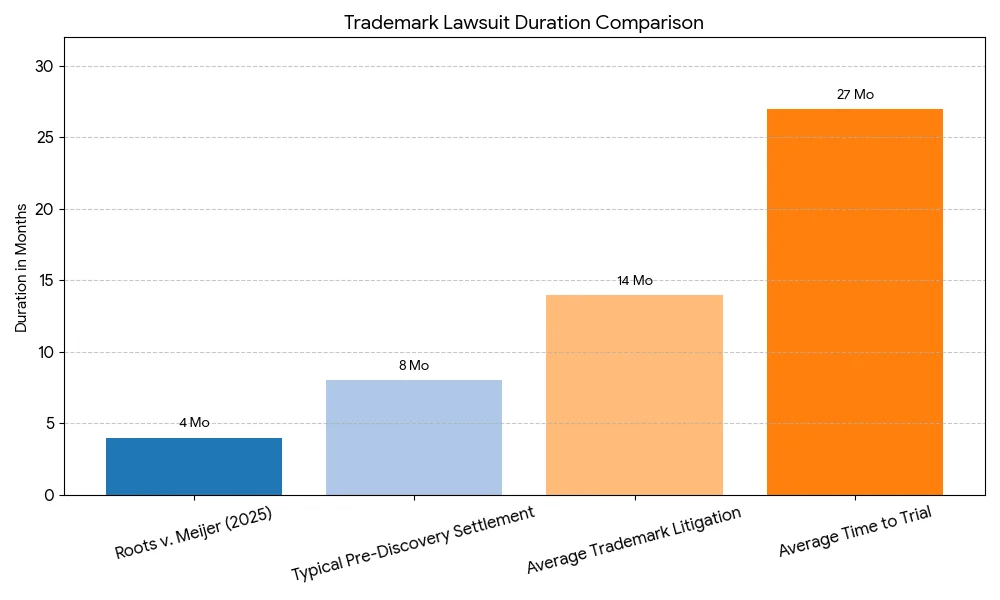
By voluntarily dismissing their case with prejudice in December 2025, Radsher had ended any ability to resubmit the same claims to Meijer. Such dismissal usually shows the existence of a settlement agreement.
Signs of a Confidential Settlement
Several factors suggest the parties reached a private settlement:
- Speed of resolution: Only four months from filing to dismissal.
- Dismissal with prejudice: Prevents future similar claims.
- No public statements: Neither company commented on terms.
- No Meijer response filed: No answer or counterclaim in public record.
Business Lessons from the Dispute
For Retailers Developing Private Labels
Conduct Thorough Trademark Searches
- Search existing registrations before product development.
- Consider hiring trademark attorneys for clearance opinions.
- Monitor USPTO actions on your applications.
Understand Geographic Considerations
- Be especially careful in markets where established brands have presence.
- Consider the “home field advantage” effect (Meijer faced Roots in Michigan, where Roots’ founders originated).
For Brand Owners Protecting Trademarks
Leverage USPTO Actions
- Use office actions and rejections to support infringement claims.
- Monitor trademark applications in your industry sectors.
- Act quickly when potential infringement is discovered.
Consider Business Relationships
- Quick settlements can preserve business relationships.
- Confidential agreements avoid public disputes.
- Focus on business continuity over legal precedent.
The Broader Impact on Trademark Law
No Legal Precedent Set
Because the case settled quickly without court rulings, it doesn’t establish new legal precedents. However, it demonstrates several important principles:
- USPTO influence: Office actions can significantly strengthen private disputes.
- Cross-border enforcement: Canadian companies can effectively protect U.S. rights.
- Settlement efficiency: Quick resolutions benefit all parties.
Industry Implications
The case highlights ongoing tensions between:
- Established brands protecting market position.
- Retailers expanding private-label offerings.
- Consumer interests in affordable alternatives
- Legal costs versus business priorities.
What Happened to “ROOTS & THREADS”?
As of January 2026, there are no public records showing:
- Appeals or new filings related to the case.
- Updates on Meijer’s trademark application.
- Public launch of any “ROOTS & THREADS” products.
This silence strongly suggests the settlement included abandonment or modification of Meijer’s planned brand name.
Key Takeaways for Businesses
Prevention is Better Than Litigation
- Early trademark clearance saves time and money.
- Professional searches identify potential conflicts.
- Alternative branding avoids established marks.
Quick Settlements Make Sense
- Litigation costs can exceed settlement costs.
- Business relationships matter more than legal victories.
- Confidential terms protect both parties’ interests.
USPTO Actions Matter
- Office rejections provide valuable leverage.
- Examining attorneys offer expert opinions on confusion.
- Public records support or undermine legal positions.
Conclusion
The case of the Roots Meijer trademark dispute shows that the contemporary intellectual property disputes can manifest and end in a rather short time. Although we can never tell the settlement conditions accurately, the case presents good lessons in trademark clearance, brand protection, and early resolution wisdom.
To businesses looking to expand to the use of their own label or even defend their current trademarks, the case demonstrates that proper planning, professional advice, and realistic resolutions to a problem tend to be in the best interest of the parties over extended litigation.
The expedited decision probably helped Meijer to shift its product development focus without compromising the integrity of Brands of Roots a win-win situation that is gaining popularity in courts and business circles in trademark matters.