 Marc Mackenzie ( Probate Lawyer )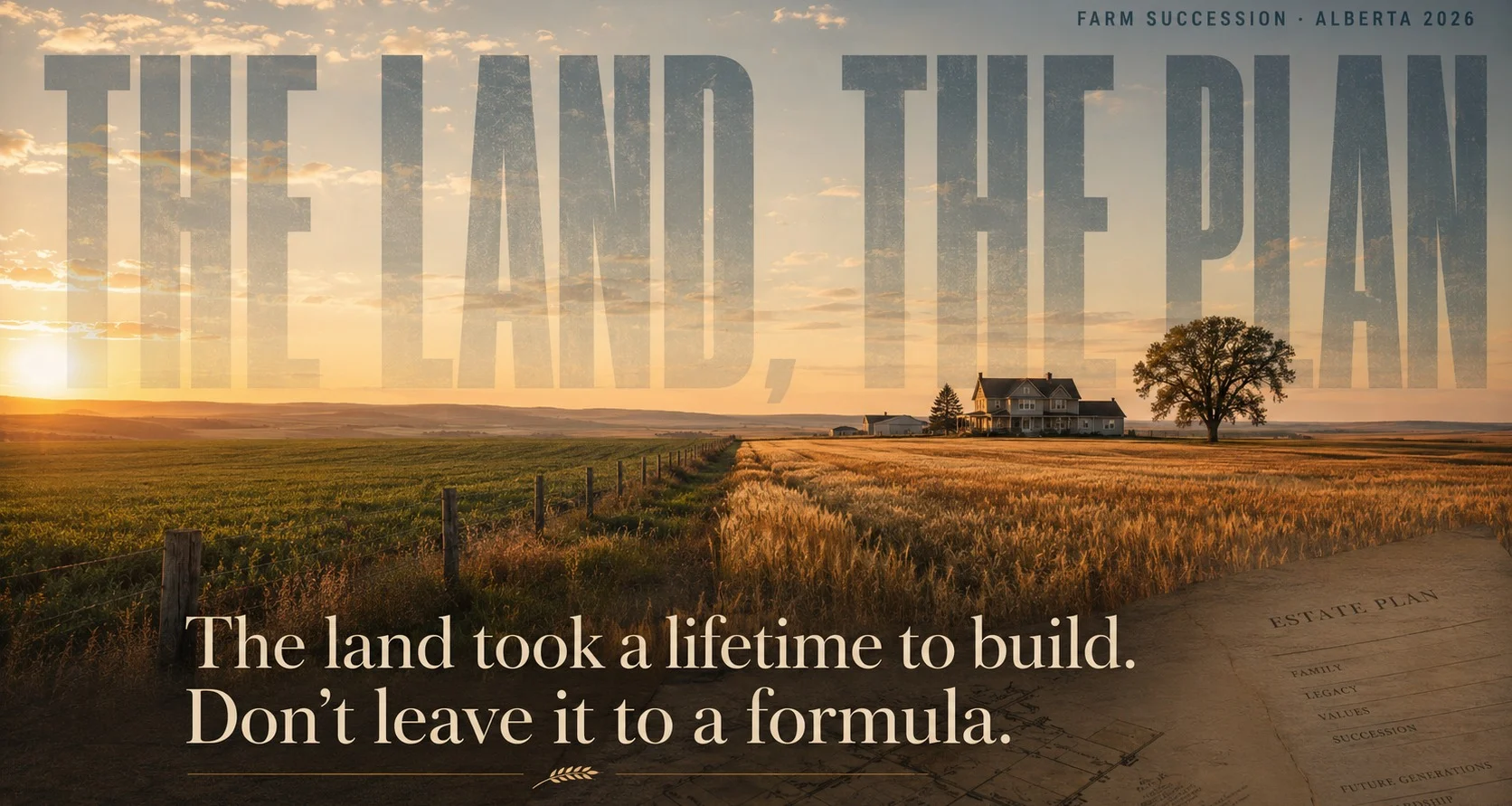
Short answer, because you’re busy and this is the part that matters: if you die owning farmland with no plan, the Canada Revenue Agency treats you as if you sold every acre at fair market value the moment before death. That triggers a capital gains bill your family may have to cover by selling the very land you wanted them to keep. There’s no inheritance tax in Canada but this deemed disposition works like one and on land that’s quietly climbed to a million dollars a quarter section, the number gets frightening fast.
The Tax Nobody Sees Coming: Deemed Disposition
When you die, subsection 70(5) of the Income Tax Act deems you to have disposed of all your capital property — farmland included — at fair market value right before death. The gain is the gap between what the land is worth now and your adjusted cost base, which for a lot of Alberta farmers is what Dad or Grandpa paid decades ago.
Run the arithmetic on real numbers. Say the land was bought at two hundred thousand and it’s worth a million and a half today. That’s a $1.3 million capital gain landing on your final tax return in one year. Even after the Lifetime Capital Gains Exemption for qualified farm property takes a big bite, you can be left with hundreds of thousands in taxable gain and a six-figure tax bill at Alberta’s top rates. The estate owes it. And if the estate is mostly land and machinery — not cash — guess where the money comes from.
That’s the whole trap. Land-rich, cash-poor estates get forced into selling ground to pay a tax that a plan could have deferred entirely.
The Tools That Fix It — If They’re Set Up Right
Here’s the good news and it’s real. Canada gives farm families three levers and used together they can drop the tax to nearly nothing:
- The spousal rollover. Leave the farm to your spouse and everything transfers at your cost base — no deemed disposition, no gain, no tax, until they later sell or die. It’s automatic breathing room, but it only defers the problem to the next death. It doesn’t solve it.
- The intergenerational rollover. Qualified farmland can transfer to a child or grandchild on a tax-deferred basis, either during your life or on death. Worth knowing: “child” is defined broadly here — biological, adopted, step, grandchild, even a child-in-law can qualify. But the land generally has to have been actively farmed by the family and there are holding conditions that can claw the rollover back if the kids sell too soon.
- The Lifetime Capital Gains Exemption. For qualified farm property this shelters up to $1.25 million of gain per person. Two spouses who both own qualifying land can, in the right structure, shelter far more between them.
None of these fire on their own. The rollover has qualification tests. The LCGE has eligibility rules that a corporate structure can accidentally break. Get the setup wrong and CRA can deny the rollover retroactively — years later, with interest.
The Problem The Tax Rules Can’t Touch: The Kids Who Don’t All Farm
This is the one that splits families and no amount of tax planning solves it by itself. You’ve got three kids. One wants to farm. Two built lives in the city and have no intention of driving a combine.
Leave everything equally and undivided and you’ve handed the farming child two off-farm siblings as business partners who’d rather cash out, which usually means the land gets sold out from under the one person who wanted it. Leave it all to the farming child and the other two feel cut out. There’s no formula in the Income Tax Act for “fair,” because fair and equal aren’t the same thing on a farm and everybody in the family knows it.
This is where the actual planning happens. Life insurance is the classic equaliser — the farm goes to the farming child, a policy funds the non-farming kids to a comparable value and nobody has to sell. An option-to-purchase can lock in a fair price and timeline for the successor. A gradual lifetime transfer moves land while you’re alive, at prices and terms you control, instead of dumping it all onto one tax return at death. These are decisions, not defaults and they have to be written down while you’re around to make them.
Why Intestacy Is The Worst-case Version
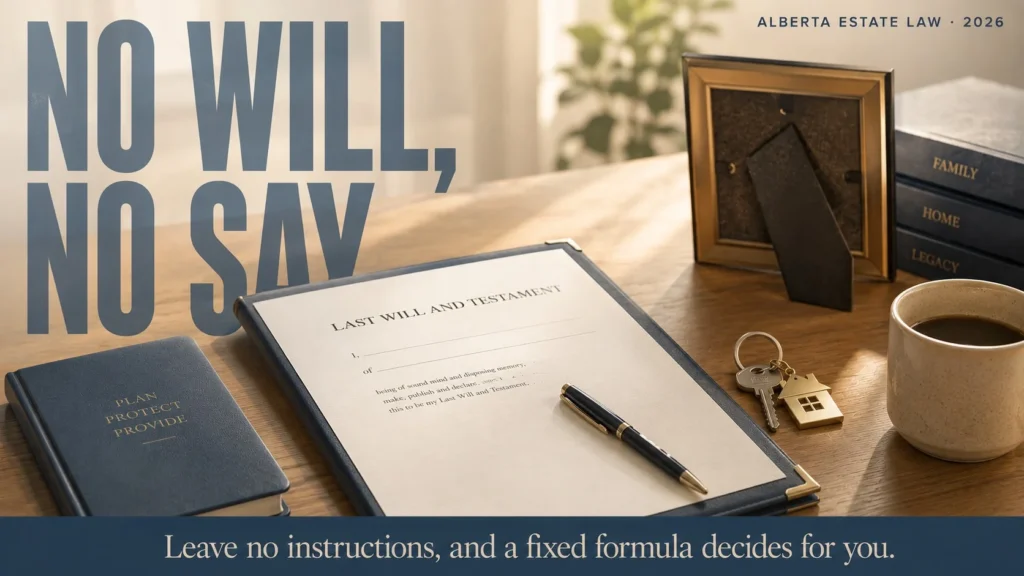
If you die with no will at all, Alberta’s intestacy rules divide the estate by a fixed formula that has never heard of your farm. The land can end up split among heirs in fractions, some of whom want to sell and some of whom want to farm, with a court-appointed administrator running the whole thing. On top of the tax bill, you now have forced co-ownership and no named successor. For a working farm, that’s close to the worst outcome available.
And here’s a sobering figure: only about 8.5% of Alberta farm operators have a formal succession plan. The other ninety-odd percent are, functionally, leaving it to the formula.
The Move
Farm succession is genuinely technical, the rollover conditions, the LCGE eligibility, the interaction with corporate shares and the spousal rollover all have to line up and the rules do shift over time. This is not a will-kit job. A local firm that handles this every day, like an estate planning attorney in Barrhead Alberta, can confirm your land actually qualifies, structure the transfer to keep it in the family and balance the farming and non-farming kids before it becomes a fight.
The land took a lifetime to build. Deciding what happens to it shouldn’t be left to a tax rule and a formula that don’t know your family’s name.