 Mohammad Ahsan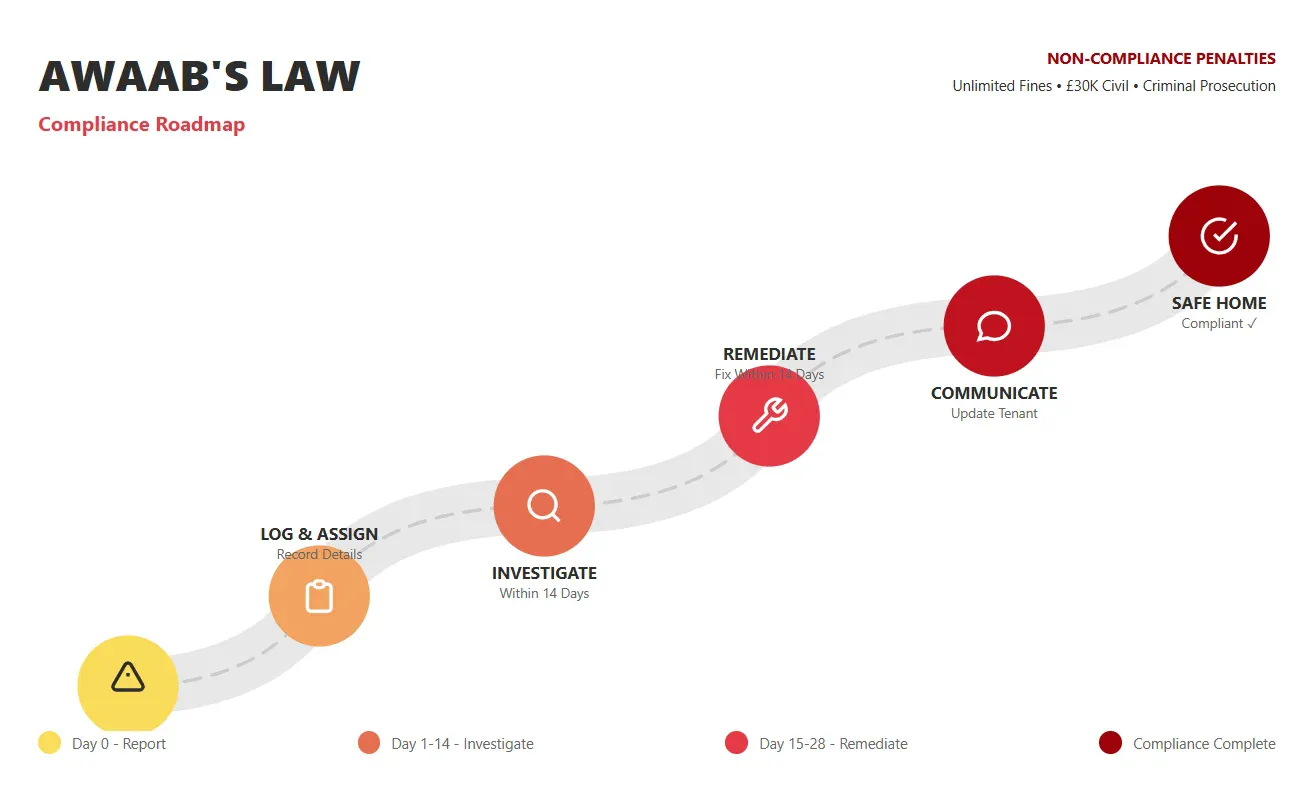
The funeral of two-year-old Awaab Ishak in 2020, who died due to the protracted exposure to mould in his residence in Rochdale, shocked the country and revealed failure points in the way in which social housing providers deal with unsafe living conditions. He was killed, which spawned a legislative initiative that currently influences all landlords, property managers, and housing professionals in England. Social Housing (Regulation) Act 2023 provided the requirements that essentially reshape the responsiveness rate of landlords to health hazards, with an extreme punishment (in case of non-compliance). To housing professionals, these new legal requirements are not only fines to be avoided, but tragedies and the need to provide all tenants with safe and healthy living conditions. With enforcement on the way, it is the time to prepare.
What Awaab’s Law Changes
New Legal Deadlines to Hazard Response
The Law of Lawawis by Awaab sets a strict deadline of the landlords to investigate and remedy severe health risks reported by tenants. Under the Housing Health and Safety Rating System (HHSRS) (the most serious risks) of severe damp, mould, excess cold, electrical risks, etc. now landlords are obliged to do the investigation in 14 days and do the repairs in a period of another 14 days which is named as the Category 1 Hazards.
In the category 2 hazards, it is less urgent but still actions have to be taken within a stipulated period. These prescriptive deadlines will be a serious departure in the way things used to be done in the past where the response time could have been quite different and also some landlords were not responsive at all until the law came out to play.
Extended Remit beyond Social Housing
Although the legislation is primarily aimed at social housing providers after the case of Awaab, the principles and expectations are already shaping wider regulatory policies of the provision of the private rented accommodation. The focus on immediate response, an adequate inquiry, and informing tenants creates the new standards that should be followed by responsible landlords of all industries to secure tenants and reduce the risk of liability.
The legislation also enhances the rights of tenants to know about hazards in their houses and what is being done to combat it, establishing transparency that would help to avoid cases when the situation is getting worse and slow bureaucracy is taking its time.
Understanding HHSRS and Health Hazards
The 29 Housing Hazards
The Housing Health and Safety Rating System recognizes 29 possible risks to properties used as homes and is categorized into four groups, namely, physiological requirements, psychological requirements, protection against infection, and protection against accidents. Examples of common hazards are damp and moulds growth, surplus cold/heat, asbestos, carbon monoxide, poor lighting, poor sanitation, and instability.
The likelihood of occurrence and the extent of harm is evaluated on each of the hazards. The first category of hazards (Category 1) are dangerous and directly threatening to health and safety and the latter (Category 2) are less dangerous, yet they must be taken care of to ensure the acceptable standards of living and avoid the increase.
Identifying the Red Flags
The property professionals should gain the ability to determine the possible risks during inspections. A clear growth of moulds, condensation effects, musty smells, peeling of the paints or wallpaper, and reports by tenants of respiratory problems are all indications of damp and mould problems. Poorly heated cold properties, those with drafty windows, or insufficient insulation are an issue of excess cold risks.
Hazard identification needs systematic inspection methods, good documentation and knowledge of interaction between various building defects to pose health risks. With these skills of critical assessment, training will equip professionals.
Essential Training for Compliance
Core Knowledge Requirements
Property professionals managing or maintaining rental accommodation need comprehensive understanding of legal obligations under Awaabs Law, HHSRS assessment principles, common hazards and their health impacts, inspection methodologies, and remediation strategies. This knowledge protects both tenants and landlords whilst ensuring compliance with tightening regulations.
Training programmes should cover practical hazard identification through case studies and real-world examples, legal timeframes and documentation requirements, effective communication with tenants about hazards and remediation plans, and understanding when to engage specialists for complex issues like structural problems or environmental hazards.
Who Needs Training
Housing officers, property managers, maintenance coordinators, landlords directly managing properties, letting agents, surveyors conducting property inspections, and contractors working in social or private rented housing all benefit from understanding Awaab’s Law requirements. Even administrative staff handling tenant reports need awareness of legal timeframes and escalation procedures.
Organisations should ensure all personnel who might receive hazard reports understand the urgency required and know proper channels for immediate action. Delayed responses due to staff unfamiliarity with requirements could result in regulatory breaches with serious consequences.
Implementing Effective Compliance Systems
Robust Reporting and Tracking
Compliance demands systematic approaches to receiving, recording, investigating, and resolving hazard reports. Digital systems that automatically flag approaching deadline dates, assign responsibilities clearly, and maintain comprehensive audit trails prove invaluable for demonstrating compliance during regulatory inspections.
Procedures must ensure tenant reports reach responsible personnel immediately, particularly for Category 1 hazards requiring 14-day investigation commencement. Clear escalation pathways prevent reports languishing in general enquiry systems whilst critical timeframes elapse.
Proactive Property Inspections
Waiting for tenant reports before identifying hazards represents reactive management that Awaab’s Law seeks to eliminate. Regular proactive inspections identify developing problems before they become serious health threats, allowing planned remediation rather than emergency responses.
Systematic inspection schedules, trained inspectors using consistent assessment criteria, and clear remediation prioritisation based on hazard severity create proactive approaches that protect tenants whilst reducing costly emergency interventions and regulatory breaches.
Communication and Tenant Engagement
Transparency Requirements
Awaab’s Law emphasises transparent communication with tenants about hazards in their homes and actions being taken. Landlords must keep tenants informed throughout investigation and remediation processes, explaining timescales, what work will occur, and how it addresses the reported hazard.
This transparency builds trust, demonstrates commitment to tenant welfare, and provides documented evidence of compliance should disputes arise. Poor communication, even when practical work progresses appropriately, can trigger complaints and regulatory investigations.
Empowering Tenants
Educating tenants about reporting processes, what constitutes reportable hazards, and their rights under Awaab’s Law encourages earlier reporting before minor issues become serious health threats. Clear, accessible reporting channels—phone, email, online portals, and in-person options—ensure tenants can easily raise concerns.
Responsive initial handling of reports, even if full investigation takes time, reassures tenants their concerns are taken seriously and encourages future reporting rather than reluctance borne from previous dismissive responses.
Consequences of Non-Compliance
Regulatory Penalties
The Regulator of Social Housing can impose unlimited fines for serious breaches of consumer standards, including failures to address health hazards within required timeframes. Beyond financial penalties, enforcement action damages reputations, triggers increased regulatory scrutiny, and may result in management orders transferring control of properties to alternative organisations.
For private landlords, local authorities can issue improvement notices, prohibition orders preventing property occupation until hazards are addressed, and civil penalties up to £30,000 for serious offences. Criminal prosecution remains possible for the most egregious cases.
Liability and Reputational Damage
Non-compliance exposes landlords to civil claims from tenants whose health suffers due to hazardous conditions. Legal costs, compensation payments, and increased insurance premiums create financial impacts that dwarf compliance investments. Reputational damage from high-profile enforcement cases affects future tenant recruitment, investor confidence, and relationships with local authorities.
FAQ Section
When does Awaab’s Law come into full effect?
The Social Housing (Regulation) Act 2023 received Royal Assent in July 2023, with various provisions implemented in stages. The specific timeframes for hazard investigations and repairs came into force in 2024. All social housing providers should already be operating under these requirements, with enforcement activity increasing as the Regulator beds in new standards.
Does Awaab’s Law apply to private landlords?
The specific timeframes in Awaab’s Law primarily apply to social housing providers. However, private landlords remain subject to HHSRS requirements and local authority enforcement. The principles behind Awaab’s Law—swift action on hazards, proper investigation, and tenant communication—represent good practice that all responsible landlords should adopt to protect tenants and limit liability.
What happens if we can’t complete repairs within 14 days?
If repairs genuinely cannot be completed within the 14-day remediation window due to legitimate complications like awaiting specialist contractors, sourcing materials, or scale of work required, landlords must demonstrate they’ve acted as quickly as reasonably possible, kept detailed records of efforts and obstacles, maintained transparent communication with tenants, and taken interim measures to reduce risk where feasible.
How should we document compliance with Awaab’s Law?
Maintain comprehensive records of all tenant hazard reports with dates received, investigation commencement and completion dates with findings, remediation works planned and completed with dates, all communications with tenants regarding the hazard, photographic evidence before and after remediation, and contractor invoices or work orders proving action taken. These records demonstrate compliance during regulatory inspections or legal disputes.
Can training help us avoid penalties under Awaab’s Law?
Comprehensive training equips staff with knowledge and skills to identify hazards early, respond within legal timeframes, implement effective remediation, and maintain proper documentation. Whilst training alone doesn’t guarantee compliance, it forms a critical component of robust systems that prevent breaches whilst demonstrating organisational commitment to tenant welfare and regulatory compliance.
Conclusion
The Law of Awaab is a landmark step in the direction of housing regulation, which requires prompt and efficient reaction to the health risks to the tenants. In the case of property professionals, compliance means not only knowledge of legal timeframe, but also an overall understanding of the hazard assessment process, the systematic application of reporting and tracking systems, and the organisational cultures in which the safety of the tenant is a primary concern, rather than the comfort of the bureaucratic.
Proper training, effective processes, and active property management ensure the safety of tenants as well as ensuring organisations do not suffer regulatory fines and negative publicity. The point here is not whether you should or should not prepare to meet the requirements of the Law on Awaabs, it is whether your preparation will hold up when subjected to regulatory examination, or, even more distressing, when subjected to an entirely preventable tenant tragedy that would have been avoided by a proper knowledge and prompt action.