 Mohammad Ahsan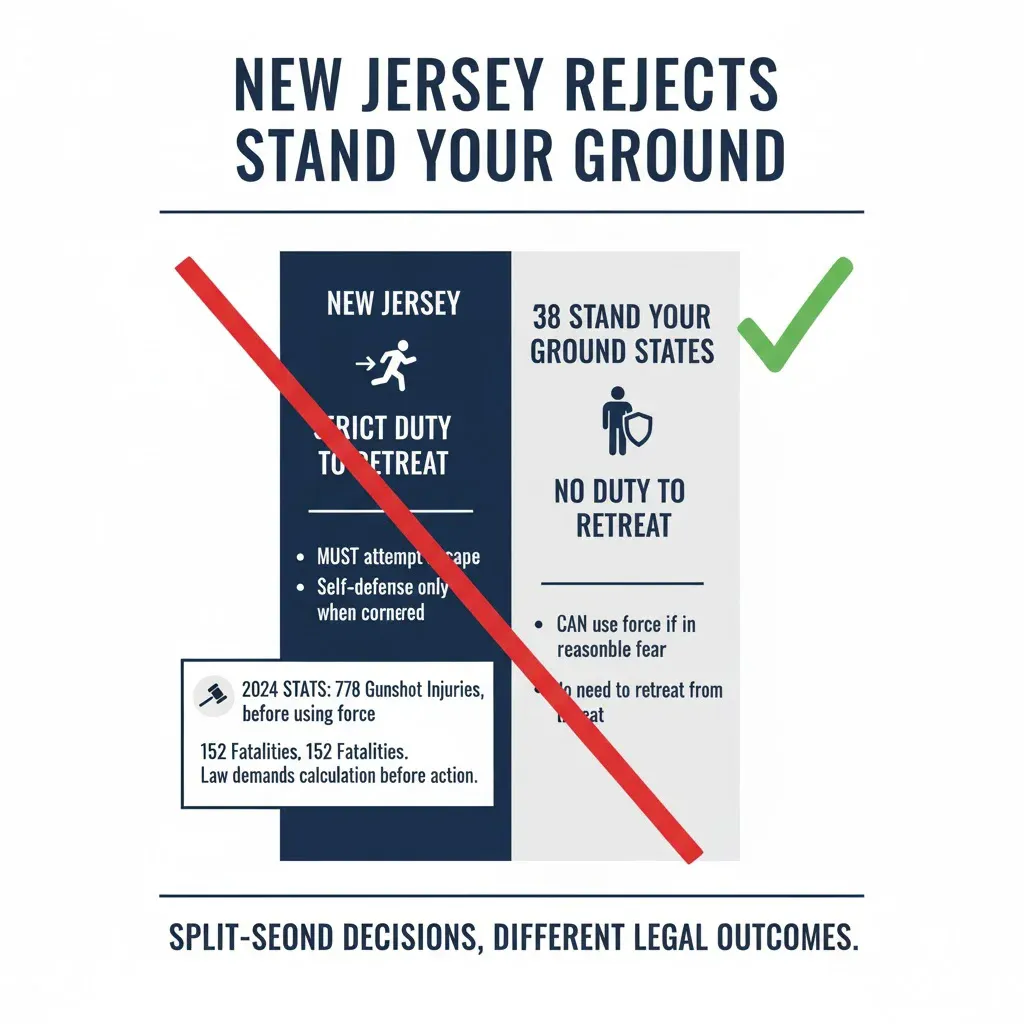
Key Takeaways
- New Jersey has NO Stand Your Ground law – you must attempt to retreat before using force, even when threatened in public.
- Duty to retreat applies everywhere except your home – parking lots, stores, streets all require escape attempts first.
- Castle Doctrine has limits – even at home, you must warn intruders to leave unless it’s dangerous to do so.
- You carry the burden of proof – self-defense is an affirmative defense, meaning YOU must prove it was justified.
- Deadly force only when facing death/serious harm – and only if you cannot retreat with “complete safety”.
- Failed self-defense claims mean prison – murder charges bring 30+ years; even assault brings 3-5 years.
- Weapons for self-defense still illegal – carrying a gun without permits brings mandatory 42 months minimum, even if never used.
New Jersey operates under one of the nation’s most restrictive self-defense frameworks. Unlike 38 states that adopted Stand Your Ground laws, New Jersey maintains its traditional duty to retreat doctrine, forcing residents to attempt escape before defending themselves, even when facing immediate danger.
The numbers tell the story. In 2024, New Jersey recorded 778 gunshot injuries with 152 fatalities. Every one of those incidents potentially involved split-second decisions about self-defense. Yet the law demands careful calculation before action – retreat first, defend only when cornered. This requirement shapes every violent encounter in the state.
The Legal Framework That Governs Force
N.J.S.A. § 2C:3-4 controls self-defense in New Jersey. The statute says force becomes justifiable only when someone “reasonably believes that such force is immediately necessary for the purpose of protecting himself against the use of unlawful force by such other person on the present occasion.” Three critical elements define this standard: reasonable belief, immediate necessity, and present threat.
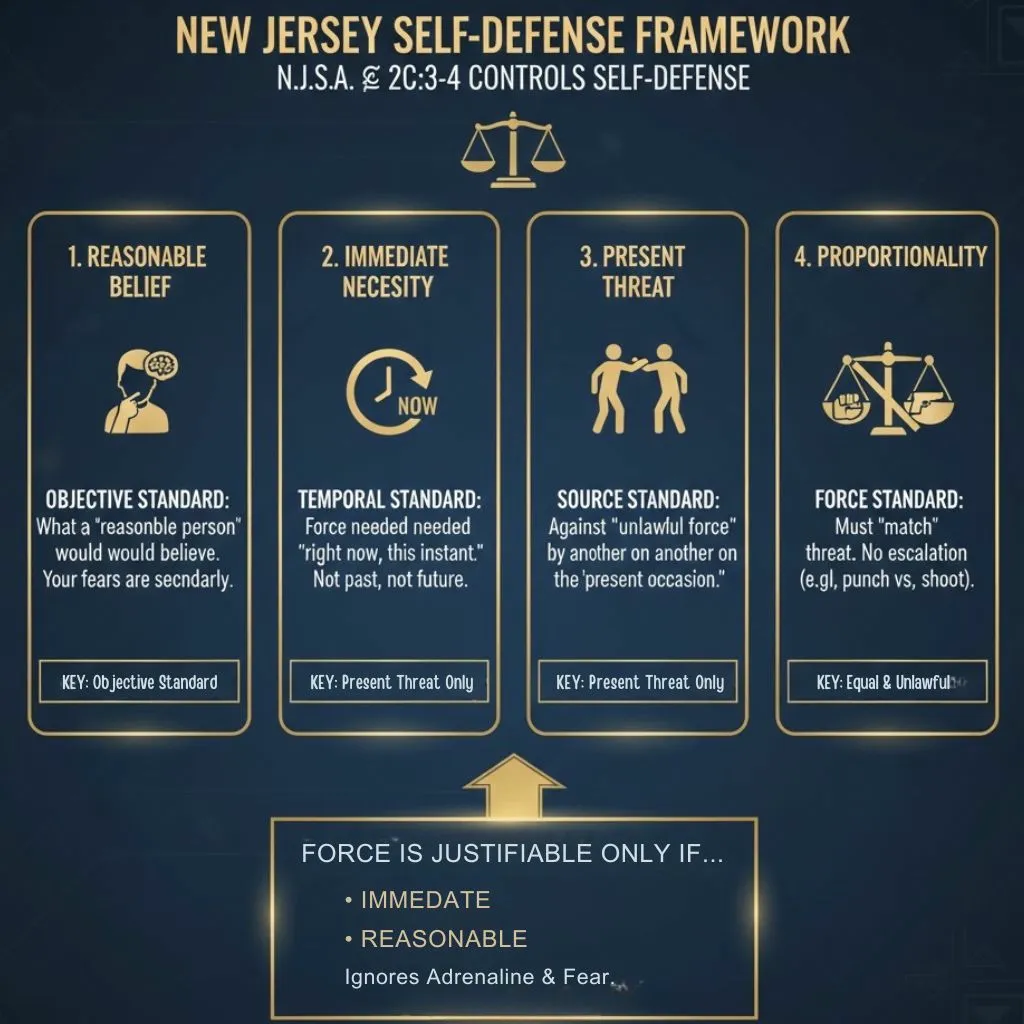
The reasonableness standard adds another layer. Courts don’t ask what you believed. They ask what a reasonable person would believe. Your personal history, your fears, your experiences – these matter less than an objective standard applied after the fact. Judges and juries decide retroactively whether your split-second decision meets their definition of reasonable.
Duty to Retreat: The Core Requirement
The duty to retreat dominates New Jersey’s approach. Before using any force, the law demands you try escaping. Not just stepping back. Not just considering escape. Actually attempting to leave if possible. The statute specifically states deadly force isn’t justified if “the actor knows that he can avoid the necessity of using such force with complete safety by retreating.”
Complete safety. Those two words create an impossible standard. How does anyone determine complete safety during an attack? If someone threatens you with a knife, is running completely safe? What if they chase you? What if you trip? Courts decide these questions later, in calm courtrooms, not during violent encounters.
This retreat requirement applies everywhere except your home. Parking lots, sidewalks, stores, restaurants – in all these places, New Jersey expects you to run rather than fight. Even if running seems dangerous. Even if the attacker appears faster. The law prioritizes escape over confrontation, regardless of practical realities.
Compare this to Pennsylvania, just across the river. There, Stand Your Ground laws eliminate retreat requirements. A Pennsylvania resident can defend themselves immediately when threatened. Cross into New Jersey, that same person must attempt escape first. Geography determines self-defense rights, creating confusion and danger for those unfamiliar with state boundaries.
Castle Doctrine: Limited Home Protection
New Jersey recognizes the Castle Doctrine, allowing force against home intruders without retreating. N.J.S.A. § 2C:3-6 provides this exception, acknowledging that homes deserve special protection. But even this protection comes with restrictions that undermine its effectiveness.
First, you must request intruders leave unless doing so would be useless or dangerous. Imagine confronting a burglar at 3 AM and needing to warn them before defending yourself. The law expects this verbal warning in most situations. Only when warning would increase danger can you skip this requirement.
Second, if you started the confrontation, Castle Doctrine doesn’t apply. If you can escape your own home with complete safety, you might need to retreat even there. The initial aggressor exception means any prior conflict could eliminate Castle Doctrine protection. Courts examine who started what, when, and why – determinations made months after the incident.
State v. Gartland (1997) further limited Castle Doctrine in domestic situations. When cohabitants are involved, even Castle Doctrine might not eliminate retreat requirements. Living with someone who becomes violent doesn’t guarantee the right to stand your ground in your own home.
The statute also distinguishes between dwellings and property. Defending your garage, shed, or yard involves different rules than defending your house. The physical boundaries of Castle Doctrine protection remain legally uncertain, decided case by case in courts.
Criminal Consequences When Self-Defense Fails
Failed self-defense claims bring severe consequences. Murder charges carry 30 years to life. Manslaughter means 5 to 10 years. Aggravated assault brings 3 to 5 years. These aren’t just numbers – they’re lives destroyed when self-defense arguments fail.
Self-defense operates as an affirmative defense in New Jersey. You admit to violence but claim justification. This admission means if your justification fails, you’ve already confessed to the crime. The burden shifts to you to prove every element of self-defense. Prosecutors just need to create doubt about your justification.
Consider State v. Bass from 2016. David Bass shot two people, claiming self-defense after an argument over money. He admitted smoking crack with the victims beforehand. The jury rejected his self-defense claim, resulting in 60 years imprisonment. His admission to shooting sealed his fate once self-defense failed.
Weapon charges compound these problems. New Jersey’s strict gun laws mean carrying for self-defense without permits brings mandatory prison time. The Graves Act mandates 42 months minimum for illegal firearm possession. Even if you carried the gun purely for protection, even if you never used it, possession alone brings mandatory imprisonment.
Real Crime Statistics and Self-Defense Needs

- Elevated Burglary Risk for Unprotected Homes: FBI 2023 data indicates homes without security systems are 300% more likely to be burglarized.
- Legal Restrictions on Self-Defense: Despite high burglary rates, New Jersey law imposes restrictions on how residents can defend themselves, even when security systems fail.
- Frequent Break-Ins: Nationally, a break-in occurs every 26 seconds, yet NJ residents must carefully consider their response, including attempting retreat.
- Conflicting Crime Trends: While New Jersey saw a significant drop in overall crime in 2024 (16% decrease in shootings, 8.1% fall in property crime), individual residents facing immediate threats find these statistics offer little comfort.
- Low Burglary Clearance Rates: Pew Research Center data shows police solve only 12% of burglaries, meaning most criminals avoid consequences.
Legislative Attempts to Change the Law
Assembly Bill A5885 in 2023 proposed eliminating retreat requirements. The bill would have granted residents “the right to stand his ground and use or threaten to use force, including deadly force” when reasonably necessary for defense. It died in committee without reaching a floor vote.
Senate Bill S2270 attempted similar changes in 2022, calling itself the “New Jersey Right to Home Defense Law.” This bill explicitly referenced the Castle Doctrine’s English common law origins, arguing for expansion of home defense rights. It also failed to advance.
Assembly Bill A1529 represents another failed attempt. These bills typically attract Republican sponsors but fail in New Jersey’s Democrat-controlled legislature. The political dynamics suggest no immediate change to self-defense laws.
The proposed bills would align New Jersey with neighboring states. Pennsylvania, Delaware, and even New York provide stronger self-defense protections in various circumstances. New Jersey remains an outlier, maintaining restrictions other states abandoned.
Each failed bill represents continued frustration among self-defense advocates. Gun rights organizations, victims’ rights groups, and concerned citizens regularly testify supporting these changes. Yet legislative committees kill these proposals year after year, maintaining the status quo.
Practical Reality for Residents
Real-world application creates impossible situations. Someone threatens you in a parking garage – you must try reaching your car first. Someone attacks you in a store – you need to seek help or exit before fighting back. These requirements assume rational thought during irrational moments.
Training becomes essential but problematic. Self-defense classes teach fighting techniques, but New Jersey law discourages using them. Martial arts training might actually hurt legal defense, as trained individuals face higher standards for force justification. Knowing how to fight effectively could paradoxically increase legal jeopardy.
Consider a woman facing a larger male attacker. The law expects her to attempt escape first, despite obvious physical disadvantages. Only when escape proves impossible can she use force. By then, the opportunity for effective defense might have passed. The law’s one-size-fits-all approach ignores physical realities.
Elderly residents face similar challenges. A 70-year-old confronting a young burglar must still attempt retreat if possible. Physical limitations don’t excuse the duty to retreat. Age, disability, or infirmity might factor into reasonableness determinations, but the base requirement remains.
Comparing Case Law Outcomes
- State v. Galicia (2012) shows how self-defense claims fail. Reynaldo Galicia claimed self-defense after a confrontation turned deadly. He drove his car at the victim, who fell and died from head injuries. The court rejected self-defense, finding Galicia created the dangerous situation.
- State v. Harmon (1986) addressed anticipatory self-defense. The court ruled that carrying a weapon in anticipation of needing self-defense doesn’t justify illegal possession. You can’t arm yourself expecting trouble, even if trouble finds you. This ruling makes preparation for self-defense legally dangerous.
- State v. Moore (1999) examined the brandishing versus using distinction. Showing a weapon to scare off attackers counts as non-deadly force. But if you actually shoot, different standards apply. The moment you pull the trigger, full deadly force analysis kicks in, including strict retreat requirements.
These cases demonstrate consistent judicial skepticism toward self-defense claims. Courts scrutinize every detail, often finding reasons to reject justification defenses. The accumulated precedent creates high barriers for defendants claiming self-defense.
The Gap Between Law and Reality
New Jersey’s self-defense laws assume perfect judgment during imperfect situations. They expect calm calculation during violent chaos. They demand retreat when every instinct says fight. This gap between legal requirements and human nature creates a system where following the law might increase danger.
Criminals don’t follow duty to retreat rules. They attack when advantageous, retreat when threatened, and exploit legal restrictions on their victims. Law-abiding citizens face prosecution for defending themselves while criminals rarely face justice for attacks. This imbalance favors aggressors over defenders.
The psychological impact extends beyond physical confrontations. Knowing you can’t legally defend yourself creates persistent vulnerability. Some residents avoid certain areas or situations, effectively retreating preemptively. Others carry weapons illegally, choosing potential criminal charges over potential victimization.
Insurance data reveals another dimension. Homeowners insurance claims for theft and burglary cost billions annually. Yet insurers can deny claims if homeowners use excessive force defending property. You might face criminal charges, civil lawsuits, and insurance denial simultaneously.
Moving Forward Without Change
Until legislation passes, New Jersey residents must navigate existing restrictions. Document threats meticulously. Install security systems. Avoid dangerous situations when possible. If forced to defend yourself, attempt retreat first, use minimum necessary force, and immediately contact police.
Legal representation becomes crucial after any self-defense incident. Never discuss the incident without an attorney present. What seems like clear self-defense to you might appear as assault to prosecutors. Every word matters when claiming justification.
Understanding these limitations isn’t just academic exercise – it’s survival knowledge for New Jersey residents. The narrow window for justified force, combined with proving self-defense claims, creates treacherous legal terrain. One wrong decision during a violent encounter could mean decades in prison.
New Jersey’s approach reflects philosophical beliefs about violence and society. By restricting self-defense, the state hopes to minimize overall violence. Whether this goal justifies placing law-abiding citizens at greater risk remains fiercely debated. For now, residents must accept these restrictions or relocate to states with stronger self-defense rights.
The future might bring change, but history suggests otherwise. New Jersey has maintained strict self-defense laws for decades despite repeated reform attempts. Until political dynamics shift dramatically, residents should expect continued restrictions on their ability to protect themselves, their families, and their property.
References
- N.J.S.A. § 2C:3-4 (New Jersey Statutes – Use of force in self-protection)
- N.J.S.A. § 2C:3-5 (New Jersey Statutes – Use of force for protection of other persons)
- N.J.S.A. § 2C:3-6 (New Jersey Statutes – Use of force in defense of premises)
- State v. Bass, 224 N.J. 285 (2016)
- State v. Galicia, 210 N.J. 364 (2012)
- State v. Harmon, 104 N.J. 189 (1986)
- State v. Moore, 158 N.J. 292 (1999)
- State v. Gartland, 149 N.J. 456 (1997)
- Assembly Bill A5885 (2023) – Failed Stand Your Ground legislation
- Senate Bill S2270 (2022) – Failed “New Jersey Right to Home Defense Law”
- FBI Uniform Crime Reporting Program (2023) – Burglary statistics
- Pew Research Center (2023) – Crime clearance rates