 Dominique ( Personal Injury )
Dog attack cases are very straightforward in CA. Where a dog has bitten someone, the owner of the dog is responsible period. But that is not the situation in Texas and it’s very important to someone who got bit in Houston or elsewhere in Texas.
In Texas, dogs are covered under the state’s “one-bite rule.” That means dog owners are not held responsible for an attack until the dog actually commits one. If a dog has never bitten or shown aggression, an owner could say they had no reason to suspect the dog was dangerous. This places the victims of dog attacks in a difficult position, since they must prove that the owner was previously aware of this aggressive behavior or else show how the owner was otherwise negligent, both of which are very hard to do.
According to a recent 2024 USPS report, Houston ranks 2nd for the most dog attacks on postal workers in the US, recording 65 attacks in a year. In a 4-year study, Harris County recorded 6,683 dog bites in unincorporated areas. These are not hypothetical legal questions for the majority of you reading this. Dog bites are a common occurrence in this city, and knowing Texas law impacts whether you have a case worth pursuing.
Texas One Bite Rule
The Texas Supreme Court set the precedent still in use for this type of case in Marshall v. Ranne, 1974. This involved a neighbor’s pig that bit the plaintiff. While pigs are not dogs, animals that are domesticated fall under this same legal framework. The court stated that owners are ‘strictly liable’ for injuries caused by their animals only if the owner had “scienter” or prior knowledge that the animal had dangerous propensities.
So if, under some statute or regulation, a pet owner whose golden retriever has always been friendly and then nips someone unexpected at a barbecue still couldn’t be sued for the barbecue bite. Under the law, the victim has to prove either that the dog owner knew his dog was vicious before it bit or injured a person, or that the owner wasn’t careful enough handling or restraining other people’s pets.
The hardship faced by dog bite victims is illustrated in the case of Allen v. Albin (2002) in which a child was attacked by an unleashed neighbor’s dog in a yard. Because the dog owner was the plaintiff, there was summary judgment in favor of the dog owner as she failed to show that this particular dog had ever been aggressive or bitten anyone. Inasmuch as there was no evidence of this, the complaint was dismissed for want of proof of strict liability under both counts. In Texas, this is the leading cause why dog bite victims cannot recover on a dog bite claim. The “one bite” rule applies to dog owners who have shown no evidence of erratic case behavior even if the plaintiff has sustained an injury.
Demonstrating negligence in the absence of a bite history
The one bite rule is not the only route to recovering compensation, and this is where many victims lose their chance. Texas does allow negligence claims against dog owners, even when strict liability doesn’t apply — you can win a case just by showing that the owner didn’t take proper care to control his or her dog.
Labaj v. VanHouten, 2010-Ohio-5309 has the perfect example of how this operates. A woman was bitten by a guard dog at an auto body shop and sued based on both strict liability and negligently handling of the dog. The dog was not found to have dangerous propensities abnormal for dogs of his class, so the one bite rule wasn’t going to help her any. But she still walked away with $50,000 after a jury determined the dog owner had been negligent in their manner of restraining the animal.
This distinction matters because negligence cases don’t require you to prove the dog bit someone before. Instead, you’re proving the owner did something careless—let the dog run loose, failed to maintain adequate fencing, ignored local leash laws, or otherwise created conditions where a bite was foreseeable. A skilled dog bite lawyer understands how to build these negligence cases when there’s no prior bite history to rely on, and that expertise often makes the difference between recovering damages and getting your case dismissed.
How Houston ordinances strengthen your claim
Houston city rules don’t supersede Texas state law; they sit on top of it. And if a dog owner has broken local rules for animal control before that dog bites another human being, those violations can count as evidence of negligence and may even be used against them to support your civil case.
The Houston city code Section 6-101 bans dogs from being “at large,” which means they must be under the direct physical control of their owner, so unless they are inside a secure enclosure, that generally requires a leash. If you were attacked by another person’s dog, and it was a free-roaming dog in the community during your attack (i.e., not behind a fence), that is more than just evidence of a city ordinance violation; it is evidence that the owner breached their duty to exercise reasonable care in controlling their animal.
HOUSTON Further, Houston makes the distinction between “dangerous dogs” and “aggressive dogs,” under section 6-151, and the burdens that the ordinance places upon owners of such dogs are significant. A dangerous dog is one that attacks and injures without provocation while at large. Marking April 30, 2009 as the effective date, an “aggressive dog” is one that (1) bites a person who is either on the property of the owner or keeper with permission or lawfully on public property; or (2) has attacked and caused severe injury to any human being, in either case without the survival of said person.
Dog owners whose pets are deemed dangerous under Houston ordinance are required to register the dog with BARC, carry at least $100,000 in liability insurance and house the pet in a secure pen which meets certain building requirements. If an owner did not meet any of those requirements before his (or her) dog bit you, that’s going to support your claim of negligence — no matter what else is true about whether this was a first bite or not.
The punishments for incurring these violations will give you an indication of how serious Houstonians are about this — permitting a dangerous dog to run at large makes you subject of fines ranging from $500 to $2,000 per day under Section 6-101(c). Violations of the general leash law for non-dangerous dogs are normally punished with a fine not exceeding $500 as a Class C misdemeanor.
Criminal consequences under Lillian’s Law
Civil liability is a matter of making victims whole, but Texas also grinds dog owners up into criminal pieces when their dogs cause serious harm. ‘LILLIAN’S LAW’ Texas Health and Safety Code Section 822.005, referred to as Lillian’s Law, permits a felony charge when the owner of a dog is criminally negligent in failing to secure their animal and that failure results in an unprovoked attack causing serious bodily injury or resulting in death.
This law won’t repay you as a victim, but it does set the precedent that the state treats reckless dog ownership seriously enough to prosecute it. And in civil matters, signs that an owner’s actions constituted criminal negligence can influence the way juries view the case.
Criminal consequences under Lillian’s Law
Civil liability is about compensating victims, but Texas also imposes criminal consequences on dog owners in serious cases. Texas Health and Safety Code Section 822.005, known as Lillian’s Law, allows felony charges when a dog owner is criminally negligent in failing to secure their dog and that failure leads to an unprovoked attack causing serious bodily injury or death.
This statute doesn’t put money in your pocket as a victim, but it does establish that the state takes reckless dog ownership seriously enough to prosecute it. And in civil cases, evidence that an owner’s conduct rose to the level of criminal negligence can influence how juries view the situation.
The two-year deadline you cannot miss
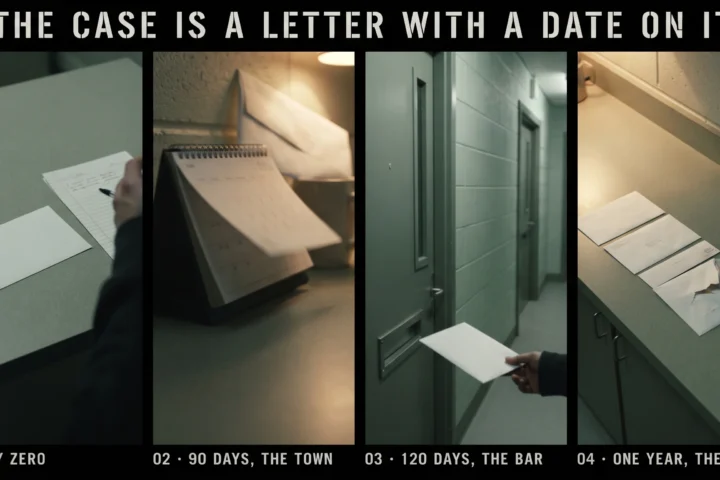
Texas Civil Practice and Remedies Code Section 16.003 gives you exactly two years from the date of injury to file a personal injury lawsuit, including dog bite cases. This statute of limitations is absolute—if you wait two years and one day, you lose your right to sue no matter how strong your case might have been.
Two years sounds like plenty of time until you consider how long it takes to gather evidence of prior aggressive behavior, obtain medical records, document the full extent of your injuries, and build a case that addresses the one bite rule. Victims who assume they can handle this later often find themselves scrambling as the deadline approaches, and some don’t make it in time.
What to do after a dog bite
What you do right after a bite influences whether there will be any evidence left when it’s time to prove your case. Go see a doctor first because you matter and because medical records notate the specific thing that happened to you. Because bite wounds that appear minor occasionally become infected or complicated, and having professional documentation from the day you were bitten prevents the dog owner from later claiming your injuries weren’t all that serious.
Notify BARCBite to B.A.R.C., Houston’s Bureau of Animal Regulation and Care. The aim of this is to create an official record and potentially prompt further investigation into whether the dog should be declared dangerous. BARC also keeps records of anything on file about the dog within BARC’s database (like whether the Dog has past record), as this information becomes relevant in order to pursue a strict liability claim under what is known as “one bite rule.”
Document everything yourself as well. Take photos of your injuries, the scene where you were bitten and any hazards that played into the attack such as broken fencing or an opened gate. Get contact information from witnesses. As the details begin to fade over months of healing, make a factual record of exactly what did happen at the time that it happened.
See how much you can learn about the dog and its history. Speak to neighbors about whether they have seen the dog behave aggressively in the past. Find out if the owner has been cited for implementing ordinance violations. Not all cases have this kind of evidence, but when they do it can turn a tough case into an easy one.
References
- Marshall v. Ranne, 511 S.W.2d 255 (Tex. 1974)
- Labaj v. VanHouten (Tex. App. 2010)
- Allen v. Albin (Tex. App. 2002)
- Texas Health & Safety Code § 822.005 (Lillian’s Law)
- Texas Civil Practice & Remedies Code § 16.003 (Statute of Limitations): https://statutes.capitol.texas.gov/Docs/CP/htm/CP.16.htm#16.003
- Houston Municipal Code § 6-101 (Leash Law)
- California Civil Code § 3342 (Strict Liability Statute): https://leginfo.legislature.ca.gov/faces/codes_displaySection.xhtml?lawCode=CIV§ionNum=3342
- City of Houston BARC Enforcement Information: https://www.houstontx.gov/barc/enforcement_info.html