 Michael Simmrin (Criminal Lawyer)
You Got a Level 5 Felony Charge in Indiana: To start with, panic is not an option. I can tell that is not so easy to do. The thing is, though, Level 5 is among the most justifiable middle-range charges in the Indiana system and results are all over the board depending on facts, history and whose side you are on.
The A Level 5 felony is just in the middle of the six-level scale of Indiana. More severe than misdemeanor or Level 6 felony. Not as serious as Levels 1 to 4 that involve decades in imprisonment. Level 5 is thinking in the form of: something real occurred here, but it was not catastrophic.
The authorities statute is the Indiana Code § 35-50-2-6, introduced as a part of the 2014 redesign to update an outdated letter-based system in Indiana (Classes A-D) to a numerical one. The goal was consistency. Whether it succeeded that is, well, it is a discussion to be held another time.
Sentencing: The Numbers That Count
By IC 35-50-2-6, Level 5 conviction bears:
- Prison term of 1 to 6 years.
- Advisory 3 year sentence (initial point by the judge).
- Fine up to $10,000.
That warning sentence is not a limit it is a minimum. The judges are deviated upon the basis of aggravating (prior record, severity of harm, use of a weapon) or mitigating factors (no priors, genuine remorse, cooperation). Practically, Level 5 first-time defendants can be sentenced to 2-4 years in prison (and with probation).
Significant: Prior to 2014, the charges were Class C felonies carrying a 2-8 year sentencing range and 4-year advisory. There are other rules in case your case is earlier than July 1, 2014.
Indiana Felony Sentencing — Full Comparison
Source: Indiana Code § 35-50-2 | Indiana Department of Correction, 2023 | in.gov/idoc — Level 5 highlighted in amber
| Felony Level | Imprisonment Range | Advisory Sentence | Max Fine | Prior Class |
|---|---|---|---|---|
| Level 1 | 20–40 years | 30 years | $10,000 | Class A |
| Level 2 | 10–30 years | 17.5 years | $10,000 | Class B |
| Level 3 | 3–16 years | 9 years | $10,000 | Class B/C |
| Level 4 | 2–12 years | 6 years | $10,000 | Class C |
| Level 5 ★ | 1–6 years | 3 years | $10,000 | Class C |
| Level 6 | 6 mo–2.5 yrs | 1 year | $10,000 | Class D |
| Murder | 45–65 years | 55 years | $10,000 | — |
Habitual Offender Enhancement
This is Level 5 that quickly becomes costly. In case the prosecutors can establish two or more previous unrelated felonies of which one is not an equivalent of Level 6 or Class D, the next 2 to 6 years can be added to the sentence. The trap: the last preceding crime should be less than 10 years ago. It should be worth fighting aggressively when the previous convictions are near that mark.
Another fact to be kept in mind: Level 5 offenders have to serve at least 75 percent of their term before they can qualify to be released. That’s stricter than Level 6.
What Actually Gets Charged as a Level 5?
The range is broader than most people realize. These aren’t all violent crimes — property offenses and some drug charges land here too.
Violent Offenses
- IC 35-42-2-1: Battery causing moderate bodily injury or committed with a deadly weapon.
- IC 35-42-1-4: Involuntary manslaughter.
- IC 35-42-5-1: Robbery without serious bodily injury to the victim.
- IC 35-42-2-2: Criminal recklessness involving discharge of a firearm.
- IC 35-42-2-1.3: Domestic battery with serious injury or prior convictions.
- OWI (operating while intoxicated) causing serious bodily injury — can elevate to Level 5 depending on circumstances.
Property Crimes
- IC 35-43-2-1: Burglary of a non-dwelling structure.
- IC 35-43-4-2: Theft or fraud involving $750–$50,000.
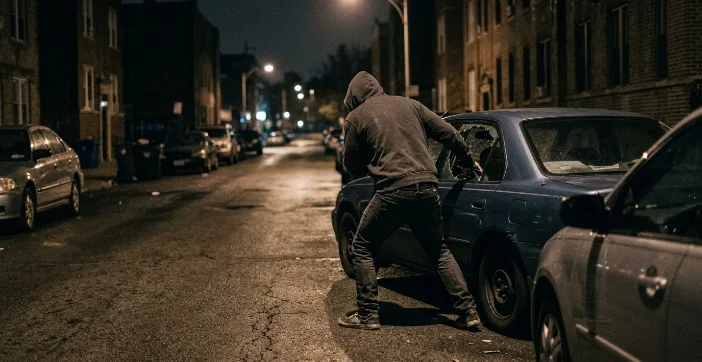
- Auto theft with prior theft convictions.
Drug-Related Charges
- Dealing in controlled substances in smaller quantities (varies by substance and weight)
- Fentanyl-related possession or dealing offenses under specific weight thresholds — see 2025 changes below
Other Notable Charges
- IC 35-42-4-6: Child solicitation.
- IC 35-46-1-5: Nonsupport of a child with arrearages exceeding $15,000.
- “Swatting” — filing a false emergency report that causes serious injury (new as of 2025).
- Signal jamming that disrupts critical infrastructure (new as of 2025).
Battery, robbery, involuntary manslaughter, criminal recklessness (IC 35-42)
Burglary, theft/fraud $750–$50K, auto theft with priors (IC 35-43)
Dealing/possession, fentanyl-related charges (post-2025 thresholds)
Child solicitation, nonsupport of child, OWI serious injury, swatting
Source: IDOC Offender Population Report, May 2023 — Figures derived from felony admission categories; Level 5-equivalent offenses extracted from violent, property, and drug primary offense data. Percentages are estimated distributions based on available IDOC category breakdowns.
What’s Changed: 2023–2026 Legislative Updates
Indiana’s criminal code isn’t static. Several targeted changes hit Level 5 territory in the past two years.
2025 Enhancements
- Fentanyl dealing penalties stiffened significantly — under 1 gram now a Level 4 felony. Related possession offenses may still fall under Level 5 depending on specifics.
- Criminal recklessness with a vehicle resulting in death or catastrophic injury elevated to Level 5.
- Swatting (false emergency calls causing serious injury) codified as Level 5.
- Signal jamming disrupting critical infrastructure added as a Level 5 offense.
2026 Reforms
- Expanded electronic monitoring for non-violent Level 5 offenders — part of a broader push to address IDOC overcrowding.
- Reduced sentences available for non-violent Level 5 cases with no prior record.
- New aggravated Level 5 category for interfering with police investigations near a crime scene.
- Statute of limitations extended for Level 3 rape — this indirectly affects related Level 5 charges in those cases.
Broader trend worth watching: Indiana is quietly shifting toward rehabilitation-focused sentencing for non-violent mid-level felonies. Bail reform discussions are also reducing pretrial detention in Level 5 cases.
Track live legislative changes at Indiana General Assembly — iga.in.gov.
The Numbers: Who Actually Gets Convicted?
Solid Level 5-specific stats are hard to isolate — Indiana’s IDOC rolls them into broader felony categories. But from the most recent detailed snapshot (IDOC May 2023 Offender Population Report):
- Total adult male offenders in IDOC custody: approximately 20,267.
- 640 male and 71 female new admissions in a sample month for violent felony-level offenses.
- Burglary and battery — both frequent Level 5 offenses — showed steady inflows throughout 2022–2023.
- Indiana’s overall imprisonment rate: 349 per 100,000 residents (2019 data, Vera Institute).
- Black/White racial disparity in imprisonment: 4.6:1 ratio — one of the more troubling statistics in the system.
Recidivism for mid-level felonies nationally runs 30–40%. Indiana-specific figures align with this range, though 2025–2026 reforms show early signs of modest improvement for non-violent Level 5 cases.
Source: IDOC Offender Population Report, May 2023 — New admissions for Level 5-equivalent offense categories. 2020 figures reflect COVID-era court backlogs. Drug decline tracks Indiana’s rehabilitation-focused sentencing shift. Violent offense uptick aligns with post-pandemic case clearance surge.
Common Defenses — And Which Ones Actually Work
Here’s something prosecutors count on: most people don’t know their options. These are the defenses that come up most in Level 5 cases.
1. Insufficient Evidence
Sounds basic. Isn’t. Prosecutors carry the burden of proof beyond reasonable doubt for every element of the charge. Weak eyewitness testimony, no physical weapon recovered, conflicting accounts — any of these can create reasonable doubt. Don’t underestimate a well-targeted challenge to the state’s evidence.
2. Self-Defense or Defense of Others
Applies primarily to battery and violent charge cases. The key question: was the fear of harm reasonable given the circumstances? Indiana’s self-defense statute (IC 35-41-3-2) is broader than many people realize. Juries respond to this defense when the facts are there.
3. Constitutional Violations
Fourth Amendment search issues, Miranda violations, coerced confessions — if law enforcement cut corners, evidence can be suppressed. This is often where cases fall apart for the prosecution. Always worth examining the stop, search and arrest carefully.
4. Mistaken Identity
More common in property crime and theft cases than people expect. Unreliable eyewitness identification is one of the leading causes of wrongful conviction nationally. A solid alibi or challenges to ID procedures can be decisive.
5. Mitigation and Plea Negotiation
Not a defense in the courtroom sense, but realistically the most-used tool. Presenting a complete picture — no prior record, demonstrated remorse, employment, family responsibilities — often results in reduction to Level 6 or even a misdemeanor. A good plea deal can be the difference between probation and years inside.
Notable Cases Worth Knowing
The way Level 5 charges are treated in the Indiana courts nowadays is influenced by such appellate decisions.
Knutson v. State (2018)
Defendant attacked a Level 5 battery charge through an appeal to dismiss. Court refused as it stated that the application of the statute to cases relating to bodily injury is deliberately expansive. Lesson learnt: the language of charging used in battery cases is difficult to strike down on the head; consider instead the gaps in the evidence.
Lane v. State (2024)
The Indiana Supreme Court amended a Level 5 sentence as inappropriate under the Appellate Rule 7(B) – the common rule that allows the appellate courts to impose a reduction of its sentence in the instance that it finds the sentence excessive depending on the nature of the crime and the personality of the criminal. This case is of importance as it validates that it does not necessarily mean that a sentence that was thought to be legally sound cannot be appealed when it fails to fit the facts.
Means v. State (2023)
Maintained Level 5 battery charge of bodily injury against a minor. The court has given a lot of focus to the standard of evidence necessary to establish bodily injury — handy for overturning the claim that the harm suffered truly is the one set in stone by statute.
Schoeff v. State (2025)
Level 5 conspiracy to deal drugs with death penalty. Court illuminated the escalation levels of controlled substance charges – significant context of anybody managing Level 5 fentanyl-related charges in the post-2025 modification.
Full case records: Indiana Courts — courts.in.gov | Case law research: Google Scholar — scholar.google.com
Additional Consequences
This is where people fail to see when they are concerned about the time in jail. An aptitude Level 5 conviction leaves a trail.
- Employment: Background checks are conducted by the majority of employers. Felony conviction greatly reduces an opportunity especially in healthcare, financial, education and government employment.
- Housing: Rentals tend to check felonies. There are certain restrictions to section 8 and public housing.
- Voting Rights: Indiana disenfranchises convicts when they are in prison. There are about 0.6 percent of adult population in Indiana that is disenfranchised at the moment.
- Professional Licenses: Nursing, law, real estate, teaching – most of the licensed professions are checked by default or the conviction of felony is automatic disqualification.
- Federal Benefits: There are some drug convictions that impair an individual to receive federal financial aid and some housing benefit schemes.
- Guns: The federal government does not allow felons to own guns. The Indiana law is in compliance with this limitation.
Expungement — Is It Possible?
Yes, some Level 5 convictions. Criminal offenses that are not violent are eligible to be expunged after 8 years in accordance with IC 35-38-9-4. Level 5 convictions that are violent are mostly ineligible. And a certain provision also deserves to know: in case you have been found guilty of Level 5 non support of a child (IC 35-46-1-5), served probation, paid all the arrearages and have no further felony, a court can reform the conviction to a Level 6 which in turn becomes expungeable under IC 35-38-9-3.
The early intervention of the law is critical in this case. The involvement of an attorney prior to a formal filing of charges can at times influence the level of charges that is charged or no charges are charged.
Bottom Line
Felonies in Indiana Level 5- these felonies are serious- however, it is not the end. Sentencing range provides the real freedom to judges, the availability of defense on all levels and new possibilities brought by the recent reforms provide new chances to non-violent defendants. The difference, virtually every time, is what occurs during the initial days following an arrest.
In the event you are charged with Level 5 or a family member is charged with Level 5, the best practical tip is straightforward: do not discuss the case with the police unless you have a lawyer present, do not allow yourself to believe that there is only one way the case should be handled (plea) and get a person who is familiar with criminal procedure in Indiana to review the facts of the case.
The law is a framework. Its application to you all depends on the particulars.
Disclosure: This content is informative and not a legal advice. Get an Indiana attorney with a license to provide direction in your case.