 Dominique ( Personal Injury )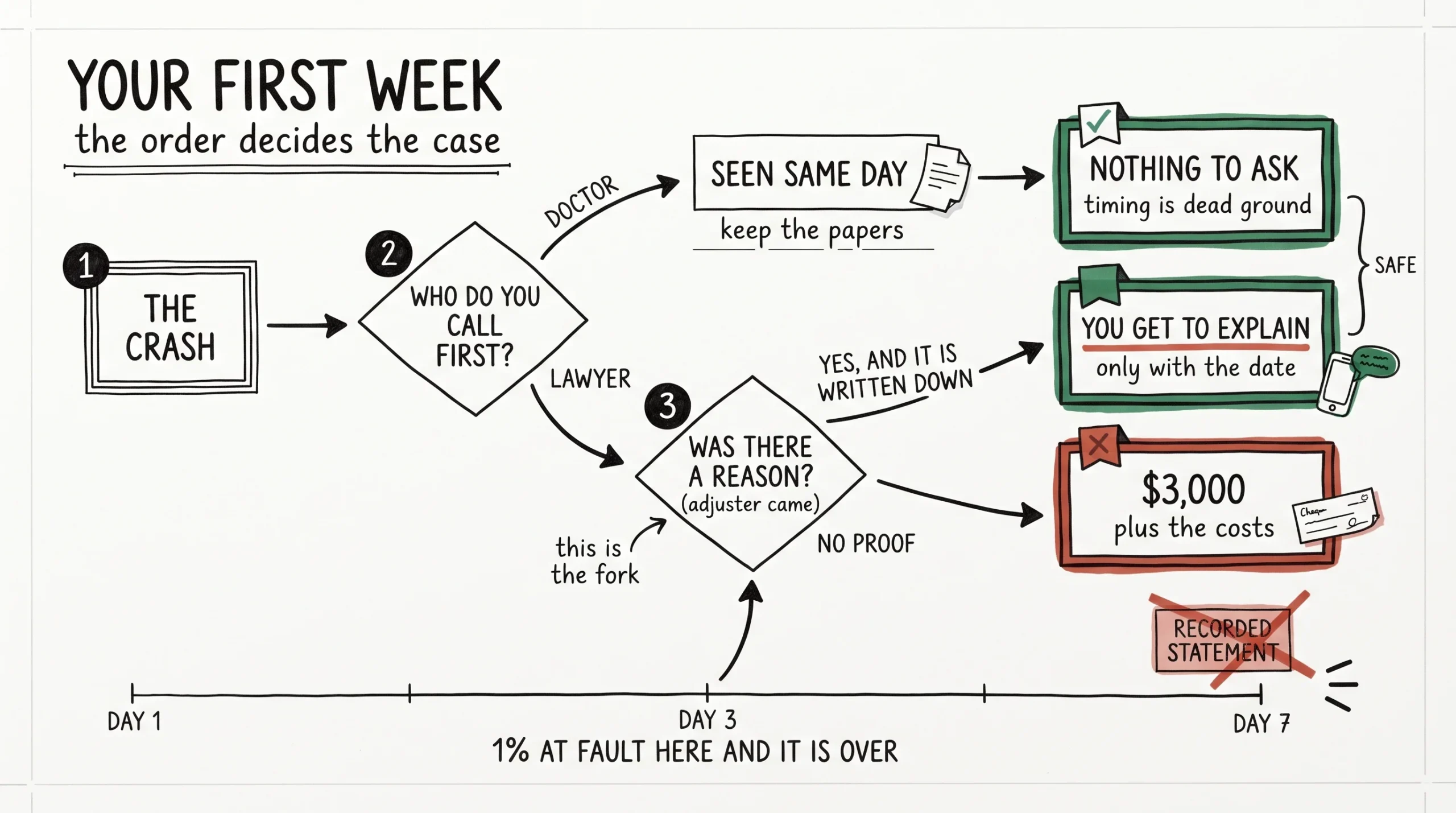
You need the Doctor first. The same day if the ambulance takes you, the next morning if it doesn’t.
Then a lawyer, and not much later than the third day, because by then the other driver’s insurance company will have found your phone number.
Her name was Joanne Williams. The case is Williams v. McCoy, and I have read the Court of Appeals opinion more times than is probably healthy.
The $3,000 Verdict
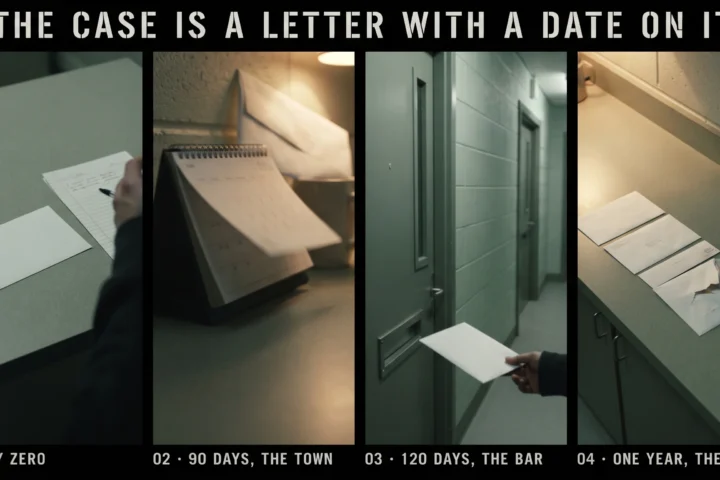
In 1997 Mrs. Williams was in a collision with a driver named Mia McCoy. She was taken to the emergency room, where they checked her over and sent her home. Four days after that she went to a chiropractor, on her husband’s say-so, and told him about a knee that had started clicking and had not clicked before. She had hurt that knee twice at work years earlier, which the defense would make a good deal of, and she had, somewhere in those four days, hired a lawyer.
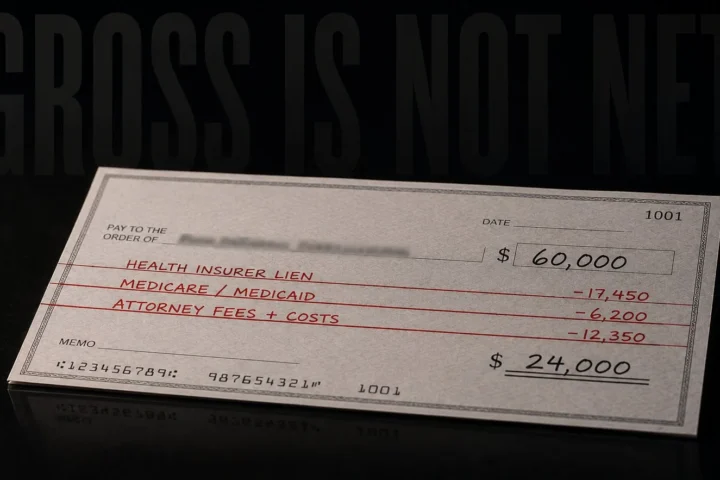
The jury found Ms. McCoy negligent. Then it gave Mrs. Williams three thousand dollars, and the judge taxed her with the costs of the action on top.
You have to read the transcript excerpts to understand how a negligent-defendant verdict turns into three thousand dollars. Defense counsel had told the jury in his opening, and the appeals court quoted him, that she was there for profit and had shown it by hiring an attorney before she went to see a doctor. On cross, after a long stretch of questions about why she had waited four days and why she had not gone back to the emergency room when things got worse, he asked her straight out whether she agreed that she had retained her attorney before going to the chiropractor. Her own lawyer objected. The judge made her answer. She said no, and then said something about having been told not to talk about insurance, and then, asked a third time, said she could not remember. Which, in front of twelve people who had just been told she was in it for the money, must have sounded exactly the way the defense wanted it to sound.
In North Carolina the defense can ask you, under oath, when you hired your lawyer, and the judge will let it in. That is the holding, and it has been the law here since a 1986 case called Thompson v. James, 80 N.C. App. 535, where the court said that going to a lawyer before a doctor “could indicate that his injury was not as severe as he claimed” and might also show an unduly litigious nature. Williams added that the defense does not even need evidence you are litigious. If how badly you were hurt is in dispute, and in a whiplash or a knee case it always is, the date is fair game.
I think it is a rotten rule. People hire lawyers because they are frightened, or because a relative told them to, or because an adjuster has been on the phone twice, and none of that says a thing about a knee. But no one asked me, and it has been the rule for forty years, so the useful question is what to do about it.
What The Jury Never Got To Hear
She had not gone shopping for a lawyer. Ms. McCoy’s insurance adjuster had come to her house. Her testimony on this, given to the judge with the jury out of the room, runs to three lines: he had tried to persuade her to take some money, and when she hesitated he told her she was wasting her time on account of the 1976 knee, that she needed the money, and that she ought to let them settle so she could get treatment. That was the day she went and hired somebody. The chiropractor came after, and the jury heard none of it, because the judge would not let her say the word insurance. She might well have been able to get the whole thing across in a sentence.
Rule 411 of the state’s evidence code says you cannot use the fact that a defendant was insured to prove the defendant was negligent. Fair enough, the theory being that jurors who know an insurer is paying might open the tap. But the trial judge in Williams read it as a ban on the word itself. He had ruled before trial that she was not to mention insurance or adjusters, and when she tried to explain her answer on the stand he sent the jury out, let her give the explanation to him alone, refused it again, and told her that if she said “insurance” one more time he would declare a mistrial and hold her in contempt of court. Then he brought the jury back and moved on.
So she sat there having half-answered a question designed to make her look like a chiseler, with the only fact that could have turned it around locked in her mouth by threat of jail. The appeals court, when it got the case, did not mince words about this. Rule 411 keeps insurance out as proof of negligence, it said; it does not keep out a plaintiff’s explanation of why she hired counsel, which is a collateral matter. The judges also pointed out, rather drily, that every juror who drives a car already assumes there is an insurance company behind the defendant, so the harm of letting her say so would have been small next to the harm of leaving her looking greedy with no reply. New trial on all issues.
Whether she won the second one I have not been able to find out. The opinion is on FindLaw and the retrial, if it happened, left no trace I could get to. It bothers me a little, not knowing.
What This Does To Your First Week
Take the two rulings together and you get a rule of thumb. I have not seen it on any firm’s website, which may be because it is awkward for the firm.
- If you see a doctor before you hire anyone, the timing question has no bite. There is nothing for the defense to build an opening statement around.
- If you hire the lawyer first, for a reason, an adjuster at the door, a call from the other side’s carrier on day two, a settlement figure pressed on you before the swelling went down, Williams says you get to tell the jury that reason. But only if you can prove there was one. Write it down that day. A text to your sister saying “the insurance guy just came to the house” is evidence; a memory of it eighteen months later is not.
- If you hire the lawyer first and there was no reason, you are Mrs. Williams without the adjuster, and you should expect the $3,000.
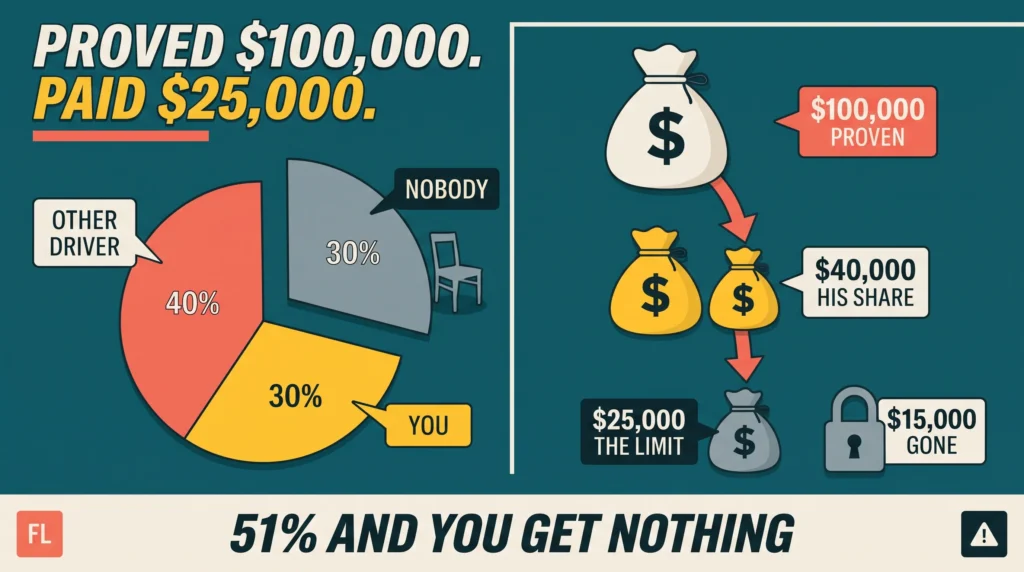
There is a second North Carolina rule pushing the other way, and it is the reason “just wait and see a doctor” is not the end of the advice either. This state still runs pure contributory negligence, one of four that do, along with Alabama, Maryland, Virginia and the District. If the other side can prove you were one percent at fault, you recover nothing, not a reduced amount, nothing at all. Florida switched to a 50 percent bar in 2023 and the plaintiff’s bar down there acted as if the sky had fallen; a Florida driver who was half to blame still gets paid. A Charlotte driver who admits to glancing at the radio does not.
Which is what the recorded statement is for, here. The adjuster is not haggling over percentages the way he would be in Atlanta. He is fishing for a sentence. “I might have been going a little over.” “I saw him late.” “I looked down for a second.” One of those, in this state, and the file closes. And he will ask for that statement inside a week, in a perfectly friendly voice, and most people give it because it seems rude not to.
So the doctor has to come before the lawyer, and the lawyer has to come before the statement. In practice that is a window of two or three days. It is not a comfortable window, and I do not know anyone who managed it by accident.
| What you did, and in what order | What the defense in Mecklenburg County can do with it | What you would need to answer it |
| Emergency room or urgent care within a day, lawyer after | Nothing on timing. This is the order Thompson and Williams leave alone | Keep the discharge papers |
| Adjuster made contact, then you hired a lawyer, then saw a doctor | Ask the Williams question and argue profit | Dated proof of the contact, made the same day |
| Lawyer first, no doctor for a week or more | Argue the injury was not serious, and that the claim went looking for a physician | Very little |
| Recorded statement to the other side’s insurer before any advice | Find one admission of fault and end the claim under contributory negligence | Nothing. What was said was said |
The third row is the Williams fact pattern without her excuse. The fourth is worse, and a fair number of people in this county do both in the same week and cannot understand afterward why a lawyer would not take the case.
A Word On The Numbers, Since Everyone Quotes Them
Charlotte had 32,932 reportable crashes in 2023 by the state’s count, with 105 people killed and a little over 16,000 hurt, and about one crash in nine statewide happened inside the city. I put that in because every article on this subject puts it in and I did not want to be the odd one out. It tells you nothing about when to hire a lawyer. What it does tell you is that most of those 16,000 injuries were the soft-tissue kind, the necks and backs and knees that show up on day three, and those are exactly the cases where how badly you were hurt is the whole trial, and that is the condition under which the Williams question gets asked.
So, When
Doctor first, that day or the next. Lawyer inside three days, and sooner if an insurer has already reached you, in which case write down the date and what they said before you do anything else. No recorded statement to the other side without advice, ever, in a contributory negligence state. People searching for Charlotte accident injury legal support are usually doing it on day six or seven, after the adjuster has called and after the statement has been given, and by then the order of events has been fixed and half of what a lawyer could have done for them is gone.
Mrs. Williams got a second trial because a judge overreached badly enough for an appellate panel to say so. Most people who get the timing wrong in this county do not get a second trial. They get a small check or none, and a lawyer explaining afterward what the order should have been.