 Michael Ettinger (Newyork Lawyer)
New York does not have a limit on medical malpractices damages. That is only the legal fact that determines all the issues concerning the way birth injury litigation will be developed in this state. When a jury in Queens or Suffolk County or the Bronx finds that a hospital has failed a newborn, they are not told by statute to put a limit on the amount of care that child will be actually worth in his or her lifetime.
The total medical malpractice settlements in New York in 2025 had increased to $729.58 million – more than it was in the preceding year – with more than 96 percent of all malpractice cases settled out of court instead of going to trial. But the cases which are ever tried before a jury? Those are the ones that specify what can be done.
Three actual New York verdicts of cerebral palsy and hypoxic-ischemic encephalopathy follow. All of them became a source of a certain medical failure. They all yielded an outcome that illustrated the real cost of having a child that will require taking care of them throughout their life. And every one of them has a lesson that is important should you be sitting in a NICU today and wondering whether what transpired in the delivery room could have been avoided.
$130 Million — The Suffolk County Family That Refused $8 Million and Went to Trial Three Times
The Delivery Room Failure
In 2002, a girl was born in an hospital named St. Charles in Suffolk County in Long Island. Her parents went to the hospital hoping that she would have a normal birth. Instead they received a child who was never going to walk, speak, and would have to be attended to all the time.
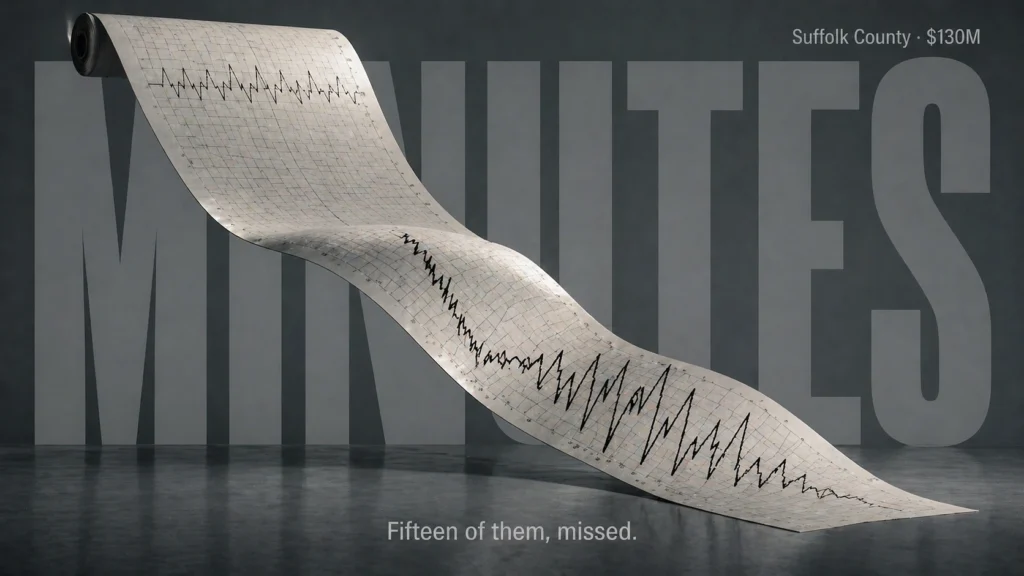
The family claimed that the nursing personnel did not notice obvious symptoms that the baby was not being given oxygen during labour. The fetal heart rate monitor, which is the most important piece of real-time information in any delivery room was giving out signs of distress. As testified in court, the injuries might have been prevented altogether had the baby been born 15 minutes earlier.
Rather, the delay resulted in serious brain damage. The child became cerebrally palsied. She cannot walk. She is in a wheelchair. She knows all that goes on around her and is unable to express herself through speech. She will require full nursing services feeding, bathing, mobility services, medical attention, all on a daily basis till the end of her days.
I’m sitting in a courtroom listening to those facts and there’s no version of that story where $8 million covers what’s coming.
The Legal Fight
The hospital offered $8 million before the first trial. The family’s legal team looked at the projected lifetime care costs — decades of physical therapy, occupational therapy, specialised equipment, in-home nursing, accessible housing — and rejected the offer. Eight million sounds like a fortune until you divide it across 60 or 70 years of round-the-clock medical need.
Then they lost the first trial.
A hospital lawyer told the press at the time that he wasn’t “aware of another attorney who’s turned down an $8 million offer and got shut out.” That quote aged poorly.
The family appealed. In 2011, a state appellate court reversed the verdict. The second trial ended in a hung jury — the panel couldn’t agree. The family went back a third time. On April 17, 2013, a jury awarded $130 million.
The girl’s mother said her “beloved daughter will be protected for the rest of her life.”
What This Case Teaches
Persistence isn’t optional — it’s structural. This family endured three trials across years. Most families would have accepted the $8 million after the first loss. The difference between $8 million and $130 million came down to a legal team that understood the lifetime cost numbers and a family willing to endure the process.
Fetal monitoring failures are the core of most cerebral palsy claims. The question wasn’t whether the baby was in distress. The monitor showed it. The question was whether the staff responded to what the data was telling them. They didn’t. That failure — recognising distress and acting on it in time — is the exact issue that cerebral palsy legal help nyc attorneys evaluate first when reviewing a potential case.
$116 Million — The Queens Breech Birth That Should Have Been a C-Section
What Went Wrong
At a Health + Hospitals facility in Queens, a baby was born in the breech position, that is, feet or buttocks first, not head first, in New York City. There are well-documented risks which are inherent in breech deliveries. The medical science is categorical: in case a baby is breech at full term, planned caesarean section can greatly decrease the risk of birth trauma in comparison to vaginal birth.
The jury concluded that the health care workers in this state-owned hospital did not adequately deal with the dangers of the breech delivery. This baby was brain damaged and later diagnosed with cerebral palsy.
The verdict: $116 million.
Why Public Hospital Cases Are Different in New York
The New York City Health + Hospitals is the biggest state-run health care system in the US – 11 acute care hospitals, five post-acute care hospitals and over 70 community-based health centres. Families suing NYC H+H facilities in malpractice actions are suing a governmental organization. This prompts a distinct process of rules.
New York General Municipal Law 50-e requires that families submit a Notice of Claim within 90 days of the incident -90 days after they found or should have found the injury. Lose that window and the case may be barred altogether, in spite of the strength of the evidence. In the case of a New York state medical malpractice against a public hospital, the statute of limitations is 1 year and 90 days after the malpractice.
In the case of a family that has just left the NICU with a baby, that clock is ticking. The diagnosis per se, cerebral palsy is not usually formally diagnosed until months or even years later, does not automatically run the deadline. In a few cases, the courts have allowed late filing, although this is not assured.
That procedural trap is one of the most consequential legal realities families in New York face, and it’s one reason why consulting an attorney early — even before a formal diagnosis — matters so much.
The Takeaway
Breech presentation is a known risk factor. When a medical team proceeds with vaginal delivery of a breech baby without adequate risk management, and the child is injured, the question of whether a C-section should have been performed becomes the centre of the case. Juries in New York have shown they will hold hospitals accountable when that question has a clear answer.
$35.2 Million — The HIE Case Where the Hospital Sent a Mother Home

The Facts
In 2023, a mother who was nine months pregnant fell on her abdomen and went to the hospital for evaluation. This is the kind of event where the standard of care is unambiguous — a significant abdominal trauma in late pregnancy requires thorough assessment for placental abruption, a condition where the placenta separates from the uterine wall and cuts off oxygen to the baby.
Hospital staff evaluated her and told her everything was fine. They discharged her.
They failed to diagnose the placental abruption.
Her baby was born with hypoxic-ischemic encephalopathy — severe oxygen deprivation to the brain — resulting in catastrophic brain injuries. The child has no independent functional movement and no vision.
A jury awarded $35.2 million.
Understanding HIE and Why Timing Is Everything
Hypoxic-ischemic encephalopathy is not a disease that creeps up or is silently manifested. It manifests itself as a medical emergency at birth. The baby has been denied the oxygen and blood to the brain and the extent of the outcome depends on the duration of the deprivation and the timeliness of the treatment.
During the last 20 years, therapeutic hypothermia, or the act of cooling the body temperature of the newborn to 72 hours to slow the secondary brain damage, has become the national standard of care in NICUs. It has enhanced the results in certain intermediate cases. It is not a remedy, though. Survivors of moderate to severe HIE are at great risk of cerebral palsy, epilepsy, intellectual disability, and feeding problems that will necessitate life-long assistance.
The placental abruption was not diagnosed in this case since the hospital failed to carry out the necessary work which it was supposed to carry out when a pregnant woman reported following a serious fall. It was the immediate result of the failure, the oxygen deprivation that ensued.
For families navigating an HIE diagnosis, working with hie attorneys who understand the medical specifics of oxygen deprivation cases — particularly how to read and interpret fetal monitoring data and how to establish the timeline of when the injury occurred — is critical. The difference between a viable case and a dismissed one often comes down to whether the legal team can prove exactly when the deprivation started and whether earlier intervention would have changed the outcome.
What This Verdict Signals
Discharge failures are actionable. When a hospital evaluates a patient presenting with a clear risk factor — in this case, abdominal trauma in late pregnancy — and sends her home without diagnosing a condition that any competent provider should have caught, that’s not a bad outcome. That’s negligence. The jury’s verdict reflected the full weight of what that missed diagnosis cost this child.
What All Three Verdicts Tell Us About NYC Birth Injury Law
As explained by a birth injury attorney nyc place these cases next to each other and a pattern emerges that matters for any family in New York evaluating whether to pursue a claim.
- The juries of New York give what the child really wants. In the absence of a damages limit, verdicts are based on actual cost of lifetime care as projected. New York juries consider these figures when expert witnesses give life care plans that consider 50, 60, or 70 years of therapy, equipment, nursing care, and lost earning capacity. The verdict amount of 130 million was not an extravagant one. It was maths – the true price of a seriously handicapped individual for the whole lifetime in the New York metropolitan area.
- Medical failure is nearly always a matter of timing. In all the cases mentioned above the gist of the complaint was the same; somebody did not move fast enough. Fetal monitoring showed distress and staff didn’t respond. The breech presentation was to have caused a C-section and it did not. It was not diagnosed with a placental abruption. Cases of birth injuries seldom hinge on esoteric medical issues. They switch on the response of the people in the room to what was in front of them.
- The legal procedure is time consuming and taxing. The family of Suffolk County underwent three trials in the course of an over ten years. Cases even those that settle normally require two to four years since the initial consultation. The contingency fee system, in which the attorney receives a percentage (typically of 1/3 to 40 percent) only if the case is successful, also allows it to be affordable to families who otherwise would have been unable to afford it. However, the emotional and time cost is actual and families must know that by doing so.
- Time limits are ruthless especially when it comes to state-owned hospitals. The legal tripwire that kills valid cases annually is the 90-day Notice of Claim requirement of cases against the NYC H+H facilities. Families who have a NICU stay, a fresh diagnosis, and too much logistics to handle in caring for an injured newborn are not thinking about filing deadlines. But the clock does not pay attention to their situations. Initial legal advice – even a single phone call prior to a formal diagnosis being made – can save possibilities that die quicker than most families think.
- The delivery room is expected to be the safest area in the building. When it is not and when a child suffers due to failure of another, the legal system will be there to take care of it. These three decisions demonstrate that New York courts are ready to just that – so long as families are aware of their rights, they are able to operate within the deadlines, and they have representation that is equal to the complexity required by such cases.
References
- Porter Law Group, “Largest Birth Injury Settlements in New York History” (December 2025). Porter Law Group.
- AEE Law, “The Biggest Personal Injury Verdicts in New York, 2024–2025” (April 2026). AEE Law.
- The Sanders Law Firm, “New York Birth Injury Lawsuit Results in $130 Million Verdict.”The Sanders Law Firm.
- Medical Malpractice Lawyers, “$130 Million New York Cerebral Palsy Medical Malpractice Verdict.”Medical Malpractice Lawyers.
- Porter Law Group, “New York Personal Injury Settlement Averages (2024–2025)” (March 2026). Porter Law Group.
- New York General Municipal Law §50-e (Notice of Claim requirements for public entities).
- Gair, Gair, Conason et al., “Verdicts and Settlements — Cerebral Palsy and Brain Damage Cases.”Gair Gair.