 Marc Mackenzie ( Probate Lawyer )
Estate planning in New York involves control, timing and discretion. To avoid probate and keep an estate private, many people consider a revocable living trust, POD accounts, TOD designations and holding property jointly with right of survivorship. These options allow assets to go directly to your client’s chosen beneficiaries, bypassing the delays and costs of probate court and keeping financial and asset information private.
Legal professionals should implement a layered approach that respects privacy and individual control while complying with applicable state law requirements.
Why Probate Is Public (and How to Avoid It)
The probate process, which certifies the will’s validity in court, is a matter of public record and usually discloses asset values and beneficiaries. Families who desire to maintain some degree of privacy may find this concerning.
Most comprehensive estate plans address this problem directly. As one of the leading estate planners in New York, Michael Ettinger, points out that one of the main reasons to plan is to “save your heirs legal fees, taxes and time.” One of the easiest ways to avoid issues is to avoid probate.
Core Probate-Avoidance Strategies
Legal professionals are familiar with these methods of avoiding probate:
- Revocable living trusts transfer ownership outside of probate
- POD and TOD for direct asset transfers
- Joint ownership with survivorship rights
- Irrevocable trusts that offer stronger privacy and protection options
- Lifetime gifting strategies to reduce the estate
- Aligned beneficiary designations across accounts
Although each tool works independently, its full potential is realized when used together. In New York, if a person dies without a will, a trust or any form of planning, the state determines how assets are divided among survivors. It’s best to maintain control with documentation.
Advanced Estate Planning in New York
The probate process in New York can be complex, depending on the number of asset types involved in the estate and the dynamics amongst family members. Experienced estate planning attorneys can help their clients find creative ways to limit their liability while still complying with the laws.
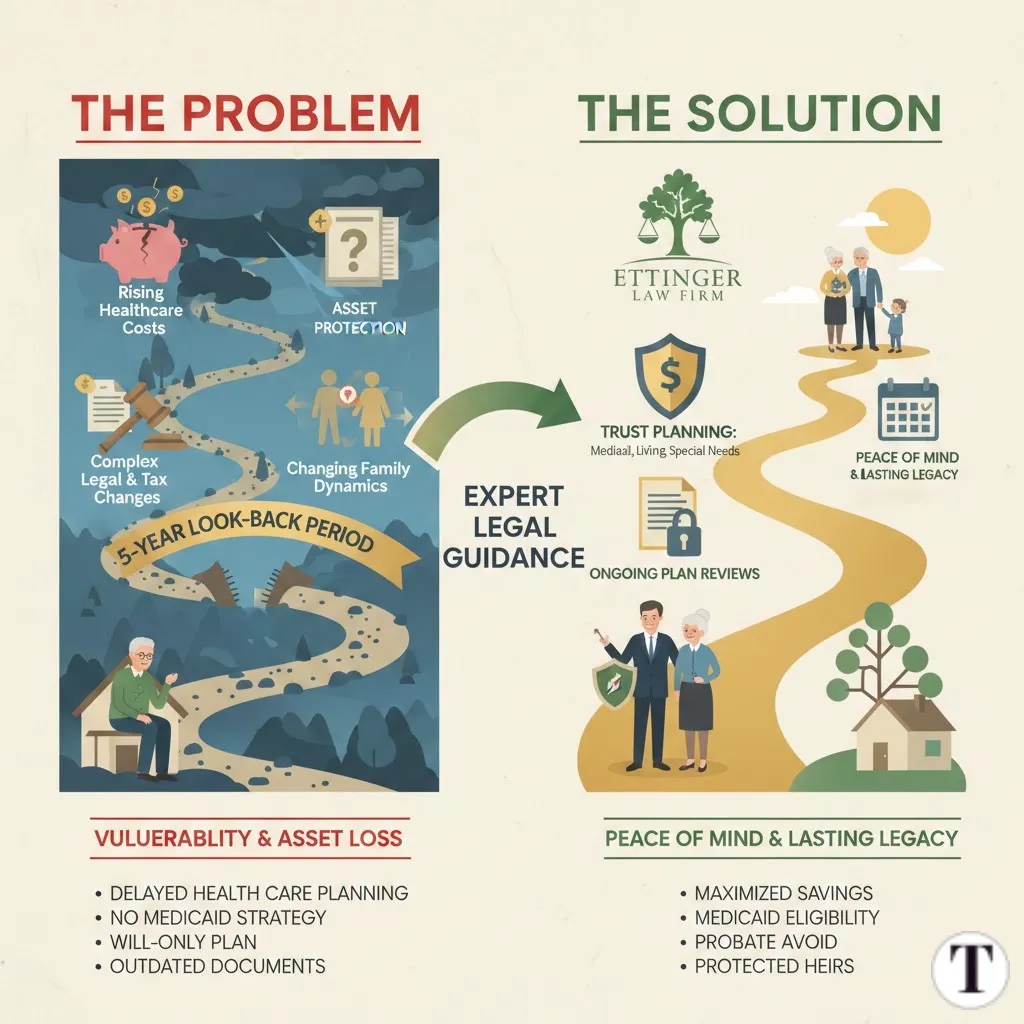
Ettinger Law Firm is a leader in the elder law field, particularly in estate planning and probate avoidance. The firm is one of the largest elder law and trust and estate planning practices in New York, with 12 offices. It offers free legal reviews and consultations for client convenience.
The firm indicates that the costs and inconvenience of the probate process and the loss of privacy provide a strong rationale for advance estate planning. Attorney Michael Ettinger says, “Make sure it goes to whom you want, when you want, the way you want.” The principle underlies nearly all probate-avoidance strategies.
6 Estate Planning Methods
Ettinger states that “a good plan guarantees that you will be protected” if you become disabled and that your assets will go to the right people or institutions. The best plans employ a combination of techniques.
1. Establishing a Revocable Living Trust
One measure to avoid or reduce probate is the use of a revocable living trust, through which the trustor can transfer assets to the trust during their lifetime. Benefits include the distribution of assets outside of court records, continuity in the event of incapacity, and the ability to amend or revoke the trust.
Funding is critical, but the trust will not operate properly if the assets are not retitled. Ettinger emphasizes retaining control and moving money intentionally to ensure outcomes are precisely what the client wants.
2. Allow Use of TOD and POD Designations
TOD and POD designations can also be used to transfer financial accounts and assets without probate. They provide quick access to cash for heirs, a minimal administrative burden and clear, direct transfers. Such designations must be carefully drafted and coordinated with the estate’s overall plan.
As Ettinger notes, estate planning “shows your family that you cared enough to plan for their future.” One of the simplest ways to do that is to designate beneficiaries.
3. Structuring Joint Ownership Strategically
A joint tenancy with right of survivorship can be an effective way of ensuring that property passes automatically to the surviving joint tenant. Potential advantages include an immediate transfer without court involvement and a simplified execution.
However, legal experts caution that there is some liability exposure for the co-owner, and clients may lose control of the asset. The best use of this approach may be within a broader strategy.
4. Irrevocable Trusts for Improved Privacy
Irrevocable trusts provide an additional layer of asset protection because the trust assets are no longer in the grantor’s estate. They offer increased privacy protections, potential asset protection benefits and reduced exposure to certain long-term costs.
That kind of planning, as Ettinger said, is about “protecting your assets from being eaten up by nursing home costs.” If you have concerns about paying for long-term care, trust planning might be the solution.
5. Lifetime Gifting Strategies Explained
Gifting of assets during the client’s life reduces the number of assets subject to probate. Common approaches include annual exclusion gifts, direct payments for education or healthcare, and transfers into trusts.
It also enables clients to avoid generational loss of wealth. Ettinger says planning could “allow you to continue your IRAs for generations.”
6. Ensure All Beneficiary Designations Match Estate Plan
Even properly drafted plans may sometimes fail to achieve their intended effects due to inconsistent beneficiary designations on retirement accounts, life insurance policies, and annuities.
The legal team should conduct regular reviews of the plan to ensure everything is in agreement. After pivotal life events, designations may need to be updated to avoid conflicting instructions. Ettinger says this is to allow you to protect the inheritance from divorce or lawsuits involving your children, which is supported by placing all your property in the trust.
Key Takeaways
Maximize estates for beneficiaries and avoid probate with the following tips:
- Probate avoidance depends on planning.
- A revocable living trust can provide flexibility and continuity, but it works only if assets are properly transferred into it.
- With the simple and efficient TOD and POD designations, assets are transferred directly to the beneficiaries without the need for administration.
- Irrevocable trusts and lifetime gifting can minimize estate taxes, easing the transfer of wealth.
- The estate plan should be consistently applied to all related documents and beneficiary designations to maximize asset protection.
Frequently Asked Questions
Learn more about avoiding probate and keeping an estate private.
What assets are generally subject to probate?
Assets titled solely to the decedent, such as real property and personal property, pass through probate administration unless there are designated beneficiaries.
Does having a will allow heirs to avoid probate?
No. A will still has to go through the probate process to be validated by the court.
Are trusts always private?
Yes, for the most part. Trusts are not filed with the court, so they are more private than wills.
Is avoiding probate only of interest to the wealthy?
No. Estate planning also avoids the delays, expenses and privacy considerations usually associated with small estates.
Using an Estate Planning Attorney in New York for Privacy
A good estate plan will protect assets, legacy and privacy. Estate planners, such as Ettinger Law Firm, can appropriately advise clients on how to make use of trusts, designations and similar ownership methods, to ensure that assets pass directly to heirs without public court filings.