 Jeffrey S. Kelly Group PLLC (Real Estate)
Seeing other states construct shining stadiums and sports complexes that receive thousands of visitors. The tourism money is going to locations that have superior facilities and your constituents are talking of old facilities. What do you do? Of course you should have a bonding public authority. That was precisely what New York did when it organised what is erroneously referred to as the Public Estates Authority–it is actually known as the New York State Sports Authority.
This lost Empire State history provides us with an interesting insight into big-thinking government planning which… failed to materialize. The Sports Authority had only seven years to live and then vanish into bureaucratic non-existence having raised more questions than stadiums. However, the limitation is as follows, in it’s short life, it has significant lessons of how a publicly funded party can be, what are it’s priorities and what are the problems of transforming the legislative dreams into reality.
You know what’s interesting? Nowadays, when one enters Public Estates Authority into the search engine, a person is likely to come across information about Public Administrators – the people in charge of handling estates in case a person dies without the will. Completely different beast. The Sports Authority was buried deep in history that even now it’s name confuses.
The Dream of 1970s: Creation of Sports Future in New York
The dawn of the seventies was the era of big government answers to big problems. The cities were being reshaped through urban renewal, federal funds were flowing in to do infrastructure work and the states were forming special authorities to do everything, including housing, to transportation. Sports facilities? They appeared to be an obvious part of this solution.
When the legislation of the Sports Authority was passed by the New York Legislature in 1973, the ideas were clear. Section 2461 of the Public Authorities Law stated that the state had realized that the promotion and development of sports would increase the tourist attractions, generate employment and promote the overall welfare of the people in New York. The results of the legislative work were quite favorable: sports complexes would bring economic life, tourism and increase the level of recreation among the population.
But–and there always is a but with these stories–the time was a complication. New York was going into a deep financial difficulty. The mid-1970s initiated the verge of bankruptcy in New York City, recession of the entire country and cynicism of government expenses. By no means the most conducive place to grand construction work.
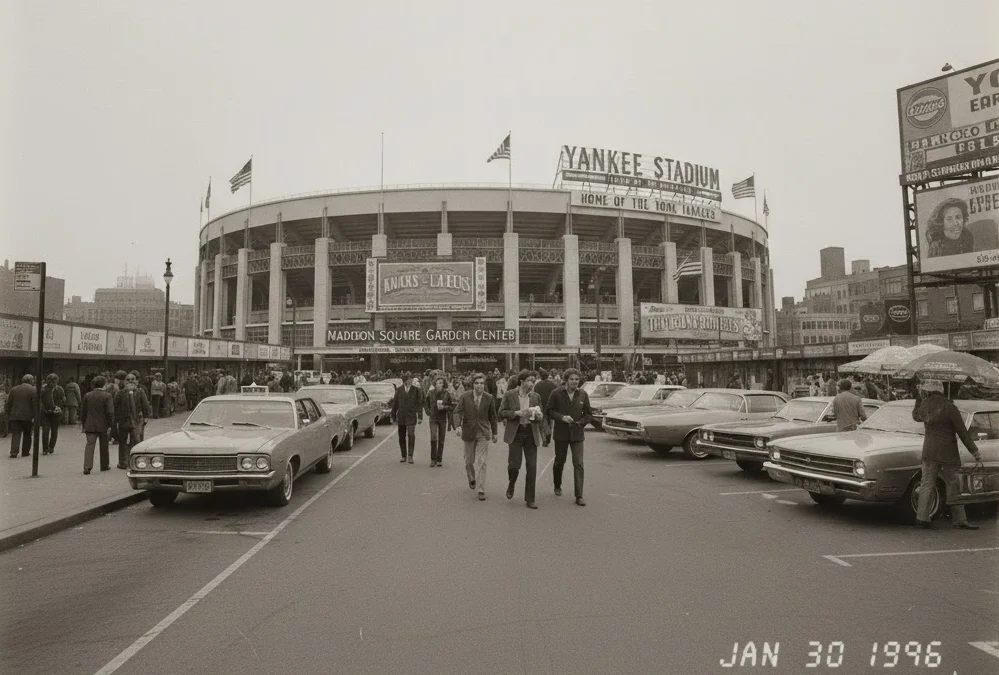
The official date of the authority commencing it’s business was 1974 whereby it had a board of directors and the legal framework to commence the issuances of bonds. In theory, it was a great thing. In practice? That’s where things get murky.
Powers Which Looked Good on Paper
The Sports Authority was not merely a government agency, but a social good corporation that had a very big budget. Our Legislature actually authorized this, what the Legislature actually authorized it to do, is to be broken down:
- Bond Authority: The big one. The authority was able to come up with bonds that were secured through future income of sports facilities. This implied that they could borrow in advance by using estimates of the revenues of stadiums, arenas and other facilities.
- Powers of Property: These included the ability to purchase and lease land, develop sites and make agreements with individual organizations. In effect, they possessed the powers of eminent development of sports.
- Investment Authority: Section 2470 gave the authority the power particularly to invest in the U.S. government obligations and state securities of New York- in effect, safe investments as they awaited the realisation of projects.
- Operational Flexibility: The Sports Authority was able to be more business-like than some of the rigid government agencies, making contracts, employing employees and running facilities.
What caught my attention in the process of reading the statute was the following: the Legislature provided this power with practically all it required to succeed, at least on paper. It was not about legal constraints but about all the rest.
| Core Powers of NY Sports Authority | Comparable Modern Entity | Key Difference |
|---|---|---|
| Bond issuance for facilities | Empire State Development | ESD has broader scope |
| Property acquisition/development | Various local IDAs | Sports Authority was state-level |
| Revenue generation from venues | Port Authority (some facilities) | PA pre-existed with revenue base |
| Public-private partnerships | Multiple current authorities | Modern entities have established track records |
The authority was also subject to regular audits—every five years, according to the statute. Though given it’s short lifespan, those audits probably read more like obituaries than performance reviews.
Following the Money (or Lack Thereof)
Here’s where the story gets really interesting. Section 2470 laid out the Sports Authority’s potential revenue sources and they were… optimistic, to say the least:
- State appropriations: Money directly allocated by the Legislature.
- Federal grants: Funding from Washington for sports and recreation projects..
- Bond proceeds: Revenue from selling municipal bonds.
- Investment income: Returns from parking money in government securities.
- Facility revenues: Future income from completed projects.
The problem? Most of these revenue streams required either legislative approval or actual facilities to generate income. It was a classic chicken-and-egg situation.
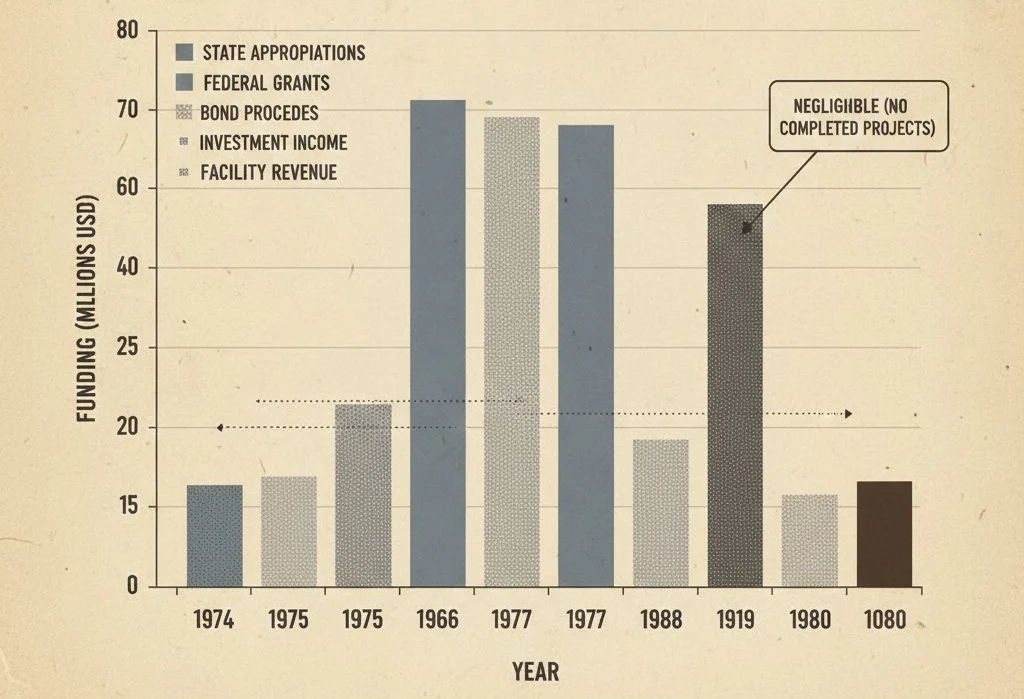
Without diving too deep into the financial weeds, the authority’s funding challenges reflected broader problems with New York’s fiscal situation in the 1970s. The state was tightening it’s belt just as the Sports Authority needed seed money to get projects off the ground.
Investment income from government securities was probably the most reliable revenue stream, but you can’t build stadiums on Treasury bill returns. The authority needed big money for big projects and that required either substantial state backing or successful bond sales to private investors.
Projects That Never Were
So what did the New York State Sports Authority actually accomplish during it’s seven-year existence?
That’s… a shorter conversation than you might expect.
Unlike later successful authorities that can point to bridges, tunnels or major facilities, the Sports Authority’s legacy is largely one of unrealized potential. No major stadiums bear it’s name. No championship games were played in facilities it financed. The authority appears to have spent most of it’s operational period conducting studies, evaluating sites and presumably writing reports that now gather dust in Albany filing cabinets.
This was not always because of incompetence or corruption, at times government agencies are just caught in the situation in which they cannot assist or help. The mid-1970s brought:
- Fiscal Crisis: With New York virtually on the brink of bankruptcy, huge capital projects became politically poisonous.
- Federal Cutbacks: When it comes to bad times, Recreation and sports money was not high on the agenda.
- Shifting the Agenda: Energy crisis, urban rot and other things had to be considered.
- Market Conditions: Bond financing was expensive owing to the high interest rates.
It is even possible that the authority was merely a step ahead of it’s time. The contemporary sports facility financing entails intricate government-business partnership, tax increment financing and advanced revenue-sharing deals. The toolkit of 1970s was less rich.
The Quiet Dissolution
March 1980. This is when the New York State Sports Authority was officially disbanded. The mechanism was contained in section 2488 of the Public Authorities Law: assets would transfer into the possession of the state, obligations would transfer and the authority would become a thing of the past.
The separation was not scandalous, there were no scandals, there was not a legislative probe, there were not outraged taxpayers seeking explanations. It was rather a gradual diminishing of light. Simply the authority became obsolete when priorities of the state changed and the initial purpose of it’s creation appeared to be more and more unrealistic.
It is interesting to note how it was forgotten in such a short time. The other unsuccessful state efforts during 1970s had more enduring effects as either a warning to others or a political message. The Sports Authority simply disappeared into the consciousness of the people.
Compare this to the Rochester Sports Authority, which lasted until 2015 before dissolving. At least that entity had four decades to attempt projects and build a track record, successful or otherwise. New York’s state-level version barely got out of the starting gate.
Modern Sports Financing: Learning from the Past?
In New York, sports facility financing today does not appear at all like it did fast-forward. There are numerous large projects that are managed by the Empire State Development Corporation, the local Industrial Development Agencies have tax incentives and do not focus on an exception; they have the usual practice of public- private alliances.
Newer plans such as the Barclays Center at Brooklyn or a few renovations of the older facilities are based on complex finance models that the Sports Authority of 1970 would have never envisioned. Contemporary leaders also have to cope with various political conditions more cynical media, mobilized opposition and cost-benefit analysis.
| Aspect | 1970s Sports Authority | Modern Approach |
|---|---|---|
| Primary funding | State appropriations, bonds | Public-private partnerships |
| Political oversight | Limited | Extensive media/public scrutiny |
| Project scope | Statewide mandate | Usually local/regional focus |
| Risk management | Public sector bears most risk | Shared risk models |
| Transparency | Minimal reporting requirements | Detailed disclosure mandates |
The failure of the Sports Authority might have actually influenced how later entities were structured. Current sports financing authorities tend to be more focused, better funded from the start or partnered with private developers who bring their own resources to projects.
But here’s something worth considering: would a well-funded, properly timed Sports Authority have changed New York’s sports landscape? We’ll never know, but it’s interesting to imagine stadiums with plaques reading “Financed by the New York State Sports Authority, 1975.”
Lessons for Law Students and History Buffs
The story of Sports Authority can teach the reader various useful lessons when learning about the New York system of public authorities:
- Legal Structure Isn’t Everything: The authority was powerful and had strong legal backing, yet that could not triumph political and economic reality.
- Timing: Good ideas can fail to work when they are introduced at the wrong time whether politically or economically.
- Revenue Models: They require reality checks Models of authorities rely on future project revenues are chicken-and-egg issues.
- Institutional Memory is Weak: Governmental structures can fade out of the human mind quite easily.
The experience of Sports Authority, in dealing with sports facility issues today, dictates the need by the municipal officials to consider small and doable projects, instead of the big picture statewide dreams. It also emphasizes the need to find competent financing sources prior to initiating grand plans.
The history enthusiast would be interested in the ways in which the Sports Authority can fit into the larger trends of government innovation and retrenchment of the 1970s. It is just a little slice of a bigger story regarding the American federalism, state capacity and the development of the public financing mechanisms.
Where Do We Go From Here?
New York State Sports Authority did not provide any lasting structures to remind of it’s presence and it only lasted seven years, which is why it is hard to believe that the institution still exists today and that people mix it with the offices of the estate administration. By all traditional standards, it was a total failure.
But perhaps it is not all the story. In order to find new ways, government sometimes must try some of them though not all experiments are effective. The Sports Authority was the effort to meet the real needs, of aging facilities, economic development opportunities, recreational needs of the residents. When the authority dissolved, they did not disappear, they simply addressed them by other means.
When you are a law student and reading about public authorities, have a look into the particular statutes, they are all most interesting illustrations of the attempts of the legislatures to strike the degree of balance between the popular purposes and the practical needs of operation. Municipal authorities should think of the way this wide mandate of the Sports Authority actually set it back; sometimes narrow, specific authorities can do more than broad, broad ones.
and in case you happen to be a mere liker of weird government history? The Sports Authority reminds that to every successful open project that we know of to-day, there are twelve or more that have been lost in obscurity and were not successful. They form a component of the way democratic governments should operate–sloppy, flawed, but at times faltering at the more desirable remedies.
Look at the local legislation in case you are wondering how the sports facilities are financed in your region. These mechanisms have changed much since the 1970s yet the underlying tensions between benefits to the populace and costs to the populace are as pertinent as ever.