 James Mcleod NZ (AU NZ Immigration Lawyer)
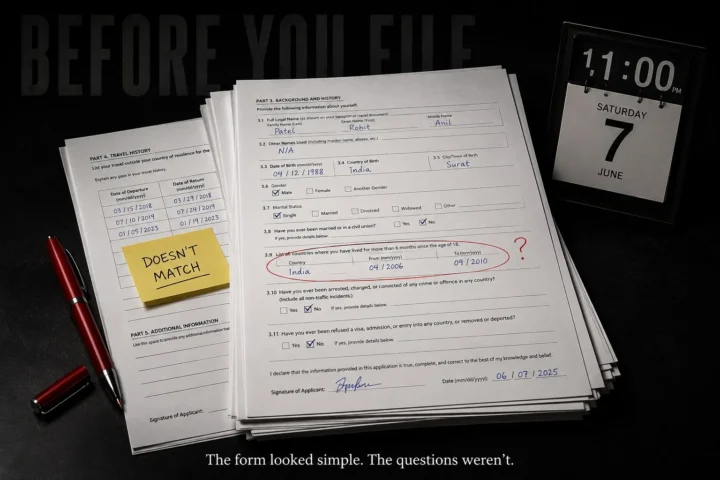
I still remember my first consultation with a client who’d applied for a U.S. non-immigrant visa on his own: he submitted the wrong edition of the form, forgot to sign it and walked into his interview without knowing how to explain the gaps in his employment history. He wasn’t alone. The truth is, visa applications can appear deceptively straightforward, but small slip-ups often trigger major headaches. This is why a high number of individuals decide to hire a Urena & Associates PLLC immigration lawyer, a legal expert that is more familiar with the system and makes sure that all aspects of your application are proper and complete.
Here’s a snapshot of common pitfalls:
- Using outdated forms – The U.S. Citizenship and Immigration Services (USCIS) and the U.S. Department of State regularly update visa-application forms and edition dates. Submitting an outdated edition can result in outright rejection.
- Incomplete or inaccurate answers – Typos, mismatched dates or names and missing responses become red flags. One firm listed “incomplete/inaccurate applications” as the top reason for denial in it’s “Top 5” list.
- Missing or deficient supporting documentation – Different visa types demand varying proof: financial records, employment verification, invitation letters, etc. Failure here often triggers requests for additional evidence (RFEs) or denials.
- Misrepresentation or fraud – Providing false or misleading information intentionally or accidentally can have long-term consequences. One blog explained how even unintentional inconsistencies may lead to permanent ineligibility.
- Deadline and timing issues – Some visa categories have tight windows; waiting too long or mis-timing the interview/filing can jeopardise everything.
What an Immigration Attorney Does (and Why That Matters)
Having been through dozens of visa cases, I can attest: bringing in an immigration attorney early changes the dynamic from reactive to proactive. Here’s how:
A. Comprehensive eligibility review
- Determine the correct visa category (non-immigrant vs immigrant) and assess your eligibility: what if you’re mis-classifying yourself and trigger an inadmissibility ground?
- Identify complicating factors (prior visa refusals, criminal history, overstays, etc.) that could call for waivers (e.g., the Form I‑601 – Application for Waiver of Grounds of Inadmissibility). Wikipedia
B. Form and documentation preparation
- Ensuring you use the correct edition of the form, with all required fields completed, matching across documents. (For example: one law blog says “Leaving required fields blank … is a common mistake.”)
- Reviewing and organising supporting documents: employment letters, financial statements, translation of foreign documents, certified police records (especially for permanent-residency/Green-Card support).
- Crafting responses and evidence for potential “difficult” issues – prior refusals, inadmissibility bars or complex family histories.
C. Interview and procedural strategy
- Preparing you for the visa interview: what questions you may face, how to speak to your submitted forms and how to present your case clearly. For many applicants, the interview is make-or-break.
- Monitoring the case after submission: tracking RFEs, advising on responses and avoiding status‐lost situations due to missed deadlines.
- Advising on legal pitfalls: Avoiding misrepresentation, understanding the doctrine of “consular non-reviewability” (meaning some visa denial decisions abroad may not be reviewable in U.S. courts). Wikipedia
D. Minimising risk of denials and delays
- With an attorney’s involvement, you’re more likely to catch errors, address sticky facts up front and avoid surprises like RFEs or outright refusals.
- A good attorney will also help you weigh cost-benefit scenarios: is it worth filing now or waiting until you can strengthen your dossier?
The Most Common Visa Application Mistakes & How to Avoid Them
Here’s a mapped-out table showing typical errors and practical ways to avoid them:
| Mistake | Why it matters | How an attorney helps |
| Outdated or wrong form | USCIS/DoS may reject the application if the edition date is incorrect. | Attorney ensures latest edition is used. |
| Missing or inconsistent info (typos, names, dates) | Causes red flags; inconsistencies undermine credibility. | Attorney reviews all entries and ensures consistency. |
| Inadequate supporting docs | Application may lack proof of claims (financial, employment, relationship). | Attorney identifies all documentary gaps & supplements accordingly. |
| Wrong visa category | Mis-filing can trigger denial or complicate future eligibility. | Attorney assesses which visa fits best and your underlying facts. |
| Unprepared for interview | The interview can expose inconsistencies or unaddressed issues. | Attorney provides mock interview preparation and strategic advice. |
| Missing deadlines or failing to monitor status | Time-sensitive actions may be required; missing them may mean denial. | Attorney tracks the timeline and sends reminders; handles responses. |
| Misrepresentation/fraud | Even minor misstatements can lead to ineligibility, barring or deportation. | Attorney guides you on how to address tricky facts honestly and legally. |
Bullet-point checklist for applicants:
- Double-check you’re filling the latest version of the form.
- Use consistent spelling of names and dates across all documents.
- Gather and organise all supporting documents before filing.
- Confirm eligibility for the visa category you’re applying for.
- Prepare for the interview: know what you claimed, why you claimed it.
- Keep track of deadlines and any communications from USCIS/DoS.
- Be honest. If you’re unsure about a fact (e.g., past overstay, prior refusal), discuss with an attorney rather than guess.
Legal Consequences of Visa Application Mistakes & How an Immigration Attorney Mitigates Them
When I sit across from clients who’ve made what seemed like “minor” avoid visa application mistakes, I often pause and ask: “Did you realise this could affect you for years?” Most don’t. The law doesn’t treat every mistake equally
some simply trigger processing delays, but others open the door to denials, bans, even criminal liability. A skilled attorney helps you spot which is which.
Key Legal Risks
Here are the major consequences I’ve seen in my practice and reviewed in case-law / legal commentary:
- Denial of the visa or petition – If the application is incomplete, inconsistent or uses the wrong form, the relevant agency (often U.S. Citizenship and Immigration Services “USCIS” or the State Department) may reject it outright.
- Requests for Additional Evidence (RFEs) – These slow everything down, often requiring a new set of documents or answers; missing an RFE deadline can lead to abandonment of the case.
- Inadmissibility and bars to entry – False statements, misrepresentation or fraud can trigger inadmissibility grounds under the Immigration and Nationality Act (“INA”), preventing entry now and potentially permanently.
- Revocation of previously-granted petitions – Even after a visa petition is approved, if material facts emerge later (or are found false), the USCIS may revoke under 8 U.S.C. § 1155. See the recent decision in Bouarfa v. Mayorkas for how this works. Wikipedia
- Criminal liability – In severe cases (e.g., knowingly filing false documents), criminal penalties apply fines, imprisonment and later deportation.
- Long-term impact on immigration benefits – A denial or worse a fraud finding, can affect eligibility for future visas, adjustment of status (green card) or citizenship.
How an Attorney Helps You Avoid These Risks
From my experience, here’s how the attorney’s role shifts the game:
- Identifying “hidden” issues
- Prior visa refusals, overstays or criminal history might not seem relevant to the client but they can trigger inadmissibility.
- I review those upfront so they either get resolved (via waiver) or we adjust strategy.
- Prior visa refusals, overstays or criminal history might not seem relevant to the client but they can trigger inadmissibility.
- Ensuring form accuracy and consistency
- A – 1-1 service: matching names, addresses, dates across all forms and supporting docs.
- Double-checking edition dates of forms and that the right form is used for your category.
- A – 1-1 service: matching names, addresses, dates across all forms and supporting docs.
- Document gathering and organisation
- Clarifying exactly what the visa type demands (financial statements, employment letters, translation of foreign documents).
- Creating a “package” rather than a piecemeal submission.
- Clarifying exactly what the visa type demands (financial statements, employment letters, translation of foreign documents).
- Interview & procedural readiness
- Preparing you for questions you might face.
- Mapping timelines: when to file, how long you may wait, what happens if you get an RFE or notice of intent to deny.
- Preparing you for questions you might face.
- Responding to complications
- If an RFE arrives, I draft responses or guide you correctly (some firms leave clients scrambling).
- If a denial happens, we evaluate appeal options, re-filing or waivers.
- If an RFE arrives, I draft responses or guide you correctly (some firms leave clients scrambling).
- Managing long-term consequences
- Advising on how a current filing affects future status.
- If misrepresentation is involved, discussing options (or losses) frankly.
- Advising on how a current filing affects future status.
Real-World Outcomes
| Type of Mistake | Potential Outcome | Attorney’s Preventive Measure |
| Outdated or incorrect form | Application rejected or delayed; costs incurred | Verify current edition; audit before filing |
| Missing or inconsistent information | Flagged for review; increased chance of denial | Pro-forma review of all entries; cross-check with client |
| Misrepresentation (e.g., omitting prior arrest) | Inadmissibility; visa denial; future bans | Full disclosure review; discussion of waivers if needed |
| Late submission / missed deadlines | Abandonment of case; must restart | Track timeline; remind client; file on time |
| Wrong visa category selected | Denial; wasted fees; may affect future filings | Eligibility assessment; choose correct category |
A Cautionary Tale
I once had a client who applied for an employment-based visa. He believed he qualified under category EB-3 but didn’t realise his role really matched EB-2 criteria. The forms he filed matched EB-3 and the job description supported EB-2. He ended up flagged for inconsistency, delaying his case by more than a year and his employer eventually changed jobs. Had we consulted an attorney early, we’d have likely filed under EB-2 and avoided the mismatch.
The larger point: what looks like a “technical” mistake often reflects deeper legal misalignment. And the consequences? Not just delay, but lost opportunity, risk of ineligibility or worse.
Case Studies & Real-Life Examples
I’ve handled enough visa applications to see the same patterns repeat different people, different countries, but the same landmines. Below are three cases that still sit with me because they illustrate how small mistakes can snowball into full-blown legal problems. I’ve adapted names and details to protect privacy, but the legal issues are the same ones applicants face every day under U.S. immigration law and Department of State procedures.
Case Study #1: The Student Visa That Almost Fell Apart Over a Typo
A young applicant from Ghana let me call him Michael was applying for an F-1 Student Visa. He had everything in place: Form I-20 issued by his school, financial proof, tuition paid. His issue was a tiny one: on his DS-160 form, he entered the wrong month in his travel history. The consulate noticed the difference between the date on his passport stamps and the date he typed into the form.
Here’s the important part:
Under Section 214(b) of the Immigration and Nationality Act (INA), a consular officer can deny a visa if the applicant’s story does not appear credible or consistent. There is no appeal for most consular denials the doctrine of consular non-reviewability (documented in Saavedra Bruno v. Albright, a real D.C. Circuit case) restricts judicial review.
Outcome:
The officer issued a refusal under 214(b).
How an attorney helped:
I worked with him to submit a corrected DS-160, prepare a clarifying supporting statement and coach him for the re-interview. He was issued the visa the second time around.
Key lesson:
Even a date typo something most people would never notice can create an impression of dishonesty or evasiveness.
Case Study #2: Employer Error on an H-1B Petition (and the RFE That Followed)
This one involved a technology firm trying to sponsor an engineer under the H-1B category. The company handled the first round of documents themselves. The job description, however, was written in a vague, generic way that didn’t clearly require a bachelor’s degree which is a mandatory element for an H-1B “specialty occupation” under 8 C.F.R. § 214.2(h).
USCIS issued a Request for Evidence (RFE), essentially asking,
“Show us why this job actually counts as a specialty occupation.”
The employer was blindsided. By the time I was brought in, the deadline felt like a timer ticking down.
Outcome:
We rewrote the job description, added industry documentation showing degree requirements, cited the OOH (Occupational Outlook Handbook) and tied the applicant’s education directly to the job duties. The case was approved, but the RFE delayed everything by months.
Key lesson:
Applicants think mistakes happen on their end but employers, schools and agents often create the biggest problems without meaning to.
Case Study #3: A Family-Based Case That Triggered a Fraud Review
A U.S. citizen had filed an I-130 Petition for Alien Relative for her foreign-national spouse. Their application hit a snag when USCIS noticed inconsistencies between the addresses listed on the I-130 and those listed on the prior visitor-visa application (DS-160) submitted years earlier.
These were innocent mistakes they had moved several times but from USCIS’s perspective, the discrepancies raised suspicion of a “sham marriage,” something the immigration system is designed to detect. Under INA § 212(a)(6)(C)(i), misrepresentation (even accidental) can trigger a permanent ban.
Outcome:
A “fraud review” was initiated. I worked with the couple to compile:
- joint leases
- joint bank statements
- photographs
- affidavits from friends
- proof of shared travel
Ultimately, USCIS closed the fraud review and approved the petition.
Key lesson:
People often underestimate how past applications even old visitor visas can come back and influence current ones.
Quick Comparison Table: What Went Wrong & Why It Mattered
| Case | Error | Legal Issue Triggered | Consequence | How Attorney Mitigated |
| Student Visa | Incorrect date on DS-160 | 214(b) credibility concerns; consular non-reviewability | Initial refusal | Re-filed, corrected, prepared applicant |
| H-1B Petition | Poor job description | Specialty occupation scrutiny under 8 C.F.R. § 214.2(h) | RFE and long delays | Rewrote job description, added evidence |
| Family Petition | Address inconsistencies | INA § 212(a)(6)(C)(i) misrepresentation risk | Fraud review | Provided robust evidence of bona fide marriage |
Choosing the Right Immigration Attorney, What Clients Should Look For
I’ve learned over the years that clients often don’t know what actually makes one immigration attorney more effective than another. It’s not the size of the firm or the flashiness of the website. It usually comes down to a handful of traits that directly shape the outcome of a visa application. If you’re choosing counsel, here’s what genuinely matters.
Experience With Your Specific Visa Category
Immigration law is broad. Someone who handles asylum cases every day may not be the best fit for an investor visa. Someone focused on employment visas may not be the right choice for a complex family case involving inadmissibility issues.
What to check:
- Has the attorney worked with your visa type before (H-1B, O-1, F-1, CR-1, EB-2, etc.)?
- Can they explain common pitfalls for your category without needing to “look it up”?
- Do they understand the nuances of both USCIS filings and consular processing?
People don’t always realise this, but there’s a big difference between preparing a petition for USCIS and preparing someone for a consular interview abroad. The rules overlap but the approach is very different.
Clear Communication Style
Good attorneys don’t bury clients in jargon or leave them guessing about what’s happening. If anything, immigration law requires the opposite: clarity, transparency and rhythm.
Here’s what I personally look for when evaluating another attorney’s communication skills:
Green flags:
- They explain why certain documents are needed, not just request them.
- They respond within a reasonable timeframe.
- They’re honest about risks even uncomfortable ones.
- They set expectations about timelines and government delays.
Red flags:
- Unwillingness to answer questions.
- Vague assurances like “Don’t worry, we’ll handle it.”
- Not reviewing your previous filings before taking the case.
- No written retainer agreement.
The attorney–client relationship in immigration is often a long one. You want someone who communicates consistently, not someone who disappears for weeks.
Transparency About Fees and Scope of Work
Immigration cases can span months or years. A trustworthy attorney will tell you:
- What the legal fee covers
- What government fees you must pay separately
- Whether RFE responses or appeals are included
- How communication is handled (email, video, in-person)
A clear fee structure isn’t just about avoiding surprises it reflects how organized the firm is behind the scenes.
Understanding of Policy Changes and Legal Shifts
U.S. immigration policy changes more frequently than most people realise. Attorneys who stay updated on:
- policy memoranda
- adjudication trends
- changes in evidentiary standards
- shifts in consular behaviour
- updates to the Foreign Affairs Manual (FAM)
- new USCIS form editions
…are the ones who catch issues before they turn into problems.
A good test is this:
Ask the attorney how recent changes affect your case. If they can’t immediately give you examples, that’s a sign they’re not keeping up.
Strategic Thinking Beyond Just Paperwork
Some lawyers are form-fillers and that’s not enough. What clients need is someone willing to:
- anticipate weaknesses before USCIS or the consulate sees them
- build the narrative of the case, not just compile documents
- advise when NOT to file (sometimes waiting is the better strategy)
- prepare you for the interview with specific examples from your filing
- evaluate long-term consequences for future filings (green card, citizenship)
Filing a visa application is not just about sending in papers. It’s about telling a legally coherent story that stands up to scrutiny.
A Quick Comparison Table: What to Look For in an Attorney
| Quality | Why It Matters | What to Ask the Attorney |
| Experience in your visa type | Increases accuracy and reduces risk of denial | “How many cases like mine have you handled?” |
| Communication | Keeps case moving smoothly | “How often will I hear from you?” |
| Transparency in fees | No surprises mid-process | “What’s included? What’s not?” |
| Knowledge of policy changes | Helps avoid outdated filings or strategies | “What recent changes affect my case?” |
| Strategic evaluation | Prevents unforced errors | “What weaknesses do you see in my situation?” |
Conclusion
Every time I finish a visa case whether it’s a straightforward student filing or a complicated employment petition I circle back to the same thought: most of the stress, delays and denials people face aren’t because they didn’t qualify. It’s because the system is unforgiving with mistakes. A wrong date here, a missing document there, an answer that doesn’t perfectly match an old application… the immigration process remembers everything.
That’s why working with an immigration attorney isn’t about “making things easier” in the casual sense. It’s about protecting yourself from legal consequences that can follow you for years. It’s about strategy, timing and making sure that every detail even the ones you forgot you ever typed supports the story you’re presenting to USCIS or a consular officer.
From what I’ve seen, the people who call in an attorney early tend to avoid the bigger problems: RFEs that could’ve been prevented, credibility issues that trace back to a mis-clicked dropdown box or denials rooted in misunderstandings that were never corrected. The law rewards clarity and consistency and the role of counsel is to help you put those pieces in place before your application ever reaches a government officer’s desk.
If there’s one thing I emphasize to clients, it’s this: immigration filings are not just paperwork. They are legal statements made under penalty of law. Treating them that way and getting the right guidance from the start is what keeps your application moving forward instead of getting stuck in the slow churn of rejections and re-filings.