 Nicholas J. Rego Accident Lawyer
Key takeaways for Florida drivers:
Immediate Actions:
- Stay at the scene and ensure safety
- Call the police when required by law
- Exchange complete information with all parties
- Document everything thoroughly
- Seek medical attention promptly
Ongoing Considerations:
- Work with qualified medical providers
- Understand your PIP coverage and limitations
- Avoid social media discussions about the accident
- Consider legal representation for serious cases
- Keep detailed records of all expenses and communications
Car accidents happen in Florida more frequently than many drivers realize. With its dense population, tourist traffic, and challenging weather conditions, the Sunshine State sees thousands of motor vehicle crashes annually. When you’re involved in an accident, your immediate actions can significantly impact your insurance claims, legal rights, and financial recovery.
Florida operates under unique insurance laws that differ from many other states. Understanding these laws and knowing what not to do after an accident can save you thousands of dollars and prevent future legal complications. This comprehensive guide outlines the seven most critical mistakes Florida drivers make after car accidents and provides expert insights on how to protect yourself.
Florida’s Car Accident Laws
Florida’s No-Fault Insurance System
Florida operates under a no-fault insurance system, which means your own insurance company pays for your medical expenses and lost wages regardless of who caused the accident. This system requires all drivers to carry Personal Injury Protection (PIP) coverage with minimum limits of $10,000.
Recent Changes in 2025
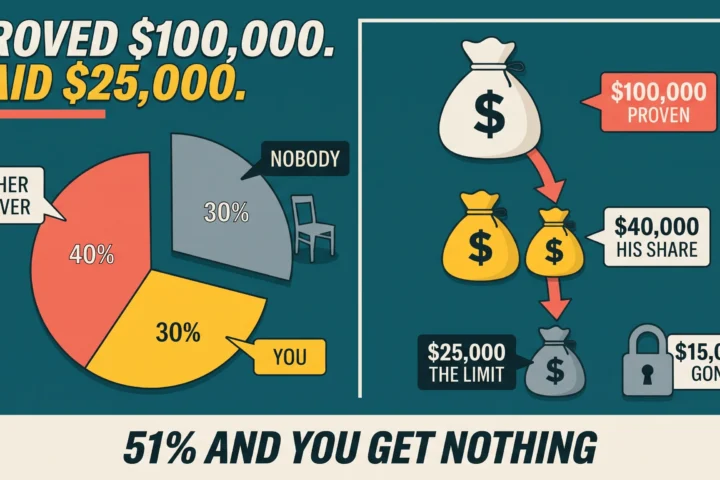
Florida’s car accident landscape underwent significant changes in 2025. Under the new comparative negligence law (Florida Statutes § 768.81(6)), if you are found to be more than 50% at fault for an accident, you cannot recover damages from the other party. This represents a significant shift from the previous pure comparative negligence system.
Reporting Requirements Under Florida Law
Florida Statute Section 316.065 mandates specific reporting requirements for car accidents:
Immediate Police Notification Required When:
- Death or injury occurs
- Property damage exceeds $500
- Hit-and-run accident
- Driver appears intoxicated
- The vehicle needs to be towed from the scene
Self-Reporting Requirements:
- Drivers must file a Driver Report of Traffic Crash within 10 days
- The report must be submitted to the Florida Department of Highway Safety and Motor Vehicles (FLHSMV)
- Failure to report can result in license suspension
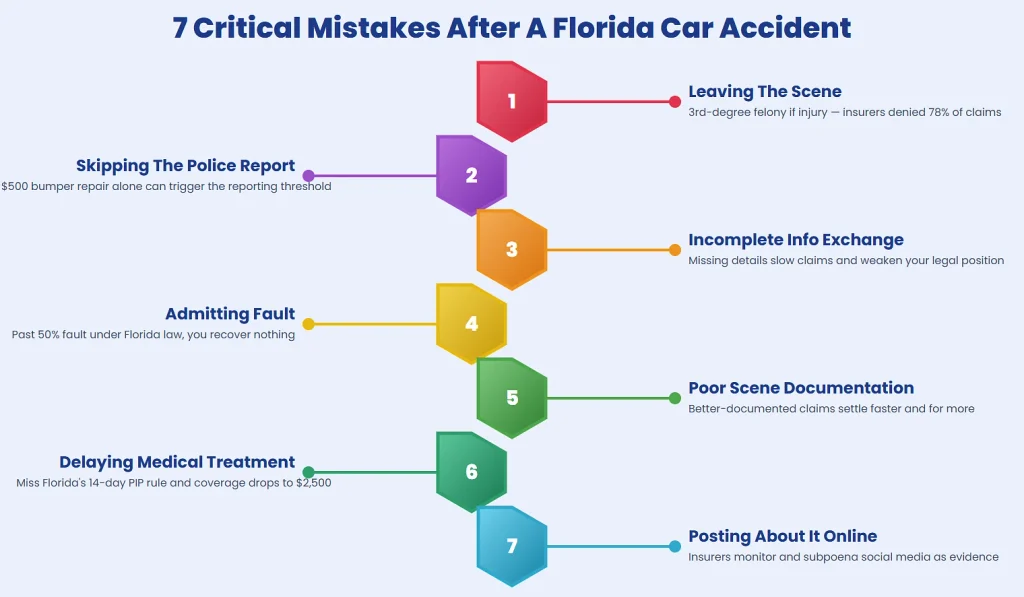
7 Critical Mistakes to Avoid:
1. Leaving the Accident Scene
The Law: Florida Statute 316.027 makes leaving the scene of an accident a serious criminal offense. Hit-and-run accidents account for over 10% of all car crashes in Florida, making this one of the state’s most prosecuted traffic crimes.
Criminal Penalties:
- Property damage only: Second-degree misdemeanor (up to 60 days in jail, $500 fine)
- Injury involved: Third-degree felony (up to 5 years in prison, $5,000 fine)
- Death involved: First-degree felony (up to 30 years in prison)
Insurance Consequences: Florida insurance companies can deny claims entirely if you leave the scene. Even if you return later, your carrier may argue that leaving constituted a breach of your policy terms.
What You Must Do:
- Stop immediately in a safe location
- Turn on hazard lights
- Check for injuries
- Call 911 if required by law
- Exchange information with all parties
- Wait for the police if they’re responding
Impact: In 2024, Miami-Dade County alone saw over 3,200 hit-and-run accidents. Insurance companies denied claims in 78% of cases where drivers initially left the scene, even when they returned within hours.
2. Failing to Call the Police When Required
Forget to Call the Police, many drivers underestimate the importance of police involvement in seemingly minor accidents. You should always contact the police after a car accident, even if it seems insignificant. Many states legally require you to report any accident where there is injury, death, or property damage over a certain amount. Having a police report on file can help protect you later when filing insurance claims.
Why Police Reports Matter: Experienced car accident lawyers consistently emphasize the importance of official police documentation. Florida police reports contain crucial information that insurance companies and courts rely on, including:
- Officer’s assessment of fault
- Witness statements
- Weather and road conditions
- Measurements and diagrams
- Citations issued
The $500 Threshold: Many drivers underestimate the cost of damage. A minor fender-bender can easily exceed $500 in today’s market:
- Bumper replacement: $800-$2,000
- Headlight assembly: $400-$1,200
- Paintwork: $500-$1,500 per panel
Documentation Benefits: Having an official police report provides:
- Neutral third-party assessment
- Legal documentation for insurance claims
- Protection against false claims
- Evidence for potential lawsuits
3. Not Exchanging Complete Information
Required Information Exchange: Florida law requires drivers to exchange specific information after any accident. Failing to obtain complete details can jeopardize your insurance claim and potentially compromise your legal rights.
Essential Information to Collect:
Driver Information:
- Full name and contact number
- Driver’s license number
- Insurance company and policy number
- Vehicle identification number (VIN)
- License plate number
Vehicle Details:
- Make, model, year, and color
- Location of damage
- Vehicle owner information (if different from driver)
Witness Information:
- Names and phone numbers
- What they observed
- Their location during the accident
Insurance Company Requirements: Most Florida insurance policies require prompt notification and the exchange of complete information. Failing to collect proper information can result in:
- Delayed claim processing
- Reduced settlement offers
- Claim denials
- Difficulty pursuing legal action
Technology Tools: Use smartphone apps or your camera to:
- Photograph insurance cards and driver’s licenses
- Record contact information accurately
- Document the exchange process
4. Admitting Fault or Apologizing
Legal Implications: Florida’s modified comparative negligence system emphasizes the importance of determining fault. Any admission of fault can be used against you in insurance negotiations and court proceedings.
Problematic Statements to Avoid:
- “I’m sorry; it was my fault.”
- “I didn’t see you there.”
- “I was going too fast.”
- “I was distracted.”
- “My brakes failed.”
What Admissions Can Cost You: Under Florida’s 50% rule, if your statements contribute to a finding that you’re more than 50% at fault, you lose the right to recover damages. This could mean:
- Loss of thousands in medical expenses
- No compensation for lost wages
- No recovery from pain and suffering
- Full responsibility for property damage
Safe Communication: Instead of admitting fault, stick to factual statements:
- “I was traveling north on [street name]”
- “The light was green when I entered the intersection.”
- “I was in the right lane.”
Insurance Investigations: Insurance companies conduct thorough investigations using:
- Police reports
- Witness statements
- Vehicle damage analysis
- Traffic camera footage
- Accident reconstruction experts
Let professionals determine fault based on evidence, not emotional statements made at the scene.
5. Inadequate Scene Documentation
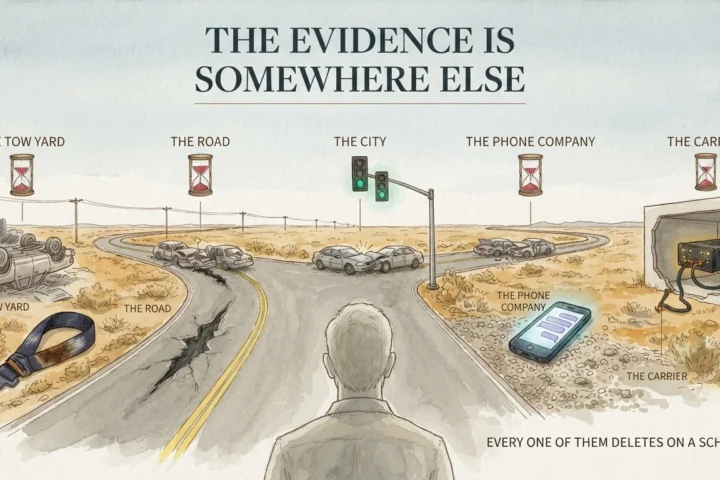
Critical Evidence Collection: Florida’s legal system relies heavily on the collection and presentation of evidence. Poor documentation can significantly weaken your position in insurance claims and lawsuits.
Photographic Evidence Checklist:
Vehicle Damage:
- All damage from multiple angles
- Close-up shots of impact points
- Interior damage (if applicable)
- License plates of all vehicles
- VINs, when visible
Scene Documentation:
- Wide shots showing vehicle positions
- Traffic signals and signs
- Road conditions and weather
- Skid marks or debris
- Street names and intersections
Personal Injuries:
- Visible injuries immediately after an accident
- Medical treatment received
- Follow-up medical documentation
Technology and Evidence: Modern smartphones can capture:
- GPS coordinates and timestamps
- Weather conditions
- Video Footage
- Audio recordings of conversations
Legal Importance: Properly documented evidence helps establish:
- How the accident occurred
- Extent of property damage
- Severity of injuries
- Environmental factors
- Compliance with traffic laws
Insurance Benefits: Well-documented claims typically result in:
- Faster processing times
- Higher settlement offers
- Fewer disputes over coverage
- Stronger negotiating position
6. Delaying Medical Treatment
Florida’s PIP Coverage Requirements: Florida’s Personal Injury Protection (PIP) coverage has specific requirements that make immediate medical attention crucial:
The 14-Day Rule:
- You must seek medical treatment within 14 days of the accident
- Failure to do so can result in PIP benefits being limited to $2,500 instead of the full $10,000
- This Rule applies regardless of how minor the accident seems
Medical Provider Requirements: PIP coverage pays 80% of medical expenses when you receive treatment from:
- Licensed physicians
- Hospitals
- Ambulatory surgical centers
- Other qualified medical providers
Hidden Injury Concerns: Many serious injuries don’t show immediate symptoms:
Whiplash and Soft Tissue Injuries:
- It can take 24-48 hours to develop symptoms
- It may worsen over several days
- It can cause long-term complications if untreated
Concussions and Brain Injuries:
- Symptoms may be delayed by hours or days
- It can have serious long-term consequences
- Often misdiagnosed or overlooked initially
Internal Injuries:
- It may not cause immediate pain
- It can be life-threatening if untreated
- Require professional medical evaluation
Documentation Benefits: Immediate medical attention creates:
- Official medical records linking injuries to the accident
- Professional assessment of injury severity
- Treatment plans and prognosis
- Evidence for insurance claims and lawsuits
Insurance Claim Strengthening: Prompt medical treatment helps establish:
- Causation between accident and injuries
- Necessity of treatment
- Extent of damages
- Ongoing medical needs
7. Social Media Posting
Digital Evidence Concerns: In today’s connected world, social media posts can significantly impact your car accident case. Insurance companies and opposing attorneys routinely monitor social media accounts for evidence that contradicts injury claims.
Problematic Posts:
- Photos showing you engaging in physical activities
- Check-ins at locations inconsistent with claimed injuries
- Comments minimizing the accident or your injuries
- Pictures of vehicle damage with casual commentary
Insurance Company Tactics: Florida insurance companies employ sophisticated methods to gather social media evidence:
- Hiring private investigators to monitor accounts
- Using specialized software to track posts and photos
- Subpoenaing social media records during litigation
- Cross-referencing posts with medical records
Privacy Settings Aren’t Foolproof: Even with privacy settings enabled:
- Friends can share your posts publicly
- Subpoenas can force the disclosure of private content
- Metadata from photos can reveal the location and timing
- Deleted posts can often be recovered
Safe Social Media Practices:
- Avoid posting about the accident entirely
- Don’t share photos of injuries or damaged vehicles
- Refrain from discussing settlement negotiations
- Be cautious about posting activities that might contradict injury claims
Legal Implications: Social media evidence can be used to:
- Contradict medical testimony
- Challenge the extent of claimed injuries
- Argue that you contributed to your damages
- Reduce settlement offers significantly
This article provides general information about Florida car accident laws and should not be considered legal advice. Laws change frequently, and individual circumstances vary. For specific legal guidance regarding your car accident case, consult with a qualified Florida attorney who specializes in personal injury and car accident law.
References
- Florida Department of Highway Safety and Motor Vehicles. (2025). “Traffic Crash Reports.” Retrieved from https://www.flhsmv.gov/traffic-crash-reports/
- The Lawyer World. “The Importance of Medical Records in Car Accident Claims in South Carolina.” Retrieved from https://thelawyerworld.com/blog/the-importance-of-medical-records-in-car-accident-claims-in-south-carolina/
- The Lawyer World. “The Steps to Take When Pursuing Compensation After a Car Accident in Davie Florida.” Retrieved from https://thelawyerworld.com/blog/the-steps-to-take-when-pursuing-compensation-after-a-car-accident-in-daive-florida/
- The Lawyer World. “Seeking Compensation for Car Accident Injuries in Missouri.” Retrieved from https://thelawyerworld.com/blog/seeking-compensation-for-car-accident-injuries-in-missouri/