 Mohammad Abdel-Rahman Accident & Injury Lawyer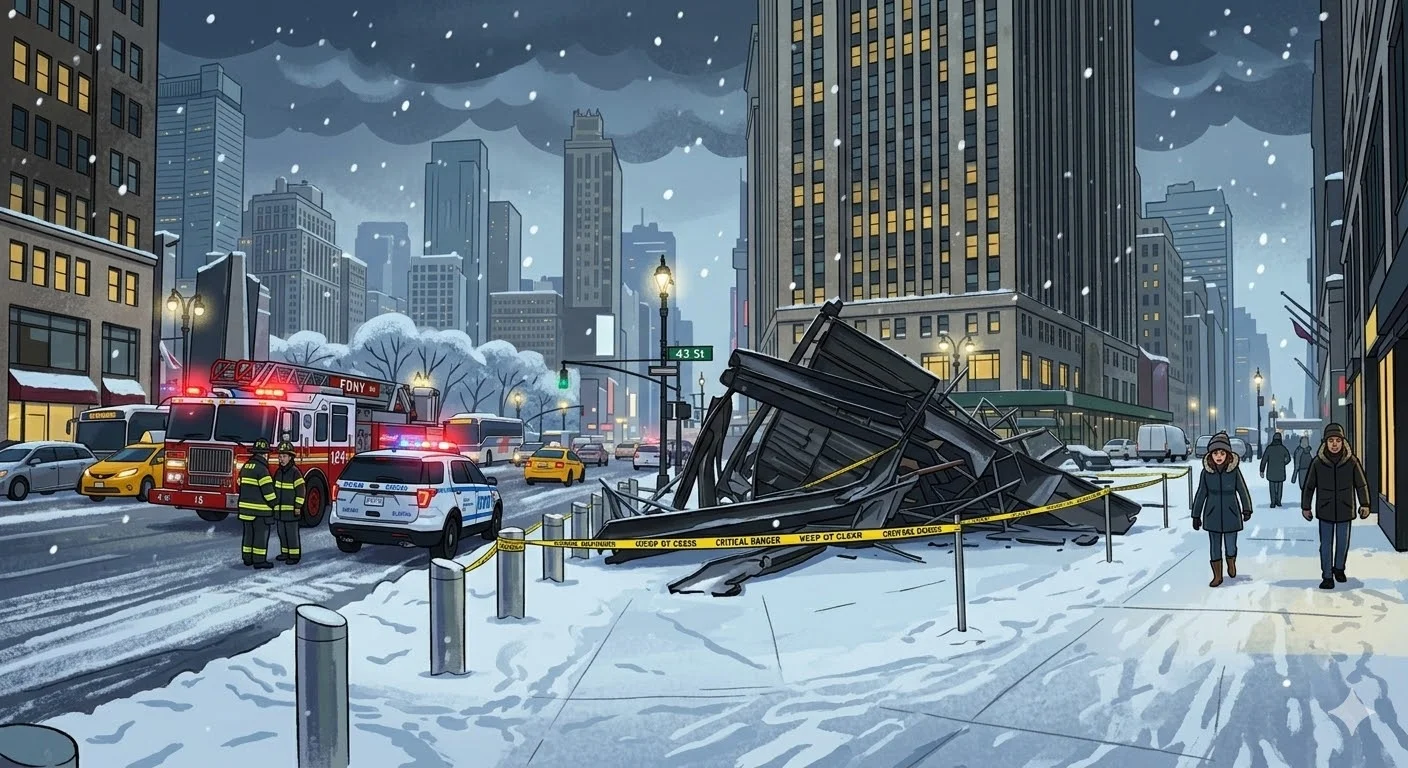
New York City winter storms of recent have been pointing to serious community safety hazards not just based on frozen sidewalks. Dangerous incidents due to high winds and extreme cold conditions include the shedding of heavy communication cables in Cypress Hill and falling sheet metal at one of the Con Edison plants in Hell’s Kitchen. These incidents pose a pressing issue to the New Yorker when extreme weather conditions lead to the collapse of the infrastructure of the building or the city and landed on the person injuring them. Who is to blame? In this report, the author discusses the legal provisions that adhere to the liability of property owners in New York City during severe weather conditions of winter, the legal obligations involve and the procedure of proving negligence following an accident.
Legal Duty of Care of Property Owners in Winter Storms in NYC
In New York City the legal obligations of property owners to provide safety to the citizens do not go away at the time of atrocious weather. As a matter of fact, the predictability of storms usually escalates the degree of care involved to avoid the damage caused by structural failure and it’s debris.
Getting into the Premises Liability and the Duty to Maintain
The law of premises liability is a legal obligation that obligates property owners to keep their premises and grounds in a fairly safe manner in order to curb the avoidable injuries of the population. This responsibility goes to the exterior of the building such as the facade, the fittings attached and any equipment to the roof. Extreme weather is no excuse to forego this task; it is an indication of the importance of working on it in advance. Due to winter storms, which cause high wind and the possibility of large amounts of snow, the chance of structural damage increases and thus proper maintenance is critical to avoid disastrous failures.
NYC Administrative Codes of Responsibility
The Administrative Code of New York City imposes a direct legal responsibility on the owners of commercial and multi-unit residential buildings to keep up the exteriors of the buildings. These local ordinances form a basis on which liability can be determined in case of an injury as a result of falling debris. Reports about the liability of the landlords show that the absence of following these standards of maintenance may lead to considerable legal and financial repercussions to the owners of properties.
- Check and maintain building facades, cornices and signages on a regular basis to make them resistant to high winds.
- Keep and ensure any cables, wires and conduits that are attached to the exterior of the building.
- Deal with the problems of snow and ice on the roofs, awnings and ledges that may create a falling hazard to people on the ground.
- Also make sure that all temporary structures such as scaffolding should be well held against the wind to avoid incidents associated with construction.
- Carry out post storm assessments to determine and rectify any new hazards caused by the weather condition.
Proving Negligence in Falling Debris Case
In order to be successful in filing a legal claim, an injured individual should be able to demonstrate that the owner of the property has been negligent. This can be done by proving that the owner violated his duty of care and that said violation was the direct cause of the injuries.
The Knew or Should Have Known Standard
One of the key components to the establishment of negligence is the idea of notice. To demonstrate the liability of an injured party, they must prove that the owner of the property had either actual notice (they had actual knowledge about the hazard) or constructive notice (they should have known about the hazard after reasonable diligence and ordinary care). An example of this would be a loose panel of the facade which has been visibly deteriorating with rust stains over months, this would be subject to the standard of constructive notice, since a reasonable property owner would have had the time to learn about it and fix it during routine maintenance.
Economic Resistance and Limitations on the Common Defenses
The property owners are likely to attempt the use of storm in progress doctrine as a defense in that they cannot be responsible when a storm is going on. This doctrine recognizes the fact that it would be impractical to expect an owner to remove snow or ice during a blizzard. This defense however has no alleviation of previous negligence on the part of an owner. In case some such structure as a sign or a piece of metal flashing were already at a state of disrepair through neglect, a predictable winter storm merely becomes the cause of an inevitable failure and the owner is still liable.
| Scenario | Clear Owner Negligence (Likely Liable) | Potential Defense (Liability Less Certain) |
|---|---|---|
| Cause of Falling Object | A poorly maintained, rusted sign bracket breaks during a windstorm that was forecasted days in advance. | An unprecedented tornado-force wind gust rips a well-maintained, recently inspected fixture from the building. |
| Owner’s Actions | The owner ignored multiple tenant complaints about a loose piece of metal on the roof. | The owner had hired contractors to inspect and secure the building exterior just weeks before the storm. |
| Legal Principle | The hazard was foreseeable and the owner had constructive or actual notice but failed to act reasonably. | The event could be argued as an “Act of God”—an unforeseeable and unpreventable natural event. |
How to act in case of falling debris injuries in Manhattan
In case you have fallen victim to falling debris and are injured, the most important thing to do is to act decisively and immediately in order to safeguard your health, as well as your legal rights. What you do during the moments and days after the incident can have a great influence on whether you can recover the compensation.
Urgent Measures to defend your Claim
After an injury, it is essential to develop a proper record of an incident and it’s effects. The integrity of a future legal claim can be preserved by the following measures.
- Prioity Your Health: Seek a medical checkup immediately. Ambulance or emergency room visit establishes a record of your official medical connection between your injuries and the nature and time of the injury.
- Report the Incident: Call 911. This creates an official police and/or emergency service report, which is a vital element of evidence to record the events of the occurrence.
- Record All: You should take pictures and video captures of the location with your mobile device as much as you can. Take pictures of the debris that dropped, the building that the debris came off, your injuries and any property damage.
- Find Witnesses: Inquire of any person who observed the incident their name and contact details. An eyewitness testifying as a neutral third party can prove to be a weapon in proving you right.
- Retain the Evidence: Retain any damaged clothes or other personal effects. Avoid negotiating with the insurance agents of the property owner or signing any document without seeking the legal advice.
Why You Need Experienced Legal Counsel
The NYC local laws and building codes are very complicated and it is highly essential to navigate a falling debris claims. The cases in question deal with establishing that the injury was brought about by the negligence of a property owner in maintaining his building, which can be rather cumbersome to do without the use of extensive research and expert opinion. The focus of the advocates should be on victims, whereby a case should be carefully built against any defenses such as the storm in progress doctrine.
Other personal injury lawyers in Manhattan are very experienced to defend injured people due to negligent maintenance of the property and hazards in the infrastructure. The achievements are based on the thorough knowledge of the premises liability legislation and a strong will to take care of the careless property owners to ensure that they fulfil their obligation and secure safe conditions.
To one of the victims of falling debris, you need someone on your side who offers the much needed assistance, be it in probing the history of the property in question to championing maximum compensation of their hospital bills, lost earnings and misery. They see to it that the rights of victims are not undermined by influential property owners and insurance companies which can aim at reducing or rejecting a legitimate claim.
Maintaining Safety and defending the rights of the victims
Although winter storms may be a fact of life in NYC, falling debris may cause injury, although frequently, this failure can be prevented, not inevitable. The owners of the property have a plain, unconditionally legal responsibility of insuring their buildings against the expected weather effects to save lives of the citizens.
The legislation offers a means of justice to the victims of negligence. The best thing is to know your rights and hence it becomes a step to recovery and it is time to hold property owners responsible to provide a safe and healthy urban environment to all. In case of any injury, it is important that with the help of qualified legal advice you sail well in the claims process and find the compensation that you rightfully merit.