 Mason (Driving Law Expert)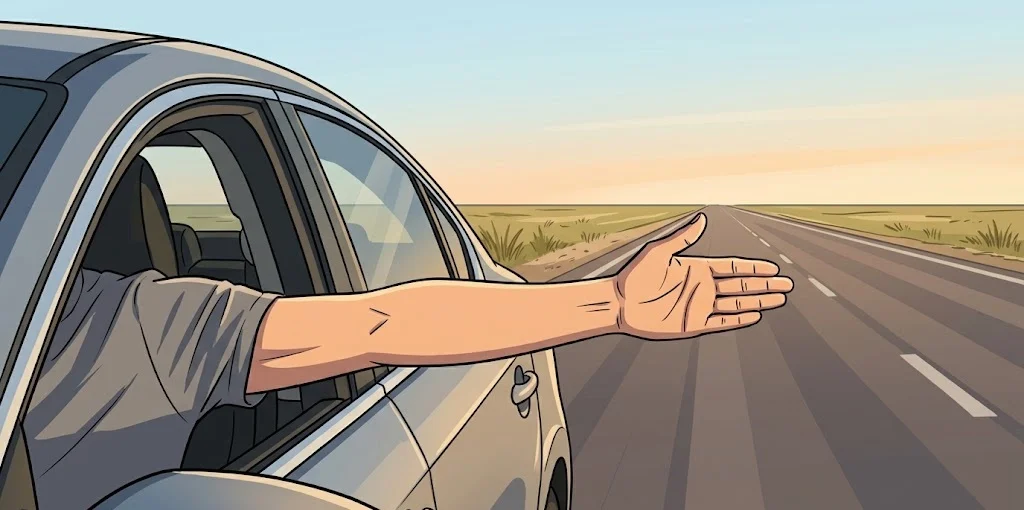
What the Law Actually Requires? Hand signals aren’t some relic from driving school that nobody uses anymore. They’re legally recognized, standardized and in certain situations required. Every state in the US, under vehicle codes derived from the Uniform Vehicle Code (UVC), treats a properly executed hand signal as a fully legal substitute for a mechanical turn signal or brake light. Miss a signal entirely, whether light or hand and you’re looking at a moving violation, points on your license and in some states, a fine that stings.
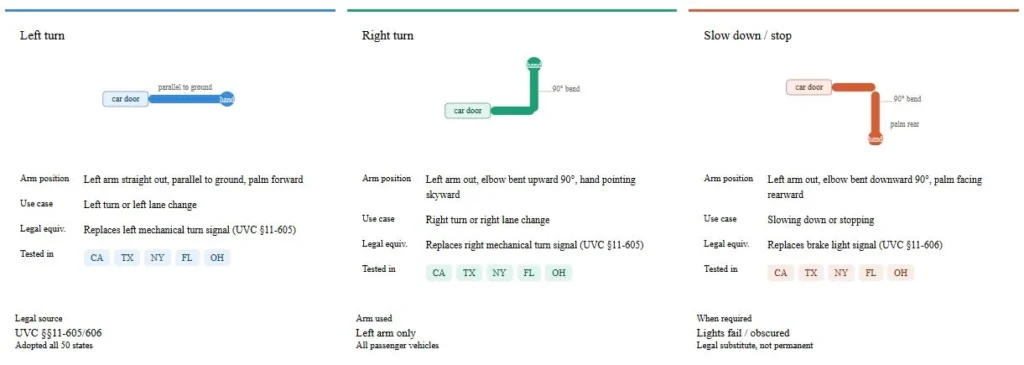
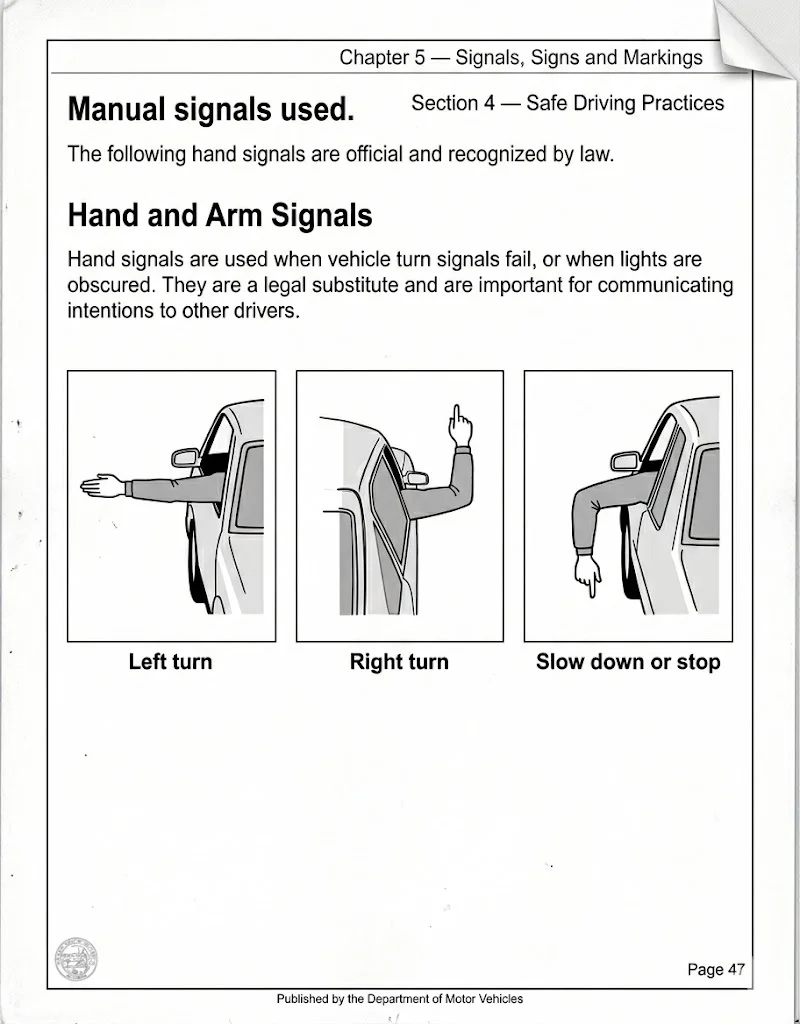
The Three Standard Hand Signals
Here’s the thing most people don’t realize these aren’t suggestions. They’re codified. The same three positions are described in every state’s DMV handbook, tested on road exams in California, Texas, Florida, New York and most others and endorsed by the National Highway Traffic Safety Administration (NHTSA).
Always use your left arm, extended from the driver’s side window. Right arm signaling isn’t recognized for standard passenger vehicles the left-arm method is what satisfies the law.
The Three Signals at a Glance
| Signal | Arm Position | What It Means |
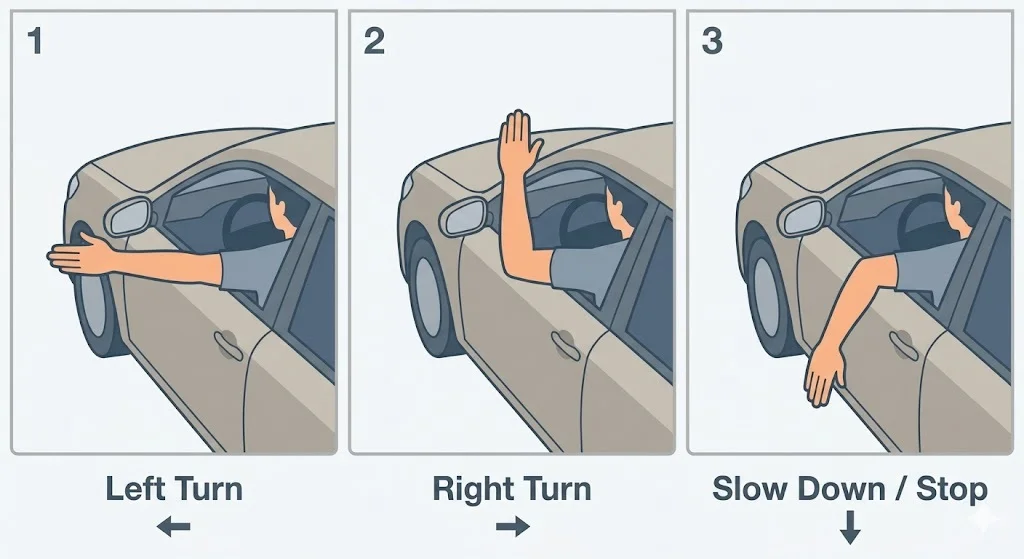
| Left Turn / Left Lane Change | Left arm extended straight out, parallel to ground, palm forward | Turning or moving left |
| Right Turn / Right Lane Change | Left arm out, bent upward 90° at elbow, hand pointing skyward | Turning or moving right |
| Slow Down / Stop | Left arm out, bent downward 90° at elbow, hand pointing toward ground, palm facing rearward | Slowing or stopping |
Hold the signal visibly until the maneuver is complete or clearly underway. Keep your right hand on the wheel, that part matters for control and examiners notice.
A Note on Bicycles and Motorcycles
Cyclists and motorcyclists get a small exception in most states. For a right turn, they may extend the right arm straight out horizontally instead of using the left-arm-up method it’s more visible from that position. The NHTSA guidance and state codes like Ohio §4511.40 and Texas Transportation Code §545.107 both reference this flexibility explicitly for bikes.
The Legal Framework: Why All 50 States Are Identical
This is where it gets interesting. Driving laws are state-regulated, there’s no single federal driving statute. And yet, hand signal rules are effectively uniform coast to coast. Why? Because virtually every state adopted the language of the Uniform Vehicle Code, specifically sections 11-605 and 11-606, which define exactly how and when signals must be given.
So whether you’re driving in rural Montana or downtown Manhattan, the left-arm-up means right turn. No exceptions, no regional quirks.
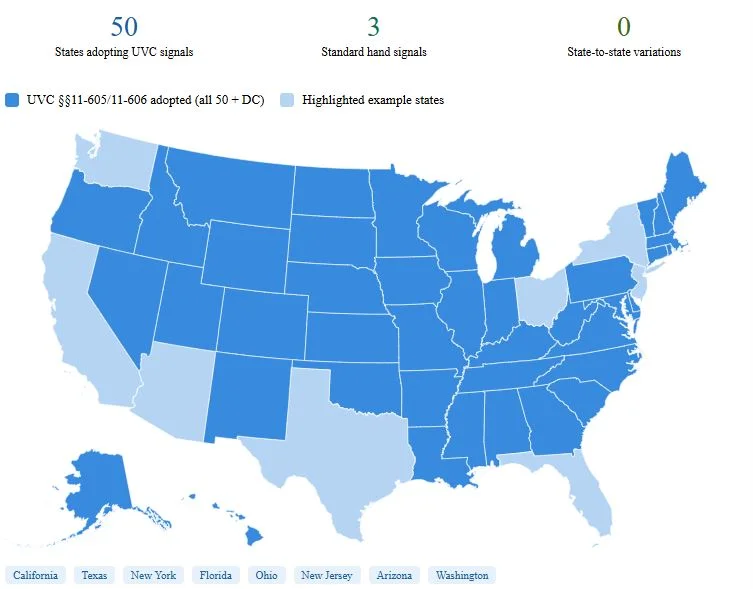
A few state-specific callouts worth knowing:
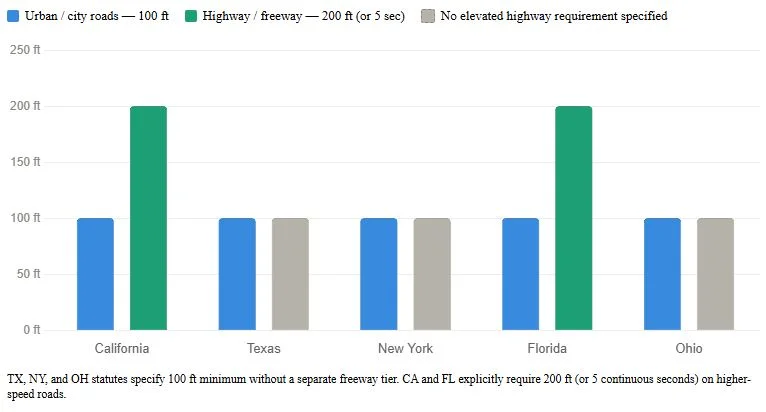
- California (VEH §22108–22110): Explicitly requires hand signals when lights fail or are hard to see in bright sunlight. The DMV behind-the-wheel exam tests this. Minimum 100 feet advance signal required.
- Florida (§316.156–316.157): “Any stop or turn signal shall be given either by means of the hand and arm or by signal lamps.” Violation is a noncriminal moving infraction.
- New York (VTL §1165): Same three left-arm positions. Part of broader signaling requirements under §1163–1164. Minimum 100 feet.
- Texas (Transportation Code §545.107): Identical left-arm signals; bicycle right-arm option acknowledged.
- New Jersey (§39:4-126), Arizona (§28-756), Washington (RCW 46.61.315): Verbatim UVC language across the board.
One thing that does vary slightly by state? The required signaling distance on highways. Most urban areas require 100 feet minimum. Freeways in several states bump that to 200 feet or 5 continuous seconds of signaling, California and Florida both fall into that category.
Penalties for Failing to Signal: What It Actually Costs You
People underestimate this. A missed signal hand or light, doesn’t matter is a moving violation in every single state. Not a parking ticket. A moving violation. That means points on your license, a fine and quite possibly a bump in your insurance premium that follows you around for years.
And if that missed signal contributed to an accident? Now you’re looking at civil liability too. Courts in multiple states have used failure to signal as evidence of negligence in crash lawsuits it establishes that you didn’t communicate your intentions and that matters legally.
Penalty Comparison by State
| State | Typical Fine (First Offense) | Points Added | Escalation |
| New York | Up to $243 | 2 points | Higher fines/points with prior violations |
| New Jersey | ~$86 | 2 points | Misdemeanor classification possible with priors |
| Florida | Per Ch. 318 schedule (~$60–$166) | 3 points | Noncriminal infraction; escalates with record |
| Ohio | Minor misdemeanor fine | 2 points | Escalates to higher misdemeanor with priors |
| Texas | $25–$200+ | 2 points | Can compound with reckless driving charges |
| California | ~$238 base (with penalties/fees) | 1 point | Insurance impact significant |
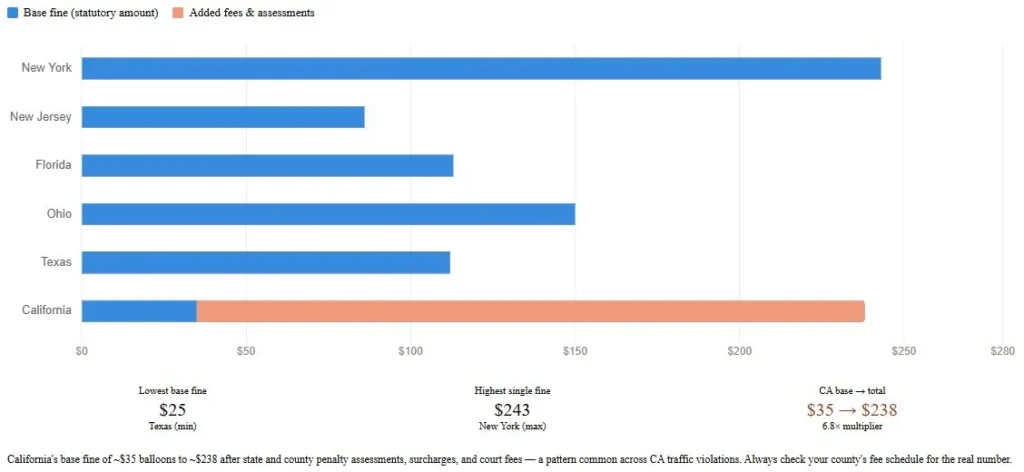
- Worth flagging: fines listed in state codes are often base amounts. By the time court fees, assessments and administrative costs are added California being a prime example the real out-of-pocket number can be two to three times the base figure. Always check your state’s actual fee schedule.
- One more thing on enforcement: Pennsylvania courts have upheld traffic stops made solely because an officer observed an unsignaled lane change. Probable cause established, stop valid. So the “nobody gets pulled over for that” assumption doesn’t always hold.
When Are You Actually Required to Use Hand Signals?
Not every drive demands you stick your arm out the window. But there are specific situations where hand signals go from optional courtesy to legal requirement and knowing the difference keeps you out of trouble.
The law kicks in when your vehicle’s signals are:
- Malfunctioning — a burned-out turn signal bulb, a broken brake light, electrical failure.
- Obscured — sun glare hitting your rear lights, dirt or mud covering the lenses, a trailer blocking visibility of your signals to following traffic.
- Absent — older vehicles, certain specialty or kit cars, some motorcycles without factory lighting setups.
The UVC language that every state adopted is clear: signals must be given by hand and arm or by approved signal lamps. When the lamps aren’t doing the job, the hand and arm takes over. It’s not a gray area.
A practical scenario worth thinking about, you’re towing a trailer and your trailer’s brake lights aren’t wired in yet or a connection failed mid-trip. The vehicles behind you can’t see your truck’s brake lights at all. That’s exactly the situation hand signals exist for. Pull over, assess and if you’re continuing, your left arm becomes your communication system until the lights are fixed.
One exception in the other direction: if your vehicle or load is so wide that your arm signal wouldn’t be visible anyway, specifically wider than 24 inches from the steering post or with rear overhang exceeding 14 feet hand signals don’t satisfy the law. Functioning lights become mandatory in those cases.
Best Practices: Using Hand Signals Safely and Effectively
Knowing the law is one thing. Actually executing a hand signal on a busy road, while maintaining vehicle control, is another. A few things that matter in practice:
- Signal early. The legal minimums 100 feet in urban areas, 200 feet or 5 seconds on highways are floors, not targets. The earlier following traffic sees your signal, the more time they have to react. Especially important on fast-moving roads.
- Make it visible. Roll the window fully down. Extend your arm completely a half-extended arm bent at the wrist doesn’t read clearly at 50 mph. The signal needs to be unambiguous to a driver two or three car lengths back.
- Hold it. Don’t flash the signal for a second and pull it back in. Keep it extended until the maneuver is clearly underway or complete.
- Combine with other cues. Hand signals work best alongside everything else you’d normally do checking mirrors, shoulder-checking, tapping the brakes lightly to warn drivers behind you that you’re slowing. A hand signal alone in heavy rain or low light has real limitations.
- Weather consideration. Rain, snow, heavy wind these reduce how well a hand signal communicates. In bad conditions, the priority shifts to getting your lights repaired as fast as possible. Hand signals are a legal backup, not a long-term solution.
- Right turns need extra awareness. The left-arm-up signal for a right turn is less intuitive to other drivers than a flashing indicator. Be especially conscious of vehicles on your right that may be closer and might miss the signal entirely.
Quick Reference: Hand Signal Checklist
- Window fully down.
- Left arm fully extended, correct position held.
- Signal given at least 100 ft before turn (200 ft / 5 sec on highways).
- Right hand remains on wheel.
- Signal held until maneuver begins.
- Mirrors and head check completed.
- Hazard lights on if emergency stop.

A Quick History: Where Hand Signals Actually Came From
Electric turn signals didn’t just appear on cars from day one. For a long time, your arm was the only option you had.
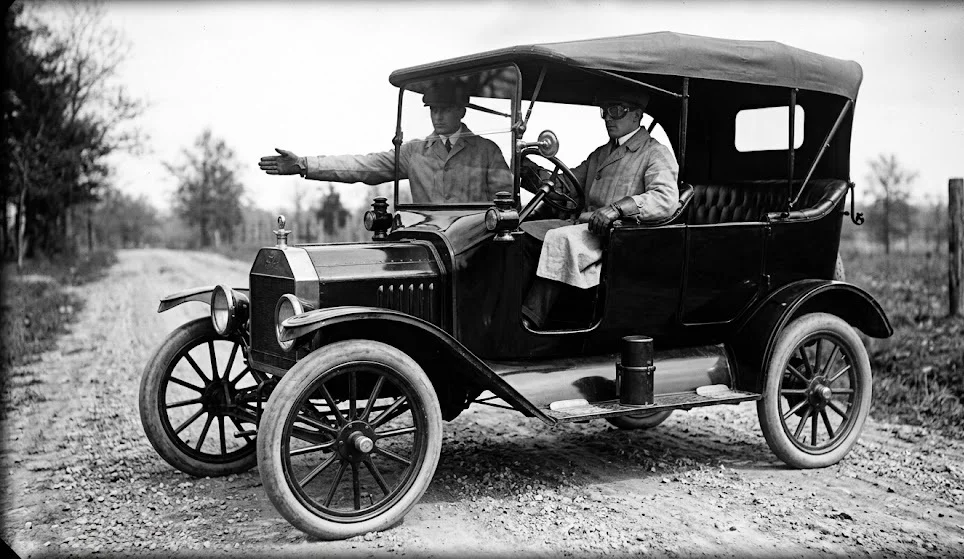
Early motorists in the 1900s, when cars were still sharing roads with horses and cyclists, relied entirely on arm gestures to communicate. There was no alternative. Mechanical “semaphore” arms showed up briefly on some vehicles in the 1920s and 30s, little hinged paddles that flipped out from the door pillar to indicate a turn. Neat idea, limited visibility, largely forgotten. Electric turn signals started appearing in the late 1930s and 40s but weren’t standardized or mandatory across vehicles for years after that.
So the hand signals baked into every state’s vehicle code today? They predate the technology that was supposed to replace them. And here’s the thing, they outlasted every intermediate solution. Semaphore arms are gone. Hand signals are still in the DMV handbook, still tested on road exams, still legally valid in 2026.
There’s something almost stubborn about that staying power. A driver in 1922 and a driver today are using the same three gestures. The roads are barely recognizable between those two eras, the communication system hasn’t changed at all.
Driver’s License Testing: Yes, They Still Test This
A lot of people assume hand signals are one of those things you memorize for the written test and never think about again. In many states, that assumption will fail you on your behind-the-wheel exam.
California’s DMV is explicit about it, examiners can ask you to demonstrate hand signals during the road test, even if your car’s lights are functioning perfectly. Texas and Florida include them in permit test question banks. New York’s licensing requirements reference them under the broader signaling statutes that examiners evaluate.
The pattern across states is consistent:
- Written/knowledge test: Expect at least one or two questions on correct hand signal positions. The left-arm-down for stopping trips people up more than the others.
- Behind-the-wheel exam: In states like California, examiners may verbally ask you to show a specific signal before or during the drive. Some ask you to name the position, others want to see the physical demonstration.
- DMV handbooks: All 50 states include hand signal diagrams. They’re not buried in an appendix, they’re in the core signaling section alongside turn signal rules.
If you’ve got a road test coming up, spend five minutes on this. It’s low-effort knowledge that occasionally shows up at a moment when nerves are already running high.
Putting It All Together: A Practical Summary
So here’s where everything lands.
Hand signals are not optional knowledge for trivia night. They’re a legal requirement when your vehicle’s lights can’t do the job and every state in the country, without exception, recognizes them as a fully valid substitute for mechanical signals. The three positions haven’t changed since drivers were navigating unpaved roads a century ago. Left arm out straight, left turn. Left arm bent up, right turn. Left arm bent down, slow or stop.
Miss a signal when you’re required to give one and you’re in moving violation territory. Fines, points, potential insurance consequences. Miss a signal and cause a crash and you’re potentially liable in civil court too.
A few things worth carrying forward from everything covered here:
- Fix broken lights immediately. Hand signals are a backup, not a permanent workaround. They’re less visible, weather-dependent and require one hand off the wheel.
- Know the distances. 100 feet minimum before turning in urban areas. 200 feet or 5 continuous seconds on highways in many states. Signal earlier than the minimum when you can.
- The left-arm-up for right turns throws people. It’s counterintuitive the first few times. Practice it so it’s automatic, not something you have to think through in a moment when you also need to be watching traffic.
- Cyclists and motorcyclists get some flexibility on right turns, right arm extended straight works in most states but the left-arm method is always acceptable.
- Review your state’s DMV handbook for the exact diagrams and distance requirements. They all match the national standard, but local specifics on fines and testing procedures vary.