 Mohammad Ahsan
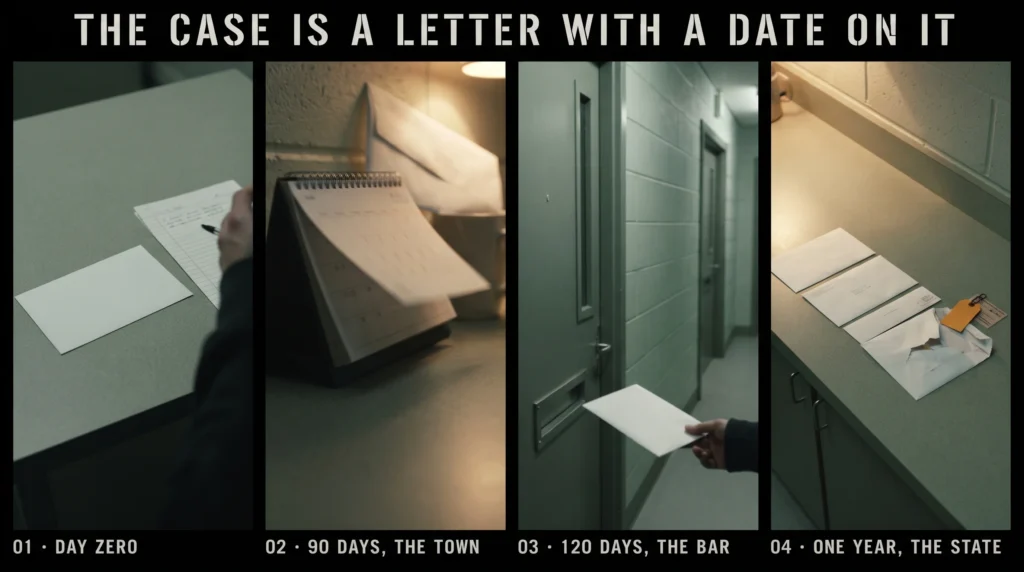
That letter from the Department of Health says someone has complained about you and they have started looking into it. That is all it says. No one has decided anything yet, and no one can for a while. Before the Board of Nursing can do a thing to your license the case has to go through six stages, and you get a say in three of them.
In short: you have 20 days to answer the letter, another 20 days to answer the file once they have built it, 10 days of privacy after the panel votes, and 21 days to pick how you fight the formal complaint. Then the Board decides. Please read the table first, because the deadlines are what catch people, and they are all in it.
Who Investigates The Complaint And Who Decides What Happens To You
Two offices are involved and people mix them up all the time. The Department of Health does the investigating and, if it comes to that, the prosecuting. The Board of Nursing does the deciding. The process itself sits in chapter 456 of the Florida Statutes, the same chapter every licensed profession in the state goes through, while the list of things a nurse can be disciplined for sits in chapter 464, section 464.018.
Who complains? Employers mostly, then patients and their families, coworkers, pharmacies, the police. Some cases open with no complainant at all, because a hospital reported a positive drug test or a court reported an arrest, and the Department has to open a file when that lands on its desk.
The Board is there for the public. The law says so in as many words, and it says nothing about being there for you. Count the people in that room who are on your side. You, and whoever you hire. Lauren A. Leikam, PLLC in Tampa does this work for nurses all over Florida, and a firm like that would rather see your letter on day one than your formal complaint on day two hundred.
The Six Stages On One Page
| Stage | What happens | Your deadline | What it means for you |
| 1. Letter of investigation | The Department tells you a complaint exists and sends a copy | 20 days to send a written response | The panel must read what you send |
| 2. Investigation | Records get pulled, witnesses get interviewed, a nurse expert may review your care | None for you, though an emergency order can be issued during it | Anything you tell the investigator goes in the file |
| 3. Rebuttal | You receive the investigative file | 20 days from mailing | Your last chance to change the file before the panel reads it |
| 4. Probable cause panel | Board members vote on the file | None for you | Dismissal, a letter of guidance, or a formal complaint. Public 10 days after a finding |
| 5. Administrative complaint | The Department files formal charges | 21 days to elect your rights | Settle, an informal hearing, or a formal hearing at DOAH |
| 6. Board decision | The Board enters a final order | 30 days to appeal | Fine up to $10,000 per count, probation, suspension or revocation, all of it public |
Stage One: The Letter And Your 20 Days
You get a copy of the complaint with the letter, and you get 20 days from the day it was served to answer it in writing. That comes from section 456.073(1). The same section says the <u>probable cause panel</u> has to read what you send, so the people who vote on your case will have your words in front of them, provided you sent any.
The letter will also invite you to call the investigator and tell your side. Admittedly the investigator will be nice about it. Many of them are nurses themselves, or were police officers, and they are good at making a phone call feel like a chat. You will feel like you are chatting. The investigator is writing a statement while you talk, and that statement goes in your file right behind the complaint.
Answer the letter in writing, inside the 20 days, and do not say anything on the phone that you have not already written down.
Two more things about this stage. If you cannot make 20 days because you are waiting on records, write to the Department and ask for more time before the deadline passes, and they will usually give it. And if the Department thinks telling you would spoil the investigation, the same section lets it hold the letter back. Some nurses never get one. The first they know of a complaint is an investigator standing at the nurses’ station asking for ten minutes.
Stage Two: The Investigation, And The Emergency Order That Can Come With It
The investigator pulls records. The patient’s chart, your personnel file, the Pyxis or Omnicell logs, the drug test, whatever the complaint touched. They interview the person who complained, then your coworkers, then you if you agreed to it. If the complaint says your care fell below standard, the chart goes to a nurse consultant who writes an opinion, and that opinion becomes what the whole case gets argued about.
Unfortunately, the law puts no clock on this stage. Six months is normal and some run a year, and your license shows clean on the public lookup the whole time.
Emergency Suspension Orders Under Section 120.60(6)
If the Department decides you are an immediate danger to patients, it does not wait. The State Surgeon General signs an <u>emergency suspension order</u> and your license is gone that day, before any panel has met. Your 20 days to answer does not stop it. Section 456.073(1) says so.
These orders get used in a short list of cases:
- taking drugs from a hospital or pharmacy
- a positive drug test at work, or being found impaired on shift
- certain arrests, mostly ones involving patients or controlled drugs
- working while a suspension was already in force
The order is public the same day. It shows on the license lookup and you cannot work. You can ask for a fast hearing and you can appeal to the District Court of Appeal, and neither one lifts the suspension while you wait.
If the complaint involves drugs, alcohol or being impaired on duty, get advice before you answer anything, because what you write back can be what gets the order signed.
Impairment Cases And The IPN
Florida has a program for nurses whose problem is alcohol, drugs or a mental health condition that is getting in the way of their work. The Intervention Project for Nurses, the IPN, runs it under section 456.076. If the complaint is that kind of complaint, the Department can send you to IPN instead of prosecuting you, and if you go in and do what the program says, the case can close with nothing on your record.
Granted, IPN is neither cheap nor easy. You pay for the evaluation. You pay for whatever treatment the evaluator orders. You sign a monitoring contract that commonly runs for years, with random tests, limits on where you can work and quarterly reports. Nurses who quit halfway get a new case opened for quitting.
An IPN referral can keep the case off the public record, and no Board order ever will, so have a lawyer who has seen both ends of it read the contract before you sign.
Stage Three: Your Rebuttal To The Investigative File
When the investigation is done, the Department mails you the whole file, and you get 20 days from the mailing date to answer it. Extensions are possible if you ask in time. This is the first time you see everything they have, including the nurse consultant’s opinion if there is one.
Most nurses do not bother with this one. It looks like more paperwork. The panel decides your case on that paperwork.
What can go in your answer that the investigator never had:
- your own nurse expert’s opinion, answering theirs point by point
- the facility’s written policies, where you followed them and the complaint assumes you did not
- the staffing sheet for that shift, the patient load, who else was on
- statements from coworkers the investigator never called
- your training and continuing education records
Put everything you have in at this stage. The panel never sees anything else.
Stage Four: The Probable Cause Panel, And The Ten Days Before It Goes Public
The panel is two or three Board members on a phone call. They have 30 days from getting the final report to decide, under section 456.073(4). They vote on the file alone. Neither you nor your lawyer is on the call, and no one testifies.
Three things can come out of it:
- No probable cause. The case closes and stays confidential. You get a letter saying so.
- A <u>letter of guidance</u>. The panel issues it instead of a finding. It is neither discipline nor public, though it stays in your Department file and gets counted if a second complaint ever comes.
- Probable cause found. The panel tells the Department to file a formal complaint.
Until this point everything has been confidential, and it stays that way for 10 more days after a finding, under section 456.073(10). From the eleventh day anyone can ask for the file. The complaint shows on the Department’s license lookup as a pending case, and the recruiter at the hospital where you just applied can read it along with everyone else.
Ten days after the panel votes yes, your employer can read the complaint online. Indeed, plenty of nurses hear the result from their manager, who read it online before they did.
Stage Five: The Administrative Complaint And Your 21 Days To Choose
The <u>administrative complaint</u> is the formal charge sheet. Each count names a ground under section 464.018 or 456.072 and the facts the Department says it can prove. Stapled to it comes a form called the <u>election of rights</u>.
You have 21 days from receiving it to send that form back. That is Rule 28-106.111. Let the 21 days pass and you have given up your right to a hearing, and the Board can enter an order on the facts exactly as the Department wrote them. The form gives you four boxes, and you cannot change your mind after you tick one:
- Settlement. You and the Department’s lawyer agree a penalty and write it up as a stipulation. The Board has to approve it at a public meeting, and the Board does send soft ones back with a counter offer.
- Informal hearing before the Board. You are not disputing the facts, only the penalty. You stand in front of the Board, make your case, and they decide that day.
- Formal hearing at the Division of Administrative Hearings. You dispute the facts. An administrative law judge hears witnesses and writes a recommended order. The Board can change the judge’s conclusions of law, but it cannot touch the findings of fact if the record supports them.
- No response. Treated as a waiver. The facts count as admitted.
True, the formal hearing costs more and takes longer. But only there does the Department have to prove anything, and it has to prove it by clear and convincing evidence. The Florida Supreme Court set that bar in Ferris v. Turlington back in 1987, and it is higher than the bar a civil jury works to.
Do not tick the informal hearing box to save money if you dispute even one fact in the complaint, because an informal hearing means you have admitted all of them.
Stage Six: What The Board Can Actually Do To Your License
Once a violation is found, the Board picks from the list in section 456.072(2):
- refuse to renew the license
- suspend it, for a fixed time or until you have done something
- revoke it
- restrict it, such as no home health, no agency work, no access to narcotics
- fine you up to $10,000 for each count
- reprimand you
- put you on probation, with conditions like supervision, extra courses, IPN and quarterly reports from your employer
- order corrective action, remedial education, or a refund of fees
On top of whichever it picks, the Board can bill you for the cost of the investigation and the prosecution under section 456.072(4), and in a case that went to a formal hearing that bill runs into thousands of dollars.
The Board cannot just pick what it likes. There is a rule, 64B9-8.006, with a range for every ground in section 464.018, a column for a first offense and a column for a second, and the Board can only go outside the range if it names an aggravating or mitigating circumstance for doing so. So the first thing your lawyer works out is which line of that rule you are on and where in the range the facts put you.
Whatever the Board orders goes on your license for good. It gets reported to Nursys and to the National Practitioner Data Bank, where every future employer and every other state’s board can see it. If you hold a multistate license under the Nurse Licensure Compact, the multistate privilege goes with it. You can appeal to the District Court of Appeal, and you have 30 days from the order to file.
Even a reprimand and a $500 fine stays on your license, in public, for the rest of your working life.
The 30 Day Rule Nurses Break Without Knowing
If you are convicted of a crime, found guilty of one, or plead no contest to one, anywhere in the country, you have 30 days to tell the Board in writing. Withhold of adjudication or not. That is section 456.072(1)(x), and missing it is a violation on its own.
Most nurses who break this rule did not know it existed. Their lawyer in the criminal case told them a withhold means nothing happened, which is true for a job application and false for the Board. A no contest plea to a misdemeanor that you took to make the thing go away is a reportable event, and the 30 days started the day you stood in court.
A withhold of adjudication is still a plea, and the 30 days to report it start the day it is entered.
The things get expensive when the crime itself was never going to cost you the license and the not reporting does. A DUI with no patient involved might have earned a letter of guidance. Nurses have ended up on probation for the same DUI because the Department found the plea on its own months later and added a count for not reporting it.
Alas, the opposite mistake is as common. A nurse whose criminal charge got dropped assumes the license case drops with it, and it does not work that way. The Board has its own grounds and its own standard of proof, and the Department can prove what happened at DOAH without any conviction at all.
When A Lawyer Changes The Outcome, And When It Is Too Late
A nursing license defense attorney helps at three points, and the earliest is the letter:
- At the letter, because the written answer and the decision about talking to the investigator decide what the file looks like for every stage after
- At the rebuttal, because only an independent expert opinion answers the Department’s expert
- At the election of rights, because the box you tick cannot be unticked
By the time the 21 days have run, or the informal box has been ticked, or the whole story has been told to the investigator in week one, there is not much left for anyone to do. Every unit has a nurse who put the letter in a drawer and hoped. Twenty days is not long when you are doing four twelves a week, and the Department writes its letter knowing that.
This article gives general information about the Florida nursing disciplinary process and is not legal advice for any particular case.