 Michael Ettinger (Newyork Lawyer)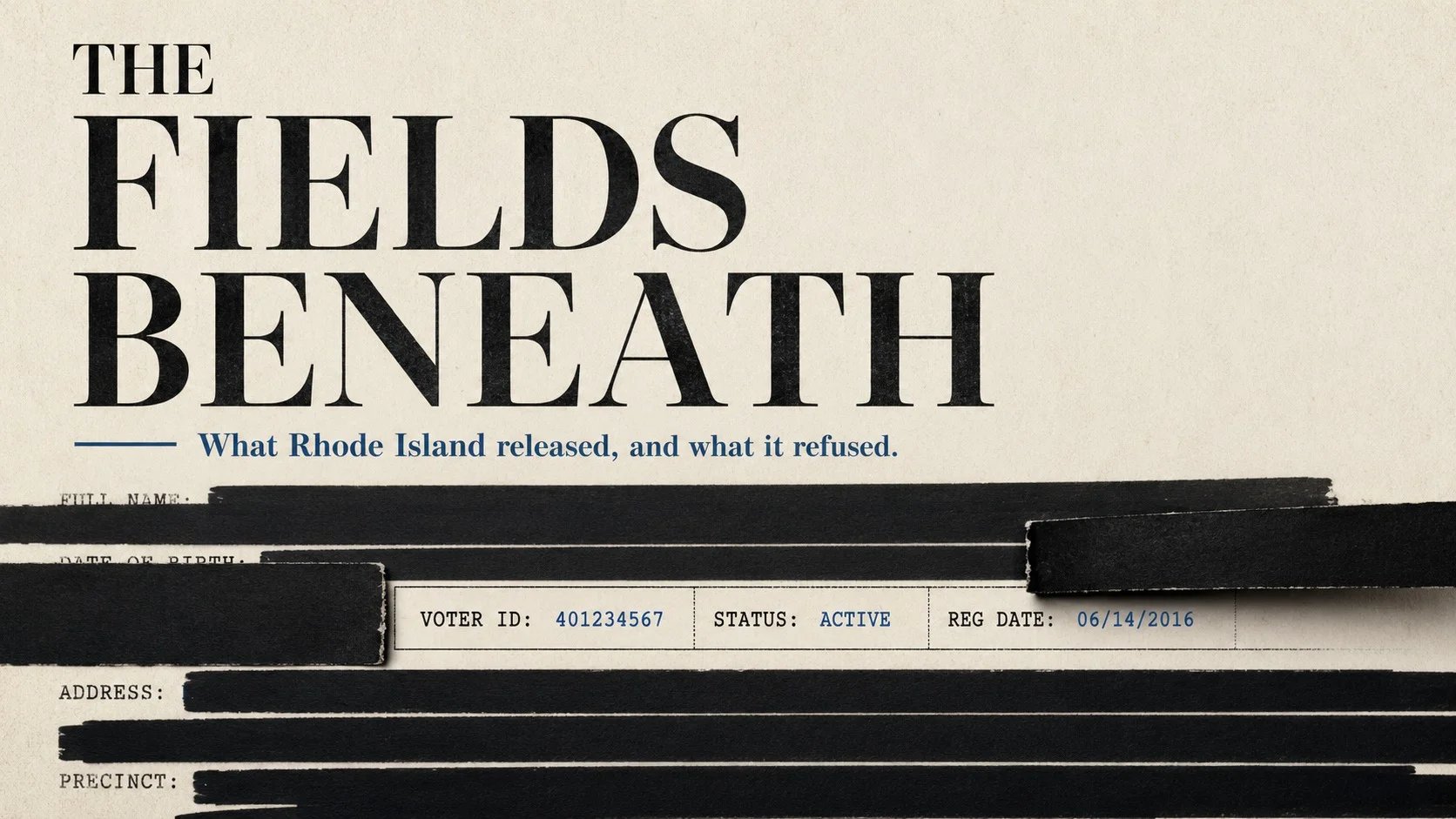
The letter arrived at the Rhode Island Secretary of State’s office asking for something no administration had requested before — an unredacted copy of the entire statewide voter registration list, driver’s license numbers and partial Social Security numbers included, covering nearly 750,000 registered voters. Gregg Amore’s answer split the baby in a way that would end up defining the whole case and I’ll come back to that, because the distinction he drew is the single most misunderstood thing about this lawsuit.
| Case | United States v. Amore, No. 1:25-cv-00639 (D.R.I.) |
| Filed | December 2025, by the U.S. Department of Justice |
| What DOJ wanted | Unredacted voter roll — incl. driver’s license numbers, last four SSN digits |
| Ruling | Dismissed April 17, 2026 — Judge Mary McElroy |
| The quote | A “fishing expedition” |
| Status | DOJ has appealed to the First Circuit |
One of 30 Lawsuits and Rhode Island Wasn’t Special
Context matters here, because Rhode Island wasn’t singled out. The Justice Department under President Trump sued 30 states and the District of Columbia seeking unredacted voter files, saying the data was needed to probe compliance with federal election laws — the demands started rolling out to states in summer 2025 and a December round of suits caught Rhode Island alongside five other states.
Officials in Providence worried openly about where the data would go and those worries turned out to be well-founded; at a March hearing, the DOJ’s own voting-section chief said the plan included sharing the data with the Department of Homeland Security to confirm whether registered voters are citizens. Critics, including the ACLU, saw the outline of a national voter database being assembled without congressional authorization — states run American elections and there’s a reason no such federal database exists.
December 2, 2025: The DOJ Sues
Rhode Island’s refusal put it in the December round of lawsuits, filed alongside Vermont, Washington and others — part of a campaign that eventually reached 30 states plus D.C., per a Brennan Center tracker. The complaint, docketed as No. 1:25-cv-00639 in Providence federal court, rested primarily on Title III of the Civil Rights Act of 1960, a records provision Congress wrote to help detect racial discrimination in voting, alongside compliance arguments under the National Voter Registration Act and HAVA. The theory: federal law entitled the government to the full, unredacted file.
January 6, 2026: Rhode Island Voters Join Their Own Defense
Three individual voters — Catherine Saunders, Stuart Waldman and Julia Sanches and Common Cause won the right to intervene as defendants, represented by the ACLU and it’s Rhode Island affiliate. Their argument went past the statutory question to what the data was for; Common Cause’s executive director would later describe the endgame as an unauthorized national voter database, “a goldmine for hackers and a tool for intimidation.”
March 26, 2026: The Hearing Where the Case Cracked
Under questioning from U.S. District Judge Mary McElroy, the acting chief of the DOJ’s voting section confirmed two things that would sink the government’s position. First, the plan for the data included sharing it with the Department of Homeland Security to check whether registered voters are citizens. Second and stranger — the government conceded there was no factual suspicion of fraud behind the demand at all, arguing instead that Title III’s mere existence supplied a legal basis. The demand was lawful, in other words, because the statute that authorized demands existed. McElroy would have things to say about that circle.
A week before her ruling, a Massachusetts federal judge dismissed the nearly identical case across the state line and on April 14 the DOJ asked the Rhode Island court for permission to send Amore a “curing” letter — a do-over that would supply the factual basis the first demand never had.
April 17, 2026: Dismissed
McElroy’s 14-page opinion spends most of its length on background and roughly five pages taking the government’s arguments apart. Neither the NVRA nor HAVA, she wrote, authorizes the DOJ “to conduct the kind of fishing expedition it seeks here,” and Congress could not have intended Title III to permit factually groundless demands through the “redundant and circular” reading the government offered. She leaned on the Massachusetts dismissal and a growing pile of DOJ losses in California, Michigan and Oregon, denied the motion to compel and dismissed the case.
The opinion also cataloged what Rhode Island already does to keep its rolls accurate — monthly checks against the state death registry and the Social Security Administration’s Death Master File, annual verification mailings, ERIC membership. The list-maintenance record the government claimed to be investigating was documented in state law the entire time.
June 2026: The Appeal
The DOJ filed its notice of appeal with the First Circuit, where Attorney General Peter Neronha — whose office defended Amore — says he’s prepared to defend the ruling, adding in a statement that the department has been “compromised” and is focused on “doing the president’s bidding.” One wrinkle worth knowing before the appellate briefs land: the First Circuit is the same court that ruled in a 2024 Maine case, PILF v. Bellows, that states must make their public voter lists available under the NVRA. The two positions coexist because Amore never withheld the public list — only the fields beneath it — and that distinction is now the ground the appeal will be fought on.