 Muhammad Usman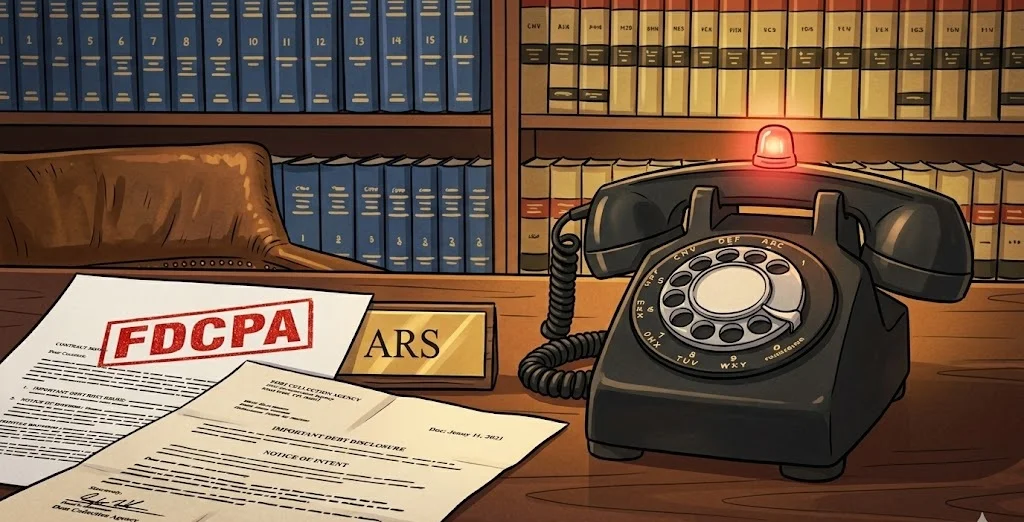
A few years back, a colleague of mine got a voicemail. Robotic voice, unknown number, said something like “this is an attempt to collect a debt” and she had absolutely no idea who had called. She ignored it for two weeks. Turns out it was a legitimate collector, but the damage was done: confusion, anxiety, delayed response. That situation? It’s exactly what the FDCPA was written to prevent.
And it’s almost exactly what happened to Elaine and William Levins.
Who Is HRRG and Why Does It Keep Showing Up in Lawsuits?
Healthcare Revenue Recovery Group, LLC most people encounter it as ARS Account Resolution Services is a Florida-based debt collection agency. It’s specialty is medical debt, working on behalf of hospitals, physician groups and healthcare systems trying to recover unpaid balances.
Headquartered in Sunrise, Florida, HRRG operates across multiple states. In New Jersey, it’s registered as “ARS Account Resolution Services.” That registered name matters a lot, as we’ll see.
On paper, HRRG does what most collectors do: phone calls, voicemails, letters, credit reporting. Standard stuff. But it’s been a repeat defendant in federal court class actions targeting it’s voicemail scripts, envelope designs, debt validation language and more. Some settlements have exceeded $500,000. That’s not a one-off compliance slip. That’s a pattern.
The Levins Case: What Actually Happened
The Levinses had a medical debt. It got assigned to HRRG. Then their phone started getting calls pre-recorded voicemails that said, roughly:
“ARS calling. Please return our call at 1-800-694-3048. ARS is a debt collector. This is an attempt to collect a debt…”
That was it. “ARS calling.”
Here’s the thing, neither Elaine nor William Levins had ever received a letter from HRRG before those calls. They had no written communication establishing who “ARS” was. And “ARS” isn’t exactly an uncommon acronym in the debt world. There’s ARS National Services, Inc., another debt collector. Dozens of New Jersey businesses use those same initials.
So the Levinses did what any reasonable person would do: they had no idea who was calling them.
They sued. Class action. Three claims under the Fair Debt Collection Practices Act (FDCPA):
- § 1692e(14): Using a name other than the collector’s “true name”.
- § 1692d(6): Failing to meaningfully disclose the caller’s identity.
- § 1692e(10): Using false or deceptive means to collect a debt.
The district court in New Jersey dismissed the case. The Levinses appealed to the Third Circuit. That’s where it got interesting.
Breaking Down the Third Circuit’s Analysis
The Third Circuit applied what’s called the “least sophisticated debtor” standard basically, how would the most vulnerable, most easily confused consumer interpret this? Not the sharpest person in the room. Not a lawyer. Someone who might genuinely not know their rights.
Under that lens, here’s what the court found:
§ 1692e(14) — The True Name Rule: HRRG Lost This One
This is the big one. The FDCPA says collectors must use their “true name” which, drawing on FTC guidance, means:
- Their full legal business name or
- The name they usually transact business under or
- A commonly used acronym but only if it’s consistently used and not misleading
“ARS” failed all three. It’s not HRRG’s full name. It’s not the name they’re primarily known by. And it’s definitely not a uniquely identifiable acronym not when another debt collector literally goes by “ARS National Services.”
The court vacated the dismissal on this claim. Remanded for further proceedings. The Levinses had a plausible case.
§ 1692d(6) — Meaningful Disclosure: HRRG Won This One
This section is about harassment — specifically, calling people repeatedly without identifying yourself. The messages did say “ARS is a debt collector” and explained the purpose of the call. That clears the bar for “meaningful disclosure,” even if the name was ambiguous.
The court leaned on Hart v. Credit Control, LLC (11th Cir. 2015) here — which held that voicemails just need to state the company name and debt collector status. The Levinses didn’t allege harassment either. So this claim didn’t survive.
§ 1692e(10) — Deceptive Means: Also HRRG
The messages weren’t materially deceptive. They stated the collection purpose clearly. Even a confused debtor would understand someone was trying to collect money. Claim dismissed.
The opinion was unanimous. No dissents.
Why This Case Actually Matters (Beyond Just HRRG)
Think about how many debt collectors use shortened names or trade names in their automated systems. “This is ABC calling.” “Message from XYZ Services.” If that acronym or abbreviation isn’t uniquely tied to your company, if someone googling it might land on three different businesses you’ve got a § 1692e(14) problem waiting to happen.
The Levins decision drew a line that a lot of compliance teams weren’t watching closely enough:
- ✅ Using a well-known DBA consistently associated with your company? Probably fine.
- ✅ Using your full registered business name? Obviously fine.
- ❌ Using a three-letter acronym that also belongs to your competitor in the same industry? Not fine.
What’s also notable: the court specifically said that complying with § 1692d(6) — the “meaningful disclosure” rule — doesn’t automatically mean you’ve complied with § 1692e(14). These are different standards. You can pass one and fail the other. Collectors who assumed one checkbox covered both got a rude awakening.
Total FDCPA suits filed (2023)
7,190
+41% vs 2015
Voicemail / communication cases (2023)
1,940
+183% vs 2018 baseline
Share of voicemail cases (2023)
27%
Up from ~9% in 2015
Source: FTC Annual Reports on FDCPA activity & Consumer Sentinel Network. Voicemail subcategory estimates derived from CFPB complaint data and published litigation analyses. ftc.gov/reports/annual-highlights-2023
HRRG’s Other Legal Troubles — This Isn’t Isolated
The Levins case didn’t come out of nowhere. HRRG has a litigation history that reads like a compliance checklist of what not to do:
Caprio v. HRRG (3d Cir. 2013)
A collection letter told debtors to “please call” in a way that allegedly overshadowed their right to dispute the debt under § 1692g. The Third Circuit reversed dismissal. This was before Levins same court, same standard.
Morales v. HRRG (3d Cir. 2021)
Barcodes printed on envelopes. Seems minor, right? But those barcodes, when scanned, revealed the debt collection nature of the mail potentially violating § 1692f(8), which restricts what can appear on collection envelopes. Settled.
Mushaeva v. HRRG (E.D. Pa. 2018)
Pennsylvania’s Act 6 caps interest on medical debts. HRRG allegedly didn’t apply that reduction properly. Class action, settled.
Redd v. HRRG (N.D. Ill. 2022)
FCRA and FDCPA claims for inadequate dispute investigations. Court sided with HRRG here plaintiff couldn’t show concrete harm. This one actually shows the post-Spokeo standing requirements working in a collector’s favor.
Faulise v. HRRG
Allegations of attempting to collect debt that wasn’t owed at all. Confidential resolution.
The through-line? Voicemail scripts, letter language, envelope design, interest calculations. These aren’t exotic edge cases. They’re everyday operational stuff that, done wrong, generates class actions.
How Levins Fits Into the Broader FDCPA Landscape
Levins didn’t exist in a vacuum. Courts across the country have wrestled with similar questions:
| Case | Court / Year | Key Holding | Connection to Levins |
|---|---|---|---|
| Hart v. Credit Control, LLC | 11th Cir. (2015) | Voicemail disclosing company name + debt collector status satisfies § 1692d(6) | Cited directly in Levins; helped define ‘meaningful disclosure’ threshold |
| Zortman v. J.C. Christensen & Assocs. | D. Minn. (2011) | Voicemail without debt details may not qualify as a ‘communication’ under FDCPA | Influenced CFPB’s limited-content message rule; different angle on voicemail compliance |
| Smith v. University Community Hospital | M.D. Fla. (2019) | Using multiple creditor names can confuse debtors, triggering false name issues | Mirrors Levins ambiguity concern — different entity names, same confusion risk |
| Perez v. McCreary | 5th Cir. (2022) | Statutory FDCPA violation alone doesn’t create standing — need concrete harm | Post-Levins development; limits similar claims where plaintiff shows only confusion, not injury |
| Monroe v. AssetCare | S.D. Tex. (2020) | Collecting time-barred debt without disclosures = FDCPA violation; $41M debt waiver | Shows scale of class action exposure when deceptive practices go unchecked |
One thing worth flagging: the Perez v. McCreary decision from the Fifth Circuit represents a genuine circuit-level shift. Post-Spokeo v. Robins (2016, U.S. Supreme Court), courts increasingly ask okay, was there actual harm here? Confusion alone may not cut it. That’s a real defense for collectors in some jurisdictions. But the Third Circuit, where Levins lives, hasn’t fully embraced that narrowing. So geography matters for these cases.
New Jersey · Pennsylvania · Delaware
Covers: NJ, PA, DE + U.S. Virgin Islands
FDCPA standing: confusion alone may suffice — broader consumer protection posture. Home of Levins v. HRRG (2018).
Texas · Louisiana · Mississippi
Covers: TX, LA, MS
FDCPA standing: concrete harm required beyond statutory violation — narrower post-Spokeo interpretation. See Perez v. McCreary (2022).
Source: uscourts.gov — Court Role and Structure. Circuit boundaries per 28 U.S.C. § 41. FDCPA standing interpretations per published circuit court opinions.
What Consumers Should Know
If you’ve ever gotten a voicemail from a name you don’t recognize claiming to collect a debt, you’re not alone and you have rights.
Under the FDCPA, you can:
- Request debt validation in writing within 30 days of first contact the collector must verify the debt is real and belongs to you.
- Dispute the debt if you believe it’s incorrect or not yours.
- Demand the collector stop contacting you they’re legally required to comply.
- Sue for violations statutory damages up to $1,000, plus actual damages and attorney’s fees.
The Consumer Financial Protection Bureau (CFPB) has a solid breakdown of these rights. Their Debt Collection Rule, effective November 2021, also introduced “limited-content messages” a specific type of voicemail that collectors can leave without triggering full FDCPA disclosure requirements. But even those messages have rules. And they still can’t mislead you about who’s calling.
If something feels off about a debt collection call wrong name, wrong amount, won’t identify themselves clearly document everything. Date, time, what was said. That record matters if you ever need it.
The Bottom Line
The Levins case is a small case with a loud lesson. Three letters — A, R, S — created enough ambiguity to land a healthcare debt collector in federal appellate court and cost them a remand on a class action claim.
For collectors: your name in an automated voicemail isn’t just branding. It’s a legal statement. If the least sophisticated debtor couldn’t tell it was you calling and not some other “ARS” company, that’s a problem the courts will take seriously.