 Drew Oldham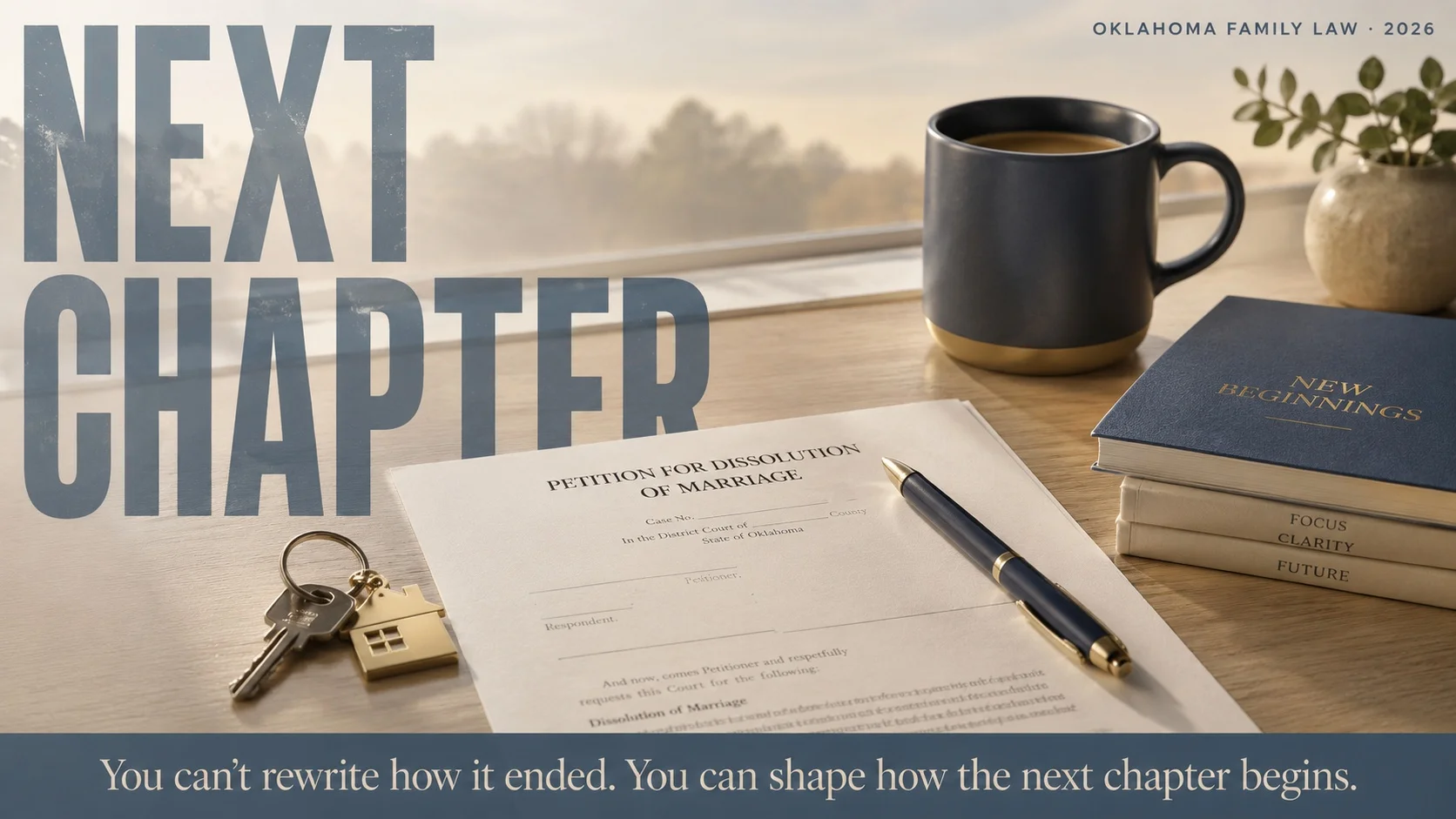
The decision wasn’t made during the argument. It came three days later while folding laundry.
Funny how life’s biggest moments rarely announce themselves. There’s no dramatic soundtrack. No slow-motion exit. Just a quiet realization that the marriage you’ve spent years building isn’t the one you’re living anymore.
Then the questions start.
“Who keeps the house?”
“What happens with the kids?”
“Do I even qualify to file?”
If your search history suddenly looks like it belongs to a first-year law student, don’t worry. You’re in good company. Understanding Oklahoma divorce law won’t make the decision easier, but it can make the road ahead a lot less intimidating.
Before You File… There’s One Box You Have to Check
Let’s get the least exciting part out of the way first.
Residency.
Oklahoma requires at least one spouse to have lived in the state for six months before filing for divorce. It’s not complicated, but it is mandatory. Think of it as the cover charge before you can enter the legal process.
Most cases are filed in the county where either spouse currently lives. Simple enough.
One hurdle down.
You Don’t Need a Smoking Gun
Despite what courtroom dramas would have you believe, divorce isn’t always about proving someone did something terrible.
Sometimes two people simply stop working as a couple.
Oklahoma recognizes no-fault divorce based on incompatibility, which means you don’t have to convince a judge that someone is “the bad spouse.” Life happens. Relationships change. The law acknowledges that.
Of course, fault-based grounds still exist. Adultery, abandonment, fraud, habitual drunkenness, imprisonment and extreme cruelty remain legal reasons for filing and may influence certain issues depending on the circumstances.
Need reliable information before you begin? The Oklahoma State Courts Network provides court forms, filing instructions and family law resources that explain the process without the legal jargon overload.
Who Gets What? (Spoiler: It Isn’t Always Half.)
Here’s one of divorce’s biggest myths. Everything gets split 50-50. Not in Oklahoma.
The state follows equitable distribution, which is really just legal language for fair isn’t always equal. Judges look at the entire picture rather than reaching for a calculator.
That includes:
- The length of the marriage
- Each spouse’s financial contributions
- Contributions inside the home, including raising children
- Whether assets are marital or separate property
Every marriage has it’s own financial fingerprint. It makes sense that every divorce would too.
When Kids Are Involved, The Conversation Changes
Arguments about furniture eventually fade. Parenting decisions don’t.
Oklahoma courts focus on one question above all else: What’s best for the child?
Judges consider each parent’s ability to provide stability, maintain healthy relationships, communicate effectively and meet the child’s emotional and physical needs. Shared custody is often encouraged when it benefits the child, but there’s no cookie-cutter solution.
Honestly, there shouldn’t be. The Oklahoma Department of Human Services also offers guidance on child support, parenting plans and family resources that many parents find helpful during the transition.
The Most Boring Part Might Save You the Biggest Headache

Let’s talk paperwork. Yes, everyone hates paperwork. Still, this is where preparation quietly becomes your superpower.
Gather your tax returns, bank statements, retirement accounts, mortgage records, insurance policies, employment information and outstanding debts before filing. The more organized your financial picture is today, the smoother negotiations are likely to be tomorrow.
It’s not exciting. Neither is changing the oil in your car, but skipping it usually costs more.
The Earlier You Ask Questions, the Better
A surprising number of people wait until everything has fallen apart before talking to an attorney.
It’s understandable. It’s also rarely ideal.
Early legal guidance helps you understand your options before temporary decisions become permanent ones. It also helps separate facts from assumptions, which, during a divorce, can be surprisingly valuable.
For families throughout the Tulsa metro, a Broken Arrow divorce attorney like Christopher Eggert handles divorce, child custody, property division and related family law matters while helping clients understand Oklahoma law before important decisions are made.
Don’t Chase a Fast Divorce. Chase a Smart One.
When emotions are running high, speed feels like the goal. Just get it over with.
But here’s the catch: divorce paperwork may last a few months. The decisions inside that paperwork can shape the next twenty years.
Who keeps the retirement account?
How will parenting time work during holidays?
Can the mortgage realistically be maintained?
Those aren’t questions worth rushing. A thoughtful divorce often feels slower in the moment, but faster to recover from later.
The Bottom Line
Nobody plans to become an expert in Oklahoma divorce law. Life simply hands you the assignment.
The good news is that preparation changes everything. Understanding residency requirements, knowing how property is divided, gathering financial records and getting legal guidance early can remove much of the uncertainty from an already difficult chapter.
You can’t rewrite how your marriage ended. You can absolutely influence how your next chapter begins.