 Peter Gemma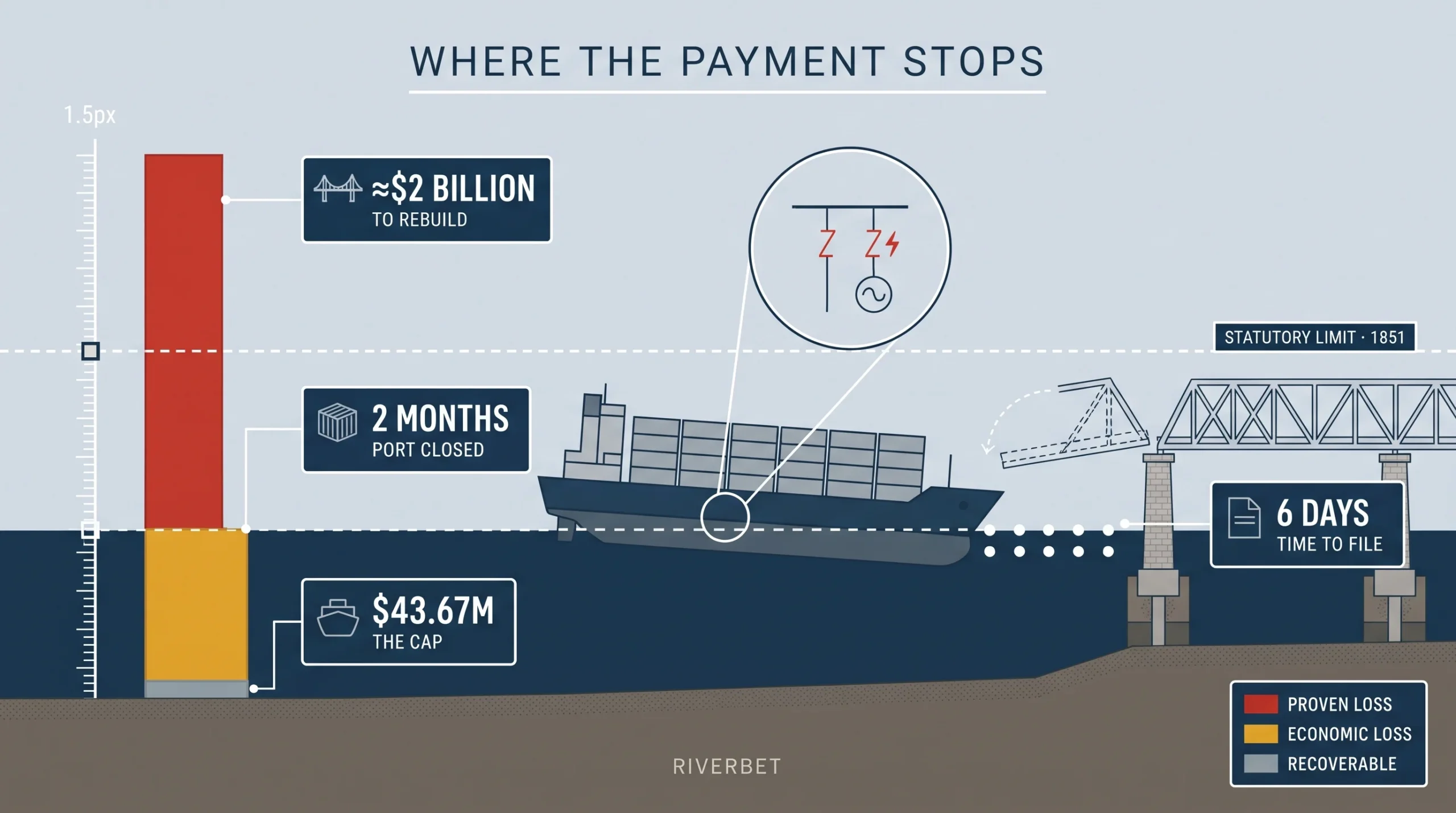
We all saw the video on March 26, 2024, around 1:30 in the morning. A container ship the size of three football fields was losing power in the Baltimore harbor, the lights went off, came back, went off again and it drifted straight into the Francis Scott Key Bridge. The bridge came down in seconds. Six men who were filling potholes on the road deck died in the water and two more survived.
Now tell me, whose fault is this?
The ship’s. Anyone with eyes can say it and the government said it too, in writing, six months later. The Justice Department went to court and said the Dali had left the dock with a jury rigged power system that had failed before, that the crew did not drop the anchor in time and that a ship does not hit a bridge like that unless somebody has mismanaged it.
So what are you wondering what happened next?
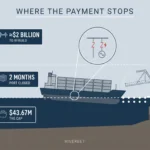
Six days after the bridge fell, before the families had buried anyone, the ship’s owner and the ship’s manager filed a paper in federal court in Baltimore. They asked to be found not at fault at all and if they were at fault, they asked that everything they owe to everyone, the six families, the state of Maryland, the port, the businesses, be capped at what they said the wrecked ship and it’s cargo were worth after the crash.
- 43.67 million dollars, against a bridge that is going to cost the better part of two billion to put back, six lives and a port that was shut for two months.
The Law They Used Is From 1851
It is called the Limitation of Liability Act. Congress passed it in 1851 to help American ship owners compete with the British, who had something like it already. The idea in 1851 was simple enough, a ship owner in New York could not know what his captain was doing in the middle of the Atlantic, so if the ship was lost the owner should only lose the ship, not his house and everything else.
Fine, in 1851. There was no radio. Today the owner is on a video call with the bridge crew every morning.
The law is on the books today, 46 U.S.C. 30523 if you want to look it up and it is being used.
- The owners of the Titanic used it in 1912.
- The owner of the Conception, the dive boat that burned off California in 2019 with 34 people asleep below deck, filed under it inside the week.
And the Dali owners used it and in January 2026 a federal judge in Baltimore ruled that the ship’s manager could keep going with it’s petition. That does not mean it wins, only that it gets to keep trying.
Understand this first, because this is what made me sit back. The act does not say the owner is not negligent. The negligence is a separate question and the families are proving it the normal way, duty, breach, cause, harm, same four things as any car crash on the Long Island Expressway. The act comes in after that. It says, even though you prove all four and a court agrees he was careless and people died because of it, the most he pays is the value of the boat, unless you can also prove the owner himself knew about the problem, not the captain or the crew, the owner, personally, sitting in Singapore.
So a ship owner can be found negligent and pay less than the cost of the six funerals and that is written in the statute, no one had to go looking for it.
Are We Fools Here
I am asking honestly. Are we fools? We can see the ship hit the bridge. The government’s own engineers wrote that the electrical problems were known on board. Members of Congress stood up and called it the Titanic law and said, you break it, you buy it.
- They put in a bill to raise the cap to 854 million and although it has not passed, the petition is still alive.
- The families were given a deadline of September 2024 to file their claims into that 43 million dollar pot, alongside the state, the city and every cargo company on the ship, while they were grieving.
Their lawyer said it rubs salt in the wounds and I do not think he was being dramatic.
When I was speaking with the Harrison Law Group law firm, Mr Robert J. Clasen shared the same thoughts as mine on this. Proving negligence is the hard part in any injury case and clients think that once it is proved the money follows and it does not always follow. There are shields in the law that sit on top of the negligence and the person who was hurt usually finds out about them from the other side’s first court filing, not before.
What This Means If You Are Not On A Ship
You are probably not going to be hit by a container ship. There are other versions of it on land, though and they work the same way.
- A rental car company cannot be sued for what the renter did, under a federal law from 2005 called the Graves Amendment, even when the renter was drunk.
- A company that is sued by hundreds of injured people can file for bankruptcy and freeze every one of those lawsuits on the same day and some have done it while making billions in profit.
- A government agency that hurt you can say the decision that hurt you was a “discretionary function” and walk out of the case under the Federal Tort Claims Act.
In none of those does the defendant have to be innocent, he only has to have filed the right paper first.
So when you are proving negligence in your own case and you have the photographs and the witness and the medical record all lined up, ask your lawyer one more question before you feel safe.
Is there anything in federal law that lets this defendant cap it, freeze it or step out of it, even if we win?